|
Can you explain your research focus?
My research generally focuses on the idea of health equity, particularly the idea of uplifting folks who are often overlooked by other research.
The study that actually brought me to SUNY Downstate, working with Dr. Sabina Hirshfield, was a mobile health intervention study seeking to improve HIV medication adherence among sexual minoritized men living with HIV who use stimulants like cocaine and methamphetamine.
My ongoing work has really built off of that. For example, I had a small pilot study that was funded by the Center for Drug Research and HIV/HCV Research at NYU specifically looking at substance use treatment utilization among Hispanic and Latinx sexually minoritized men who use methamphetamine in particular. But I'm also really moving forward in the direction of HIV prevention as well among that same population.
What else does studying substance use and HIV-related risk behavior tell us when it comes to health equity amongst sexual and ethnic minorities?
There's a lot of work that has shown that disparities exist...We don't really dive as much into what is underscoring those disparities, how can we help to reduce them, what programs might work to really break down the differences that exist within these populations.
What we've seen in the last five to ten years is wonderfully a decrease in the new HIV diagnoses among White sexual minoritized men and among Black sexual minoritized men. But what we're not seeing is a reduction among Hispanic and Latinx sexual minoritized men. It's actually remained stable.
So we're sort of leaving this population on the table while we're making such wonderful advances among other populations. But do we really understand what is preventing them from reaching that same level of reduction in new diagnoses? I don't think we do just yet. So I think it's fundamentally important that if you care about health equity, that you understand that sexual minoritized populations, particularly those of color, particularly Hispanic and Latinx sexual minoritized men really need to be at the forefront of our conversation.
How has being a PRIDE scholar influenced your research?
I'm incredibly thankful for the support I have received through TRANSPORT and more recently through PRIDE. Without TRANSPORT, I wouldn't be here. I wouldn't be at SUNY Downstate anymore...TRANSPORT itself as a sort of all-encompassing program has really been fundamental to my successes here at Downstate.
PRIDE itself, moving into PRIDE as a junior faculty member, it's sort of the same story. I don't think I'd have the title that I have right now if it were not for PRIDE supporting me. Even just getting the chance to sit in on the PRIDE seminars during the summer was really eye-opening and a really great way to engage with other junior researchers and feel like I could mentor somebody who was in a similar stage in my career—because I had seen some of the hurdles they were encountering. It felt like I could give back in some way and it was a really nice experience to build a little bit of that self-efficacy as a junior researcher.
What advice do you have for either students or professionals who are seeking to address health equity in this work?
When I think about my interest in health equity and finding a way to do something about health equity—understand it, find ways to pursue it, find ways to break down some disparities that exist—what I always come back to is finding your niche and finding your passion. We all have different skills. But also it's really, What can you bring to a team? We very rarely do research alone. So how can we help to build a comprehensive team?
I think the easiest or the most fundamentally important aspects are things like data analysis skills. If you can find mentors that can help to bring those skills into your sphere, or if it's part of an educational program that you're in. Really gravitate toward understanding how to look at numbers, how to talk to people, how to synthesize those two, which is much more complex. This will carry people so far in their pursuit of understanding health equity.
Anything that we haven't covered that you want to talk about?
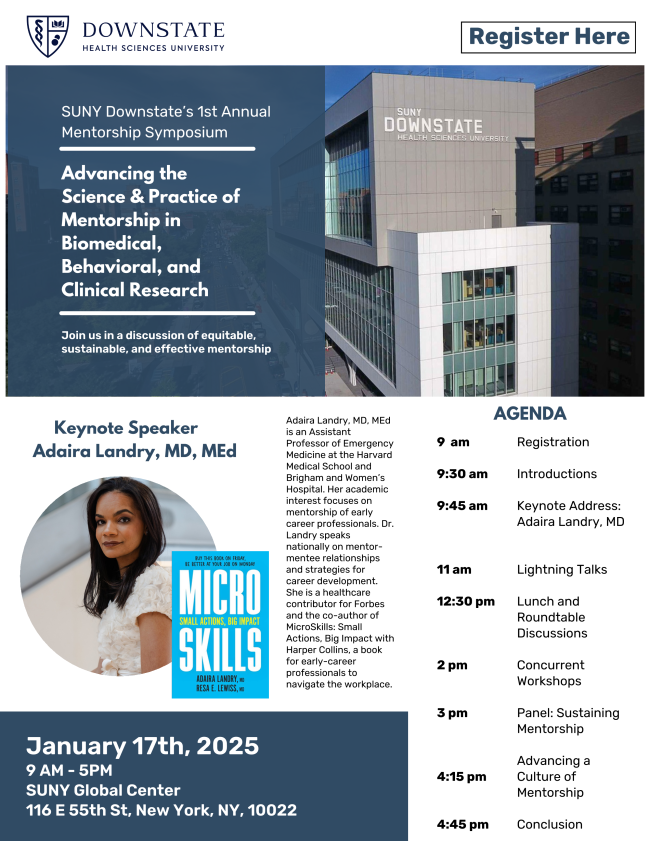
One of the most important things that programs like TRANSPORT and PRIDE bring is this underlying important value of mentorship. It's actually one of the things that I'm interested in--not only helping mentees thrive but also finding the ways to build those capacities within mentors to then help those mentees thrive. And I think there's a real important gap in how we mentor. The only way I learned how to mentor was by watching my mentors and learning what not to do and what to do. So I think that's a fundamentally important piece.
Another piece of advice for mentees, for example, is to find ways to "mentor up." The more that you can communicate your needs to a mentor and identify if a mentor is good for you, the better it is for you in the long run.
But it's important to find ways to develop that self-efficacy to push for what it is that you need as a junior researcher, as an early-career student. And of course programs like PRIDE and TRANSPORT and phenomenal ways to pursue that as a researcher. It's important to talk to folks who have been doing this to get a sense of how you can find your path forward in ways that do justice to you and what it is that your goals are.
|