|
A Night to Remember: Dr. Doug Tallamy Inspires at Our Inaugural Distinguished Lecture Series
| | |
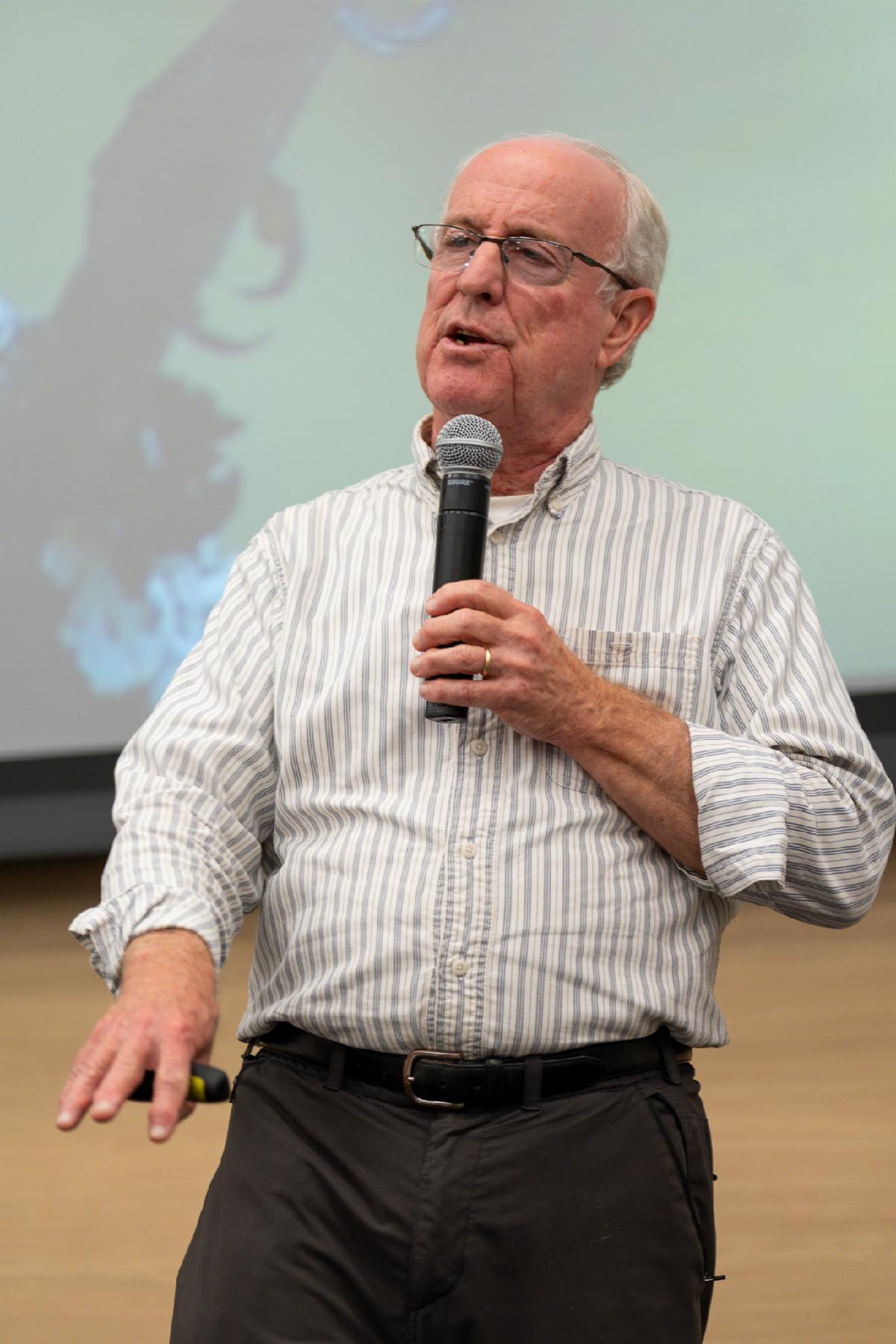
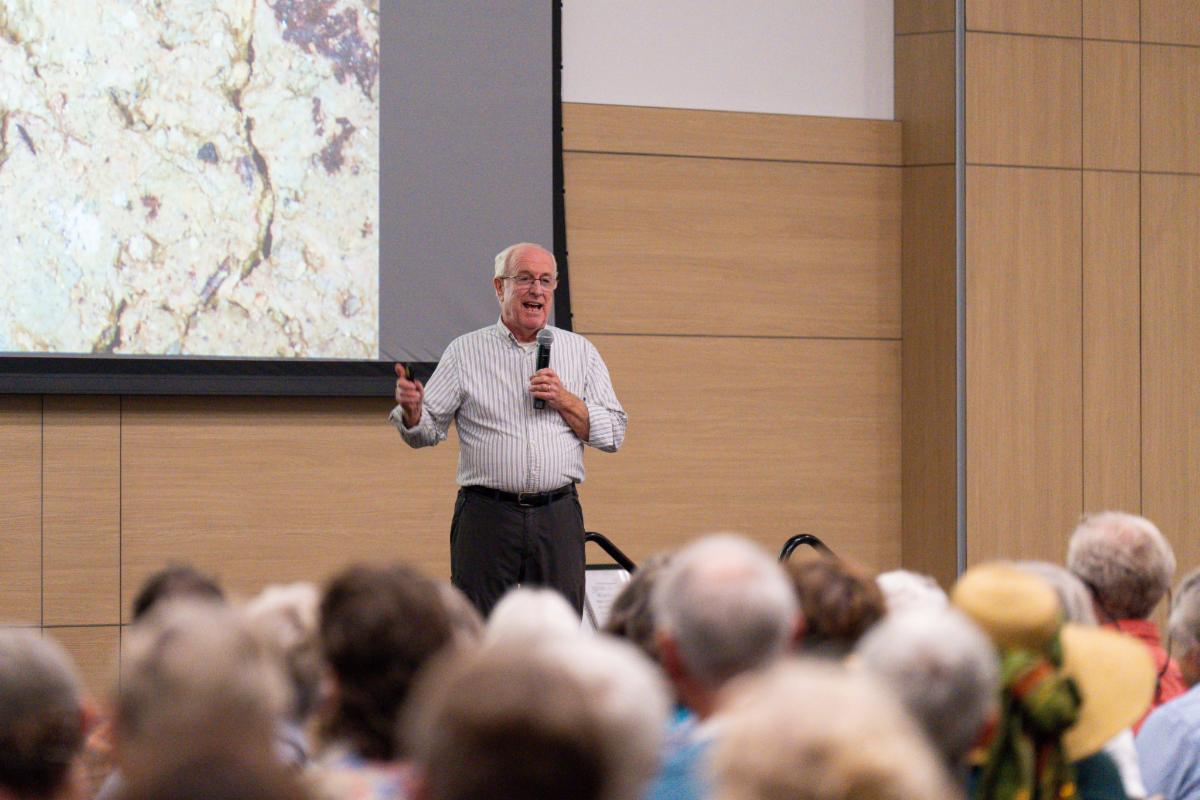
On October 3, 2025, the Tennessee Valley Chapter of Wild Ones welcomed acclaimed ecologist and author Dr. Doug Tallamy to Chattanooga for the inaugural Distinguished Lecture Series. Held at UTC’s Wolford Athletic Center, the event drew nearly 300 attendees eager to hear Tallamy’s hopeful message from his latest book, How Can I Help?
Dr. Tallamy inspired the audience to embrace everyday stewardship—showing how reimagining our home landscapes with native plants can restore biodiversity and heal ecosystems. His call to action resonated deeply, reminding us that “we are nature’s best hope.”
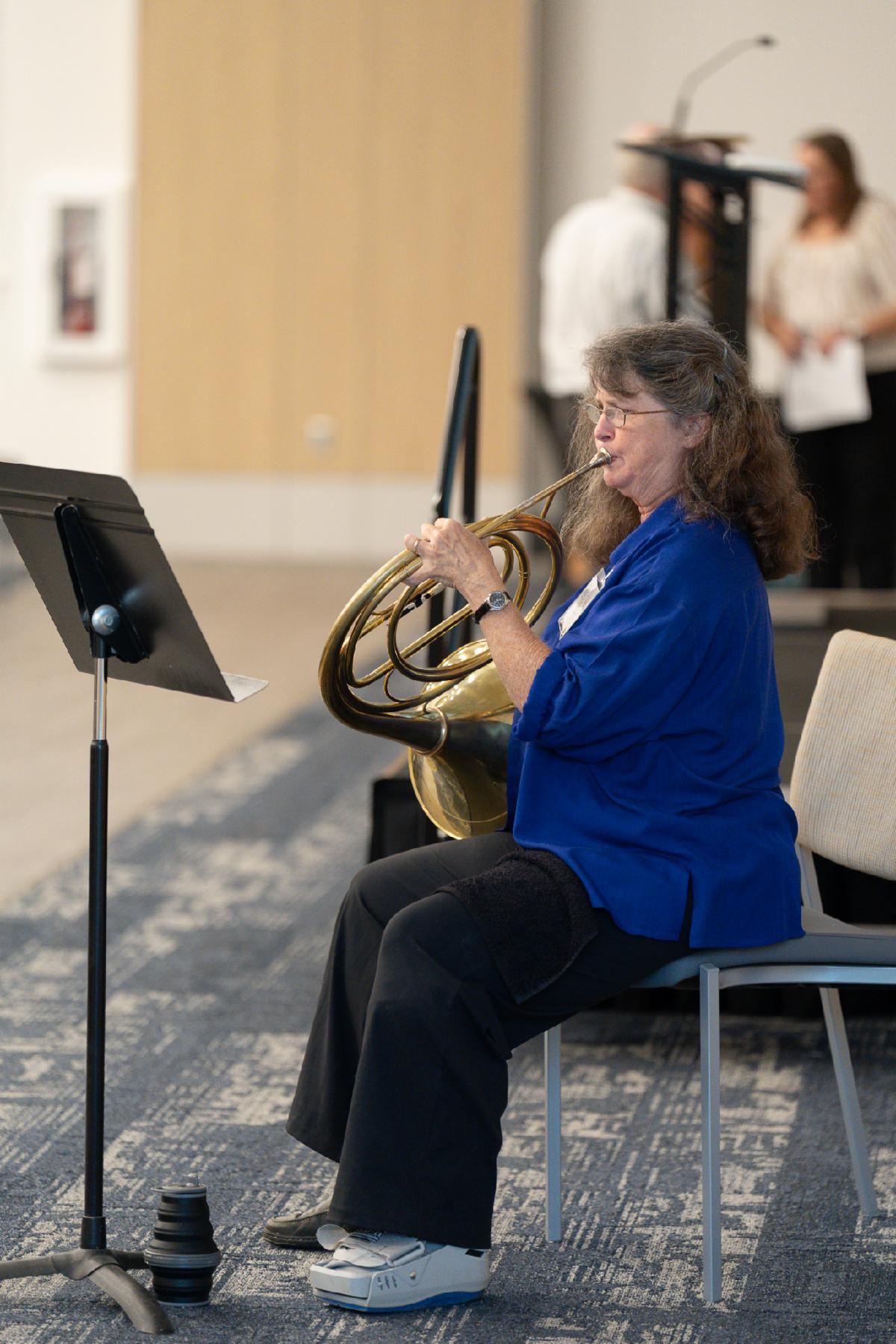
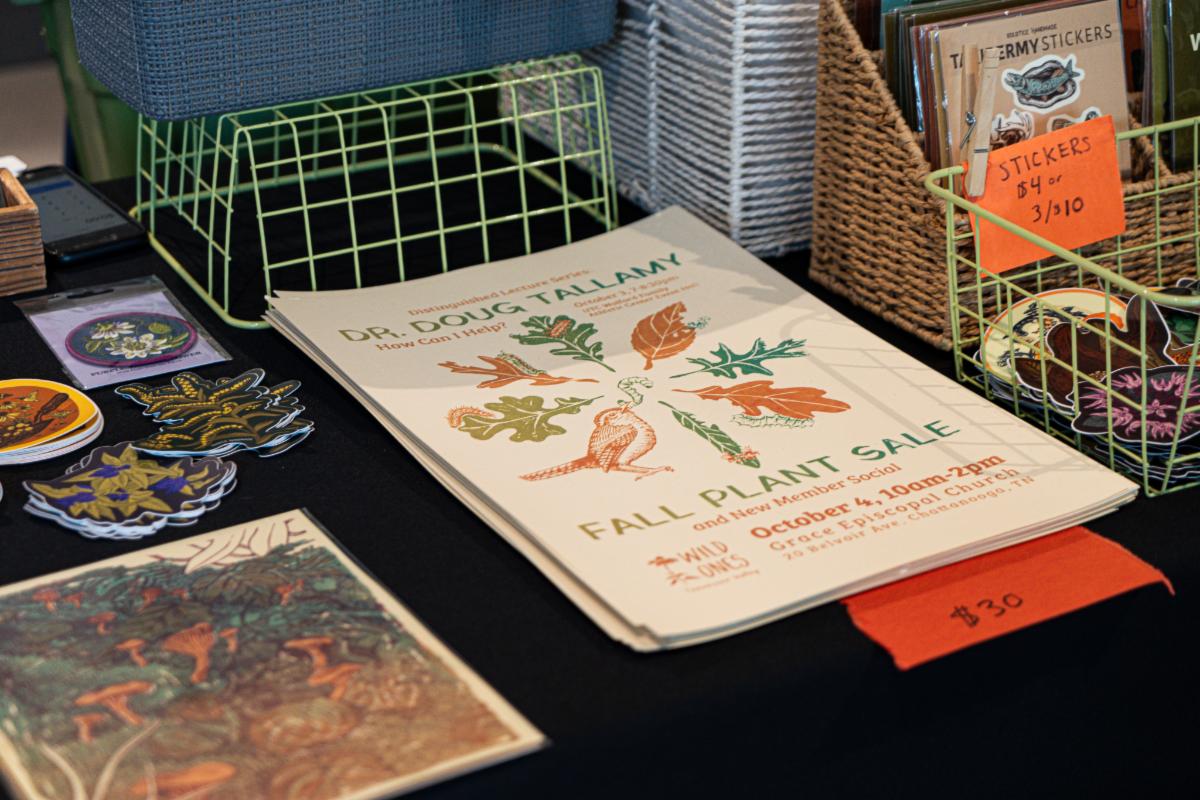
The evening opened with a moving natural horn performance by Wild Ones member, Dr. Ellie Jenkins and featured vibrant community engagement. Solstice Handmade showcased a custom design honoring Tallamy’s work, while The Book & Cover offered his full collection onsite, encouraging continued exploration.
| | |
This memorable night was made possible by the generous support of the Lyndhurst Foundation, UTC Arts-Based Collective, and Solstice Handmade. We’re grateful to all who helped launch this new tradition of learning, connection, and ecological action.
Stay tuned—this is just the beginning.
| | | |
Dr. Doug Tallamy speaks to nearly 300 attendees of the Inaugural
Distinguished Lecture Series on October 3, 2025.
| Wild Ones member, Dr. Ellie Jenkins performs on the natural horn. | |
Solstice Handmade served as the featured artist for the event and created
custom artwork inspired by Dr. Tallamy's work.
| | |
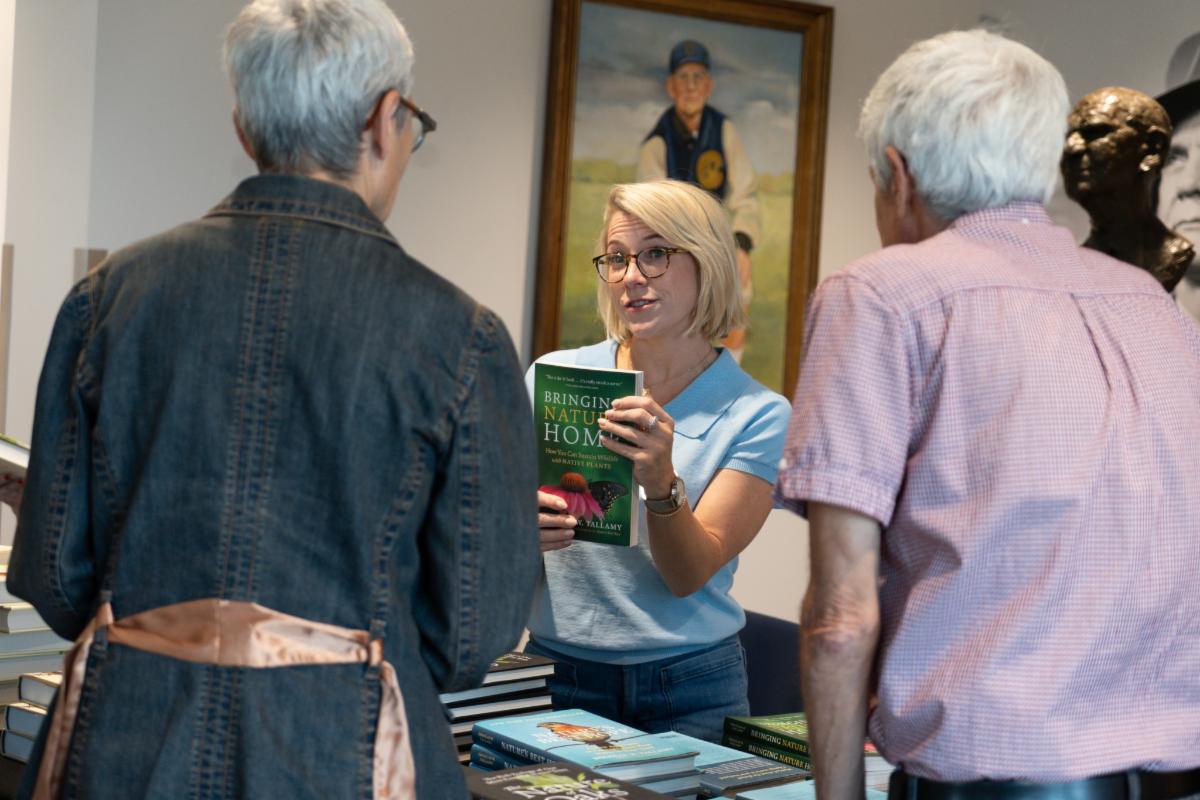
The Book & Cover was the featured book vendor offering a selection of
Dr. Tallamy's work for purchase at the event.
| | | | |
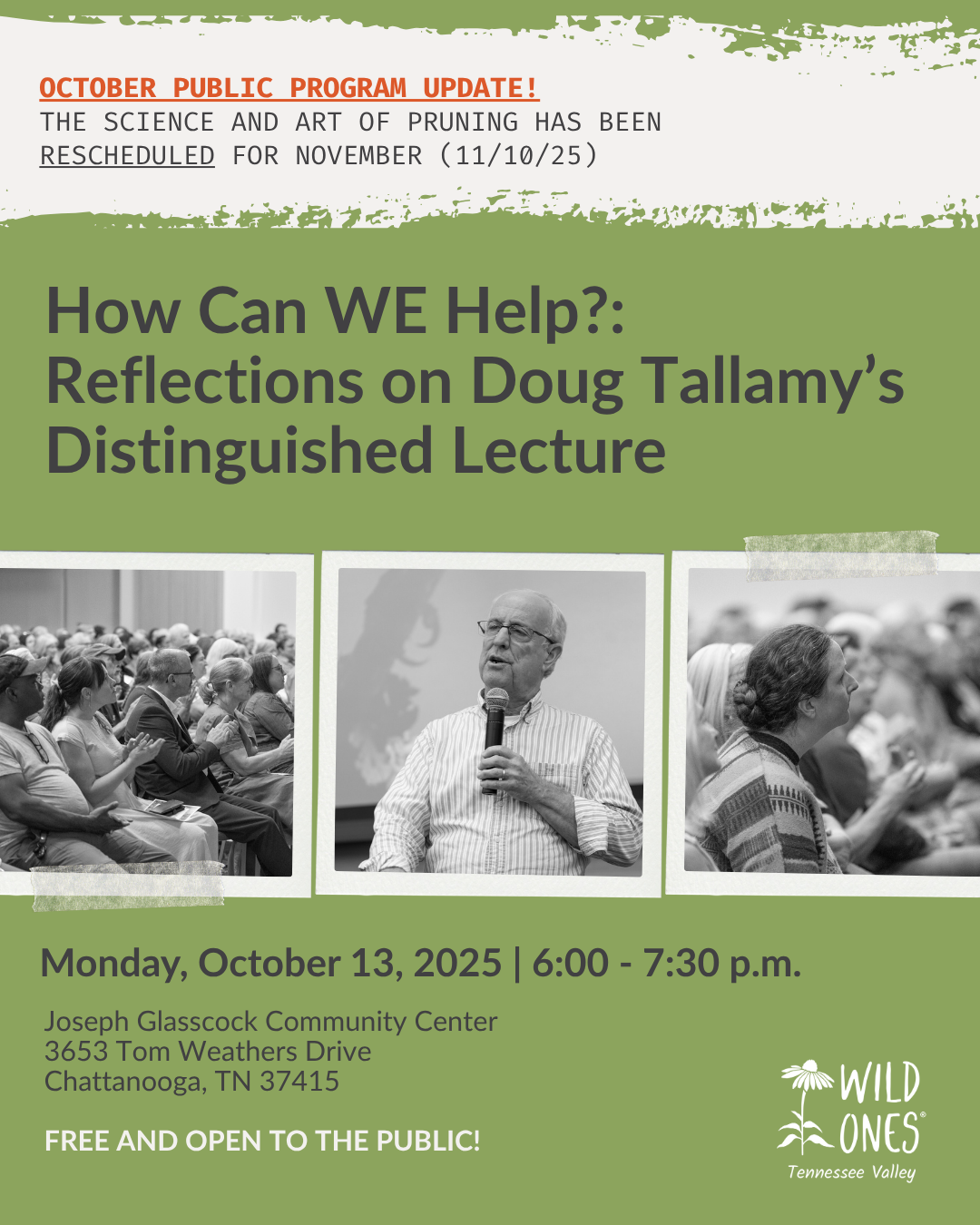
How Can WE Help?: Reflections on Doug Tallamy's Distinguished Lecture
Monday, October 13 2025
6:00 p.m. to 7:30 p.m. (EDT)
FREE and Open to the Public
Joseph Glasscock Community Center, 3653 Tom Weathers Dr, Chattanooga, TN, 37415
| | | | |
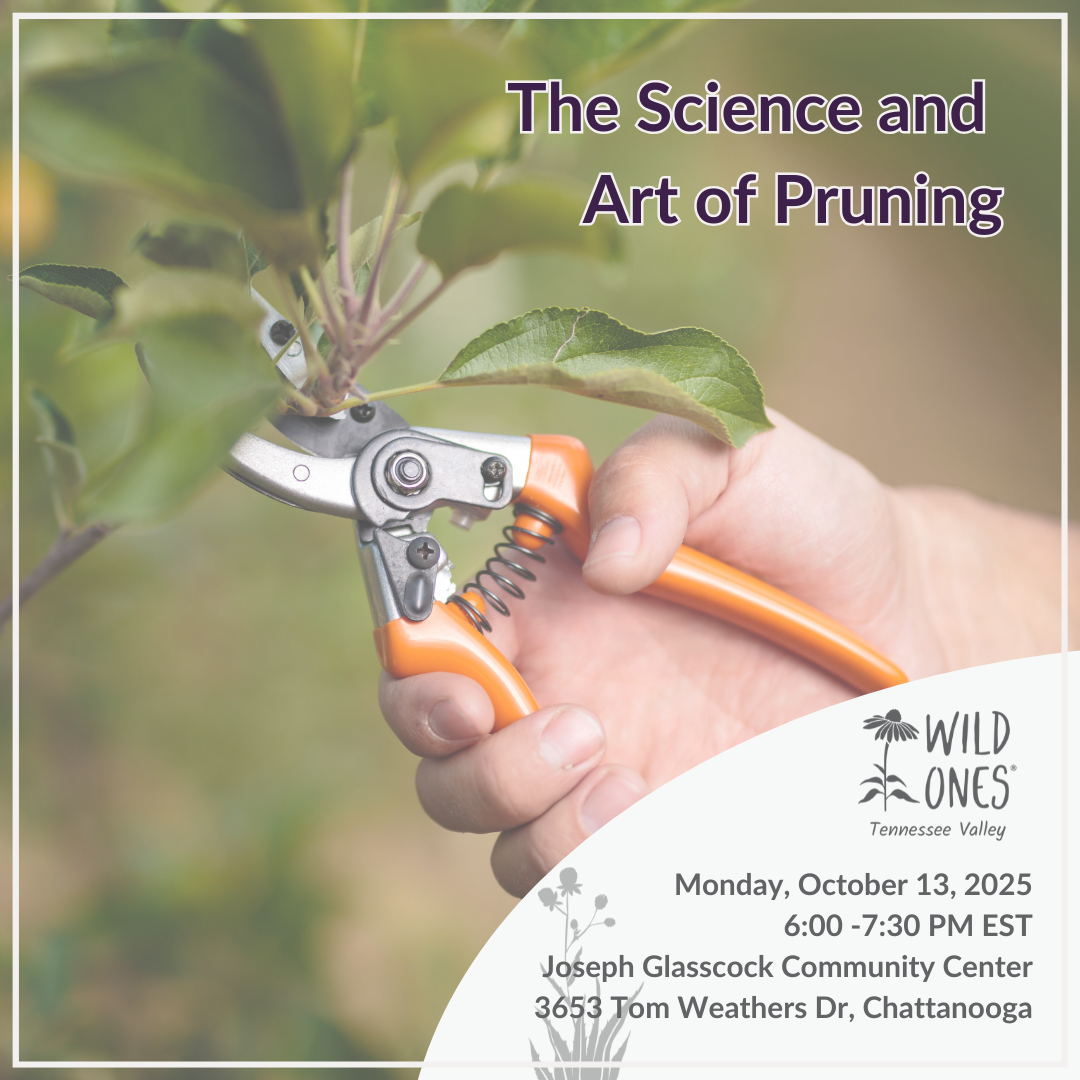
The Science and Art of Pruning
with Matt Whitaker
Monday, November 10, 2025
6:00 p.m. to 7:30 p.m. (EDT)
FREE and Open to the Public
Joseph Glasscock Community Center, 3653 Tom Weathers Dr, Chattanooga, TN, 37415
| | |
The Certificate in Native Plants program is designed to expand students' knowledge of botany, ecology, conservation and uses of native flora in the southeastern United States. The CNP offers a blend of classroom instruction, hands-on learning and guided hikes. Discounted class fees are available for members of Wild Ones, the Tennessee Native Plant Society or Reflection Riding. Classes are open to all, including interested individuals who may not be working toward the Certificate.
Those working toward the Certificate are asked to volunteer in various capacities to support approved native plant projects in our region. Volunteer requirements have changed slightly. More information and a downloadable volunteer form are available on our website.
For more info about the Certificate in Native Plants program, click here.
| | | | |
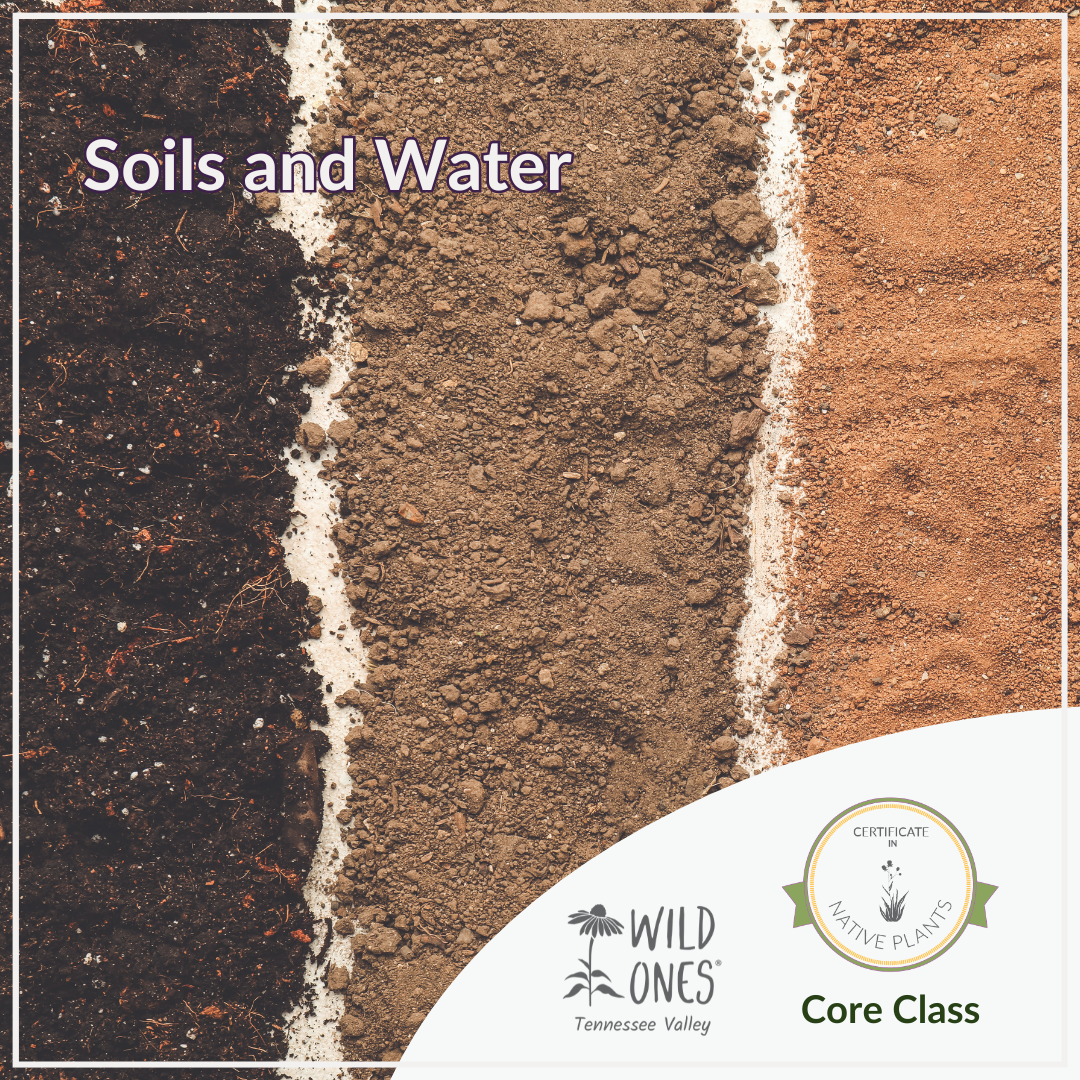
Soils and Water (CORE)
Instructor: Dr. Andrea Ludwig
Saturday, November 8, 2025
9:00 a.m. - 3:30 p.m. (EDT)
Tennessee Aquarium Conservation Institue
175 Baylor School Rd.
Chattanooga, TN 37405
Certificate in Native Plants CORE class.
| | | | |
Chapter Annual Meeting
Saturday, November 1, 2025
11:00 a.m. - 2:00 p.m. (EDT)
Crabtree Farms Evelyn Center
1000 E. 30th Street
Chattanooga, TN, 37407
All Tennessee Valley Wild Ones members and guests are welcome to attend. We will have a potluck lunch, election of officers, highlights of 2025, and a seed & plant swap. Please bring a dish and plants to share. This is a great time to visit with other native plant enthusiasts!
| | | | |
2025 Holiday Member Social
Monday, December 1, 2025
6:00 - 8:00 p.m. (EST)
Our Holiday Social is the perfect time to visit with your native plant friends and celebrate a successful TVWO year. Members are welcome to bring a guest. Please bring an appetizer or dessert to share. More to come!
| | To access information and registration links for all upcoming programs, classes, hikes and members-only events presented by the Tennessee Valley Chapter of Wild Ones and Wild Ones national, click below: | | |
Do you want to receive a reminder email
in advance of our free public programs?
If so, join our Meetup group.
| | |
Thank You, 2025 Volunteers!
As 2025 winds down, we are filled with appreciation for the incredible volunteers who have made this year one of growth, impact, and connection for Tennessee Valley Wild Ones.
Thanks to your dedication, we’ve reached new audiences with our message of native plant advocacy, ecological restoration, and community stewardship. From hosting events to planting gardens, educating neighbors to supporting outreach—you have been the heart of our mission.
But our work is far from over.
Let’s keep the momentum going into 2026!
We invite you to stay involved, bring a friend, and help us expand our reach even further. Whether it’s volunteering at events, joining a committee, mentoring a Seeds for Education recipient, advocating for biodiversity and responsible development, leading a book discussion, organizing a POD in your area, or simply sharing our message, your continued support is vital. There are so many ways YOU can make a difference!
Together, we’re building a healthier, more biodiverse future—one plant, one person, one place at a time.
Thank you for all you’ve done—and all you’ll continue to do.
With gratitude,
Tennessee Valley Wild Ones Leadership Team
| | 2025 Seeds for Education Grant Recipients Awarded | | |
We’re thrilled to announce the 2025 Seeds for Education grant recipients—four inspiring school and community projects that are planting the seeds of ecological learning and stewardship across the tri-state region. These grants support the creation of native plant gardens and pollinator habitats that will engage students, educators, and neighborhoods in hands-on conservation. From sensory gardens to student-led courtyard installations, each project reflects the heart of our mission: restoring native landscapes and cultivating a deeper connection to the natural world.
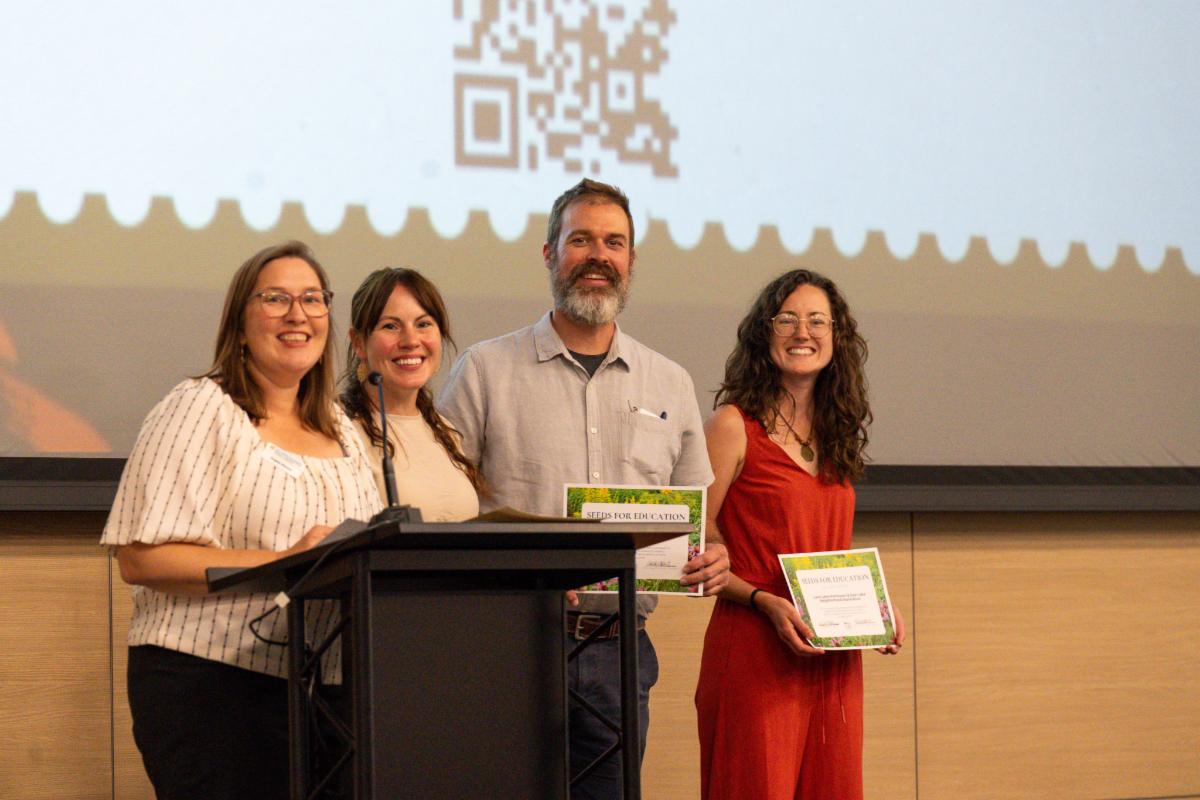
This year's recipients were each recognized at the Distinguished Lecture Series by Lisa Pouncey and Angela Dittmar - TVWO Chattanooga Area Pollinator Partnership co-chairs.
Lane Lake Montessori Native Pollinator Garden
Sarah LePage, parent volunteer
This project is led by Lane Lake Montessori on the grounds of the East Lake Neighborhood
Association center. That space is shared with Nature Kin Farm and Forest School, an after- school tutoring program, and the East Lake Neighborhood Association. It will benefit the students of both schools and the entire surrounding community. This garden will also expand on the wildlife corridor created in East Lake Park and managed by Wild Violet Permaculture.
Southeast Whitfield High School
Zack Lumpkin, Agriculture Teacher
The pollinator garden will be in the central courtyard in the middle of the school property, highly visible to students and visitors.
| |  | |
The students will get a lot of hands-on experience, as they will design, install, and maintain the garden. They will also educate others through signage that they design and through presentations to classes or groups of students.
Chattanooga High School for the Creative Arts (CCA)
Jeremy Henderson, teacher
Students from the CCA Gardening Club, led by teacher Jeremy Henderson, will be the leaders
of the project in planting, maintaining, and deciding on future native installations. This garden
will be installed in 2 courtyards of the school. There is an old greenhouse at CCA that has recently been restored for use by the garden club and the students are also excited to start
native seeds to propagate for the school grounds.
Clifton Hills Elementary School
Ingrid Seymour, school social worker
This garden was envisioned as a native-focused sensory garden and pollinator habitat where students can enjoy the restorative effects of nature while learning about forest ecology and local ecosystems. It is an extension of the gardens already in place at Clifton Hills. The sensory
garden was designed with disabled students in mind; it will offer a therapeutic space where
children can practice emotional regulation. The Clifton Hills garden has strong partnerships with
Crabtree Farms and the Chattanooga Food Forest Coalition.
| | | |
Wild Ones Name Tag Refresh - Order Yours Today!
Members don't miss your chance to place your order for a new Wild Ones Name Tag to wear to public programs, Wild Ones events and when volunteering. The name tags are $11 and have been redesigned to include the new Wild Ones logo and a magnetic or pin backing - your choice. The order form is linked below, but don't wait, the deadline to order is October 31st!
| | | | |
Free Webinar: Next Steps with Nature with Dr. Doug Tallamy
Thursday, October 16, 2025
7:00 - 8:00 p.m. (EST)
This webinar builds on Tallamy’s newest book, How Can I Help?: Saving Nature with Your Yard, offering real-world solutions to the challenges people face when turning their landscapes into functional ecosystems. Doug Tallamy addresses 500 of the most frequently asked questions about ecological landscaping. Topics include biodiversity, invasive species control, native vs. non-native plants, oak biology, monarch butterflies, urban habitat restoration, and more.
| | | |
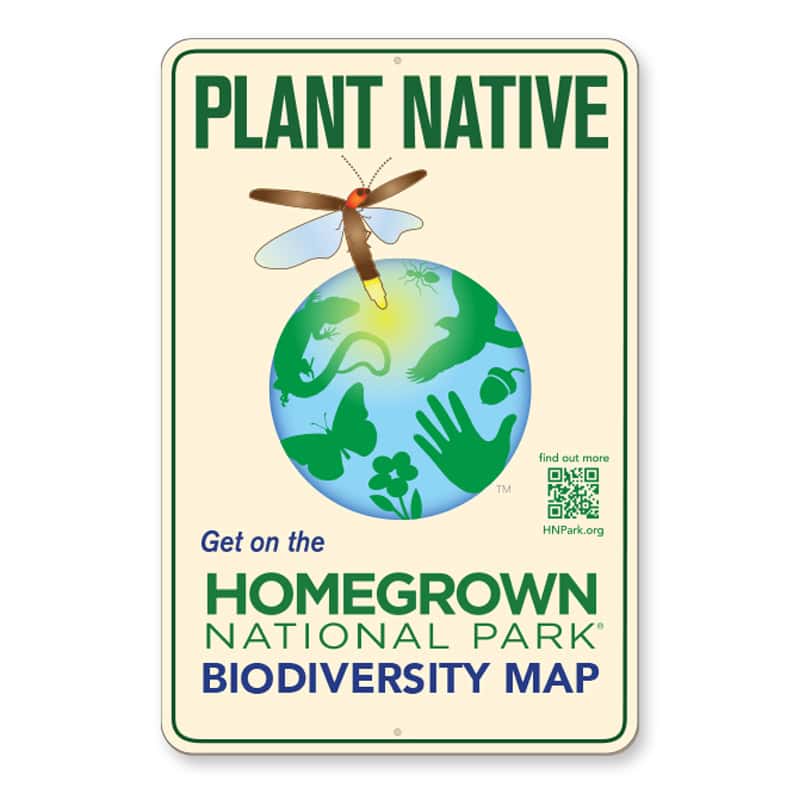
Homegrown National Park
Have you joined the movement?
Homegrown National Park® (HNP) raises awareness and urgently inspires everyone to address the biodiversity crisis by adding native plants and removing invasive ones where we live, work, learn, pray, and play.
“Our National Parks, no matter how grand in scale, are too small and separated from one another to preserve (native) species to the levels needed. Thus, the concept for Homegrown National Park, a bottom-up call-to-action to restore habitat where we live and work, and to a lesser extent where we farm and graze, extending national parks to our yards and communities." - Doug Tallamy, Co-Founder
Learn More and Get on the Map!
| | |
Wild Ones is growing in Tennessee and the Southeast!
Check out the events at nearby chapters!
| |
Rethinking Mulch: Is There Ever a Good Reason to Use It in a Landscape?
Mulch has been a hot topic in the horticultural world as of late. A scathing essay by Radovan Hajek, a co-owner of US Perennials Nursery, on the American aesthetic of too much mulch and too few plants has been making the rounds in popular garden newsletters. Read more.
Article: Gardenista.com
Image: Refugia
| |
Study Finds Pesticide Residue Widespread on Urban Butterfly Plants
A new study published in Environmental Toxicology and Chemistry found nearly ubiquitous pesticide contamination on butterfly host plants across two U.S. cities, Albuquerque, New Mexico, and Sacramento, California. In 20% of the plants tested, pesticide residues were at levels known to kill or otherwise harm butterflies and moths. Read more.
Article: Xerces.com
Image: Shutterstock
| | |
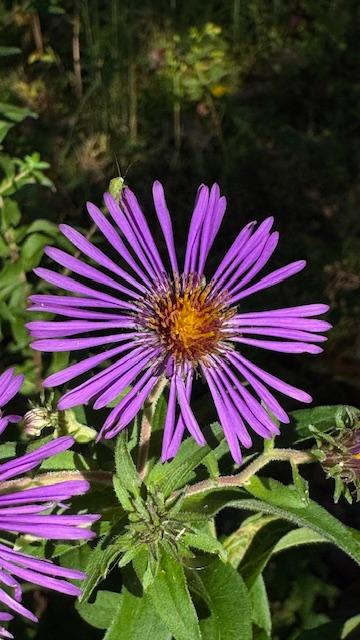
New England Aster
Symphyotrichum novae-angliae, commonly known as New England Aster s a species of flowering plant in the aster family (Asteraceae) native to central and eastern North America. New England aster generally grows in wet environments but can also be found in dry soil or sand.
The seeds and nectar of this mostly conservationally secure species, which blooms August to November, are important to a wide variety of animals, including birds, bees, and butterflies.
Photo by Mike O'Brien
| | |
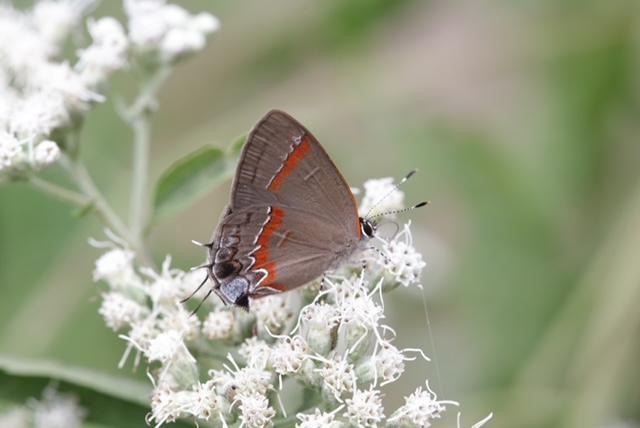
Red-banded Hairstreak butterfly on Tall Boneset
Eupatorium altissimum, commonly known as Tall Boneset or Tall Thoroughwort is a stout native perennial whose stems are hairy in the top half of the plant. The flowers are clustered loosely at the tops of stems in narrow, flat-topped configurations; there are only 5 florets in each head, and the flowers are dull white. The bracts beneath the flowerheads are broad and rounded. Blooms August–October.
Photo by Mike O'Brien
| | |
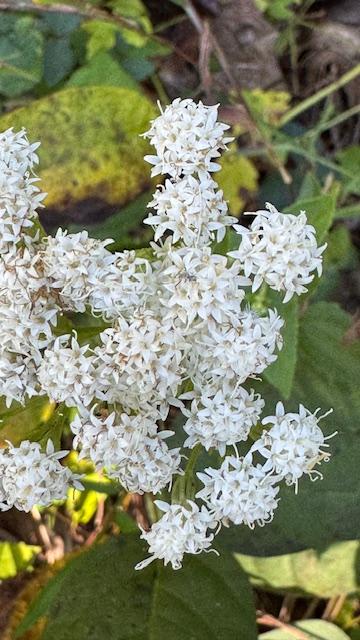
White Snakeroot
Ageratina altissima, also known as white snakeroot is a perennial herb in the family Asteraceae, native to eastern and central North America. The plant blooms in the fall, from July to October and its nectar attracts many species of butterflies and moths, bees, wasps, and flies.
Photo by Mike O'Brien
| | |
Becoming a Wild Ones member shows your commitment to the native plant movement and is a great way to connect with a helpful and knowledgeable native plant community that will prove invaluable in your native garden journey!
Benefits of a Wild Ones membership include:
-
Access to the current electronic issue of the quarterly Wild Ones Journal
- Invitations to workshops, garden tours, seed exchanges, plants sales, and stewardship project
-
Discounts for partner educational webinars such as NDAL, etc. and Wild Ones chapter programs
-
Participation in an annual national photo contest
-
Access to the Wild Ones Member Center for learning resources
- Participation in Wild for Monarchs and Native Garden recognition programs
- Involvement in citizen science and networking with conservation partners
- Receiving Wild Ones National e-Newsletters
-
Invitation to Wild Ones' private Facebook discussion group and the national Wild Ones Annual Member Meeting
- Networking opportunities and camaraderie with like-minded people who care about native plants and our planet
Additional benefits for members of the Tennessee Valley chapter:
-
Discounted admission to all Certificate in Native Plants classes year-round.
-
Free admission at members-only programs, including local and regional guided hikes, garden visits (Landscapes in Progress), the annual meeting, an annual plant swap, and other member social events.
-
Annual Welcome Party and Orientation for new members.
-
Monthly email Member Update, with news about chapter activities.
- All members of the family who live at the same address are entitled to member benefits!
- 10% off plants at Overhill Garden's Native Plant Nursery
- 15% off plants at Reflection Riding's Native Plant Nursery
Your membership dollars help forward our mission of promoting the restoration of native landscapes by allowing us to:
-
Provide free, educational resources and learning opportunities that are open to the public from respected experts like Wild Ones Honorary Directors Doug Tallamy, Neil Diboll, Heather Holm and Donna VanBuecken
-
Support the efforts of over 65 local Wild Ones chapters in 23 states
-
Publish a quarterly, award-winning, online journal featuring current native plant information and resources
-
Share free, professionally-designed native garden templates for multiple regions in the United States.
| |
The Tennessee Valley Chapter of Wild Ones is 100% volunteer run!
Here are a few ways you can get more involved in the chapter
and in our Chattanooga Pollinator Partnership.
| | Follow our chapter on social media: | | Follow Wild Ones on social media: | | |
NOTE: Please do not unsubscribe!
This is the only method you have for receiving important communications from the Tennessee Valley Chapter of Wild Ones!
Please add contact@tnvalleywildones.org
to your address book -
This is needed to keep our emails out of your SPAM folder.
| | | | |