|
Updated FSA Acreage Numbers Reveal Interesting Developments for Canola
Barry Coleman, Northern Canola Growers Association
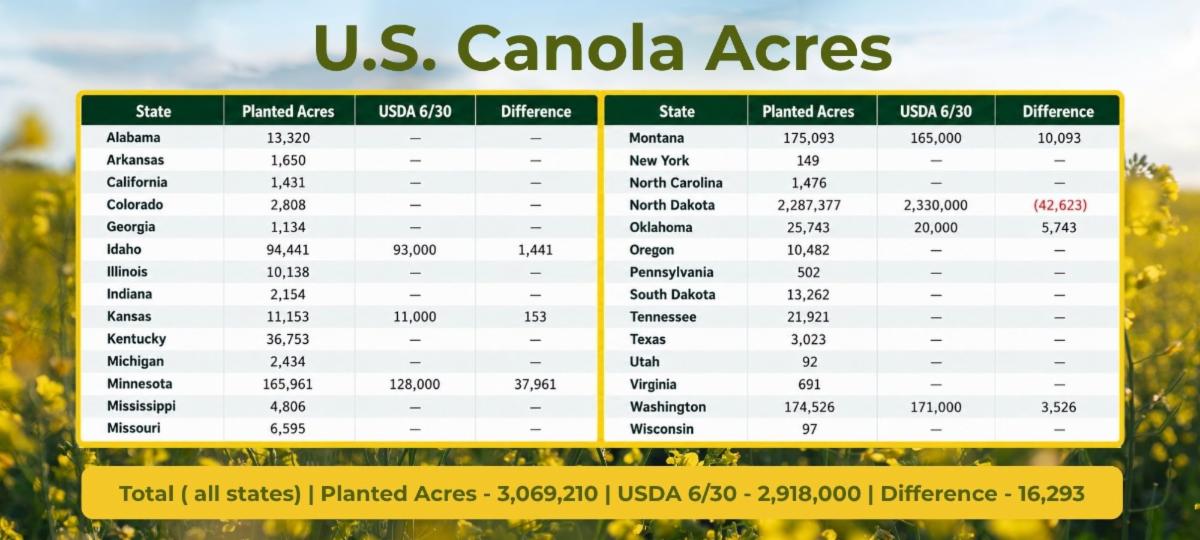
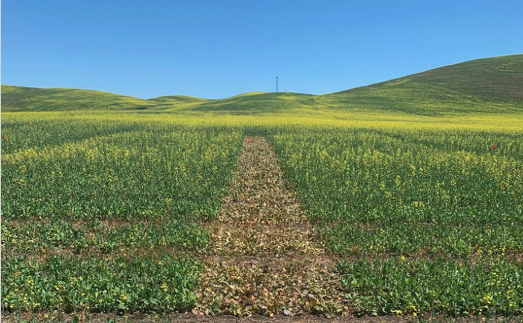
An analysis of U.S. canola acres from the recent FSA update shows acres nationwide are up 5.17% from USDA’s June 30 Acreage Report to a record 3.069 million. The data shows canola was planted in 29 states this year, and combined acreage in southeastern and mid-south states reached approximately 100,000 acres, with Kentucky leading the way at over 36,000 acres. USDA underestimated acreage in several states, most notably in Minnesota, where acreage is almost 38,000 acres higher than the June 30 estimates.
| | |
USDA Expands Regenerative Agriculture Pilot Program to $1 Billion
The U.S. Department of Agriculture (USDA) announced it is increasing financial assistance for its Regenerative Pilot Program from $700 million to $1 billion for fiscal year 2027. Administered through USDA’s Natural Resources Conservation Service (NRCS), the voluntary program provides financial and technical assistance to help farmers and ranchers implement whole-farm conservation systems focused on soil health, water management and long-term agricultural resilience. For FY2027, USDA will provide $650 million through the Environmental Quality Incentives Program (EQIP) and $350 million through the Conservation Stewardship Program (CSP). USDA also announced changes intended to give states and producers greater flexibility, including allowing State Technical Advisory Committees to identify additional conservation practices that address local production systems and resource concerns. Producers can apply through their local NRCS Service Center by their state’s applicable ranking dates.
Read the press release from the USDA: https://bit.ly/4ADasmu
| |
Biofuels Tax Credit - Updated Guidance and GREET Model Released
On September 9, the IRS issued an updated notice for the 45Z Clean Fuels Production Credit. The IRS notice allows for carbon intensity adjustments and enhanced 45Z tax credits for 2025 and 2026 for feedstocks produced using regenerative agriculture practices. At the same time, the U.S. Department of Energy and Argonne National Labs (ANL) released an updated 45ZCF-GREET model.
The 45ZCF-GREET model is used to determine carbon intensity scores of fuels and feedstocks and subsequent 45Z ax credit values. The 45ZCF-GREET model was first released in January 2025 and was most recently updated in June 2026. The US Canola Association (USCA) will be working with ANL to have improved canola data derived from our recent grower survey incorporated into the next GREET model updates.
A notable addition to the 45ZCF-GREET model in this update is the inclusion of a new module (45ZCF FD-CIC module) that enables renewable fuel producers to calculate carbon intensity adjustments for feedstocks produced using regenerative agricultural practices. The USDA Feedstock Carbon Intensity Calculator (USDA FD-CIC) module is currently limited to spring canola and USCA continues to work with USDA to include all canola production. The FD-CIC module includes the use of cover crops, tillage practices, application of nitrification inhibitors, and application of manure as regenerative agricultural practices for U.S.-grown corn, sorghum, soybeans, and spring canola.
The USDA published a beta version of the FD-CIC in January 2025, which initially did not include any canola. In June 2026, USDA published an updated version of the FD-CIC, which includes spring canola.
View the IRS Notice: https://bit.ly/4hlXDWm
View the DOE 45ZCF-GREET User Manual: https://bit.ly/4hmuQ3N
| | |
Administration Expands Small Refinery Exemptions
In early September, the EPA released its decision on Small Refinery Exemptions (SREs), allowing an additional 770 million SREs and bringing the total to 1.76 billion RINs. This is higher than the 990 million estimated in the RFS rule issued in March, but less than what was reportedly being considered. To mitigate the impact to the biofuels and agriculture sectors, the Administration will reallocate 100% of the 770 million additional SRE RINs. USCA and the biofuels industry strongly advocate that any SREs provided be fully reallocated. Prior to the announcement, the US Canola Association expressed concern with reports that EPA was contemplating waiving an additional 1.8 billion RINs of the 2025 Renewable Fuel Standard (RFS) compliance obligation through SREs. Additional SREs, especially if not reallocated, undermine canola markets after farmers have invested in a higher 2026 crop.
| |
Farm Bill Passes Senate Ag Committee
On September 16, the Senate Ag Committee was able to pass the Farm Bill out of committee on a partisan 12-11 vote. No amendments were considered during this committee session, just the vote to report the bill out of committee. When or if it gets scheduled for consideration by the full Senate is uncertain, but it won’t be before the November elections. It will need bipartisan support (60 votes) to pass the full Senate, and that will likely be contingent on a deal being reached during the Lame Duck session with Democrats on implementation of SNAP changes.
| |
Trade Issues Escalated with Canada
President Trump escalated trade actions against Canada, signing proclamations on September 9 that ban certain Canadian imports, including alcoholic beverages, effective September 29. The move follows Canada's retaliatory tariffs and replaces existing 50% duties on those products. So far, the import bans and tariffs have not been imposed on Canadian canola imports to the United States.
| |
EPA and U.S. Army Corps of Engineers Issue Supplemental Notice on WOTUS
On September 4, the EPA and the U.S. Army Corps of Engineers issued a notice to supplement and seek additional comment on aspects of the Proposed Rule that was published in November 2025 to revise the regulations defining the scope of waters covered under the Clean Water Act in light of the U.S. Supreme Court’s 2023 decision in Sackett v. EPA. The Proposed Rule is intended to provide greater regulatory certainty by clarifying the definition of “waters of the United States.” The September 4 supplemental notice seeks to gather input on additional regulatory alternatives that they will consider alongside the 2025 proposed rule. The supplemental notice includes a 30-day public comment period ending October 9.
The notice can be viewed here: https://bit.ly/4ddLTTn
| |
USCA Comments on EPA Desiccation Innovation Challenge
EPA is seeking input on alternatives to conventional chemical desiccation, a preharvest tool growers rely on to dry down canola evenly. Given that canola's uneven pod maturity can lead to significant yield loss, USCA submitted comments urging EPA to recognize desiccation's role as an essential tool for growers, and to fund canola-specific research and evaluate any alternatives against real-world yield, quality, and harvest-efficiency benchmarks.
View the full notice: https://bit.ly/4z8L0UD
| |
USDA Announces Plan to Modernize Data Collection and NASS Launches AgInsights
USDA's plan to modernize data collection is built around the following four pillars:
-
Modernize the Data Reporting Experience: USDA said it will expand use of administrative data, improve mobile access to surveys, explore opportunities to use prefilled information where appropriate, and strengthen coordination across USDA. These changes are intended to reduce duplicative requests and limit the amount of time producers spend reporting information.
-
Enhance Acreage and Yield Estimation: USDA said it will conduct a pilot to evaluate the use of improved satellite imagery, geospatial tools, crop models, and other emerging technologies combined with producer-reported information to enhance acreage and yield estimations. USDA will also assess the use of optional field inputs to enhance and ground-truth yield estimates and continue advancing yield research through collaboration with agricultural partners and land-grant universities.
-
Integrate Data and Technology Platforms: USDA said it will modernize its technology infrastructure, expand secure data-sharing capabilities, and evaluate the responsible use of tools such as artificial intelligence and machine learning.
-
Expand Trust and Transparency with Producers: USDA said it will protect producer privacy, clearly explain why it requests information and how it uses it, and create additional opportunities for producers to provide feedback. USDA said it will also improve communication surrounding reports, methodologies, response rates, and data limitations.
On September 16, the USDA’s National Agricultural Statistics Service (NASS) launched AgInsights, a new data dissemination tool that will serve as a key component of NASS’s ongoing modernization strategy. Designed to enhance existing data products and services, the AgInsights application offers streamlined information dissemination, increased operational efficiency, and a more dynamic, interactive experience, making it easier for producers to navigate and access the latest agricultural data.
The AgInsights tool can be found at: aginsights.nass.usda.gov
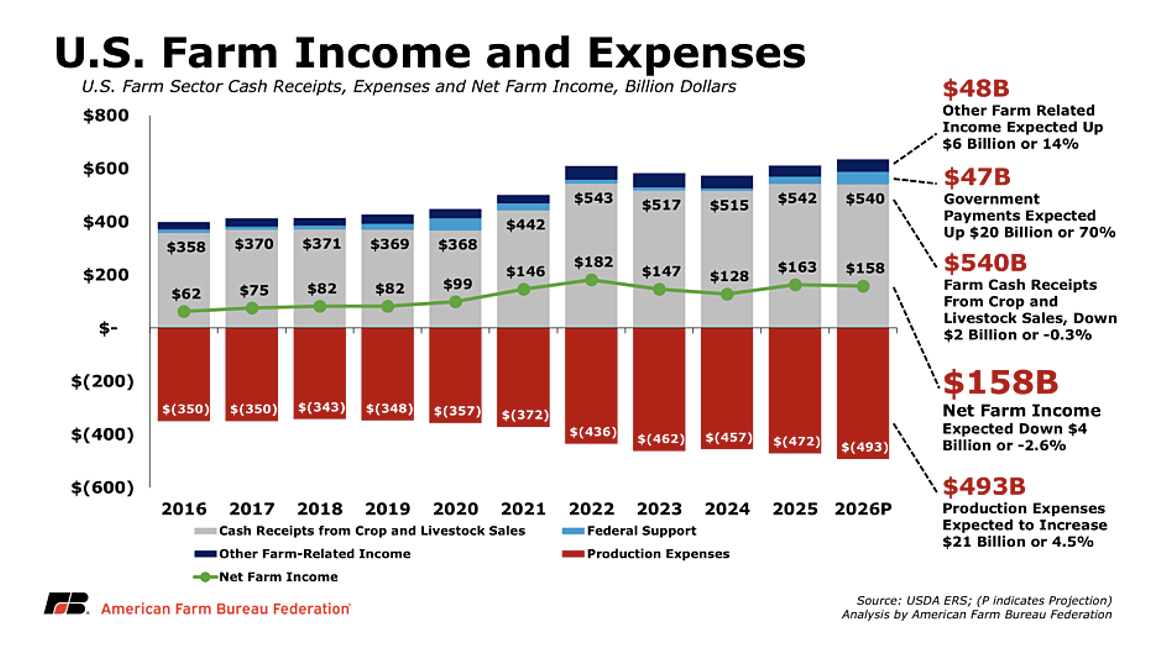
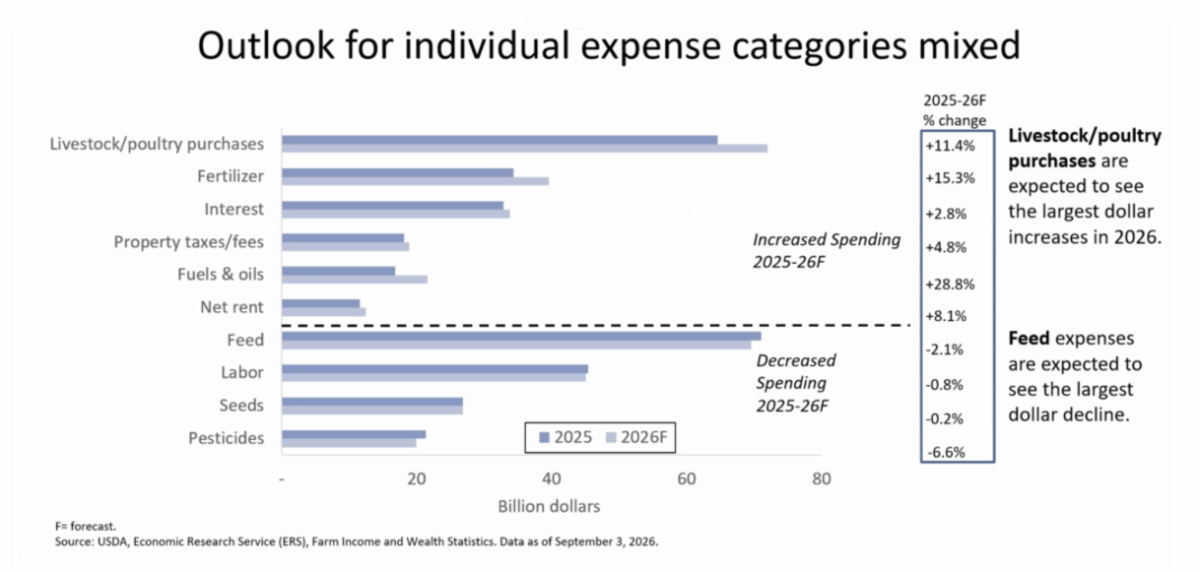
| USDA's 2026 Farm Income and Expenses Outlook | | |
Dietitian: Science Doesn’t Support Claims That Seed Oils Cause Inflammation
According to Sky Lakes Medical Center, despite claims circulating on social media, research does not support the idea that seed oils cause inflammation. Jennifer Newton, RD, MPH, nutrition coordinator at Sky Lakes, explains that while omega-6 fatty acids can serve as building blocks for inflammatory compounds, the body tightly regulates this process. Research has associated higher levels of linoleic acid, the primary omega-6 fatty acid in many seed oils, with lower inflammation and better cardiovascular and metabolic health. Newton recommends focusing instead on ultra-processed foods, which can also contain added sugars, excess sodium and saturated fat. For home cooking, she recommends olive and canola oils, noting canola oil’s neutral flavor, versatility at higher temperatures and affordability.
Read the article from Sky Lakes Medical Center: https://bit.ly/4hE9aAg
| | |
Research Supports Seed Oils as Part of a Healthy Diet
According to The National, decades of research and controlled trials support the use of unsaturated plant oils, including canola oil, as part of a healthy diet. Studies consistently show that replacing saturated fats with unsaturated fats can lower LDL cholesterol and reduce heart disease risk.
The article also examines claims that omega-6 fatty acids in seed oils promote chronic inflammation. Nutrition experts note that while the theory may sound biologically plausible, controlled human trials do not show increased inflammatory markers from consuming seed oils.
Experts encourage consumers to focus on overall dietary patterns rather than singling out one ingredient. Canola, referred to as rapeseed oil in the article, is highlighted as a healthy, affordable cooking oil rich in unsaturated fats.
Read the article from The National: https://bit.ly/46Ewfwt
| | |
Culinary Institute of America: Menus of Change Research Collaborative Meeting - University of Michigan, Ann Arbor, MI
October 5-7, 2026
The Menus of Change Research Collaborative (MCURC), co-led by the Culinary Institute of America and Harvard T.H. Chan School of Public Health, is a national network of over 90 leading universities, executive chefs, and researchers working to advance healthy, sustainable, and scalable dining operations through evidence-based menu innovation. The Northern Canola Growers Association will attend and sponsor the event.
| |
Canola/Wheat Outlook & International Durum Forum - Minot, ND
November 17-18, 2026
The 2026 Canola/Wheat Outlook & International Durum Forum will be held Nov. 17–18 at the North Dakota State Fairgrounds Center’s FFA Hall in Minot, North Dakota. The annual event brings together canola, wheat and durum producers and industry stakeholders for market outlooks, industry insights and discussion.
To learn more: https://bit.ly/3Vhsvi7
| |
2026 Idaho Grain & Oilseed Convention - Sun Valley, ID
November 17-19, 2026
The 2026 Idaho Grain & Oilseed Convention comes at a defining moment for agriculture. As producers navigate market uncertainty, rising costs, and a changing policy landscape, this year’s theme is Navigating What’s Next: Facing Challenges. Finding Opportunities focuses on the decisions, innovation, and collaboration shaping the future of Idaho agriculture. Join fellow growers, industry leaders, researchers, and partners from across the region for timely discussions on markets, policy, technology, and emerging opportunities impacting agriculture today and in the years ahead, including breakout sessions focused specifically on canola production and oilseed marketing, logistics and end use.
***PNWCA producer members can receive $50 off registration.***
To learn more and register: https://bit.ly/3Rzrh08
| |
The Northern Canola Growers Association Annual Canola Research Meeting -
via Zoom
December 3, 2026 | 9 a.m. CST
The Northern Canola Growers Association will hold its 18th Annual Canola Research Meeting via Zoom on Thursday, Dec. 3, at 9 a.m. Canola growers and industry stakeholders are invited to attend and share their thoughts and ideas on research priorities important to canola growers.
To join the meeting, click on this Zoom link: https://us02web.zoom.us/j/89714870639
| |
PNW Canola Association Launches New Website
The Pacific Northwest Canola Association has launched a refreshed website featuring practical, high-quality information for canola growers, industry professionals, and consumers. Visit pnwcanola.org to explore the updated site and its canola resources.
| |
Washington Oilseeds Commission Seeks 2027 Research Proposals
The Washington Oilseeds Commission (WOC) has issued its 2027 Research Request for Proposals, with approximately $200,000 expected to be available for research funding. Projects that directly address the commission’s identified research priorities will receive the strongest consideration, with individual awards in recent years generally ranging from $5,000 to $50,000. Researchers are encouraged to submit projects that help advance Washington’s oilseed industry. Proposals are due Oct. 31, 2026. WOC is a partner member of the Pacific Northwest Canola Association.
Learn more: https://www.waoilseeds.org/research.html
| |
BASF, Bunge Partner to Support InVigor Gold Canola Launch
BASF and Bunge have announced that Bunge will process BASF’s InVigor Gold™ canola seed, marking a key step toward the hybrid’s planned U.S. commercial launch in 2027. Designed for hotter, drier environments and lower-organic-matter soils, the canola-quality Brassica juncea hybrid could expand canola production into more challenging growing areas. Initial availability of InVigor Gold L322 is planned for growers in Montana, North Dakota and Washington, with Bunge providing processing and market access beginning at its Warden, Washington, facility.
Read the BASF press release: https://bit.ly/4hhV6fJ
Read the Bunge press release: https://bit.ly/4xOY3cv
| |
Bayer, Neste Partner to Expand Winter Canola for Biofuels
Bayer and Neste have finalized a commercial agreement to expand Bayer’s newgold® winter canola in the Southern Great Plains, creating additional feedstock for renewable diesel and sustainable aviation fuel. According to Bayer, the collaboration will build a network of value-chain partners to expand winter canola acreage and give growers an additional market and rotational crop option alongside wheat. Bayer plans to launch newgold® winter canola hybrids in fall 2027, featuring winter hardiness, TruFlex® technology, and pod shatter resistance, with the resulting high-protein canola meal marketed for livestock feed.
Read the Bayer press release: https://bit.ly/4hvMkJQ
| |
Renewable Diesel Demand Fuels Growth in U.S. Canola Acres
In a recent High Plains Journal article, growing demand for renewable diesel is creating new opportunities for U.S. canola growers, particularly in the Great Plains. According to Scoular, U.S. farmers planted nearly 3 million acres of canola in 2026, up 27% from the previous year, while acreage in Kansas and Oklahoma has climbed to more than 50,000 acres from about 15,000 three years ago. Scoular’s Goodland, Kansas, processing facility provides a regional market for the crop, and improved genetics, competitive prices and canola’s benefits in wheat rotations are helping support additional grower interest.
Read the High Plains Journal article: https://bit.ly/46Qjyih
| |
Montana Renewables Targets 200 Million Gallons of SAF Production by 2028
Montana Renewables has revised its MaxSAF expansion project at its Great Falls, Montana, renewable fuels facility, planning to increase sustainable aviation fuel (SAF) production to about 200 million gallons annually by the end of 2028. According to Oil & Gas Journal, the facility is expected to consume about 2 billion pounds of farm- and ranch-originated feedstocks annually to produce renewable jet fuel, diesel and gasoline. The phased expansion is expected to boost SAF production to more than 80 million gallons annually by the end of 2026 and more than 120 million gallons by spring 2027.
Read the article from Oil & Gas News: https://bit.ly/4iRdcq6
| |
Researchers Explore Canola Oil as an Ingredient in Road Paint
Researchers at the University of Saskatchewan are exploring whether canola oil could replace petroleum-based ingredients in highway-marking paints. Working with the Government of Saskatchewan’s Ministry of Highways and industry partner Richardson International, the project will evaluate canola oil-based paints for performance, cost-effectiveness and sustainability. If successful, the research could create a new value-added use for canola while providing a locally produced alternative for roadway paints.
Read the article from the University of Saskatchewan: https://bit.ly/4wYwhtO
| | |
USCA works to support and advance U.S. canola production, marketing, processing, and use through government and industry relations. Since its establishment in 1989, the association has helped domestic canola acreage grow from virtually zero to about 2 million. To learn more about USCA, go to: www.UScanola.com
Want to promote your products or services to canola producers and industry members? Visit our advertising pages to find specs, deadlines and rates to advertise in the Canola Quick Bytes monthly e-newsletter.
| | | | |