|
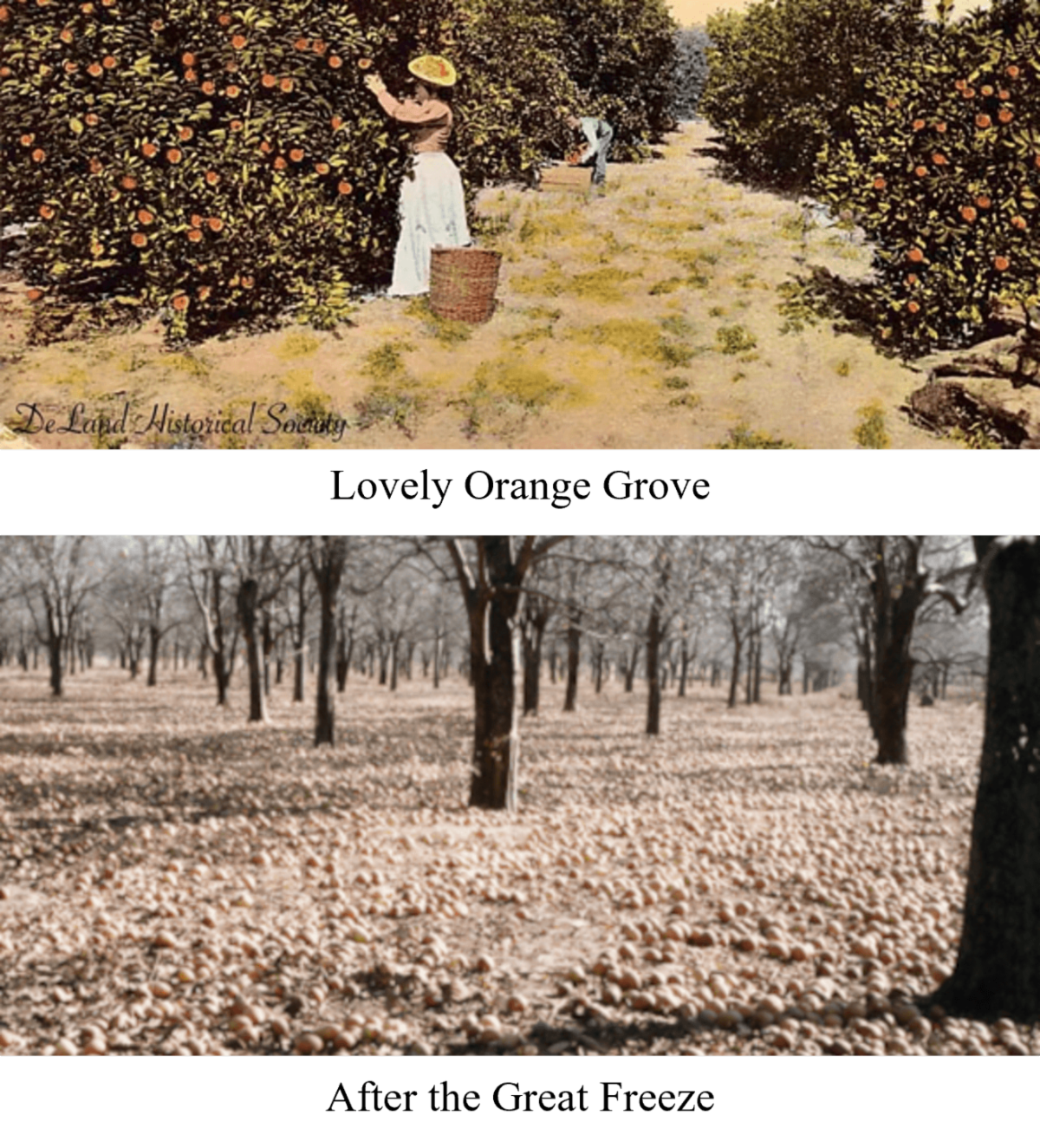
Two freezes occurred in Florida during one catastrophic season, the first in December 1894 and the second in February 1895. The citrus shipment plummeted from five million boxes in 1894 to 146,000 in 1896, about a 95% decline.
When the second freeze came a few months later the effects were even more devastating, and bark split from top to bottom killing 90% of the citrus trees. Orange trees needed seven years to bear fruit, and many growers couldn’t afford to replant and wait. Most of the groves were sold as real estate.
At the time of the Great Freeze, oranges were a source of primary or passive income for most Daytona residents. Property values plummeted and people left. Banks closed because of loan defaults. Those who stayed had to pivot to survive.
The wide beaches and moderate winters here were already attracting winter visitors. Automobile racing would be introduced on the beach by 1903. The crisis in the citrus industry led Daytona to redouble its efforts to promote tourism.
|