|
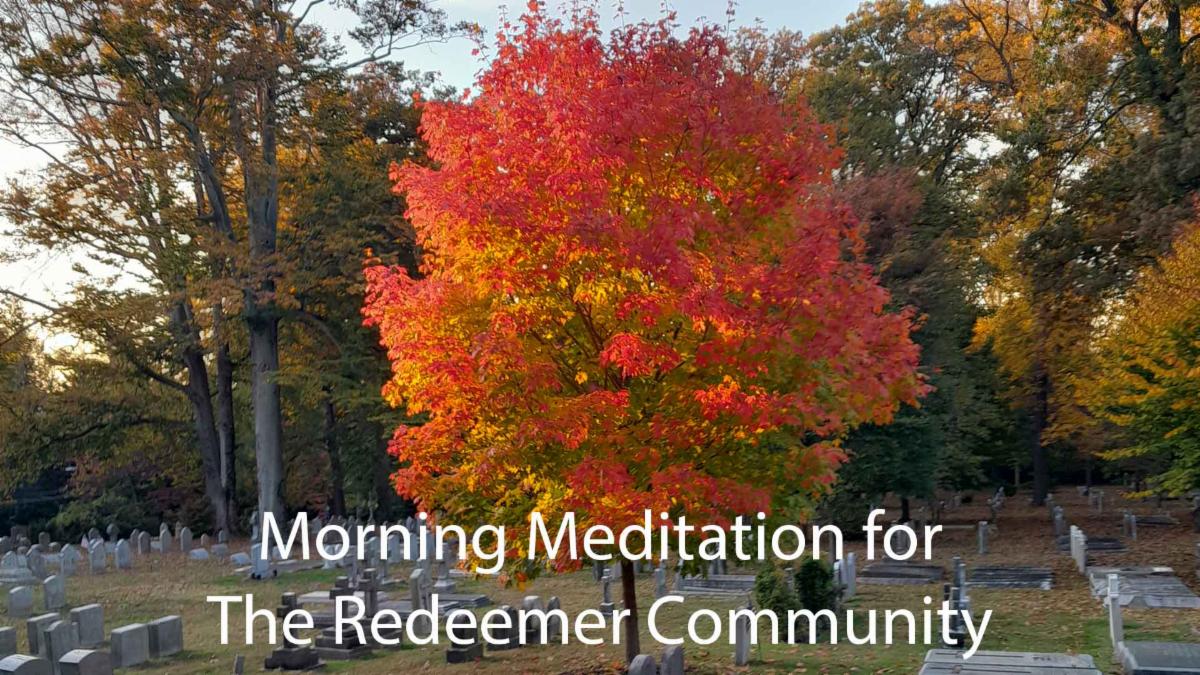
Morning Meditation
October 29, 2026
Reading: James 2:14-17
What good is it, my brothers and sisters, if someone claims to have faith but has no deeds? Can such faith save them? Suppose a brother or a sister is without clothes and daily food. If one of you says to them, “Go in peace; keep warm and well fed,” but does nothing about their physical needs, what good is it? In the same way, faith by itself, if it is not accompanied by action, is dead.
Meditation by Glenn Beamer
One of the ways I helped earn my way through William & Mary was by driving the Community Action Pre-school van to take twenty children from campus to their homes as far as 25 miles of campus.
Among the children in our van, I noticed that 3 and 4-year-old sisters whose winter coats never looked clean – the coats had an oily sheen and black grit along the hem lines. When I entered their house I discovered why – they didn’t have a furnace or electric heat. They heated their house with a fire they stoked in a 45-gallon steel drum. They relied on kerosene (hence the sheen), charcoal, & wood. The house was cold and the girls took their coats off when they went to bed adjacent to the oil drum. Broken windowpanes were covered with wax paper. The floorboards in the living area rotted and exposed black dirt. I understood the sheen on their coats.
The sisters lived in an African American neighborhood, Highland Park, that sits behind a forest of pine trees seventy-five yards west of Duke of Gloucester Street in Colonial Williamsburg. Ninety percent of Highland Park’s residents worked for Colonial Williamsburg or William and Mary.
When I talked with the sisters’ mother, she relayed that she struggled with Williamsburg’s seasonal employment. In the spring, she would get work in the ‘Burg’s many motels and waffle houses. She would pay off her back rent and save for her daughters’ school clothes and needs. In the fall, when tourism slowed, she’d be furloughed and earn what she could washing and folding clothes for $3 a load. But she could never get ahead and was inhibited by Williamsburg’s seasonal employment. She believed that education would provide her daughters with a means out of poverty.
Although one beneficent individual or parish could improve this family’s situation, there were thousands of families who faced similar circumstances in Virginia’s tidewater region. But this family and similarly situated families needed something beyond charity. The first thing they needed was stability – they needed to break the cycle of debt, repayment, destitution and return-to-debt.
Fifteen years after driving the community action van, I taught at UVa. The custodian who cleaned my office and classrooms was a man named Willie who had significant dental problems. In a spree of university cost-cutting, the university “transitioned” custodial and cafeteria personnel from university to contractor employment. Part of that transition included the end of Willie’s dental insurance, and he had about 10 teeth left. Fortunately, a senior colleague shared my concern, contacted the chairperson of Dentistry at UVa’s hospital and arranged for pro-bono dentures for Willie.
I don’t deny the good that is done when we see an individual’s need and respond to it generously. We follow God’s will when we reach out to and help “the least of these” as Matthew 25 commends us to. But I think God calls us to move beyond singular acts of kindness. We first need to listen to folks who are in genuinely stressful and declining financial circumstances. We need to create consensus about the systematic changes we can enact to provide a Christian-inspired foundation for our neighbors to thrive as the gifts from God that we proclaim them and ourselves to be. And then we need to move forward to build those foundations in areas as varied as housing, education, transportation and health care.
|