NCHR Health News Digest, October 2026 | |
Breast cancer advice that you'll want to know
In honor of Breast Cancer Awareness Month, we want to remind you all that some treatments for breast cancer are better than others. Many women in the U.S. are overtreated for breast cancer, and that is not a good idea.
-
Mammograms help diagnose breast cancer earlier, and early breast cancers are easier to treat. Women with early-stage breast cancer do not need a mastectomy (to remove one or both breasts) in order to live a long and healthy life. In fact, women with Stage 0, 1, 2, or 3a breast cancers live longer if they have a lumpectomy (which removes just the cancer, not the entire breast) than if they have a mastectomy. See our newly revised article for more info here.
-
Radiation therapy can reduce the chances of breast cancer returning to the same breast, but it is not proven to help women live longer. Most women whose cancer is removed in a lumpectomy will not have a recurrence of cancer whether or not they undergo radiation therapy. For more info, see www.stopcancerfund.org or send questions to info@stopcancerfund.org
-
Many women with abnormal mammograms are told they have DCIS (ductal carcinoma in situ). Despite the name, most experts say DCIS (also called stage 0 breast cancer) is not really cancer -- it is more like a warning that a woman might get cancer because it sometimes will develop into cancer. DCIS should usually be surgically removed as a precaution, but does not require radiation therapy or a sentinel lymph node biopsy.
For more information about DCIS, download our free DCIS patient booklet.
| |
New episode: You Can't Make This Stuff Up
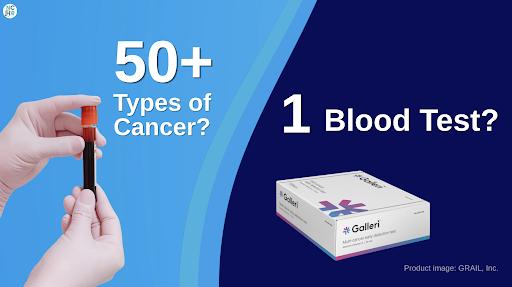
In our most recent episode of You Can’t Make This Stuff Up, NCHR President Dr. Zuckerman briefly explains why we are concerned about the Galleri blood test. This test promises early detection of 50+ types of cancer, but the results are often inaccurate.
Unfortunately, most people who have cancer will be informed by the Galleri blood test results that they don’t have cancer. This is especially likely with early-stage cancers -- which is supposed to be what the test is designed to diagnose.
So, even if the test says you don’t have cancer, you should continue to get all the screening tests (such as mammograms, Pap smears, PSA tests, and colonoscopies) to make sure. In addition, some people who are told they do have cancer based on the blood test won’t actually have cancer.
For that reason, anyone who is told they have cancer will need CT scans, biopsies, and other tests to find out if they do or don't. These inaccurate results are the reason why insurance currently won’t pay for the Galleri blood test. But RFK Jr. likes GRAIL, the company that makes Galleri, because it supports his policies, and the FDA seems to want to approve it, which means Medicare will pay for it, and private insurance might too.
This is what you need to know: There is no evidence that the Galleri blood test reduces cancer deaths or helps patients live longer.
Watch our reel on YouTube, Instagram, Facebook, LinkedIn, and our Website.
| | |
Should GLP-1 labels warn patients about sudden vision loss?
Millions of people are taking GLP-1 drugs such as Ozempic and Wegovy for diabetes or weight loss. But could these popular drugs also increase the chances of suddenly losing your vision?
Researchers are investigating a rare condition called nonarteritic anterior ischemic optic neuropathy, or NAION, which occurs when the optic nerve does not get enough blood flow and can cause sudden vision loss. Numerous GLP-1 patients have been diagnosed with vision loss caused by that condition.
So far, the research is mixed. Some studies found that patients taking GLP-1 medications were more likely to develop NAION, while others did not find a connection. European regulators concluded that NAION is a very rare side effect of semaglutide and required a warning. Other countries are warning patients about the GLP-1 drugs made by Eli Lilly as well as Novo Nordisk. FDA first identified a potential link between GLP-1 drugs and NAION in late 2024 but is still investigating and has not yet required a NAION warning on U.S. labels.
Patients deserve to know about serious potential side effects, even when researchers are still determining exactly how often they happen and who is most likely to be harmed.
The American Optometric Association recommends that patients concerned about NAION have their optic nerves checked before starting a GLP-1 drug.
Read the article here.
| | |
Should vaccine experts be chosen on a "litmus test"?
A new Rolling Stone investigation examines efforts to weaken childhood vaccine requirements, focusing on the influence of RFK Jr.'s former attorney Aaron Siri on federal vaccine policy. Much to her surprise, NCHR President Dr. Diana Zuckerman was included in the article because of an affidavit she submitted in a lawsuit by the American Academy of Pediatrics challenging changes to federal vaccine policy.
"Like many people of my generation, being in Rolling Stone was like a weird dream come true," Dr. Zuckerman says. "In my affidavit, I explained that Siri’s law partner interviewed me because they were considering me for the federal Advisory Committee on Immunization Practices, which is the expert committee that recommends which vaccines Americans should receive. Instead of being asked about my expertise on vaccines, I was explicitly asked if I would feel comfortable saying that decisions about vaccines for children should be made only between parents and doctors."
She disagreed, saying that parents and doctors should be involved in the decision but that some doctors are not experts on all the vaccines. That was the wrong answer from the anti-vax law firm's point of view. Was it all a coincidence that all the committee members who were chosen expressed that opinion?
The article was critical of the law firm's role in deciding vaccine policies, and we (obviously) agree.
You can read the Rolling Stone article if you have a subscription here.
| | We're Speaking Out For You | |
Who pays for FDA to make sure medical products are safe and effective?
Getting new medical devices onto the market is one of FDA’s jobs. The agency also needs enough funding to find safety problems after patients start using them, especially implanted devices.
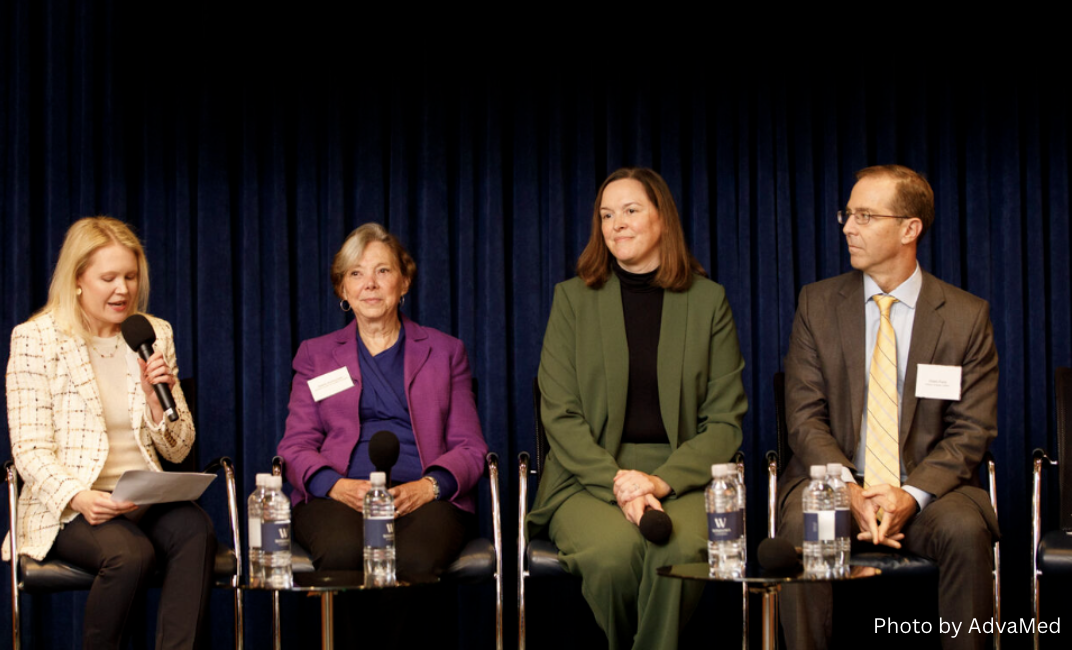
Dr. Diana Zuckerman recently participated in a panel at the Alliance for a Stronger FDA’s 2026 Summit, “Supporting the FDA of Tomorrow,” where she explained why Congressional funding matters even though medical device companies pay FDA user fees. Dr. Zuckerman emphasized that Congressional appropriations are the only source of funding to monitor the safety and effectiveness of medical devices before and after they are on the market.
The other panel members represented the FDA, AdvaMed, which represents medical device manufacturers, and the Personalized Medicine Coalition. Although these individuals do not always agree about FDA policies, they agreed that Congressional funding is essential for FDA to do its job well.
The FDA is proud that they are getting new medical devices on the market more quickly, but that is not our main priority. The FDA also needs enough staff and resources to evaluate whether there are problems when thousands or millions of patients are using them and to act quickly to prevent patients from being harmed.
As a founding Board member, NCHR works with the Alliance for a Stronger FDA to help Congress understand why Congressional appropriations are essential for a strong FDA that can protect patients and the public. Despite many differences of opinion from the regulated industries and nonprofit organizations that make up the Alliance, we all agree on that.
| | |
Did FDA go too far in removing warnings about hormones for menopause?
Hormone therapy can help women struggling with severe menopause symptoms. But hormonal treatment still has serious risks that women need to know about.
Newly published research confirms that women taking hormone therapy for menopause are more likely to develop cardiovascular disease than similar women not taking these hormones. This large new study found they were 30% more likely to develop strokes, 20% more likely to have a heart attack, and 60% more likely to develop dangerous blood clots.
Unfortunately, in February, FDA removed its strongest warnings on several hormone products regarding cardiovascular disease, breast cancer, and dementia. We strongly disagree with removing those warnings from hormone pills.
The FDA decision was always flawed, since even before the 2026 study, a review of the best studies found that women taking estrogen plus progesterone were more likely to develop breast cancer, stroke, and dangerous blood clots. The risks depend on the type of hormone, the dose, how it is taken, how long it is used, and the woman taking it. That is exactly why clear warnings matter and why the FDA's decision to remove warnings was inappropriate.
We agree that the strongest warning is not necessary for low-dose vaginal estrogen ointment. But that is very different from removing warnings from systemic hormone pills that have well-documented risks for some women.
Women seeking relief from menopause symptoms need accurate information about risks. For most women, we continue to recommend using hormones only when needed for severe symptoms, at the lowest effective dose and for the shortest appropriate period of time.
Read our article here.
| | |
Check us out!
Did you know that artificial turf, rubber playground surfaces, and rubber mulch contain chemicals that can cause attention problems, obesity, early puberty, asthma, and cancer? Are your children or grandchildren getting exposed when they play? Follow us @safe.to.play
| |
| Our main Instagram account and Threads provide free information about new medical research, programs, and policies to help health experts, patients, and the public improve the health of individuals and communities. Follow us @healthresearch4u | | | Connect With Us on Our Other Social Media! | | Your Contribution Can Make a Difference! | | We do not accept any funding from drug companies, device companies, chemical companies, or other sources that could influence our work and compromise our integrity. That's why so many people turn to us when they need help. Donations are tax-deductible! Please consider giving to the National Center for Health Research online or by mail to the address below. You can also contribute to our Cancer Prevention and Treatment Fund online, by mail, or through the Combined Federal Campaign using CFC# 11967. | |
To sign up for these monthly updates, click here.
| | | | |