|
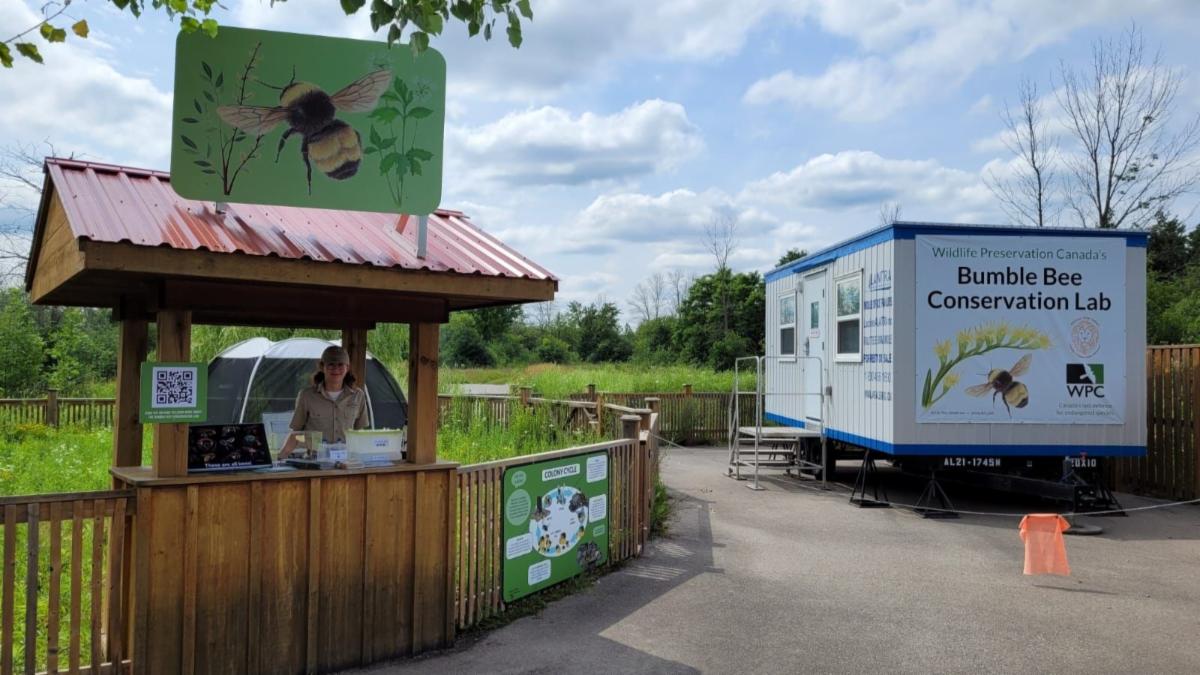
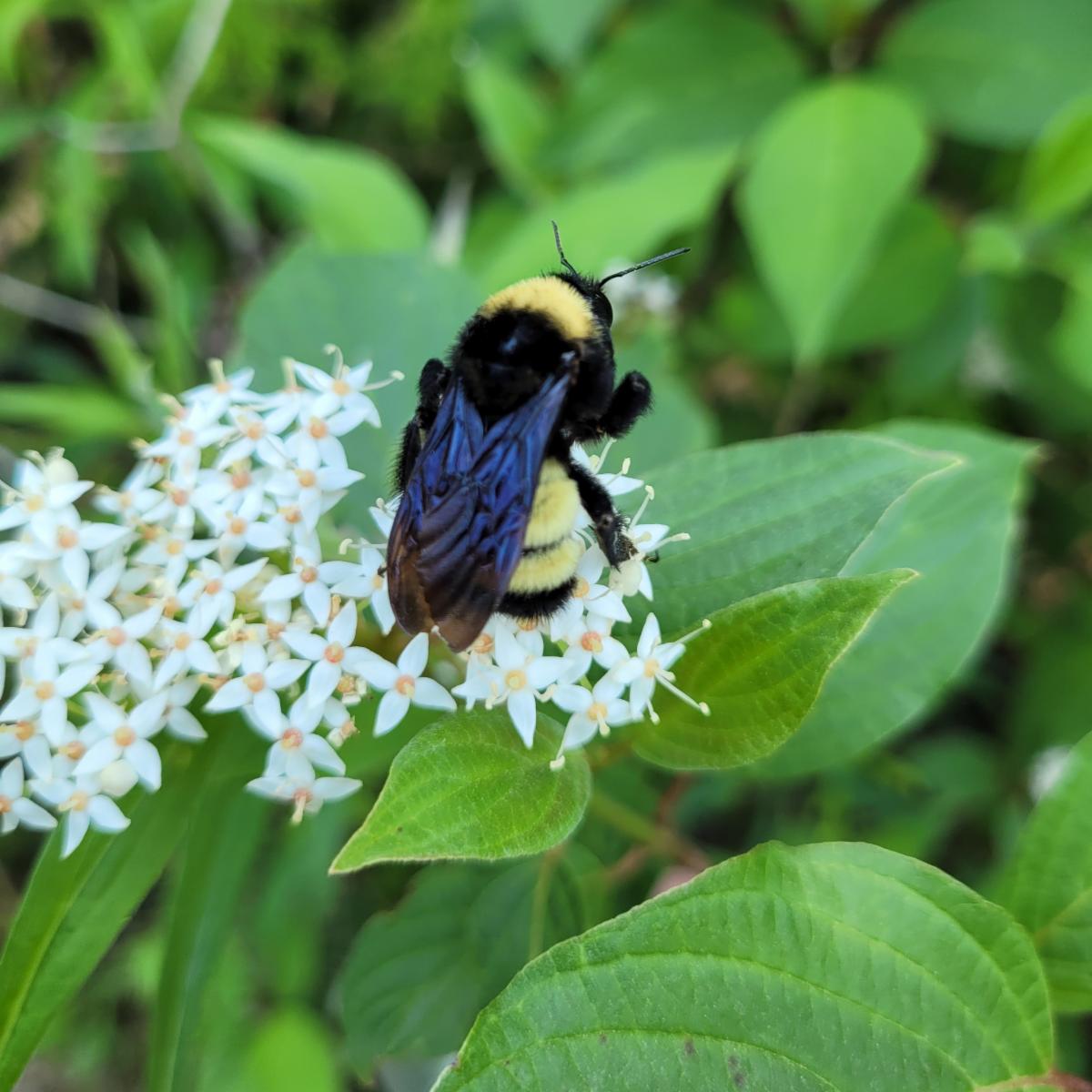
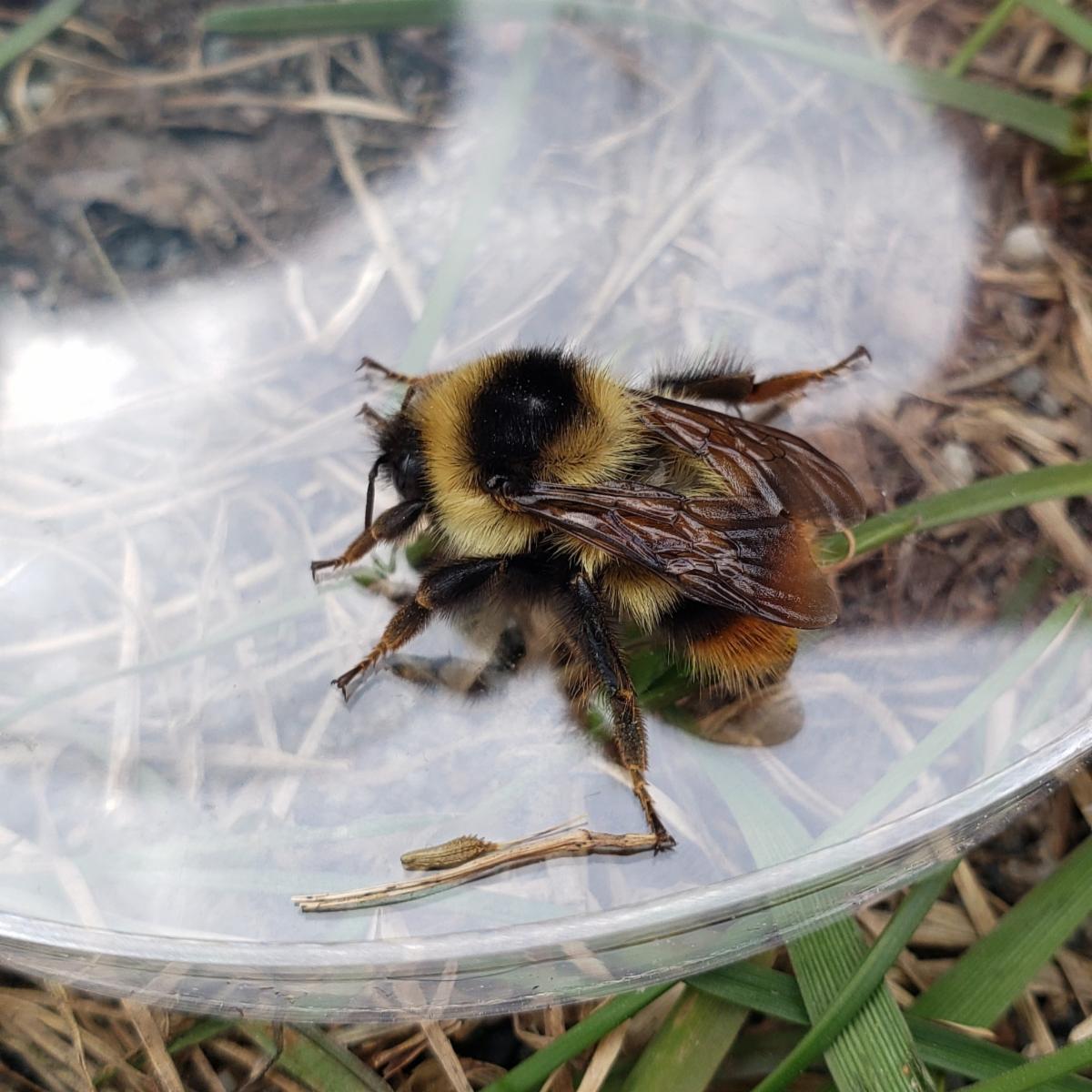
At Wildlife Preservation Canada (WPC), researchers are hard at work learning how to save endangered species through captive breeding. For bumble bees, their breeding research is tailored to the yellow-banded bumble bee (B. terricola, pictured on the right ⓒ T. Harrison), which is listed under Canada’s Species at Risk Act as ‘Special Concern’.
The hope is to establish a self-sustaining population and develop strategies that lead to the releasing of these new queens to further boost the wild populations.
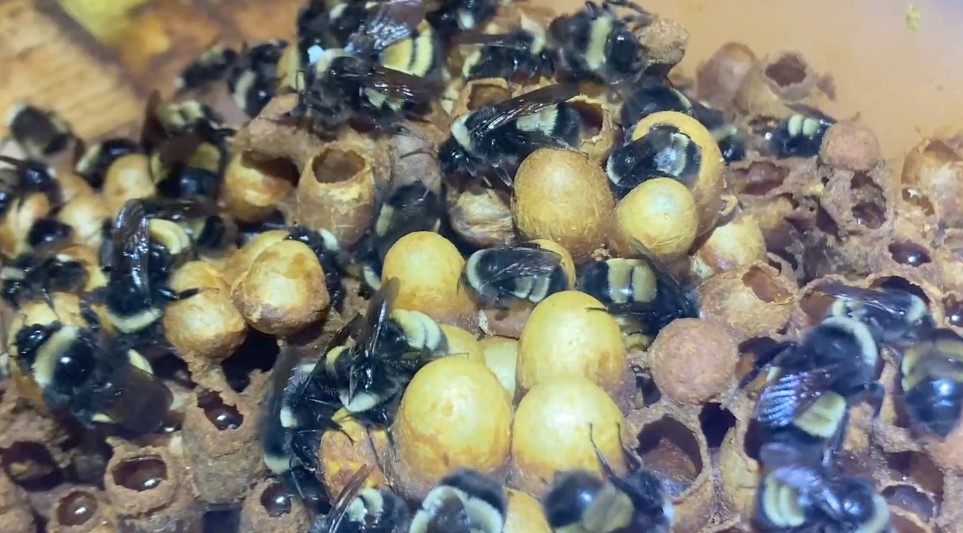
Each year WPC's Bumble Bee Conservation Lab establishes breeding colonies of the yellow-banded bumble bee. If all goes well in the lab, these colonies produce workers, then males, and finally new queens who will overwinter!
Unlike honey bees, whose colonies survive throughout the winter and whose queens live for multiple years, bumble bees have an annual colony cycle.
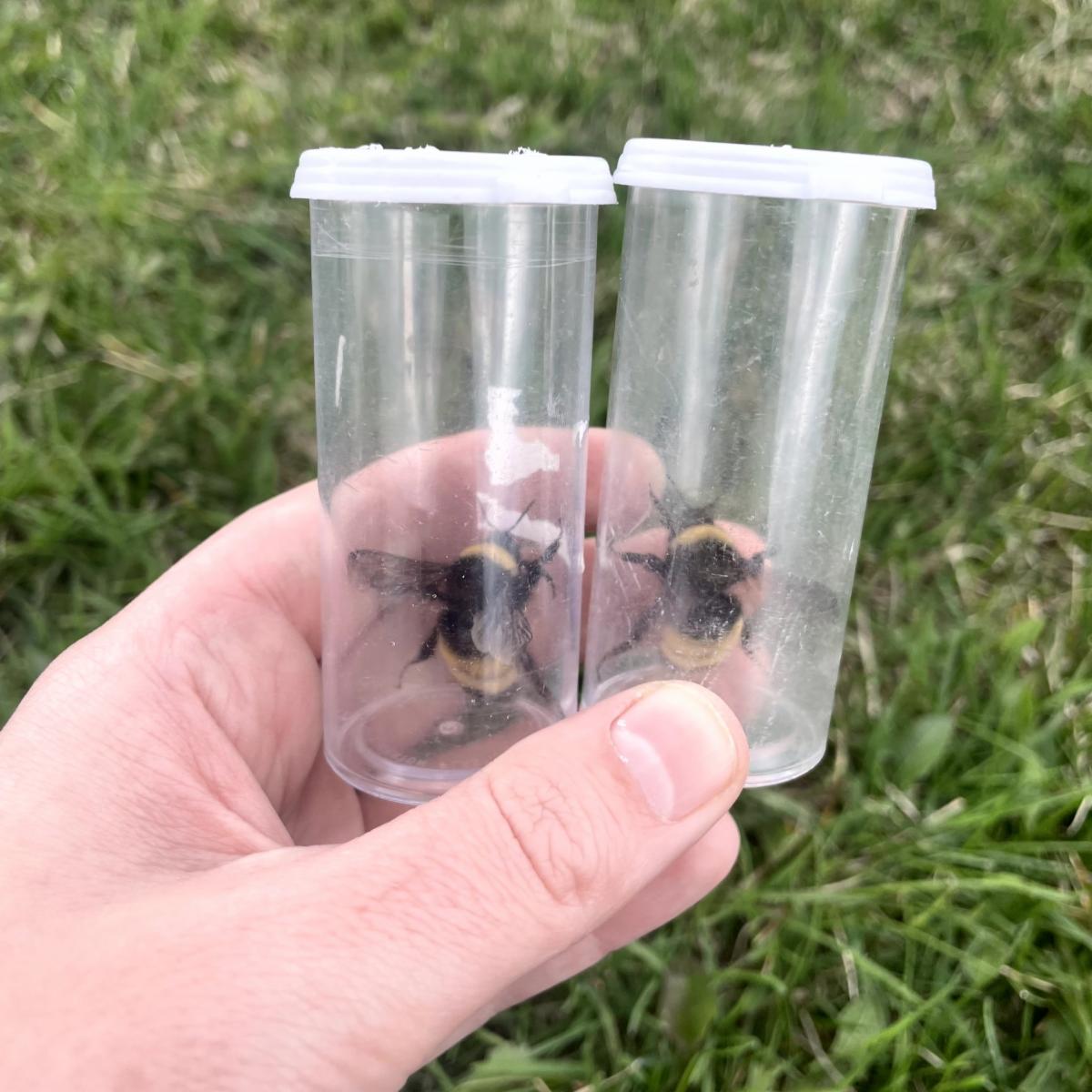
Each fall, mated bumble bee queens dig into the earth to hibernate while the remaining colony members (foundress queen, worker bees, male bees) naturally perish. Come spring, bumble bee queens emerge from hibernation to start their colonies from scratch—but not all bumble bees follow the same sleeping schedule! In Ontario, Canada for example, the common eastern bumble bee (Bombus impatiens) is one of the earliest species seen, emerging in mid-to-late April, but other species may not emerge until May or June, like the northern amber bumble bee (B. borealis).
Your Bumble Bee Watch submissions help experts track the seasonal differences between bumble bee species! By sharing bumble bee observations in early spring or fall, your contributions lend insight that can be used to improve hands-on recovery actions for at-risk bumble bees, like conservation breeding.
|