Letter from the Executive Director |
|
Greetings!
While the dynamic and complex nature of gardens provides a hedge against the human tendency to ignore things that are familiar, there are times in the garden when something appears that heightens the attention even more, piercing passive observation like a balloon popping pierces silence.
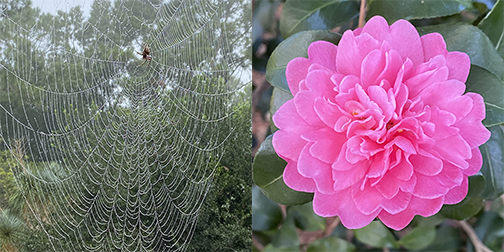
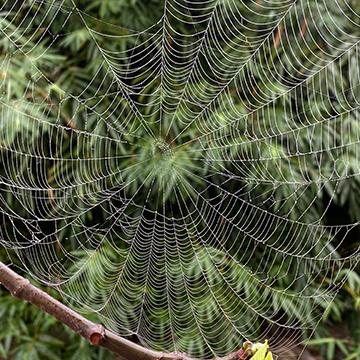
I had such an experience in the garden last week. I was shuffling down the walkway from the house to my office on a damp, dewey, morning, preoccupied with unresolved details pertaining to the Taking Root Luncheon, and parallel to the walkway I spotted a large, moisture laden spider web that stopped me in my tracks. It was a marvel of engineering and grace and delicacy and I stopped to admire it and, as one does, I pulled my iPhone out of my pocket and took a few photos of it. Satisfied I’d captured it properly, I continued my short walk to the office and then after a few more feet I saw another, even grander web, this one drooping even more from the weight of the dew, swaying back and forth in the breeze. As I inspected it more closely, I saw that the web was anchored on two sides by architecture – on one side the building that houses the office, on the other, the pump house. I walked off the distance between the two structures and estimated the distance to be at least twenty five feet! Rarity of occurrence is one aspect that defines a miracle, but this web had the impact of a miracle no matter how many similar webs there may be in the world. While I felt buoyed by my sighting, I couldn't help but imagine the spider was probably disappointed that its web had lost its stealth property due to the dew. Seemed bad for business.
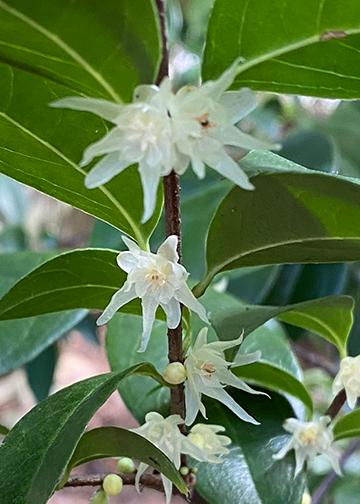
Later in the day I was drifting through another part of the garden and came upon a Camellia 'Autumn Spirit' bursting with an array of lovely pinkish red blooms, each a miraculous expression of delicacy and beauty. A trap of its own, capturing my gaze and attention and gratitude for the ability to experience nature doing its thing; an embarrassment of riches guaranteed to save me from succumbing to an indifference to the familiar.
I hope you’ll come to the Garden soon and experience for yourself the feeling of gratitude that can come from discoveries of something as simple as a spider web or a blooming Camellia.
|
|
Photo by Jenny Antill Photography |
|
Taking Root Luncheon a Big Success! |
|
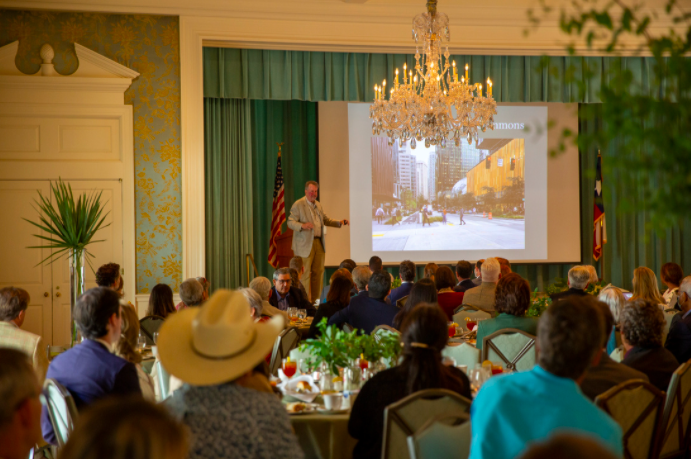
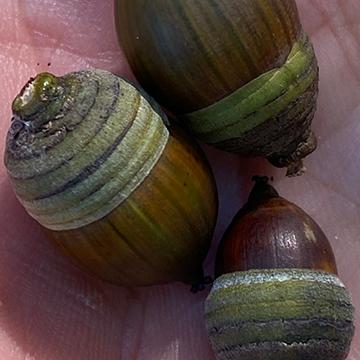
Our ninth annual Taking Root Luncheon was held on Tuesday, October 19th at the Junior League of Houston. Nearly 200 friends of the Garden gathered (in person!) to hear our keynote speaker, William Bryant Logan. Mr. Logan, an expert on oaks, showed the worldwide range of oak distribution, highlighting the Sierra Madre Oriental mountains of Mexico as the center of world oak distribution. As you may know, the Sierra Madre Oriental mountains was the location in Mexico of John's first plant collecting trip, and the vast number of trips to follow. Bill also spoke of the history of Man's reciprocal relationship with oaks, giving fascinating examples of indigenous wisdom in North America and the benefits that could come from the application of that wisdom in contemporary times.
Thank you to everyone who supported this year's Taking Root Luncheon. It was our most successful yet, encouraging us as we begin planning next year's Taking Root with our stellar co-chairs Susie Tucker and Jessica Phifer.
|
|
A Visit from the Smithsonian |
|
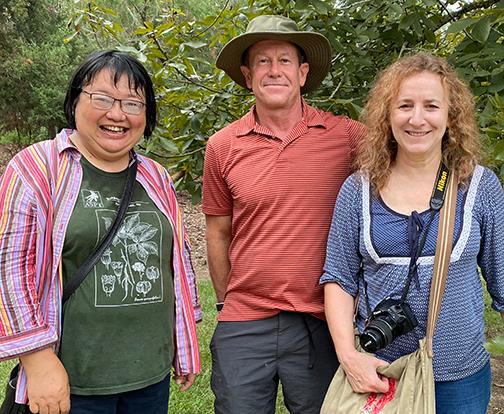
The Garden recently hosted Jun Wen and Stefanie Ickert-Bond, researchers from the Smithsonian Institution on a collecting trip to the Southeast. Jun and Stefanie were primarily interested in varieties of grapevines (Vitis, Vitaceae) and hickories (Carya Juglandaceae), so we were thrilled to be able to point out our Mexican hickories in the arboretum. Board Vice President, Wally Wilkins, gave Jun and Stefanie a tour of the Garden.
Here's an excerpt from the Smithsonian's recent newsletter:
While in Texas, Wen and Ickert-Bond visited the John Fairey Garden near Hempstead. Having a unique artistic design by its founder John Fairey, the Garden is a hidden treasure with extraordinary collections from Mexico. The collecting team enjoyed getting to know the Garden via an introduction from botanist Adam Black via FaceBook. The team was given a tour by Executive Director Randy Twaddle and horticultural botanist Wally Wilkins.
The two trips were among many recent grape escapes that Wen had led, setting a foundation to wrap up the taxonomic revision of North American grapes. The studies of Carya and Crotalaria are collaborative work with colleagues at the Food and Drug Administration (FDA) for DNA-based species identification assay development.
|
|
New Feature – Notes from John Fairey's Mexico plant collecting journals |
|
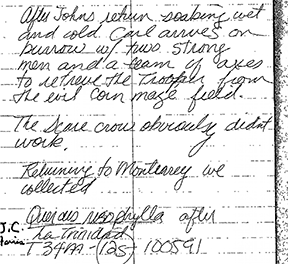
When John Fairey and friends traveled to Mexico on plant expedition trips, he always kept a journal of their discoveries. Sometimes there would be a brief narrative of something that had happened but they were primarily to record the plants they discovered. Interestingly, it appears as though the journal was open for any on the trip to contribute to, as the hand writing in them is clearly that of more than one person. After reading them for a while, one gets the hang of recognizing the multiple voices in each journal. We attribute today's entry to Eric Lautzenheiser from the San Antonio Botanic Garden who had joined them on this trip along with Guy Sternberg from Starhill Forest Arboretum. At that time the area was remote and the road was rough but John and Carl returned there often making at least 10 trips. They collected about 35 different species in the area including Quercus rysophylla, Taxus globosa, Cupressus arizonica & Salvia microphylla ‘La Trinidad Pink.’
We thought you might find these journal entries interesting, so we'll post an entry to two, chosen at random, and publish in each month's newsletter. Happy reading!
|
|
“Carl slid into fence. John went to El Butano and Carl went to La Trinidad.” “After John’s return soaking wet and cold, Carl arrives on burro with two strong men and a team of oxes [sic] to retrieve the Trooper from the evil corn maze field. The scarecrow obviously didn’t work”.
|
|
|
|
|
|
|