McKnight Foundation Roadshow Visits Region Nine | | |
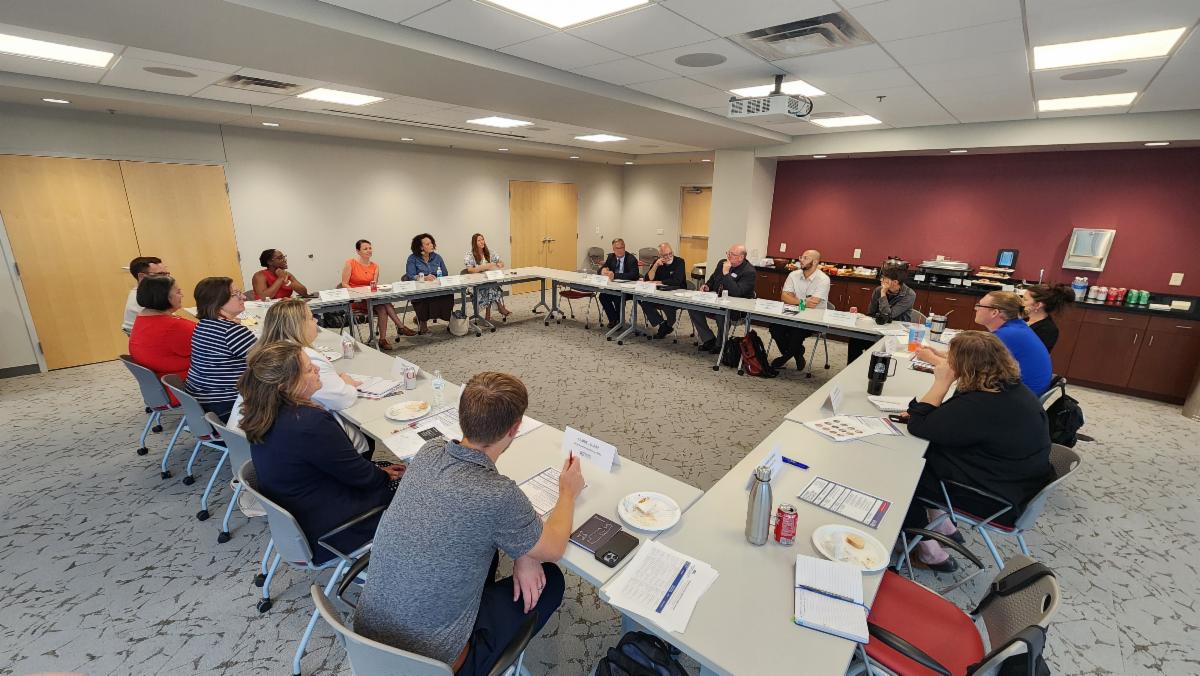
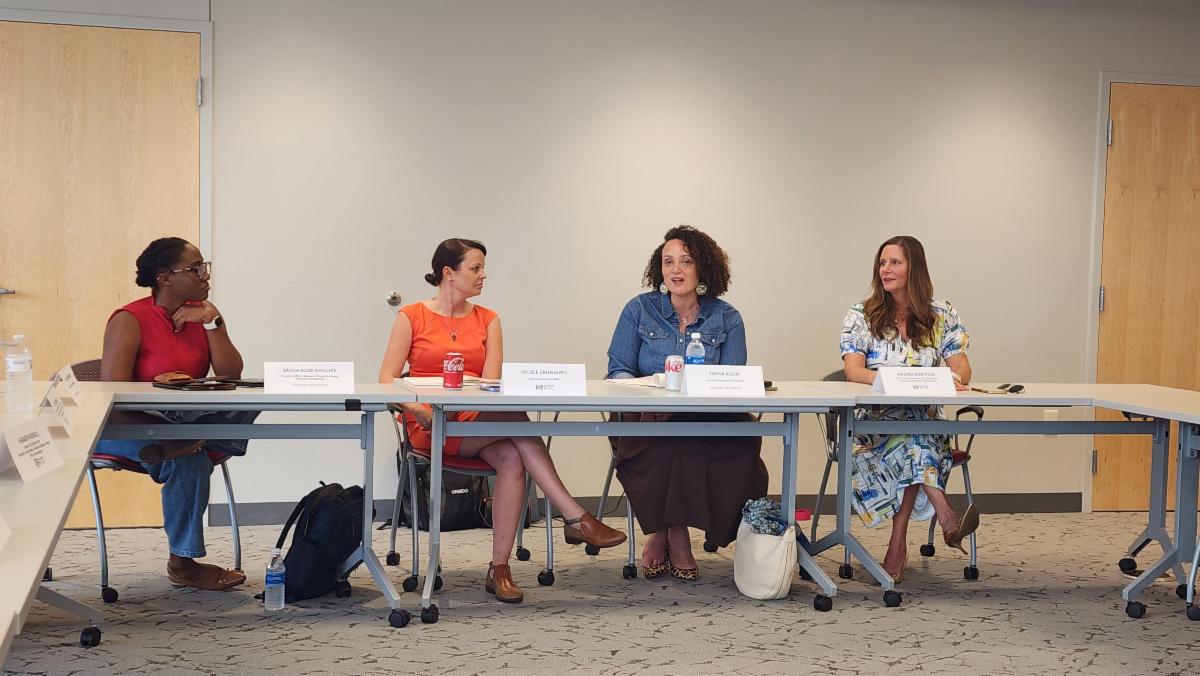
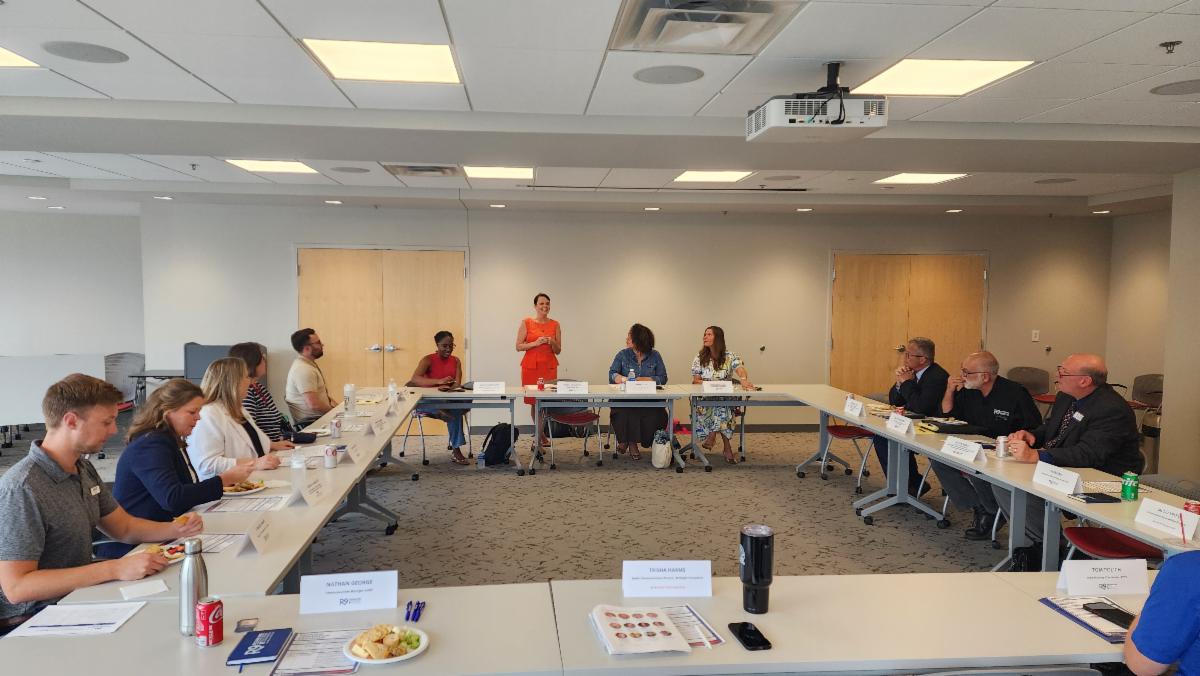
RNDC had the opportunity to welcome the McKnight Foundation to Region Nine during their statewide Roadshow. The gathering brought McKnight staff together with RNDC Commissioners and staff for an open conversation about climate, community, and collaboration.
Around the table, participants dug into big questions: How do organizations that aren’t traditional climate groups help move progress forward? Where do we find hope when progress feels stalled? And what strategies actually make climate action part of people’s everyday lives?
"We are grateful for the broad range of community leadership voices that joined us. It was enlightening to hear the various perspectives and learn about the unique aspects that bring people together, drive action, and build stronger communities in the region. The insights we gained from the conversation are invaluable and will undoubtedly shape our understanding moving forward", said Trisha Harms, McKnight Foundation Senior Communications Officer.
The discussion included stories from across South Central Minnesota. Commissioners spoke about the ways local governments are connecting climate action to everyday community development, while McKnight staff highlighted examples of grassroots leadership and cross-sector collaboration. What stood out most was the sense that progress happens when people from different backgrounds bring their perspectives and energy to the same table.
This visit also built on an ongoing partnership between McKnight and RNDC. Earlier this year, McKnight funded a learning exchange to Aachen, Germany, giving regional stakeholders the chance to learn from European approaches to sustainability and community resilience.
| | Alejandra Completes Humphrey Policy Fellows Program to Advance Greater Minnesota Voices | | |
RNDC Economic Recovery Planner Alejandra recently completed the Humphrey Policy Fellows Program, a leadership development initiative through the University of Minnesota’s Humphrey School of Public Affairs. The yearlong program brings together emerging and established leaders from across the state to learn about public policy issues, strengthen leadership skills, and build networks across industries.
Over the course of nine months, participants met monthly with state and national leaders to discuss issues impacting Minnesota at the local, state, and federal levels. Each session focused on topics such as conflict resolution, coalition building, and leadership strategies, while also offering time to engage with elected officials and policy experts.
The program draws participants from a wide range of fields, including the private sector, nonprofits, law firms, and government. This diversity of perspectives creates a unique environment for problem-solving and relationship-building. For Alejandra, these conversations helped highlight the shared challenges faced by communities across Minnesota, regardless of size or geography.
Housing and childcare emerged as recurring themes throughout the program. Participants examined the lack of affordable housing, challenges tied to vacant buildings, and the growing role of private equity in housing markets. “Housing touches every community differently, but the underlying need for safe, affordable options is the same,” Alejandra shared.
As part of her cohort’s project work, Alejandra explored approaches to redeveloping vacant properties and creating more equitable housing opportunities. The experience provided insights into how policy, investment, and community engagement can align to address long-standing barriers.
In addition to classroom-style learning, the program offered hands-on experiences. Fellows traveled to Washington, D.C., where they met with national representatives, and visited the Minnesota State Capitol for discussions with legislators and staff. A highlight for Alejandra was participating in a mock legislative hearing, where she testified against a mock bill and gained a deeper understanding of the legislative process.
Networking was another valuable component of the program. By connecting with professionals across multiple sectors, Alejandra was able to build relationships that will benefit her work in South Central Minnesota. These conversations reinforced the importance of collaboration in tackling complex regional challenges.
Looking ahead, Alejandra hopes to encourage more participation from Greater Minnesota in future Humphrey Policy Fellows cohorts. She sees the program as an important opportunity for rural voices to be heard in statewide policy discussions. Scholarships and financial aid are available to help offset costs, ensuring accessibility for participants across the state.
“The program showed me the value of bringing Greater Minnesota perspectives to the table,” Alejandra said. “I want to see more rural leaders take part and share their experiences.”
Through the Humphrey Policy Fellows Program, Alejandra gained tools and connections that will support her work at RNDC and beyond. Her experience underscores the importance of investing in leadership development that bridges urban and rural perspectives to shape a stronger, more inclusive Minnesota.
| | Waseca Receives Funding to Develop Manufacturing Workforce Training Facility | | |
Waseca County has received a $2.1 million investment from the U.S. Economic Development Administration (EDA) to develop a new advanced manufacturing workforce training facility in Waseca. This project, with a total cost of $3 million, represents a significant step toward strengthening the region’s manufacturing sector and workforce pipeline.
The facility will be designed to prepare workers for the highly technical demands of modern manufacturing. Plans include classrooms, a mechatronics skills training area, and a computer numerical control (CNC) shop. These spaces will provide hands-on training opportunities, equipping students and workers with skills that are in high demand across the region.
Once complete, the center is expected to create 50 jobs and leverage $1 million in private investment. Beyond the numbers, it will expand the region’s capacity to support business growth in the manufacturing industry, positioning Waseca and the surrounding area as a hub for advanced workforce development.
This project builds on years of planning and collaboration. In 2019, the Region Nine Development Commission (RNDC) partnered with Waseca to create a strategic plan for a proposed workforce training facility. That planning process, also supported by EDA funding, laid the foundation for today’s investment by outlining the region’s workforce needs and identifying opportunities for innovation in training and education.
The new training center represents more than just infrastructure—it represents opportunity. It will help meet the immediate needs of employers for skilled workers, while also preparing the next generation of employees for careers in advanced manufacturing. In doing so, it is expected to attract new businesses, stimulate private investment, and contribute to a stronger and more resilient regional economy.
EDA grants are awarded through a competitive process based on an application’s merit, eligibility, and available funding. Waseca’s successful award reflects the strength of the project vision and the regional commitment to building a workforce ready for the future.
RNDC supported Waseca throughout the application process and looks forward to continuing its partnership with the city as this project moves forward. Together, these efforts will provide lasting benefits for both Waseca County and the broader south central Minnesota region.
| | Minnesota Young American Leaders Program Nominations Open | | |
The Minnesota Young American Leaders Program (MYALP) is an intensive, three-and-a-half day program at the University of Minnesota, Twin Cities convening leaders from across for-profit, government, and non-profit sectors who are committed to help their communities and our region prosper inclusively.
The program interweaves case studies, insights from national and Minnesota practitioners of cross-sector leadership, diverse perspectives on our current state economy, and research presentations from scholars to provide tools for cross-sector collaboration and to invest in leaders who impact the future of our region and state.
Participants of MYALP have the opportunity to collaborate after the program to develop and potentially launch an initiative for public good and to build a broader capacity in their region by deepening their practical knowledge of what it takes to make shared leadership initiatives happen.
RNDC is fortunate to have five previous participants in the program: Executive Director Nicole Griensewic, Economic Recovery Planner Alejandra Bejarano, Environment and Sustainability Planner Sabri Fair, Lending Specialist Jazmine Flores, and RNDC Commissioner Chris Dalton.
| | Applications for the Taylor Family Farms Foundation Childcare Grant program are Open | | |
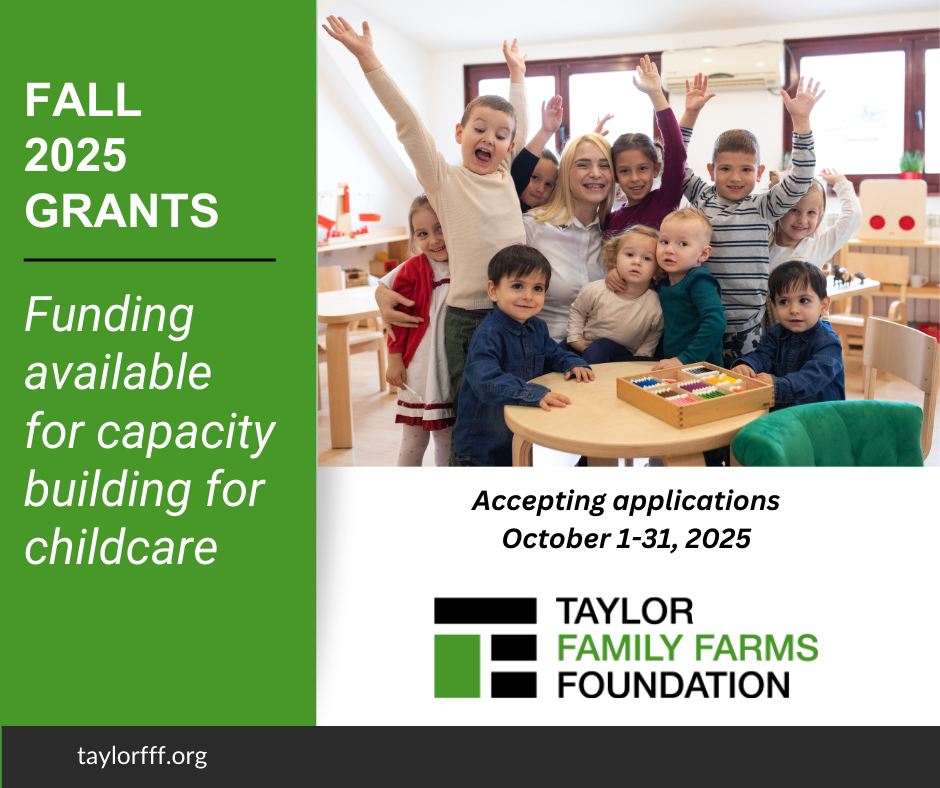
Applications for the Taylor Family Farms Foundation Childcare Grant program are open. The goal of the grants are to increase childcare capacity in rural communities.
Eligible projects may include, but are not limited to:
- Increasing childcare capacity
- Projects to reduce childcare challenges in your community
- Support ADA compliance
- Assist with licensure compliance or regulatory updates
Project proposals for these grants require a fifty percent match from other funders/partners. Typical grants range from $10,000 to $50,000. Applicants must be nonprofit organizations, churches, schools or municipalities that are able to receive funding from a non-profit foundation.
Applications will be accepted from organizations in 29 counties of southern Minnesota from October 1-31, 2025.
See the application guidelines at https://tinyurl.com/ymca7t3h
Learn more about the Taylor Family Farms Foundation at https://taylorfff.org/
| | |
MDA Opens Applications for Livestock Investment Grants
The Minnesota Department of Agriculture (MDA) is now accepting applications for the fiscal year 2026 Agriculture Growth, Research, and Innovation (AGRI) Livestock Investment Grant Program.
Established by the Minnesota legislature in 2008, this program helps farmers start, improve, or expand livestock operations by funding equipment purchases, facility improvements, and new construction.
The MDA expects to award approximately $1.4 million through a competitive review process, with grant awards ranging from $400 to $25,000. Priority will be given to:
- Applicants who have farmed 10 years or fewer
- Generational transitions
- Producers of livestock for kosher or halal markets
- Requests for robotic milking equipment
- Applicants who have not previously received a Livestock Investment Grant
The grant does not cover livestock purchases, feed, crop seed, or debt refinancing. Full grant eligibility requirements and application details are available on the AGRI Livestock Investment Grant webpage.
Applications for the grant will be accepted until 4 p.m. CT on Thursday, November 13 through the MDA’s online application portal.
Deadline: Nov. 13, 2025
| | |
Grants Available to Improve Safety on Minnesota Farms
The Minnesota Department of Agriculture (MDA) is announcing that farmers can apply for funding through two key safety programs: the Grain Storage Facility Safety Grant and the Rollover Protective Structure (ROPS) Rebate Program. These programs help farmers add critical safety equipment to on-farm grain storage facilities and retrofit older tractors with lifesaving rollover protection.
Examples of eligible safety equipment include, but are not limited to:
- Fall protection systems;
- Engineering controls that prevent contact with an auger or other moving parts;
- Dust collection systems that minimize explosion hazards;
- Personal protective equipment that increases the likelihood of surviving a grain-bin-related emergency;
- Grain silo air quality monitoring equipment;
- Other grain storage facility safety equipment with prior approval from the MDA.
-
The program reimburses up to 75% of the cost to purchase and install eligible safety equipment for on-farm grain bins or silos. Applicants are eligible to receive up to $400 per bin or silo, with a limit of $2,400 per farm per year. Grant funding comes from a legislative appropriation of $75,000 for both the Grain Storage Facility Safety Grant and the Rollover Protective Structure (ROPS) Rebate programs.
The MDA is accepting grant applications for both programs through June 30, 2027, or until all funds are exhausted. Funds will be awarded on a first-come, first-served basis. For more information and to apply, visit the MDA’s Grain Storage Facility Safety Grant and Rollover Protective Structure (ROPS) Rebate Program webpages.
Deadline: June. 30, 2027
| |
Region Nine Development Commission takes great pride in working with and on behalf of counties, cities, townships, and schools throughout South Central Minnesota. Since 1972, being a partner for progress has led to the development of programs and identification of solutions in the areas of economic development, business development, healthy communities, transportation, community development, and leveraging regional resources. To learn more about our work and mission, visit www.rndc.org.
| | | Follow RNDC on social media to stay up-to-date on events, news, and more! | | | | |