View as web page

Master Gardener banner with California poppy logo and University of California Agriculture and Natural Resources text

October Tips & Events for Santa Clara County

“In the garden, Autumn is, indeed the crowning glory of the year, bringing us the fruition of months of thought and care and toil.” ~Rose G. Kingsley

We hope to see you at our Fall Garden Fair on October 3rd!

Monthly Tips

Quiz: Odd one out?

These many-legged creatures are found around the house or in the garden. Can you identify the one that is not like the others?

1. Red-and-black segmented arthropod on damp, twiggy soil.
2. Dark, shiny cylindrical arthropod curving on a dried leaf.
3. Arthropod with long legs and thin antennae on an orange leaf.
4. Slender light-brown arthropod with visible legs on a leaf.

Photo credits (left to right): (1) Jackman, Texas A&M Extension; (2) Jeff Hahn, University of Minnesota; (3 & 4) Jack Kelly Clark, UC IPM

A Versatile Lawn Alternative

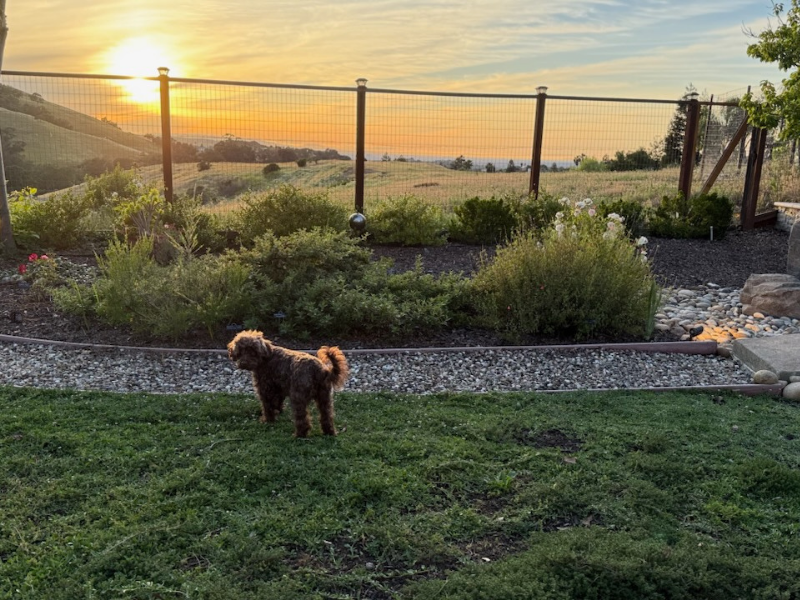
Are you looking for a low-growing, no-mow, dog-friendly and proven low-water perennial groundcover? Lippia (Phyla nodiflora) may be your answer. This adaptable and pollinator-friendly native plant grows quickly in full sun and is tolerant of sand, loam and clay soils. Kurapia is a sterile cultivar of lippia developed in Japan and investigated by UC Davis, UC Riverside, and University of Arizona for use in the US. Kurapia uses up to 60% less water than turfgrass and looks great year-round with little irrigation.

Small brown dog standing on a lawn in a landscaped garden at sunset, with rolling hills beyond a wire fence.

Photo: Lippia makes for a dog-friendly lawn, Yahui Tu

CA Native Plant Talks

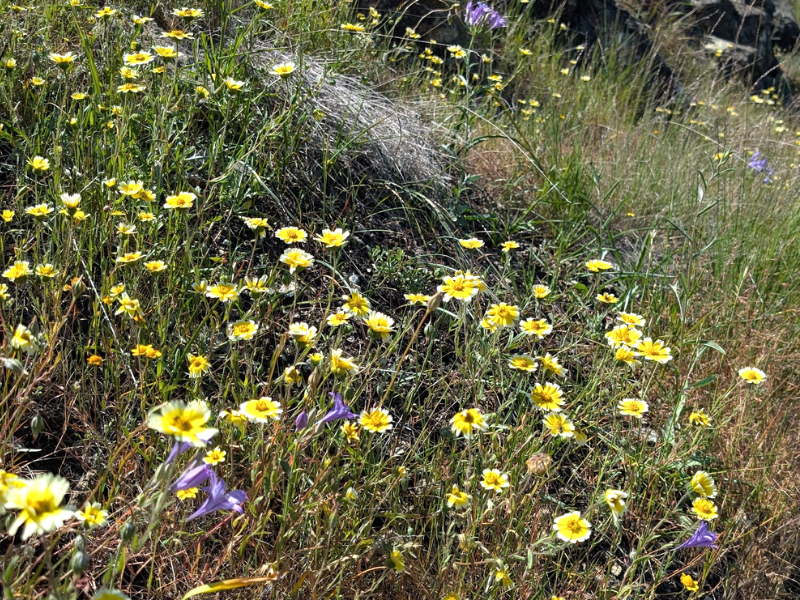
Fall is a great time to learn about and plant California natives. A wide variety of plant species have co-evolved with local wildlife and adapted to local conditions. They provide habitat for pollinators, birds and wildlife, and many are drought tolerant. With the beginning of the rainy season and cooling temperatures, new plants will have an easier time establishing before next summer. Come learn more!


Multiple classes are available in October:

A sunny, grassy slope carpeted with small yellow and white wildflowers, with occasional purple blossoms interspersed.

Photo: A cluster of tidy tips growing at Santa Teresa County Park, Ying Chen

Tiny Holes, Big Problem

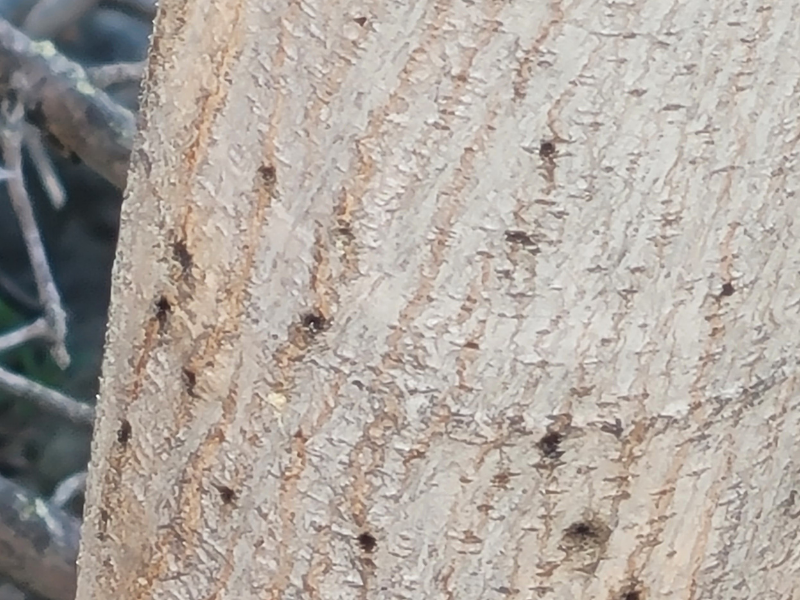
If you see numerous holes on a tree trunk, look closer. Are the holes the size of a ballpoint pen tip? Do you see staining, gumming, sugar exudate or frass at the holes? If so, the tree may be infested with invasive shothole borers (ISHB), which infect it with Fusarium dieback (FD). Since 2023, ISHB-FD has been detected in San Jose where one in five trees could be affected. Potential economic impact is worrying as ISHB-FD has many reproductive host trees that support beetle propagation. If you notice signs of ISHB-FD, consult these diagnosis and management tips. San Jose residents can also refer to the city's ISHB web page on what to do.

Pale, rough tree bark covered with numerous small dark holes.

Photo: Numerous holes with slight staining at the edges on a Box Elder tree trunk showing early signs of ISHB-FD infestation, Mary Werthman

B.U.G.

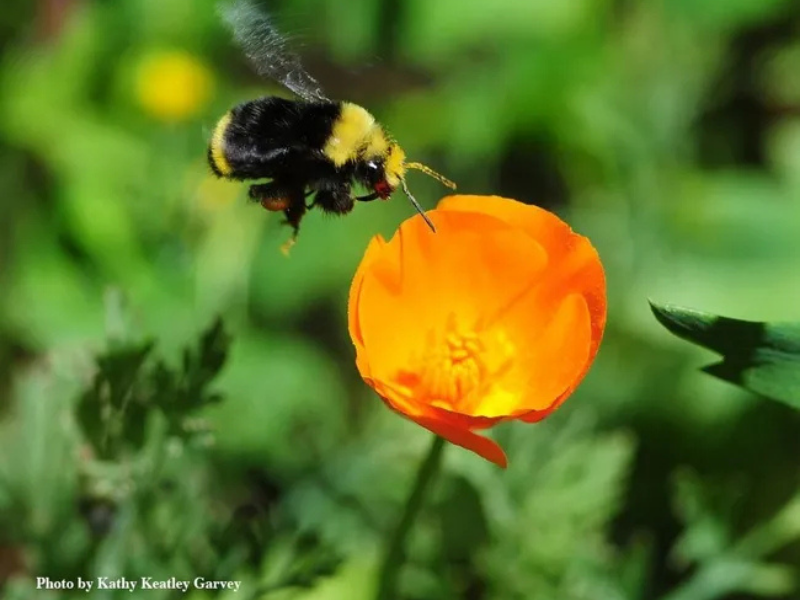
A yellow-faced bumble bee, Bombus vosnesenskii, heading toward California poppy, Eschscholzia californica.

Do you notice the little details in nature, love taking photos on your phone, AND care about bringing wildlife back to your neighborhood? The Biodiversity in Urban Gardens (BUG) statewide study needs you! The study aims to collect biodiversity data in urban communities to help determine how native plant gardens support wildlife differently than non-native plant gardens. Citizen volunteers like you can support this program by taking photos of the native animals you see on, in, under, or around native plants, and uploading them to the iNaturalist app.

Photo credit: Kathy Keatley Garvey


Plant Clinic

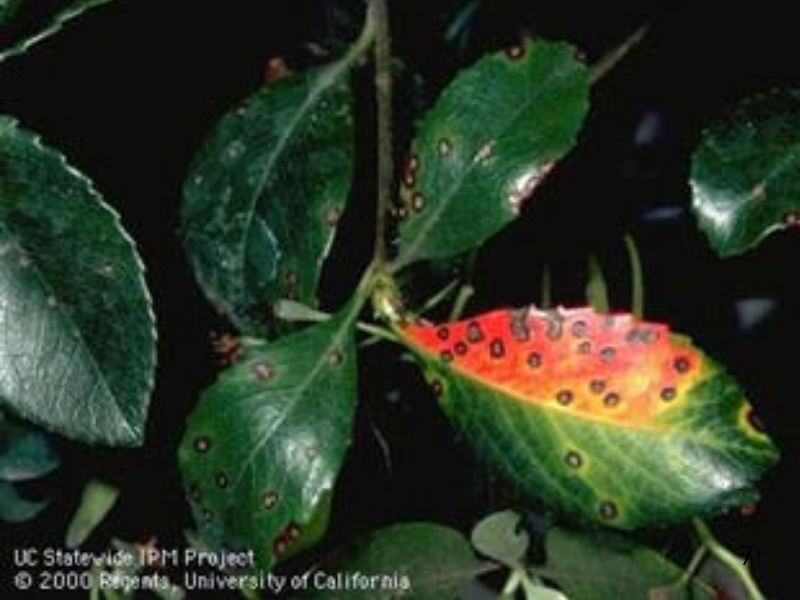
Green leaves with dark disease spots and one leaf with a reddish yellow area with many spots

Do you have a sick plant, an ailing tree, or mysterious spots on leaves? Join UC Master Gardeners to diagnose your plant and pest problems. You can also listen and learn while other people ask questions. Our last virtual plant clinic of 2026 is via Zoom on Tuesday, October 13 at 7:00 pm. Priority will be given to questions that are emailed in advance. Instructions for submitting questions are in the Zoom registration confirmation.

Photo credit: Jack Kelly Clark, UC ANR


Quiz Answer: Centipede

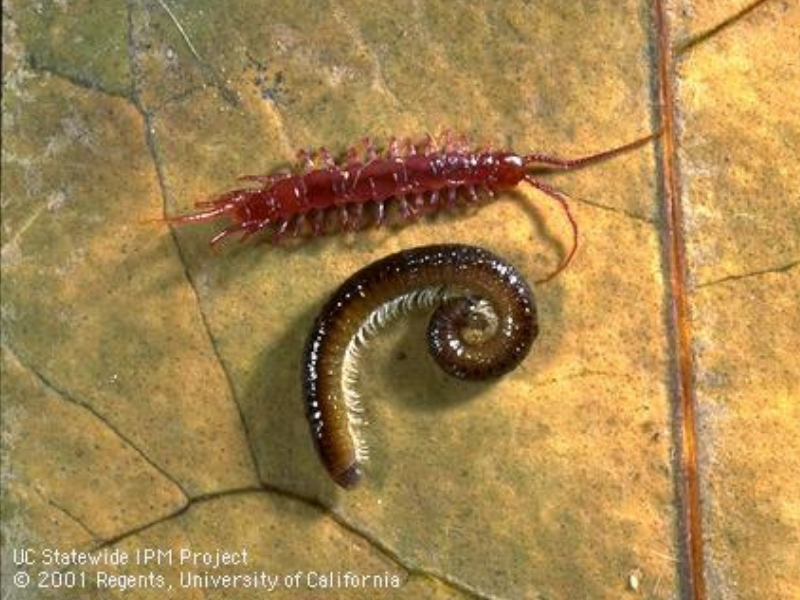
Except for photo 3, a centipede, all others are millipedes. You can tell them apart by observing their legs: centipedes have one pair of legs per body segment extending from the sides, while millipedes have two pairs of legs per segment extending from the underside. While they may look similar, their behavior is quite different. Centipedes are fast moving carnivores that hunt small insects such as flies or roaches. Millipedes are slow moving herbivores that feed on rotting plants and break down dead plant matter. Both are beneficial to your garden but can be a nuisance if an infestation occurs. 

A reddish centipede placed above a curled up brown millipede on top of a yellowing leaf.

Photo credit: Jack Kelly Clark, UC IPM


More October Tips and To-Dos

For more gardening tips and to-dos, visit the monthly tips archive on our website. It is perfect for browsing, and while you may recognize some of the content, you’re sure to find something new. It starts with to-dos for the month, just the thing to review before heading out to your garden.


Upcoming Events

Martial Cottle Park Fall Garden Fair, Saturday, October 3, 9:00 am–2:00 pm, Martial Cottle Park, 5283 Snell Avenue, San Jose


Growing Asian Vegetables in the South Bay Area, Saturday, October 3, noon–1:00 pm, Calabazas Branch Library, 1230 S Blaney Avenue, San Jose


PADG The Power of Compost in a Garden, Saturday, October 10, 10:00 am–noon, Palo Alto Demonstration Garden, 851 Center Drive, Palo Alto


Controlling Weeds in Your Garden, Saturday, October 10, 10:30–11:30 am, Gilroy Library, 350 W 6th Street, Gilroy


Planning Your Cool Vegetable Garden, Saturday, October 10, 11:00 am–12:30 pm, Mountain View Public Library, 585 Franklin Street, Mountain View


Flowers and Herbs for Late Fall and Winter, Tuesday, October 13, 7:00–8:30 pm, Morgan Hill Library, 660 W. Main Avenue, Morgan Hill


Gardening with Nature: Native Plants for Pollinators, Tuesday, October 13, 7:00–8:30 pm, Saratoga Library, 13650 Saratoga Avenue, Saratoga


Plant Clinic Online, Tuesday, October 13, 7:00–8:30 pm, Online


Pests on Palms and Other Trees, Thursday, October 15, noon–1:00 pm, Online


Growing Fall & Winter Vegetables, Saturday, October 17, 10:00–11:30 am, South County Teaching and Demonstration Garden, 80 Highland Avenue, San Martin


MRDG Growing California Natives in Your Garden, Saturday, October 17, 10:00 am–noon, McClellan Ranch Preserve, community garden area, 22221 McClellan Road, Cupertino


PADG Open Garden Saturdays, Saturday, October 17, 10:00 am–noon, Palo Alto Demonstration Garden, 851 Center Drive, Palo Alto


Growing Asian Vegetables, Saturday, October 17, 11:00 am–12:30 pm, Berryessa Branch Library, 3355 Noble Avenue, San Jose


Planning a Simple Native Garden for Beginners, Saturday, October 17, 1:00–3:00 pm, Sunnyvale Public Library, 665 W Olive Ave, Sunnyvale


PADG Open Garden Saturdays, Saturday, October 24, 10:00 am–noon, Palo Alto Demonstration Garden, 851 Center Drive, Palo Alto


Growing Great Garlic & Shallots, Saturday, October 24, 10:30–11:30 am, Rose Garden Branch Library, 1580 Naglee Avenue, San Jose


Wild at Home: Crafting a Backyard Sanctuary for Birds, Bees, and Beyond, Saturday, October 24, 10:30–11:45 am, Willow Glen Branch Library, 1157 Minnesota Avenue, San Jose


Fruit Tree Basics, Thursday, October 29, 6:30–8:30 pm, Fremont Unified High School District Adult Education, 589 W. Fremont Avenue, Sunnyvale


PADG Open Garden Saturdays, Saturday, October 31, 10:00 am–noon, Palo Alto Demonstration Garden, 851 Center Drive, Palo Alto


PADG Fall in Love with California Natives, Saturday, November 7, 10:00–11:30 am, Palo Alto Demonstration Garden, 851 Center Drive, Palo Alto

Check our calendar for the latest schedule of events. Videos of many past presentations are also available.

Composting Workshops

Composting produces soil-building organic materials for gardens. It also helps to divert organic waste from greenhouse gas-generating landfills. The University of California Cooperative Extension of Santa Clara County partners with cities and the county to offer composting education workshops to residents.


About Us

University of California Master Gardener volunteers promote sustainable gardening practices and provide research-based horticultural information to home gardeners. Visit our website for more information including:


Have a gardening question? Ask us. We’re here to help!

Master Gardener logo showing a stylized California poppy on a blue background
Connect With Us
Facebook  Instagram  Youtube  TikTok
 
 
Did you learn something new from this month's newsletter?
Thumbs up            Thumbs down