|
Which two panda centers are located in the mountains of Sichuan Province, which are also home to wild pandas and are part of their natural habitat?
A: Bifengxia and Hetaoping
B: Dujiangyan and Bifengxia
C: Hetaoping and Chengdu
D: Gengda and Hetaoping
Check your answer HERE
| |
|
New Merchandise Has Arrived | |
|
New panda gear has arrived in celebration of the giant pandas arrival at the San Diego Zoo and the pandas coming to the Smithsonian National Zoo later this year. We have both youth and adult sizes for the tees and hoodies. Several sizes are already sold out!
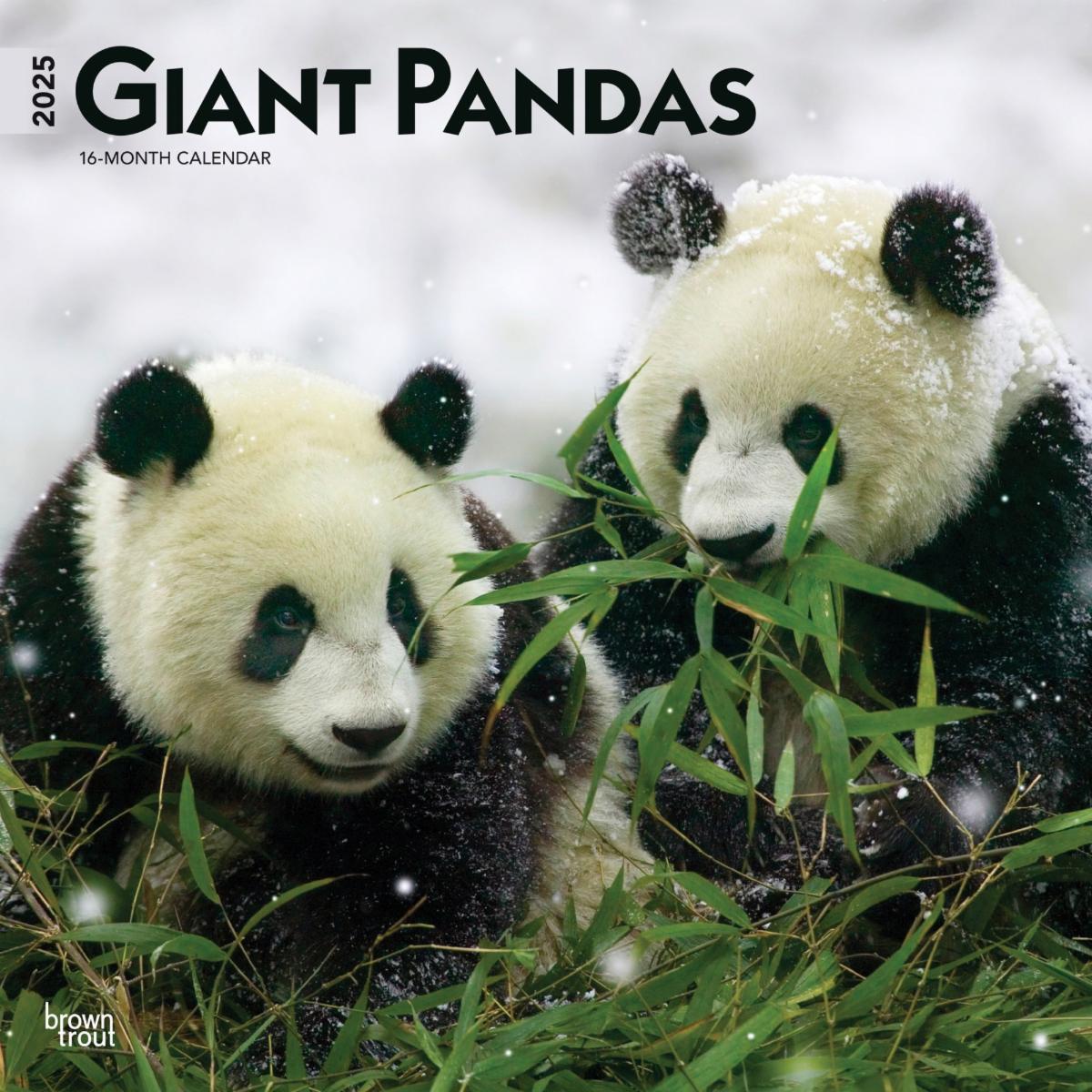
2025 giant panda calendars are now in our store. Pair up a calendar and tee for a discount! All merchandise is limited in supplies and may not be reordered.
SHOP TODAY
| |
Giant panda skin cells transformed into stem cells to help ensure their survival | |
|
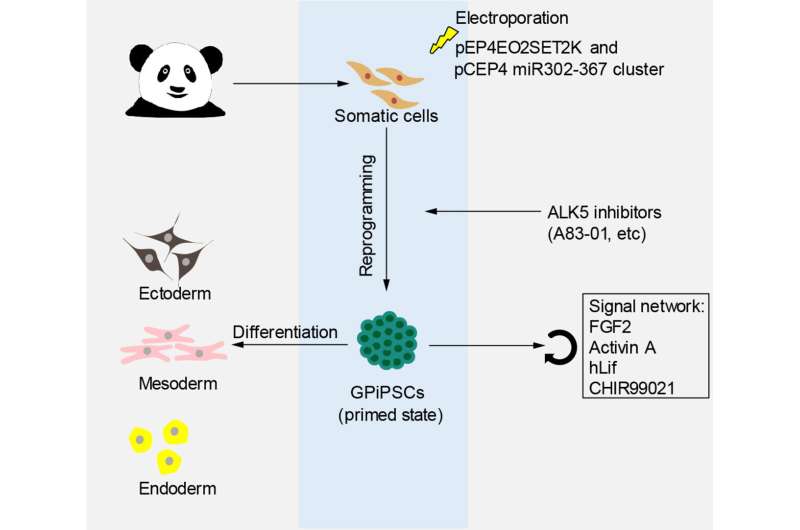
A team of biologists in China has reprogrammed skin cells from giant pandas into induced pluripotent stem cells (iPSCs), opening the door to creating primordial germ cells that could serve as precursors to sperm and egg cells.
In their study, published in the journal Science Advances, the group introduced a specific microRNA cluster to panda fibroblasts to generate the iPSCs.
Over the past several years, stem cell biologists have been refining the process involved in converting cells known as fibroblasts into iPSCs as a prime part of regenerative medicine research. Such cells can be used to grow different kinds of cells, including those that can mature into organs and egg cells.
In recent years, conservationists have come to see the technology as a potential means to save endangered animals. To that end, iPSCs have been created for a rare zebra, the Tasmanian devil and the northern white rhino.
One thing that researchers on such projects have learned along the way is that the process of transforming fibroblasts to iPSCs is different for each species, which means that a new process is required to create iPSCs for each new animal. In this new effort, the research team has created a process for the giant panda.
The work started back in 2019, with the goal of creating iPSCs that could be used as precursors to male and female reproductive cells, helping to ensure the continued propagation of giant pandas. That effort led to the use of fibroblast skin cells to generate the desired iPSCs.
To get the fibroblasts to transform into iPSCs, the group introduced a specific type of microRNA cluster under special growing conditions that included molecules with just the right transcription factors for pandas.
Once they found a process that worked, the team refined it to make it more efficient. They have been testing their iPSCs to ensure that they can divide and form germ layers in usable ways—and from there, to grow into desired types of cells.
| |
Zoo Atlanta Announces Departure Timeline for Giant Pandas | |
|
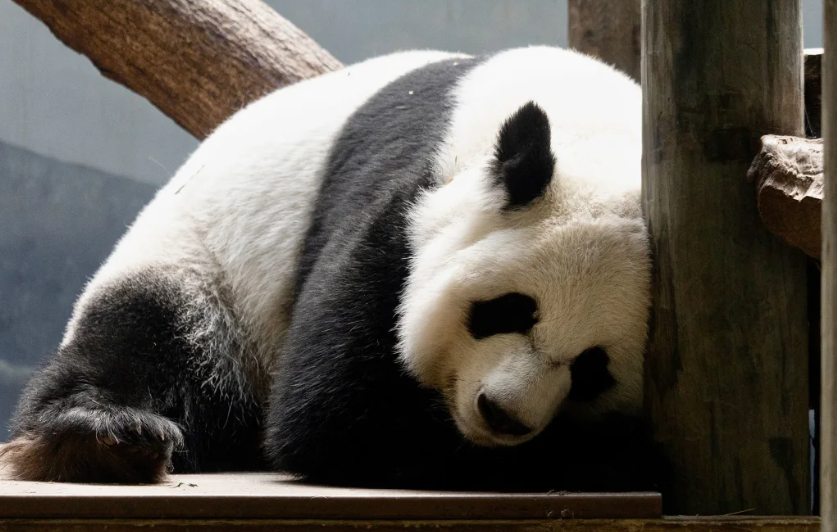
Giant pandas Lun Lun, Yang Yang, Ya Lun, and Xi Lun will travel to China in mid-October 2024, in tandem with the expiration of Zoo Atlanta’s giant panda agreement with China at the end of that month. Zoo Atlanta is not able to share specifics on the pandas’ departure timeline. However, friends and fans interested in visiting the giant pandas are encouraged to do so within the next three weeks.
Prior to their departure, the giant pandas will be visible at the Zoo’s Arthur M. Blank Family Foundation Giant Panda Conservation Center.
“While Zoo Atlanta will certainly miss Lun Lun, Yang Yang, Ya Lun, and Xi Lun, and their departure is bittersweet, they have created a momentous legacy here in Atlanta and around the world, leaving their mark not only in the hearts of their friends and fans, but on the scientific and zoological communities’ understanding of the behavior, biology, and care of this rare and treasured species,” said Raymond B. King, President and CEO. “It has been our privilege to be able to share this remarkable family with our Members and guests for 25 years.”
2024 marks the 25th anniversary of the Zoo Atlanta giant panda program. Dating to the mid-1990s, even prior to the arrival of Lun Lun and Yang Yang in 1999, Zoo Atlanta’s partnership with colleagues in China has a longtime history of collaboration and information sharing that has benefited the care, study, and conservation of giant pandas.
Zoo Atlanta will host a “Panda-Palooza” event from 10 a.m. to 3 p.m. on Saturday, October 5, 2024, with special activities wishing the giant pandas farewell. Stay tuned to zooatlanta.org for event details.
Since the inception of its giant panda program, Zoo Atlanta has supported the conservation of wild giant pandas and has been in the fortunate position of being able to support giant pandas living in nature reserves. Zoo Atlanta’s conservation support benefits habitat restoration, reserve management, and ranger support, as well as genetic diversity research.
The Chinese government has invested a significant amount of human, material, and financial resources to continuously strengthen the restoration and protection of wild giant panda habitat and has gradually established 67 giant panda reserves. In 2021, a habitat protection system with the Giant Panda National Park as the main body was established, further improving the connectivity, coordination and integrity of the giant panda habitat. 72% of wild giant pandas are strictly protected.
In addition to conservation support and contributions to the global body of scientific knowledge of giant pandas and their biology and behavior, the Zoo Atlanta panda cooperative conservation program has been notably successful in terms of future contributions to the population of the species. Seven giant pandas have been born at the Zoo since 2006, including two successful pairs of twins. Offspring of Lun Lun and Yang Yang include Mei Lan (born 2006); Xi Lan (born 2008); Po (born 2010); twins Mei Lun and Mei Huan (born 2013); and twins Ya Lun and Xi Lun (born 2016). Mei Lan, Xi Lan, Po, Mei Lun, and Mei Huan already reside at the Chengdu Research Base of Giant Panda Breeding in China and have since all become parents themselves.
FULL ARTICLE
| |
David Rubenstein Donates $10 Million to Smithsonian's National Zoo and Conservation Biology Institute's Giant Panda Program | |
|
Inspired by the launch of the Smithsonian Campaign for Our Shared Future last Friday, David M. Rubenstein, co-founder and co-chairman of The Carlyle Group, has pledged $10 million toward the Smithsonian’s National Zoo and Conservation Biology Institute’s (NZCBI) $25 million campaign to fund the giant panda conservation program.
“David Rubenstein’s long-term support has transformed our giant panda program and, in turn, the future of this magnificent species and its native habitat,” said Brandie Smith, NZCBI’s John and Adrienne Mars Director.
“David understands the work to save giant pandas is larger than one person, one organization or one nation. We are deeply appreciative of his commitment to preserving biodiversity.”
Including this new gift, Rubenstein has donated a total of $22 million in support of NZCBI’s giant panda conservation program since 2011, and an additional $2 million in 2013 to support Asian elephant research. As in previous years, Rubenstein’s gift will support efforts by Smithsonian and Chinese partners to innovate new techniques and pursue research to contribute to the health and welfare of giant pandas in human care and expand work critical to the conservation of giant pandas in the wild, including research on restoring native habitat and assessing impacts of climate change.
“The National Zoo’s panda program brings joy to millions of people today as it does the important work of understanding and preserving these magnificent creatures for generations to come,” Rubenstein said. “I am pleased to renew my support of this consequential program, a part of the larger Smithsonian campaign. The long-standing partnership between the Smithsonian and the China Wildlife Conservation Association has led to scientific breakthroughs to better understand what pandas need to thrive. These advances help the pandas as well as other rare and endangered animals in human care and in the wild.”
Since the first pair arrived at the Zoo in 1972, giant pandas have been one of the biggest attractions at NZCBI, which now draws an estimated 2 million visitors annually. For more than five decades, NZCBI has created and maintained one of the world’s foremost giant panda conservation programs, helping move the panda from “endangered” to “vulnerable” on the global list of species at risk of extinction.
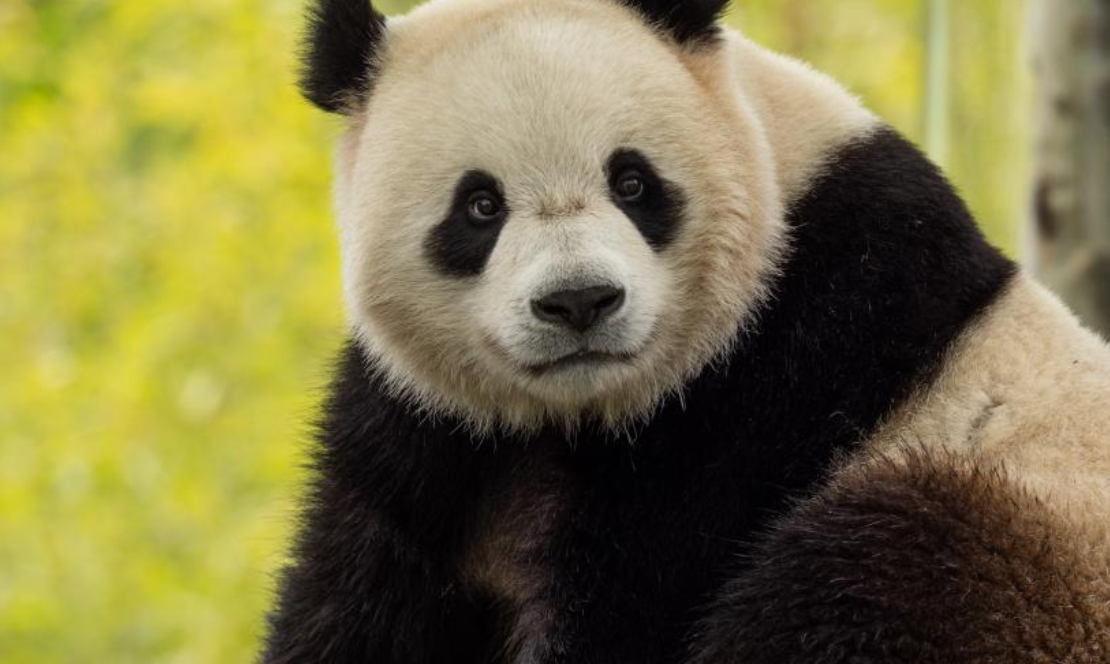
On May 29, NZCBI announced a new 10-year cooperative giant panda research and breeding agreement signed by Smith and Wu Minglu, secretary general of the China Wildlife Conservation Association (CWCA). The Zoo will welcome a new pair of giant pandas, 3-year-old male Bao Li [BOW-lee] and 3-year-old female Qing Bao [ching-BOW], by the end of the year. The pair received a recommendation to breed based on their genetics, health and temperament, among other factors.
The terms of the new agreement stipulate NZCBI and partners in China will conduct cooperative research projects in China and at the Zoo in Washington, D.C. In line with all zoos outside of China that care for and exhibit giant pandas, NZCBI will pay a $1 million annual fee to the CWCA in support of these projects. Federal funding covers NZCBI’s essential animal care expenses such as food, medicine, animal care staff and facilities maintenance. The remainder of NZCBI’s operating budget, including the giant panda conservation program, comes from the support of Zoo visitors, members and donors.
FULL ARTICLE
| |
Giant pandas enjoy special 'cakes' at collective birthday ahead of Mid-Autumn Festival in SW China's Sichuan | |
|
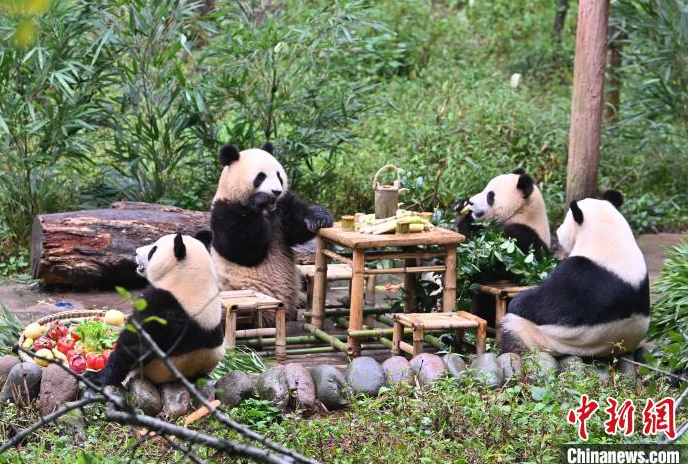
The Ya'an base of the China Conservation and Research Center for the Giant Panda in Ya'an city, southwest China's Sichuan Province held a collective birthday party for several giant pandas on Sept. 13.
Giant panda keepers prepared gifts including specially-made "birthday cakes", fruits, and mooncake-shaped Wowotou, a type of steamed corn bun, for the giant pandas according to their age, personality, health condition, and dietary preferences.
The birthday party cleverly incorporated elements of the festival, allowing China's "national treasures" to celebrate the festival in advance. The carefully prepared birthday gifts were well received by the giant pandas, who chewed slowly, savoring every mouthful of their delicious treat.
Male giant panda Bei Bei, who was born in the U.S. in 2015 and returned to China in 2019, was treated to a variety of fruits and vegetables, with corn cobs hanging from branches in its enclosure. He first sniffed around, then went straight to his baskets to search for his favorite bamboo shoots, and finally sat down to enjoy them.
"Bei Bei is full of energy and not only keen on climbing trees and strolling around, but also particularly fond of playing in the mud," said Zhu Wen, the keeper of Bei Bei.
4-year-old giant panda twin brothers Jia Yang and Jia Bai, who are also fond of playing and frolicking in the mud, enjoyed a Weiqi, or Go-themed celebration specially designed by their keepers. During the celebration, the brothers, who are affectionately called "dirty buns" by netizens due to their "dirty yet cute" fur colors, climbed onto a perch filled with fruits, fresh bamboo, and specially-made "mooncakes", sniffed around, and then began to feast heartily, making a crisp crunch sound as they chewed on the bamboo.
Xiang Xiang, a female giant panda born in the Ueno Zoo in Japan in 2017 and returned to China in 2023, also received its exclusive "mooncakes", "birthday cake", as well as other gifts. At the birthday party, Xiang Xiang carefully approached a small bamboo basket, overturned it on the ground, and discovered the bamboo shoots inside. She then turned to explore the nearby "birthday cake" made of fruits, and skillfully used its paws to put the fruit into its mouth.
According to Xiang Xiang's keeper Zhao Lanlan, Xiang Xiang has been in good health and has a hearty appetite since arriving at the base. As Xiang Xiang enjoyed her birthday gifts, the path outside Xiang Xiang's enclosure was crowded with visitors coming from various regions just to catch a glimpse of her charm.
Keiko Yamamoto, a visitor from Japan, has been closely following the updates on Xiang Xiang and her mother Xian Nyu and father Bi Li for many years, and has met them several times in Japan. She continuously clicked her camera shutter, afraid of missing any spectacular moments of Xiang Xiang from every angle.
"Xiang Xiang is still beautiful and captivating. The joy and excitement of this reunion make it all the more precious to me," said Yamamoto.
A total of more than 20 giant pandas, such as Lu Lu, Han Han, and Mei Sheng, from the Ya'an base of the China Conservation and Research Center for the Giant Panda, met visitors on the same day.
FULL ARTICLE
| |
|
PandaMania is a collection of 999 unique PandaMania NFTs – unique digital collectibles living on the Ethereum blockchain. Our super cute collection of 999 unique Pandas will raise money to help Pandas International with the propagation and preservation of the Giant Panda. PandaMania has donated over $45,000 to Pandas International to date!
Shop the PandaMania store store too to help raise funds for the pandas!
| |
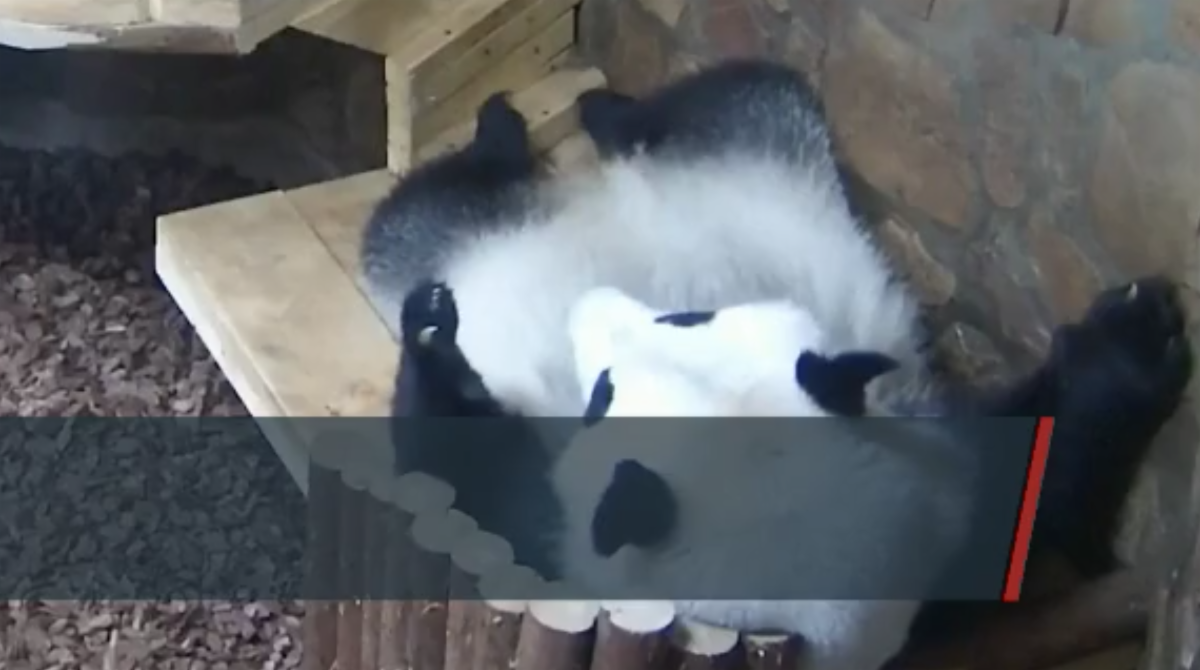
Panda Stays Cool in the Heat | |
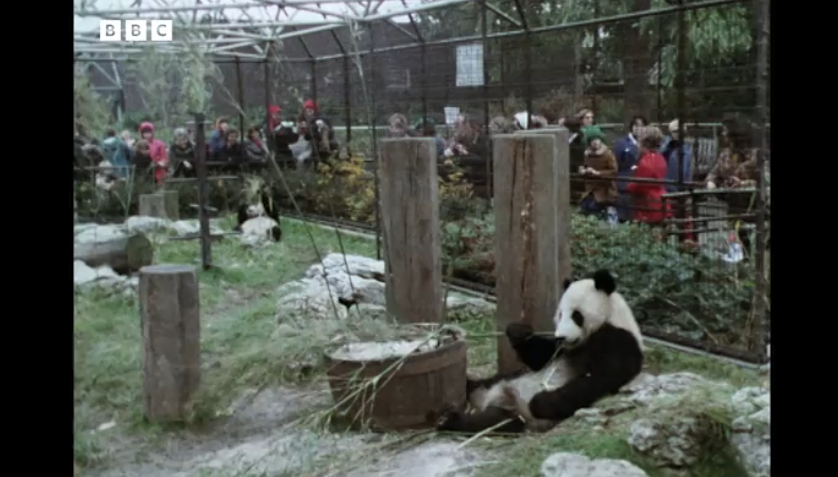
1974: Pandas settle into their new home at London Zoo | |
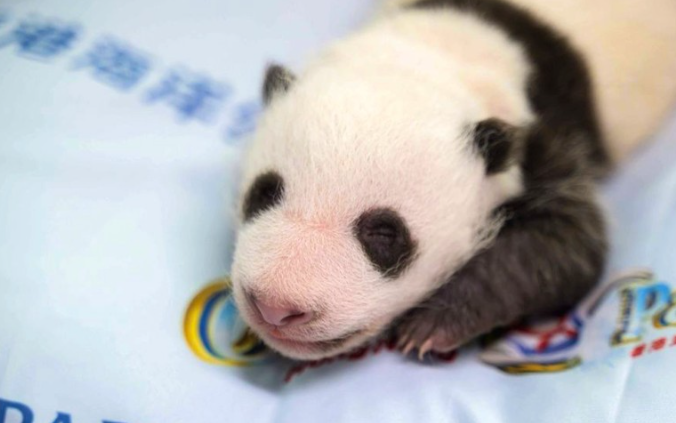
Panda cubs in Hong Kong’s Ocean Park
turn 1-month-old
| |
Giant Panda Captivates Fans with a Playful Kiss | |
Copyright ©2024 All Rights Reserved | | | | |