Professional
 

Thom I strives to leave you better than he found you.


  When I was in grade school every October the firemen would show up to talk with us about fire safety at home and give us literature to take home to our parents about all kinds of things that should be in the home to prevent or minimize fires and escaping from them.

Today there are all kinds of items you should have in the home. I list them at the bottom.

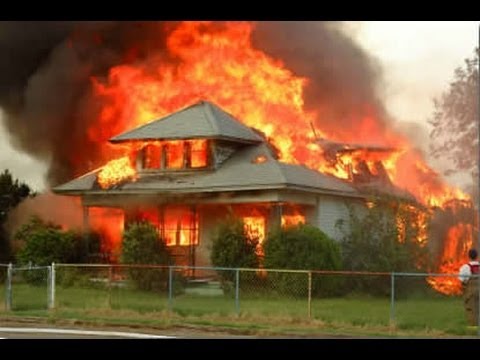
In New Jersey and Westchester County NY fires are everywhere

Your homeowners policy as well as your business policy cover damage by fire.

If it is a multi-family residence, it is foolish not to have renters insurance. It is fairly inexpensive. It will cover your personal goods if lost by a covered event. It will also defend you if you are sued.

Fire damage and connected homes

You live in a townhouse that is part of four connected units. The middle unit sparks a fire. What about the units on either side. Modern building codes would have required a firewall between each unit. This way the fire does not easily spread next door. However, there are other perils such as smoke, water, damage caused by the fire company. Are you covered for that as well.

Generally, standard homeowners insurance policies provide open-peril coverage for the dwelling, meaning losses are covered unless specifically excluded. Fire is a covered cause of loss under these policies, so long as it was not intentionally caused by or at the direction of the person who bought the insurance policy.

But, what about the housing units that may have been tangentially damaged by the fire on either side of the affected unit? In cases like this, the homeowners or renters policies for the adjoining units typically would respond if those homes sustained direct physical damage from the fire, smoke, heat or firefighting efforts. Which begs the question: What happens to the homeowners whose houses did not have the original damage?


If another party is found to be legally responsible for the fire, the insurance companies for the adjoining units may pursue subrogation—when, after paying a loss, an insurance company works to recover the amount of the loss from another party that is legally liable for it—against that party (and that party’s insurance company, if applicable).

If subrogation is successful, or if the claim is not charged as an at-fault loss, there is a greater likelihood that the neighboring homeowners’ insurance rates will not be affected—but this varies by insurance company.


 What should you do and have to survive a fire at home or your business?

  1. Fire Extiguishers - be sure the valve indicator says it is full. Otherwise take it to a fire equipment vendor to be recharged or buy a new one. They should be placed in different areas of the home and visible.
  2. Smoke/CO detectors. Hard wired is best but battery operated is ok using lithium 10 year life batteries. Be sure to test all detectors to be sure they are working.
  3. Fire Blanket - relatively new the last few years, great for the kitchen or in the garage where the cars are.
  4. Escape route - sit the family down and discuss the best way to exit the home in case of fire depending where the ingnition takes place. On the upper floors, you may need a ladder that rolls out the window.


Imagine all the people living life in peace. You may say I'm a dreamer, but I'm not the only one. I hope someday you'll join us, and the world will be as one.—John Lennon


Maxx & I are looking out for you.

Maxx & I
 
Facebook  LinkedIn