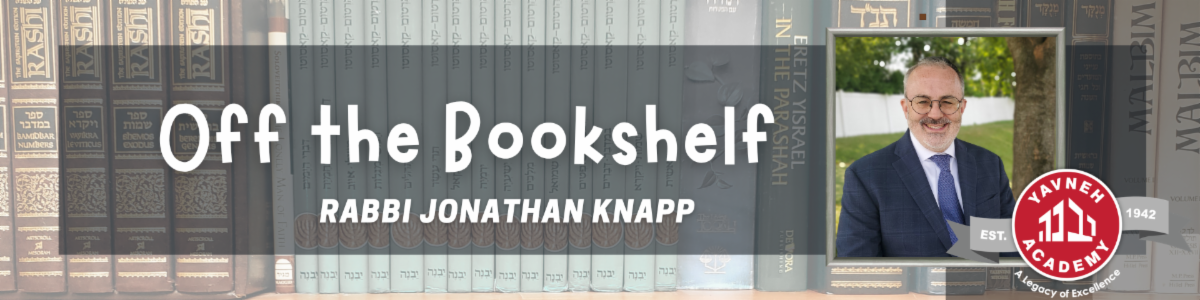
|
Rosh Hashanah 5787
As we enter these precious Yamim Noraim, it feels as though there is so much for which to daven, both individually and collectively.
On an individual level, there are people desperately in need of help with life's most basic needs…health, parnasah, security and stability. They deserve our attention, our support and our tefillot. On a collective level, our people and the world at large desperately need peace, healing and greater tolerance for difference.
These themes permeate our tefillot and comprise some of the central motifs of our prayers during these days.
And yet, as we approach this season of immersive prayer, I also wonder how we can utilize these days to bring greater meaning to our lives. Beyond our basic needs, we pine for depth and fulfillment, in our relationship with our Creator, in our relationships with others, and in our understanding of our own purpose.
In his introduction to the Rosh Hashanah Machzor, Rabbi Jonathan Sacks asks:
“What then does Rosh Hashana say to us? How can it transform our lives?”
Among his answers, he writes:
“Life is meaningful… We are here because a loving God brought the universe, and life, into existence, a God who knows our fears, hears our prayers and believes in us more than we believe in ourselves.”
Rabbi Sacks then cites the historian Paul Johnson, who wrote that the Jewish people stand “right at the center of the perennial attempt to give human life the dignity of purpose.”
It is a powerful idea. Once our most basic needs are met, we have agency in determining how we direct our lives. We do not merely want to live; we want our lives to mean something.
Rabbi Sacks writes further:
“Our life is the single greatest work of art we will ever make.”
He invokes Rabbi Joseph B. Soloveitchik's description of the Ish HaHalakhah, the halakhic personality, and the distinctly human longing to create, to bring something new and meaningful into the world.
In short, as humans we possess a deep desire not merely to exist, but to create, contribute and make meaning of our lives.
This idea is beautifully expressed by social scientist Dr. Arthur Brooks in his recently released book, The Meaning of Your Life: Finding Purpose in an Age of Emptiness. Brooks, a professor at the Harvard Kennedy School and Harvard Business School, describes what millions of people experience today as a lack of purpose and significance, a growing sense of emptiness even when many of life's material needs have been met.
He suggests a simple exercise designed to help us consider whether our goals are aligned with our life's meaning:
“Imagine yourself in five years’ time. You are thinking about your life and saying, ‘I have a much stronger sense of my life's meaning than I did five years ago.’ Take a few minutes and imagine the satisfaction this brings.”
What would have to happen over those five years for us to be able to say that?
Many are familiar with Maslow's hierarchy of needs. At its foundation are our most basic physical necessities: food, water, sleep and shelter. We then seek safety and security, including health, financial stability and protection from harm.
Only when those needs are sufficiently met can we turn more fully toward the higher levels of human aspiration, culminating in what Maslow called self-actualization: fulfilling one's unique potential, pursuing personal growth and creating something of enduring meaning.
Perhaps these different levels of human need are reflected in the different descriptions of chayim, life, for which we daven during these upcoming days.
During the Aseret Yemei Teshuvah, we add four special phrases to the Shemoneh Esrei. In the first two, our request is simply for life:
זָכְרֵנוּ לְחַיִּים מֶלֶךְ חָפֵץ בַּחַיִּים וְכָתְבֵנוּ בְּסֵפֶר הַחַיִּים לְמַעַנְךָ אֱלֹהִים חַיִּים
Remember us for life, King who desires life, and inscribe us in the Book of Life, for Your sake, living God.
We ask Hashem for chayim itself…for health, sustenance, security and the ability simply to live.
But later, our language subtly changes:
וּכְתוֹב לְחַיִּים טוֹבִים כָּל בְּנֵי בְרִיתֶךָ
Inscribe all the children of Your covenant for a good life.
We no longer ask only for chayim. We ask for chayim tovim.
Embedded in that small addition is an enormous aspiration. We first ask Hashem for life itself, for the fundamental blessings without which everything else becomes secondary. But then we ask for something more... not simply that we should live, but that we should live well. That our lives should possess depth, direction, purpose and meaning.
This Yom Tov season, perhaps we can hold both prayers simultaneously.
We beseech Hashem for life's most basic blessings…for peace, health, parnasah, food, shelter and security, for ourselves, for those around us, for Am Yisrael and for the world at large.
And then we aspire to climb higher.
We ask Hashem for His divine assistance in creating lives of purpose and meaning… in building deeply fulfilling relationships with family and friends, in growing closer to our Creator, and in discovering and fulfilling the unique mission for which each of us was placed in this world.
May we all be inscribed not only for chayim, but for chayim tovim…a year of good health and happiness, of growth and fulfillment, and of lives rich with meaning and purpose.
Ketivah v'chatimah tovah.
SIncerely,
Rabbi Jonathan Knapp
Head of School
|