From Our Associate Commissioner | | |
Dear Colleagues, Families, and Friends,
Welcome to the September issue of our monthly OBEWL newsletter, marking the energetic commencement of another promising school year. As we return to our classrooms and communities, we stand at a pivotal moment where traditional educational paradigms are being intentionally reshaped. The powerful convergence of the New York Inspires initiative and the NYS Portrait of a Graduate with our core OBEWL mission and CR Part 154 regulations has created a constructive disruptor environment, shattering the long-standing status quo that has historically limited our multilingual learners. By aligning with this vision of holistic student success, we are actively dismantling systemic barriers and replacing them with inclusive, linguistically rich pathways. We are no longer just teaching language; we are rewriting the educational landscape to recognize bilingualism as the ultimate asset.
This framework is what we need to support our English Language Learners (ELLs) in the classroom and beyond graduation. New York Inspires challenges us to innovate boldly, while the Portrait of a Graduate redefines readiness by emphasizing global citizenship, critical thinking, and cultural competence—competencies that ELLs naturally possess and develop. Supported by the equity-driven mandate of CR Part 154, this unified approach ensures that our students are not merely adapting to existing structures, but are actively equipped to lead in a diverse, global workforce. Thank you for your fierce advocacy, your passion, and your willingness to challenge the ordinary as we collaborate this September to unlock the limitless potential of New York’s multilingual future.
Yours in Solidarity,
Elisa Alvarez
| | IMMIGRANT STUDENT PROTECTION PROCEDURES | |
The New York State Legislature amended NYS Education Law 3201-b to safeguard the right of all students to a free public school education, requiring all public school districts to maintain safe environments for all students, ensuring uninterrupted access to education regardless of immigration status.
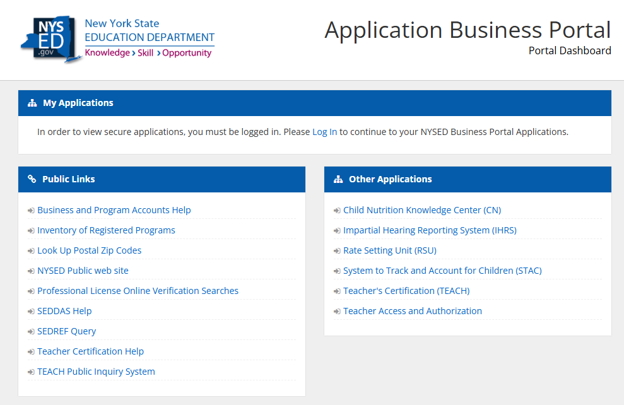
NYSED has developed model procedures for the establishment and implementation of required local policies and operational protocols. To comply with the updated law, all school districts must formally verify to the Commissioner that they have developed and implemented procedures complying with the department’s model policy. This verification must be provided through the NYSED business portal no later than September 21, 2026.
For more information, district personnel should consult the Joint Guidance on Safeguarding the Rights of Immigrant Students, which serves as an authoritative reference for day-to-day operational compliance under New York Education Law § 3201-b.
| SCIENCE OF READING FOR ELLS TOOLKIT | |
The NYSED Office of Bilingual Education and World Languages (OBEWL) officially released the Science of Reading for Multilingual Learners Toolkit, a comprehensive educational initiative to provide precise, evidence-aligned guidance for teaching literacy to English Language Learners (ELLs).
The toolkit features a specific series of 6 foundational Topic Briefs created for OBEWL by leading bilingual literacy experts Dr. Socorro Herrera, Dr. Kathy Escamilla, and Dr. Robin Cabral. These briefs address the call for evidence-based instruction that intentionally integrates the unique linguistic and cultural assets of multilingual students, moving away from purely monolingual frameworks.
The OBEWL Science of Reading for Multilingual Learners toolkit includes the following:
Brief 1: Expanding the Scope of Reading to Include Multilingual Learners
Outlines the developmental differences between monolingual English learners and ELLs and MLs; highlights how an expanded reading scope is critical for academic success, and details how to address these cognitive realities in everyday life.
Brief 2: Teaching Reading in Multilingual Classrooms: Moving Beyond a Deficit Perspective
Replaces remediation-heavy models with frameworks that honor and elevate a student's cultural and home-language capabilities.
Brief 3: Literacy Development of Emergent Multilingual Learners in Early Childhood Classrooms
Examines structural, early-literacy milestones for young ELLs and MLs, emphasizing simultaneous oral language cultivation alongside primary print concepts.
Brief 4: The Science of Reading in Dual Language Immersion Classrooms
Focuses on standard dual-language and cross-linguistic pedagogical practices, looking directly at how biliteracy concepts map across languages structurally.
Brief 5: The Science of Reading in Multilingual K-12 Classrooms
Examines the application of Science of Reading to address the needs of ELLs and MLs, including recontextualization of the "Big Six" skills and competencies and the synergistic integration of learning to read with reading to learn strategies.
Brief 6: What Every Instructional Leader Needs to Know: Recommendations for Advancing Multiliteracy
Provides guide rails for school district administrators and instructional leaders detailing how to scale equitable scheduling, implement professional development, and use culturally sound systems for testing literacy.
| |
RETHINKING READINESS:
WHY ENGLISH LANGUAGE LEARNERS ARE CENTRAL TO NY INSPIRES
| |
At the September Board of Regents meeting, NYSED provided an update on the next phase of the New York Inspires project: New York will move to one diploma for all students, with endorsements to recognize student achievement in various areas, beginning with the graduating class of 2028. Through this initiative, the state is moving toward a broader vision of education, one that values academic knowledge, communication, creativity, collaboration, global citizenship, and preparation for life beyond high school.
The major shifts of NY Inspires present an opportunity to redefine how students’ readiness and success are understood. Regents Exams will no longer be a graduation requirement, providing schools with the ability to measure their students’ competency in the learning standards through multiple methods. At the heart of this transformation is a fundamental question: What should every student know and be able to do upon graduation?
For English language learners (ELLs), this question carries particular significance. Students may be developing English proficiency while simultaneously acquiring complex academic knowledge, applying critical thinking, and demonstrating skills across content areas. Their language development should not be mistaken for a measure of their intellectual capacity or academic potential.
This distinction places ELLs at the center of the NY Inspires conversation. Their experiences provide an important lens for examining whether a competency-based system can accurately recognize what students know and can do. The opportunity to consider multiple forms of evidence towards learning, such as authentic projects and performance-based learning, can help make academic understanding visible while students continue to develop English. Through these increased opportunities, schools can maintain high expectations while providing ELLs with new tools to demonstrate their knowledge and skills.
| SUPPLEMENTAL CERTIFICATION PATHWAYS | | |
September 12, 2023 to August 31, 2027
In an effort to promote the teaching of English Language Learners in NYS schools, the Board of Regents recently adopted an emergency rule to provide flexibilities for the Supplementary Certificate and Supplementary Bilingual Education Extension. The supplementary certificates have a (5) five-year validity period, during which the candidate should be working toward completing the requirements for the initial certificate. In the case of the Bilingual Extension Supplementary certificate, the validity period is (3) three years, and can be renewed for an additional (3) year period for recipients who enroll in a New York State-approved teacher education program leading to the Bilingual Extension.
Option One (1): You currently hold a New York State teaching certification, and you are seeking a supplementary Bilingual Education extension to your current certification.
Option Two (2): You currently hold a valid Initial, Professional, or Permanent New York State teaching certification and you are seeking supplementary certification in English to Speakers of Other Languages.
Option Three (3): You currently hold an English to Speakers of Other Languages (ESOL) Initial, Professional, or Permanent New York State teaching certification and you are seeking supplementary certification in a content area.
For more information visit the NYS Teacher Certification Exams website or the NYS Office of Teacher Initiatives certification requirement search page.
| | SIENA COLLEGE CR-ITI PROGRAM | | |
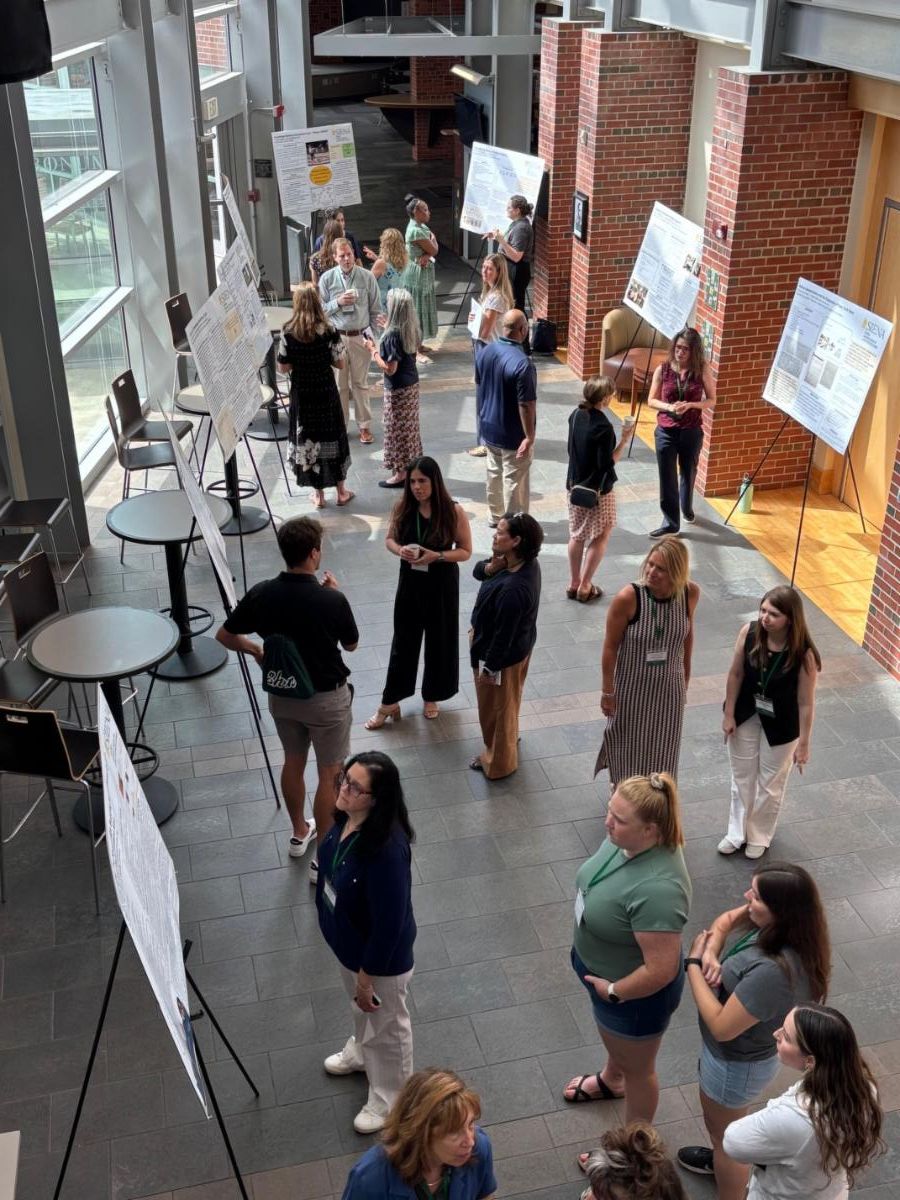
Siena College (Loudonville, NY) recently graduated its first cohort of participants in its Clinically Rich-Intensive Teacher Institute. TESOL Program Coordinators Dr. Karen Gregory (PI), and Dr. Gretchen Oliver (Co-PI), invited the Class of 2025 graduates from the TESOL Certificate of Advanced Study program to reflect on their learning through the course of study. In their responses, there were several themes that demonstrate how educators are able to put theory into practice to provide access to grade-level content for ELLs in NYS schools.
Integration: Several teacher participants emphasized the importance of integrated content and language instruction and assessment.
A high school math teacher wrote: “It is critical that all content teachers understand themselves as language teachers and integrate literacy instruction into their curriculum, and our coursework in [the CR-ITI program] highlights this fundamental principle.”
Interaction: Another theme participants shared in their reflections relates to their new understanding of the importance of developing oral language and creating opportunities for all students, ELLs included, to interact in every lesson.
An 8th grade ELA teacher wrote: “I learned best practices for teaching English Language Learners, including the importance of interactive experiences rich in academic vocabulary, providing language supports, meeting all four language demands, and encouraging language production. I now have confidence in gauging a student’s proficiency level and know the type of work students produce at the levels.”
Planning for language development: Teachers reflected on how their planning process has changed as a result of their learning in the CR-ITI program. Instead of hoping for interaction and participation, they learned how to plan so that all students would be required to use language productively.
An 8th grade social studies teacher reflected on a newfound intentionality to his planning process, in which he prioritizes opportunities for language learning: “I have come to see that effective instruction for ELLs is not about adding supports on top of existing lessons – it’s about designing instruction from the ground up with language development, cultural responsiveness, and interaction at the core."
Deep learning over covering content: Participants recognized that ELLs (and all students) will benefit from learning activities and experiences that promote deep learning over more superficial “coverage” of curricular topics.
A first grade teacher who moved into the role of an ENL specialist reflected on the connections between vocabulary study, word study, and deep learning: “One of the most significant takeaways includes the importance of deep learning and how knowledge-building instructional cycles can enhance ELLs' understanding of content in meaningful and impactful ways.”
| | COMPREHENSIVE ELL EDUCATION PLAN (CEEP) 2026-2027 | |
The Comprehensive ELL Education Plan (CEEP) was released on September 1, 2026, and is due on October 31, 2026, through the NYSED Business Portal. The CEEP has been updated for the 2026-2027 school year. Since districts completed their most recent submission this spring, this year’s CEEP includes fewer questions requiring a narrative response.
OBEWL has again provided a Submission Guide to support districts in completing the CEEP. Districts are encouraged to review the guide in advance and use it as a resource throughout the submission process.
Districts should review their Standard Operating Procedure (SOP) and update it as needed to reflect any substantial changes to their staffing or program procedures.
| | MLS SIFE SCREENER TRAININGS | | NY STATE SEAL OF BILITERACY (NYSSB) | | |
In 2025-26, over 650 schools awarded the NYSSB to more than 15,000 students. 54% of NYSSB earners were those studying a world language in school; 30% were current or ever English Language Learners (ELLs); and 16% were Heritage Language Speakers.
Schools intending to offer this program in 2026-27 must submit the NYSSB School Notification Form by December 1st.
NYSED offers a variety of resources for schools looking to start or expand their NYS Seal of Biliteracy program, many of which are available in the 10 most common languages of English Language Learners in NYS:
Please visit the NYSSB website for more information.
| | |
New York State is officially transitioning to the WIDA Consortium, marking an exciting step forward in how the state supports its 260,000 English Language Learners (ELLs). This shift standardizes language development metrics, streamlines administration, and grants local educators access to robust, research-grounded instructional tools. The move to an adaptive online platform means assessments will automatically tailor their difficulty to a student's progress, ensuring a more accurate and responsive testing experience.
Fast Facts for Educators
- Digital Shift: Testing moves online, though paper provisions remain available for documented religious exemptions.
- Diverse Accommodations: WIDA introduces built-in accessibility features, including comprehensive cognitive disability accommodations and Braille versions for grades 1–12.
- Curriculum Alignment: New York's specific academic and linguistic demands still apply; WIDA serves to enhance, not replace, culturally responsive content integration.
Alternate Assessment: WIDA provides an alternate English language proficiency assessment for students with the most severe cognitive disabilities.
| | | | |