Quarterly News and Updates | | The Department of Health Care Services (DHCS), Office of Family Planning (OFP) newsletter gives you the latest resources, news, and information in family planning and family planning-related services to support your important work for the Family Planning, Access, Care, and Treatment (Family PACT) Program. | | |
- Clinical Updates
- Family PACT Program Provider Training Updates
- Upcoming Events & Training Opportunities
- Family PACT Program Policy Updates
- Medi-Cal Information & Bulletins
- Contact Us & Helpful Resources
| | |
September: Sexual Health Awareness Month
and National Hispanic Heritage Month
(September 15 - October 15)
| | |
September’s Sexual Health Awareness Month and National Hispanic Heritage Month (September 15–October 15) underscore the importance of equitable sexual and reproductive health care. With ~57% of Family PACT clients identifying as Hispanic or Latino in FY 2023–2024, providers play a key role in delivering culturally responsive, evidence-based care and accessible bilingual resources.
Visit our Clinical Resource Library to explore resources for both clients and providers. Access Client Education Materials on topics ranging from birth control methods to HIV/sexually transmitted infection (STI) prevention and testing, available in both English and Spanish. Providers can also find Clinical Practice Alerts highlighting the latest national guidelines and best practices for HIV/STI testing and treatment, urinary tract infection (UTI) management, cervical cancer screening, and more.
| | October: Health Literacy Month | | Health Literacy Month highlights the important role Family PACT providers play in ensuring clients receive clear, accessible, and culturally responsive information to support informed reproductive health and family planning decisions. Family PACT also embraces health care fluency, which goes beyond literacy to recognize the importance of scientific knowledge, cultural perceptions, trust in the health care system, and confidence in self-advocacy. Providers can strengthen health care fluency by using Family PACT’s easy-to-understand client education materials and participating in clinical webinars on timely sexual and reproductive health topics. | | November: U.S. Antibiotic Awareness Week (November 18-24) | | |
U.S. Antibiotic Awareness Week emphasizes the proper use of antibiotics to combat resistance and keep bacterial STIs like chlamydia, gonorrhea, and syphilis treatable. Responsible antibiotic stewardship protects reproductive health, preserves effective treatments against drug-resistant strains, and prevents side effects such as vaginal microbiome disruption when treating common conditions like UTIs and pelvic infections.
Find helpful Family PACT resources below:
Client Education Materials
Clinical Practice Alerts
Webinar
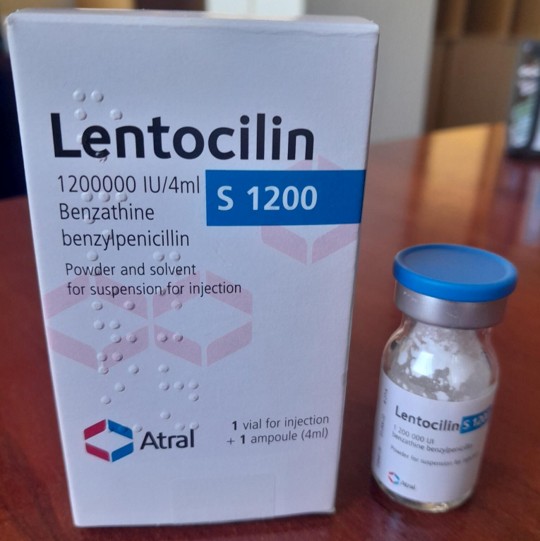
| | Lentocilin Reimbursable Under HCPCS Code J0561 | | Source: National Network of STI Clinical Prevention Training Centers | | |
Family PACT Bulletin 227 | August 2026
Effective retroactively for dates of service on or after June 7, 2024, Lentocilin (penicillin G benzathine) is a covered Medi-Cal and Family PACT Program benefit due to the ongoing national Bicillin® L-A shortage. Lentocilin 1.2 million units is reimbursable as a medical benefit when billed under HCPCS J0561 (injection, penicillin G benzathine, 100,000 units) with National Drug Code (NDC) 84383011001 in accordance with applicable Medi-Cal billing requirements.
An Erroneous Payment Correction (EPC) will be implemented to reprocess denied claims with dates of service on or after the effective date of this billing policy, that were appropriately submitted based on the guidance published in this article, but erroneously denied because Medi-Cal had not yet implemented the system changes to support appropriate adjudication. Providers may also elect to use this updated billing policy to correct and resubmit previously denied claims as described in the CIF Submission and Timeliness Instructions section of the Provider Manual.
Providers should follow all standard Medi-Cal and Family PACT billing requirements. Coverage remains in effect until the Bicillin shortage is resolved.
The Family PACT Policies, Procedures and Billing Instructions (PPBI) Manual has been updated accordingly:
- Benefits Grid (p. 45)
- Clinic Formulary (p. 19)
| | |
CPT Code 87494 Added to
Family PACT Laboratory Policy
| | |
Family PACT Bulletin 227 | August 2026
Effective for dates of service on or after September 1, 2026, Family PACT laboratory policy for Sexually Transmitted Infections has been updated to include CPT® code 87494 (infectious agent detection by nucleic acid [DNA or RNA]; Chlamydia trachomatis and Neisseria gonorrhoeae, multiplex amplified probe technique).
CPT 87494 may not be reimbursed in conjunction with CPT 87491 (infectious agent detection by nucleic acid [DNA or RNA]; Chlamydia trachomatis, amplified probe technique) or CPT 87591 (infectious agent detection by nucleic acid [DNA or RNA]; Neisseria gonorrhoeae, amplified probe technique).
| | The PPBI Manual has been updated: | | Family PACT HPV Testing Updates | | |
Family PACT Bulletin 227 | August 2026
Reimbursement for primary high-risk human papillomavirus (hrHPV) testing includes self-collected vaginal specimens, which is an acceptable option for average-risk individuals age 30 thru 65 according to Health Resources and Services Administration, American Cancer Society and the Enduring Consensus Cervical Cancer Screening and Management Guidelines. Screening after a negative self-collected hrHPV test should be repeated in 3 years.
Effective for dates of service on or after September 1, 2026, CPT® code 87624 (HPV, high risk types [e.g., 16, 18, 31, 33, 35, 39, 45, 51, 52, 56, 58, 59, 68]) and 87626 (Detection test by nucleic acid for HPV, separately reported high-risk types [e.g. 16, 18, 31, 45, 51, 52]) are covered for females 30 thru 65 years of age once every five years, any provider, or three years following a client-collected specimen.
The PPBI Manual has been updated accordingly:
- Benefits: Family Planning-Related Services (pp. 4-7)
- Laboratory Services (pp. 38, 39)
| | Important Clinical Updates from the
California Department of Public Health (CDPH) | | Nexplanon® REMS Deadline Extended | | |
On August 18, 2026, the U.S. Food and Drug Administration (FDA) extended the NEXPLANON® (etonogestrel implant) Risk Evaluation and Mitigation Strategy (REMS) transition period deadline from August 23, 2026, to February 23, 2027.
There will be no disruption to product access on Monday, August 24, 2026.
All providers performing Nexplanon insertions or removals must complete the FDA-required Risk Evaluation and Mitigation Strategy (REMS) certification by February 23, 2027, to maintain access to Nexplanon.
| |
IMPORTANT: Office of Family Planning Reminder
Family PACT Providers are required to offer the Nexplanon® contraceptive implant onsite. Each site enrolled in the Family PACT Program must identify, at a minimum, one clinician trained to provide Long-Acting Reversible Contraception (LARC) services – including insertion and removal of the contraceptive implant – onsite. See PPBI Manual, Section Provider Enrollment and Responsibilities, page 5.
| | FAMILY PACT PROGRAM PROVIDER TRAINING UPDATES | |
Family PACT Learning Track Updates
September 2026
| | |
Updates effective September 14, 2026:
Family PACT Program Overview Course
The Family PACT Program Overview training course has been fully refreshed with updated and essential information for new and existing Family PACT providers related to Family PACT policies, provider responsibilities, client enrollment, program standards, and available resources. The Program Overview is available to all learning tracks.
-
Site Certifiers are now required to complete this updated training during their next scheduled renewal period.
-
Note: Staff are not required to go back and complete this training at this time; staff will only be required to complete it at the next scheduled renewal period, which is required every two (2) years for Site Certifiers and every five (5) years for all other learning tracks.
New Learning Track: Non-Clinician
A new Non-Clinician Learning Track, designed for counselors, health educators, medical assistants (MAs), licensed vocational nurses (LVNs), and registered nurses (RNs) who provide client counseling and education, is now available.
Training Catalog Updates
- The Fraud, Waste, and Abuse course has been archived and removed from the training catalog. The content has been incorporated into the updated Program Overview course.
- The Family PACT Provider Staff Portal Training is now required for the Administrator Track.
- Additional training catalog updates will be released in the coming months.
For more information and to access trainings, visit the Family PACT Online Training Center.
For more information on training requirements, refer to the Provider Enrollment and Responsibilities section of the PPBI Manual.
| |
Family PACT Provider Training Frequency Updates
July 2026
| | |
Family PACT Bulletin 226 | July 2026
Updates effective July 1, 2026:
Clinicians and all other clinic staff must complete required Family PACT trainings every five (5) years (instead of every two [2] years).
Note: The requirements for Site Certifiers remain unchanged: required trainings must be completed every two (2) years and the Provider Orientation must be completed every two (2) years.
For more information and to access trainings, visit the Family PACT Online Training Center.
For more information on training requirements, refer to the Provider Enrollment and Responsibilities section of the PPBI Manual.
| | UPCOMING EVENTS &
TRAINING OPPORTUNITIES | | |
Comprehensive IUD and
Contraceptive Implant Training
| | |
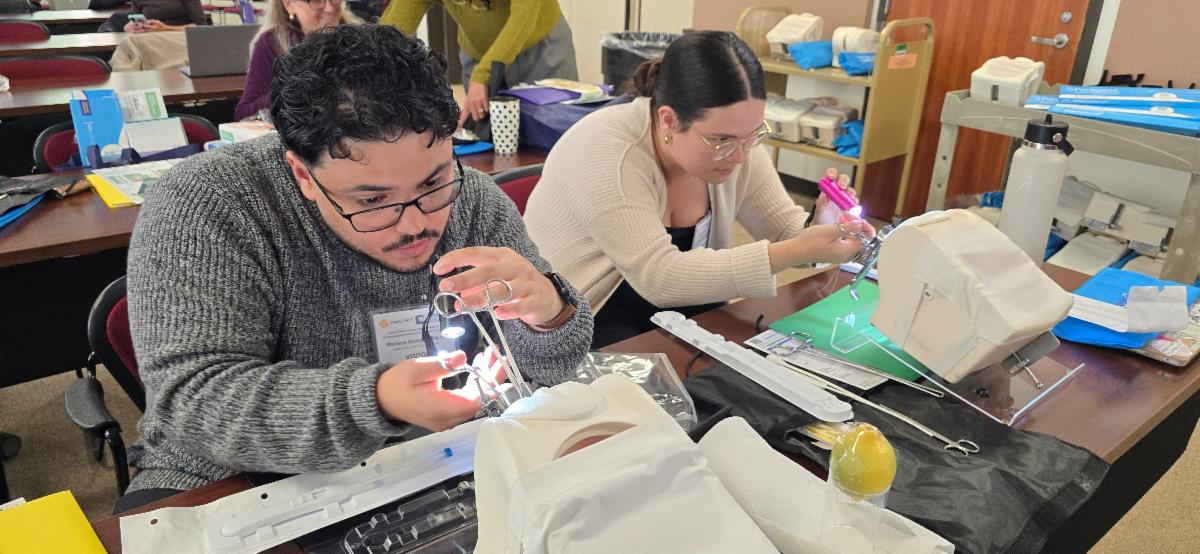
Attend a FREE two-day, hands-on IUD (intrauterine device) and contraceptive implant training on October 27-28, 2026.
Participants will receive expert clinical instruction and hands-on practice in IUD and contraceptive implant placement and removal, including training with Mirena®, Kyleena®, Liletta®, Paragard®, and Nexplanon®.
The training also covers evidence-based pain management techniques, including paracervical blocks, and introduces innovative tools such as the Carevix® suction cervical stabilizer.
The training will also help providers meet the new FDA-required mandate that all clinicians performing Nexplanon insertions or removals must complete the Risk Evaluation and Mitigation Strategy (REMS) certification prior to attending the in-person training. Providers must enroll in REMS by October 8, 2026 and complete the didactic part by October 21, 2026 to attend the contraceptive implant in-person training.
Clinicians will earn Continuing Medical Education (CME) credits for the IUD portion of the training through expert clinical instruction and hands-on practice designed to expand access to long-acting reversible contraception (LARC) across California.
Registration will close on October 16, 2026, so act fast to secure your spot.
Event: Comprehensive IUD and Contraceptive Implant Training
Date: October 27-28, 2026
Location: 1500 Capitol Avenue, Sacramento, CA 95814
Credits: 8 CMEs
Capacity: 60 providers
Cost: FREE
| | Family PACT Program Provider Orientation | | |
The mandatory virtual provider orientation is a live session conducted over Zoom that provides an overview of comprehensive family planning and resources, program benefits and services, client eligibility, provider responsibilities, and provider compliance. Only site certifiers (physicians, physician assistants, certified nurse practitioners, or certified nurse midwives) who are responsible for overseeing the family planning services rendered may register to attend.
This Provider Orientation is eligible for 1.5 CME credits.
Upcoming Dates:
- October 8, 2026
- December 10, 2026
- February 11, 2027
| | Medi-Cal Provider Training Event: October 2026 | | |
Medi-Cal Training Announcement - August 3, 2026
October Training Event:
The Medi-Cal Outreach and Education team and DHCS will be conducting an in-person training event on October 14, 2026, in Southern California.
Double Tree by Hilton
285 East Hospitality Lane
San Bernardino, CA 92408
| |
FAMILY PACT PROGRAM
POLICY UPDATES
| | Family PACT Policy Updates to Required Training Frequency, Contraceptive Requirements, and
Non-Physician Medical Practitioners (NMPs) | | |
Family PACT Bulletin 226 | July 2026
Effective July 1, 2026, OFP has updated the PPBI regarding required trainings, contraceptive requirements and NMPs.
The training frequency required for clinicians and all other clinic staff has been updated.
Note: The frequency requirements for Site Certifiers remain unchanged.
For more information on Required Trainings, visit the Family PACT Online Training Center.
OFP has updated the Provider Enrollment and Responsibilities section to clarify that Family PACT providers must offer, at minimum, the contraceptive implant and at least one type of hormonal IUD and non-hormonal IUD onsite. Program Standards has a new “Availability of Covered Services (Contraceptives)” table clarifying which contraceptive methods are required to be offered onsite, by prescription or by referral.
NMPs are authorized to deliver the full scope of Family PACT family planning and family planning-related services, including sterilization services, within their scope of practice and to the extent permitted by applicable professional licensing statutes and regulations as set forth in the physician/practitioner interface document.
| | The PPBI Manual has been updated: | | Sterilization Consent Form Now Available in Additional Languages | | MEDI-CAL INFORMATION & BULLETINS | | |
Every Woman Counts (EWC) Detecting Early Cancer (DETEC) Application Enhancements
in the Provider Portal
| | |
Medi-Cal News | June 26, 2026
The Every Woman Counts (EWC) Detecting Early Cancer (DETEC) application in the Provider Portal has been updated to help prevent duplicate cycle records, improve workflow and increase data security. The following enhancements are included in this update:
- Mother’s Maiden Name is now a required field when creating or recertifying a recipient.
- Referral providers can print the recipient Identification (ID) cards.
- The sexual orientation field has been removed from the Compare Recipient screen.
- The Date of Birth (DOB) field has been removed from the printed Recipient Card.
For more information, refer to the Every Woman Counts Detecting Early Cancer (DETEC) User Guide.
| | Important: Every Woman Counts (EWC) Program Support to Transition to DHCS | | |
Medi-Cal News | July 3, 2026
The Department of Health Care Services (DHCS) remains committed to providing equitable, high-quality access to individuals served through the Every Woman Counts (EWC) program, while also undertaking efforts to streamline operations and reduce administrative costs.
Beginning July 1, 2026, support for the EWC program has transitioned activities from Regional Contractors to an in-house operation within DHCS.
Under this updated model, DHCS is maintaining core program functions, including outreach, education, patient navigation, provider training and quality assurance. This is an operational and administrative restructuring only. There are no EWC program changes from a policy or coverage perspective, and there are no changes to eligibility or benefits. The current EWC Regional Contractor agreements expired on June 30, 2026.
Effective July 1, 2026, all correspondence for the EWC program may be sent directly to DHCS as follows:
-
General program questions: ewc@dhcs.ca.gov
-
Clinical questions, including Detecting Early Cancer (DETEC) data entry questions: ewcclinicalservices@dhcs.ca.gov
- For questions containing Protected Health Information (PHI), write “[SECURE]” in the email subject line.
-
EWC member outreach, education and information: ewchealtheducation@dhcs.ca.gov, or
-
Call 1-800-511-2300 if assistance is needed in locating an EWC provider in their area.
-
Providers can call the Telephone Service Center (TSC) at 1-800-541-5555 from 8 a.m. to 5 p.m., Monday through Friday, for help with claims and billing, setting up a Provider PIN or checking member eligibility.
More information will be shared on the Every Woman Counts page of the DHCS website.
| | Provider Portal Breast and Cervical Cancer Treatment Program (BCCTP) Application Update | | |
Medi-Cal News | July 24, 2026
The qualifying diagnoses list for the Breast and Cervical Cancer Treatment Program (BCCTP), has been updated to provide the most current medical terminology. Providers can select the qualifying diagnosis from the Breast Cancer Diagnosis or Cervical Cancer/Endocervical Diagnosis dropdown menus when submitting a BCCTP application in the Provider Portal.
Note: The pathology report is required when selecting the following diagnoses:
- Breast Malignancy, not otherwise specified (NOS)
- Cervical Malignancy NOS
- Or the diagnosis is not in the drop-down list
Submit the pathology report by fax to 1-916-440-5693 or email to BCCTP@dhcs.ca.gov.
For more information about the Provider Portal BCCTP application, refer to the Breast and Cervical Cancer Treatment Program (BCCTP) User Guide.
| | Important Reminder: Ordering, Referring, and Prescribing (ORP) Requirements | | |
Medi-Cal Program & Eligibility Bulletin 50 | September 2026
The Center for Medicare & Medicaid Services (CMS) requires Medi-Cal claims for goods or services that were ordered, referred, or prescribed by another provider to include that provider’s National Provider Identifier (NPI). The ordering, referring, or prescribing (ORP) provider must have a valid Type 1 (Individual) NPI and be actively enrolled in Medi-Cal for the date of service, even if they do not bill Medi-Cal directly. Billing providers are encouraged to work with unenrolled ORP providers to complete enrollment through the Provider Application and Validation for Enrollment (PAVE) portal and can verify enrollment through the Profile of Enrolled Medi-Cal Fee-for-Service (FFS) Providers.
Billing providers should establish processes to verify that all required secondary NPIs, including ordering, referring, rendering, attending, and admitting providers, are valid Type 1 NPIs and actively enrolled in Medi-Cal for the date of service. Once enforcement begins, claims that are missing a required ORP NPI or contain an invalid or inactive NPI may be denied. DHCS plans to implement the CMS requirement using a phased enforcement approach, with additional information to be released as it becomes available.
Update: This landing page was just announced: Prescribers and Billing Providers FAQ | DHCS
| | |
Upcoming Medi-Cal Learning Portal Transition Will Impact Presumptive Eligibility (PE)
Determination Access
| | |
Medi-Cal News | September 25, 2026
Who Is Affected?
Staff currently performing Presumptive Eligibility (PE) determinations who have not personally completed the required PE certification training in the Medi-Cal Learning Portal (MLP).
What's Changing?
Beginning in November 2026, MLP training records will be more closely linked to individual users. Staff will no longer be able to perform PE determinations based on another person’s certification record and may lose access if they are not individually certified.
What You Need to Do
Before the November transition, each staff member performing PE determinations must have their own MLP account, ensure their MLP username matches their Provider Portal email address, and complete all required PE certification training. If the username and email do not match, a new MLP account should be created using the Provider Portal email address as the username.
Act Now to Avoid Service Disruptions
Complete these steps before November 2026 to prevent interruptions in PE determination access and maintain compliance with Medi-Cal PE program requirements. For assistance, contact the MLP Support Team at CAMMISAccountTraining@gainwelltechnologies.com.
| | |
Get the Latest Medi-Cal News:
Subscribe to MCSS Today
| | |
The Medi-Cal Subscription Service (MCSS) is a free service that keeps you up-to-date on the latest Medi-Cal news. Subscribers receive subject-specific emails shortly after urgent announcements and other updates are posted on the Medi-Cal website.
Medi-Cal
Medi-Cal Subscription Services - MCSS
| | | | |