Check out these fun summer reads for children recommended by our partner school’s literacy specialist. | |
“At some point in our lives we all need care, and women often provide this care in our families. And while family care may be priceless, that does not mean that there’s no cost to those providing it... Gender and racial inequality combined with our nation’s lack of care infrastructure and work/family policies … harms women, not just in the short term, but in the medium- and in the long-term.” | |  |
|
Who:
Wendy Chun-Hoon, director of the Women’s Bureau
Where:
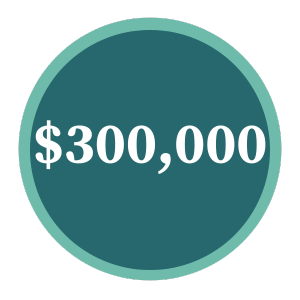
“Caregiving costs women nearly $300,000 in lost pay over their lifetimes, Department of Labor finds,” an article in The 19th
| | |
|
The US Department of Labor published a report examining the employment related costs to women that come from providing family care (including child care and other caregiving needs). The total cost of this unpaid care was estimated to be nearly $300,000 across a lifetime. The 19th explains more about the report here. | |
|
Ohio Budget
This week the Ohio Senate unveiled its version of the state budget, the blueprint meant to govern state spending over the next two years. As the budget moves through each phase – governor, House, Senate, conference committee – the document is as much a demonstration of policy priorities and values as it is about dollars and cents. The major early childhood relevant news with respect to the Senate budget version is that it significantly cuts funds for programs supporting Ohio’s children and families and makes some major alterations to child care policy. For example, it:
|
-
Significantly cuts proposed allocations to the Healthy Beginnings at Home program, which supports stable housing initiatives for pregnant moms (from $15m to $2.5m);
- Reduces the amount proposed by the House for infant vitality programs (from $2m to $1m);
- Pushes the eligibility threshold for publicly funded child care back down to 145% of FPL, instead of the 160% FPL proposed by the governor;
- Reduced proposed funds for the Ohio Commission on Fatherhood;
- Halves the proposed cash transfer for a child care infrastructure fund (from $30m to $15m);
- Does not restore the proposed $150 million in child care scholarships for critical occupational workers;
- Prohibits the state from requiring that administrators or employees of licensed child care programs must hold bachelor’s (or higher) degrees – therefore significantly altering credentialing components of the state’s quality rating and improvement system;
- Prohibits Step Up to Quality from requiring bachelor’s+ degrees;
- Expands an exemption passed late last year that lifted SUTQ requirements for programs serving publicly funded children at less than 25% (of licensed capacity) - this would shift up to 50%;
- Reduces earmarks – or provides them for one year instead of two in the biennium – to several programs including the Children’s Hunger Alliance and Big Brothers, Big Sisters;
- Removes an earmarked amount for the SPARK program;
- Reduces proposed funds for the state’s early childhood education grant;
- Reduces funds for early childhood mental health (ECMH) from $6.3m in each year to $3m.
The bill contains much more, clocking in at 7,700 pages. Below are links to other analyses, news reports, and resources about the Senate version:
| |
|
Federal
U.S. Senator Sherrod Brown introduced a bill, the Expanding Childcare in Rural America (ECRA) Act of 2023, that would prioritize child care in rural communities. Specifically, the legislation would task the U.S. Department of Agriculture to prioritize projects that take into consideration access and affordability of childcare in rural and agricultural settings. In a press release for the bill, the Ohio Association of Child Care Providers praised ECRA for providing funding “to assist rural and agricultural communities in closing the gap in childcare supply” and said, “by utilizing existing funding, workforce issues can be addressed, and supply can be increased, enabling child care providers to fully serve working families in these rural communities. The Ohio Association of Child Care Providers (OACCP) is happy to endorse this bill, and excited to support providers in any way. We are the 'workforce behind the workforce.’”
| |
Crane just announced our first-ever Excellence in Early Childhood awards. Nominations are now open for an outstanding early childhood practitioner, researcher, and policy leader in Ohio. Read more or submit a nomination here. | |
|
New America describes two initiatives in California that will finance early childhood education through local taxes, noting that “the road to this new funding has been long and winding” with obstacles including “failures at the ballot box and court fights with anti-tax groups.”
Vermont made headlines last month for its move to expand publicly funded child care eligibility by huge margins – up to 575% of FPL, with families earning up to 175% of FPL requiring to pay nothing. This week, the governor vetoed it based on objections to the source of funding the expansion – a new payroll tax. With a Democratic supermajority in the state legislature, it is speculated that the veto will be overridden.
In an effort to help ease the child care workforce shortage, New York plans to offer up to $3,000 for retention bonuses. The effort could support up to 150,000 early childhood educators.
| |
|
Dollywood is just one of many employers seeking to retain workers by providing childcare benefits to employees. EdSurge takes a look at the famous park as well as different models of employer-supported childcare. Some employers offer on-site childcare, while others have contracts with local centers, and still others offer payment support or subsidize childcare costs for their workforce. Opinions on the matter vary greatly. Some experts view this as a helpful short-term solution for supporting employees. However, there are growing concerns that linking childcare to employment detracts from the larger goal of a better funded early education system.
The Policy Center for Maternal Mental Health has published report cards for states on maternal mental health. Grades were based on several indicators, such as the availability of mental health providers and supports for mothers; whether states have a dedicated task force overseeing this issue; requirements that ob-gyns screen for maternal mental health issues; and the extent to which screenings and services are covered by health insurance including Medicaid. Ohio’s score card is available here.
Cleveland.com describes one innovative small business in Northeast Ohio that dispatches substitute early childhood teachers to child care programs in order to help them meet required child-teacher ratios.
| |
Quality Rating and Improvement Systems (QRIS) are used throughout the US to assess quality in early learning centers. In 2019, the National Resource Center for Health and Safety in Child Care and Early Education, American Academy of Pediatrics, and American Public Health Association published guidelines on national quality standards for ECE called Caring for our Children. A new study compared QRIS indicators for 41 states, specifically looking at child development and mental health standards found in Caring for our Children. The study found that 95% (39) of states included at least one indicator for child development and mental health standards. Findings indicate that QRIS systems are one avenue that states can use to further incorporate attention to children’s development and mental health as a marker of high-quality early education. | |
This edition written by: Jamie O'Leary and Janelle Williamson | | | | |