The Ohio Water Resources Center Newsletter
Issue 2 | Volume 5 | February 2023
| |
|
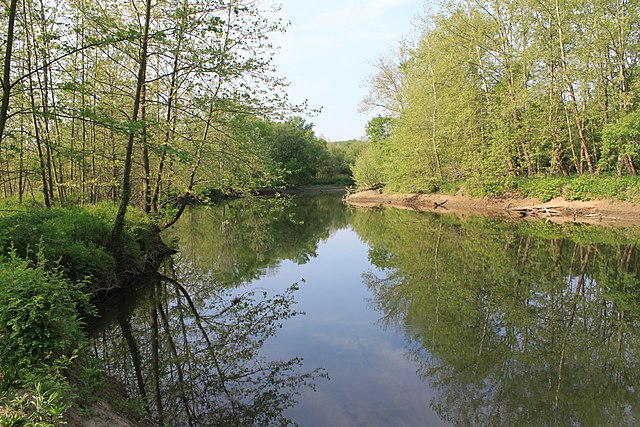
The objective of the Clean Water Act (CWA), amended in 1972, was to restore and maintain the integrity of the Nation’s waters. The CWA regulates water quality through water standards, response programs, and authorized permits for the discharge of pollutants into “navigable waters” of the United States. Under the CWA, the term “navigable waters” is defined to be “waters of the United States (WOTUS)”. Interpretation this definition has presented discrepancies over the extent of federal jurisdiction granted under the CWA, becoming a long-standing obstacle for implementation of programs established under the act.
On January 18th, 2023, the U.S. Army Corps of Engineers (Corps) and the U.S. Environmental Protection Agency (EPA) issued a final revision of the “WOTUS” definition to further instate the authority of the agencies in regards to stream, wetland and other water body management. This regulation replaces the Navigable Waters Protection Rule (NWPR) released by the Trump Administration in 2020. The NWPR excluded several types of water from regulation under the CWA, including groundwaters, ephemeral streams, diffuse storm water runoff, many road ditches and converted farmland, manmade features for irrigation, and wastewater treatment systems. The WOTUS ruling aims to reduce inconsistencies concerning the definition, protect people’s health, and support economic opportunity.
| |
|
Efficient removal of PFAS using electrically heatable carbon nanotube hollow fiber membrane
distillation
| |
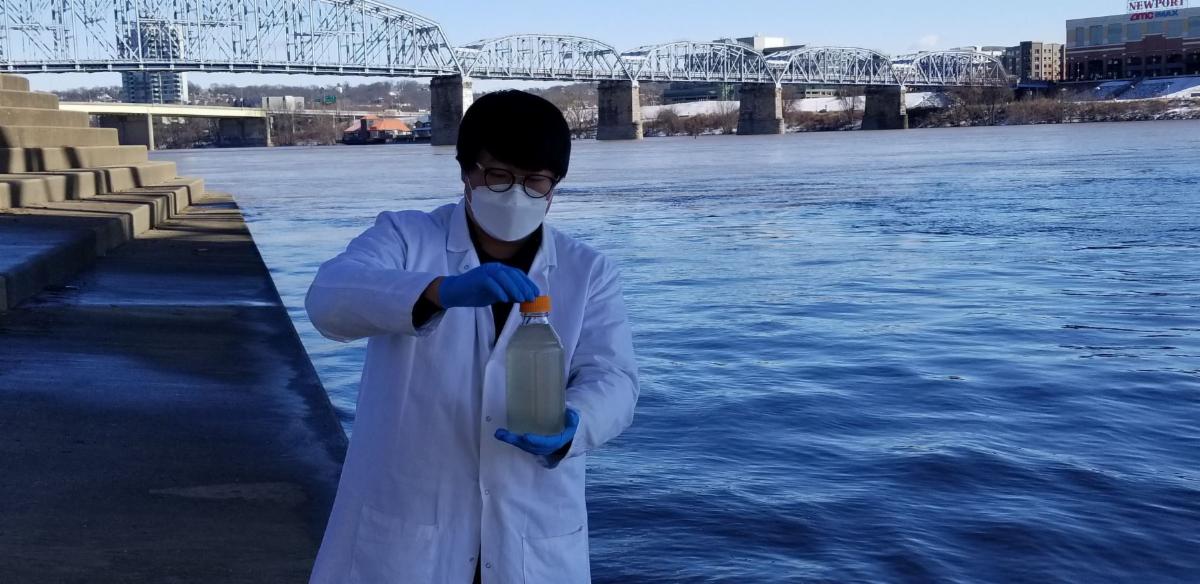
Dr. Soryong Chae, Associate Professor in the Department of Chemical and Environmental Engineering at the University of Cincinnati, completed an Ohio Water Resources Center funded project on per- and poly-fluoroalkyl contaminants (PFAS). These contaminants have a significant impact on drinking water quality, fish and animal habitat, human health, and ecosystem services in Ohio. The extreme environmental persistence of PFAS creates increasing difficulty for impacted water to be treated by many conventional remediation and treatment technologies. This study aimed to pioneer an innovative engineering system to achieve energy-efficient removal of PFAS from water and wastewater.
Dr. Chae and his team focused on the incorporation of carbon nanotube (CNT) sheets onto hollow fiber membranes and the effects of Joule heating on the removal of emerging PFAS via membrane distillation (MD) from water to address the current performance and productivity of MD technology. The removal of PFAS by the electively heatable CNT (30 layers)/PVDF hollow fiber membrane was studied using a bench-scale vacuum membrane distillation (VMD) process. The CNT hollow fiber membranes with 30 CNT layers showed excellent removal (> 99.9%) of model PFAS compounds at lower concentrations in feed (1 - 10 mg/L PFOA) during 12 hr operation. However, when the VMD system was fed with 1,000 mg/L PFOA solution, PFOA concentration in the membrane permeate gradually increased, and the removal efficiency dropped below 99% after 6 hr operation.
These results provide insight into processes for the effective removal of PFAS from water and wastewater subjected to advanced treatment technologies, as well as fundamental understanding of fate and transport of PFAS through CNT layers and polymer membranes.
| | | |
Visualization of U.S. River Conditions, October to December 2022 | |
The USGS Groundwater and Streamflow Information Program (GWSIP) serves as the national source of impartial, timely, and rigorous data for waters across the United States. New data visualization from USGS stream gaging shows low- and high-flow events across the US during the last few months of 2022. The animation shows that while the Western U.S. and the Great Plains experienced droughts, Hurricane Nicole in Florida brought high waters to the Appalachia. Concurrently, the Northwestern U.S. experienced flooding as an atmospheric river brought excess rain. These data provide information for uses in water supply and management, monitoring floods and droughts, design of urban development, determination of flood risk and many recreational activities.
| | | |
|
Scholarship Program: Ohio Section AWWA
The OAWWA will award three Undergraduate scholarships and three Graduate/Continuing Education scholarships to students supporting the water industry. More information is available here. The deadline to apply is February 10, 2023.
Call for speakers: 2023 Water Finance Conference
Organizers of the 2023 Water Finance Conference seek speakers on financing municipal water, wastewater and stormwater systems. Abstracts can be submitted to afarr@benjaminmedia.com and the deadline to submit is March 10, 2023.
| |  |
|
Call for Abstracts: Fresh Ideas Competition
The OAWWA invites students and recent graduates involved in drinking-water related research to submit an abstract for the 2023 Fresh Ideas Competition. The instructions and application are available here. The deadline to submit is February 20, 2023.
Call for Papers: MDPI Journal of Water Special Issue
The Multidisciplinary Digital Publishing Institute (MDPI) is inviting paper contributions to the Special Issue of the Journal of Water titled “Green Water-Infrastructure Systems: Advances in Research and Technology.” The submission deadline is February 28, 2023. More information is available here.
| | |
|
Symposium: 27th Annual Symposium: Weather, Water, and Climate Symposium
February 10, 2023 • Virtual and U.S. Bank Conference Theater Ohio Union
The College of Arts and Sciences Atmospheric Sciences Program at The Ohio State University has announced its 27th Annual Symposium, Weather, Water, and Climate. Learn more here.
Webinar: So Many Stormwater BMP Resources
February 15, 2023 • Virtual
Registration is open for the water luncheon webinar, hosted by the Ohio Stormwater Association (OSWA). This webinar will focus on post-construction BMP planning, design, construction, and maintenance.
Symposium: 38th Annual WateReuse Symposium
March 5-8, 2023 • Atlanta, GA
The 38th annual WateReuse Symposium will consist of seven technical session tracks to highlight how utilities and businesses can benefit from water recycling, including the opportunities it can provide for underserved communities. Register and learn more here.
| |
|
Get in Touch
Email: OhioWRC@osu.edu
Phone: 614-292-2807
Website: https://wrc.osu.edu
Address: 475 Hitchcock Hall
2070 Neil Avenue
Columbus, OH 43210
Follow us on Twitter
| | |
| | | |