The Ohio Water Resources Center Newsletter
Issue 10 | Volume 7 | October 2025
| | |
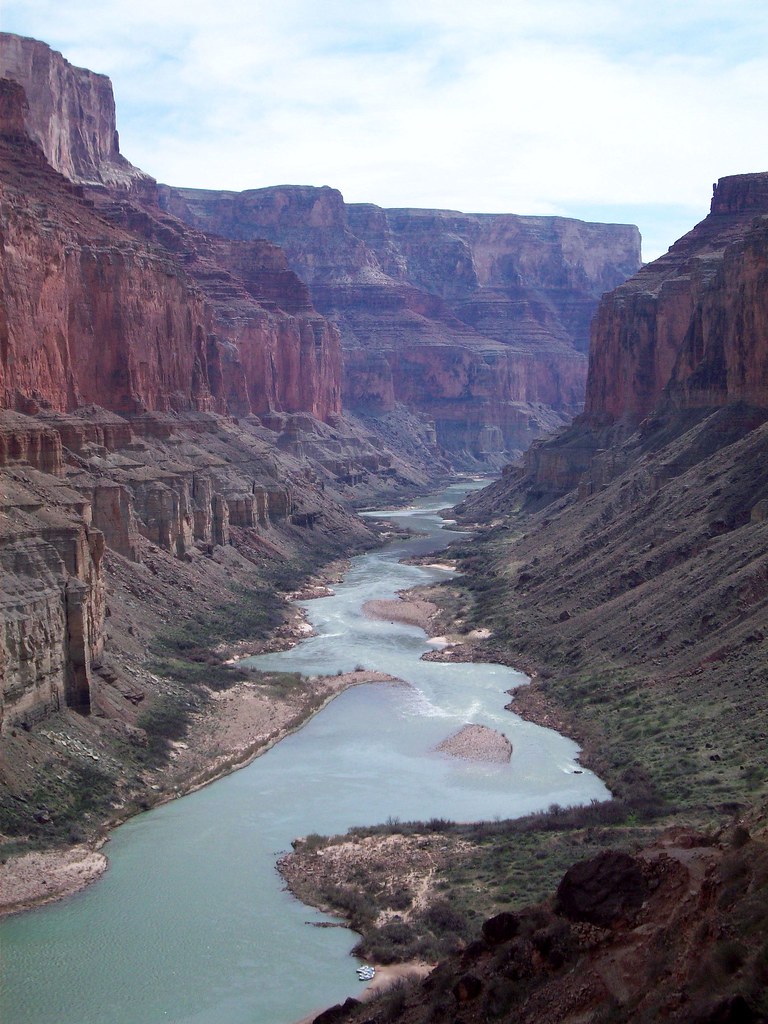
According to a recent report, Colorado River reservoir levels may approach critically low levels by summer 2026. Using Bureau of Reclamation forecasts for reservoir storage as input into a mass balance model, the report estimated that consumptive use would exceed storage by at least 3.6-million-acre-feet, endangering the functionality of the Hoover and Glen Canyon dams.
Forecasted low levels would further strain the region’s water resources, which have been steadily dwindling under arid conditions since the early 2000s. The report comes at an already tense time as the seven states served by the river negotiate over its management post-2026. Federal officials have warned that basin states must reach an agreement by Nov. 11, or the federal government may step in.
Colorado River management reveals significant challenges in how water resources are managed. Water rights differ by state, and many Western states along the Colorado follow the “Law of the River,” which refers to the collection of court precedents, compacts, and treaties that govern water use. Unlike Ohio, California uses appropriative water rights, meaning that the first person to use water from a source has the right to that water. During droughts, those with junior rights to a given water source must reduce their use before other people along the same waterway. Ohio uses riparian rights, meaning that landowners with property adjacent to a stream have the right to “reasonable use” of the water, no matter who used the stream first.
As weather, agricultural, and industrial use strain water resources, it is important to consider the framework that different states and regions have built around water withdrawals. As water reuse becomes more prevalent, its effects on water rights, policy, and management are in their infancy.
Image Credit: "Colorado River, Marble Canyon" by Gonzo fan2007 is licensed under CC BY 2.0.
| |
| | Connecting students and researchers | |
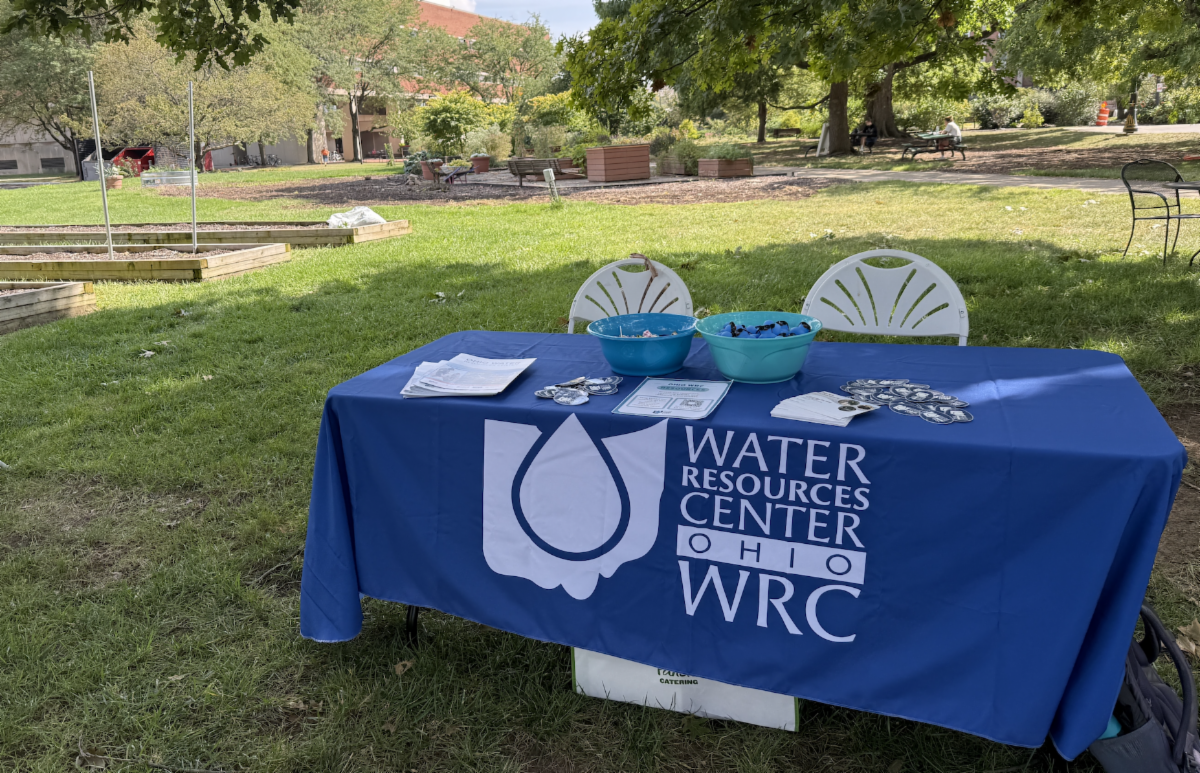
The Ohio Water Resources Center had a blast at Ohio State’s College of Food, Agricultural, and Environmental Sciences Back 2 School Bash. Many students who stopped by expressed an interest in connecting with researchers across Ohio to learn and grow their experience in water research.
If you are in need of an undergraduate research assistant, please fill out this survey from the Ohio WRC that will allow interested students to reach out to you directly.
| | | |
Microbial source tracking in Cedar and Crane creeks near Curtice, Ohio, 2021 | |
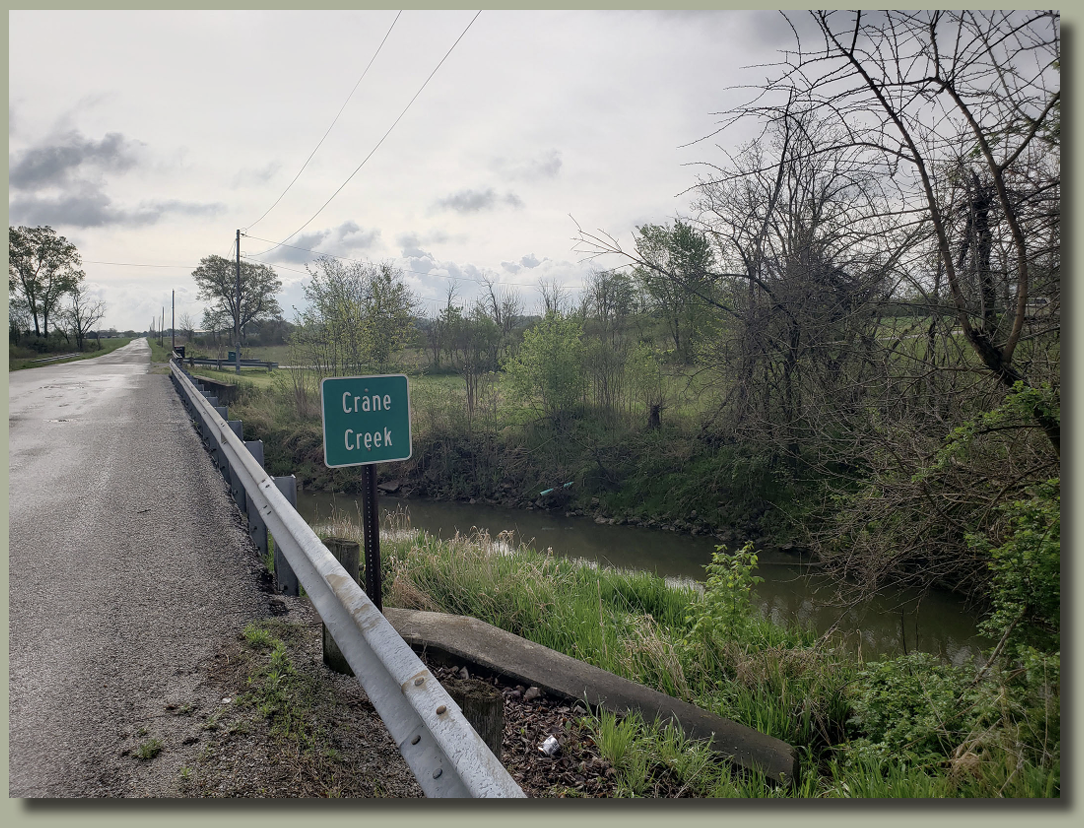
A new report from the Ohio-Kentucky-Indiana Water Science Center summarizes an effort to identify locations and sources of fecal contamination in Cedar and Crane creeks in northwestern Ohio. The creeks, located near Curtice, Ohio, showed elevated concentrations of Escherichia coli (E. coli) bacteria and signs of sewage. In partnership with the Ohio EPA, USGS researchers from the center collected 118 samples at the two creeks from May to September 2021.
Samples were analyzed for E. coli concentrations and human and canine-associated microbial source tracking (MST) markers. Human-origin fecal contamination was found at all sites sampled in this study, and a human-associated MST marker was significantly correlated with elevated E. coli concentrations. The E. coli levels exceeded Ohio EPA's regulatory statistical threshold in 91% of samples, indicating that much of the impairment in the creeks originates from human waste. A canine-associated MST marker was found in most samples, but the same marker can be found in human waste as well.
The Martin Williston Road ditch effluent site along Crane Creek had a significantly higher median MST marker level than other sampling sites, indicating that the ditch could be a potential source of fecal contamination to the creek.
| | | | | |  | |
Campbell Soup admits to violating Clean Water Act 5,400 times, polluting river
Via USA Today, September 18, 2025
Why Ohio high school bans Stanleys, Owalas and Hydro Flasks, citing safety reasons
Via Akron Beacon Journal, September 15, 2025
New Albany welcomes $246 million Edged Data Center promising water, energy efficiency
Via Columbus Dispatch, September 11, 2025
| | | |
Call for abstracts: WMAO annual meeting and symposium
November 12-13, 2025 • Dublin, OH
The theme of this year’s annual Water Management Association of Ohio meeting is “Flowing Forward: Ohio’s Water in Motion.” The event will emphasize the need for innovative strategies to improve water management and technology. Poster abstracts are due by October 18, 2025. More information, including how to submit, can be found here.
Call for pre-proposals: Ohio Department of Higher Education Harmful Algal Bloom Research Initiative
On behalf of the Ohio Department of Higher Education, Ohio Sea grant and the University of Toledo are requesting pre-proposals for two-year research projects that will support the H2Ohio Initiative and aid algal bloom management efforts. Proposals must include a component relating to Ohio industry, commerce and business. Pre-proposals are due by 5 p.m. on October 23, 2025. More information on the funds and submission process can be found here.
| | | |
Call for abstracts: 2026 Ohio Stormwater Conference
May 6-8, 2026 • Sandusky, OH
In its 19th year, this annual conference is dedicated to comprehensive stormwater and watershed management. The conference will provide updates on environmental issues, new technologies, regulatory information, and pollution prevention. Click here for more information. Abstracts are due November 27, 2025, and can be submitted here.
Find undergraduate student researchers from Ohio universities
The Ohio Water Resources Center has developed a survey to connect PIs with students looking for research opportunities. If you are a PI or graduate student looking for an undergraduate student researcher, please fill out our survey. Your information will be available on our website for students who are looking for research opportunities. The connection portal also has guidance for students reaching out to PIs.
| | | |
Ohio Stormwater Association X-Golf Networking
October 9, 2025 • Toledo, Cleveland, Columbus, and Cincinnati, OH
NOTE: Today — October 1, 2025 — is the last day of registration. Register here by 11:59 p.m. to attend.
The Ohio Stormwater Association, a division of the Water Management Association of Ohio, is hosting a statewide networking event at four X-Golf locations across Ohio. The event will include networking with stormwater professionals, dinner, and golf simulations, from 4-7 p.m. Registration is $55 per person. More information can be found here.
Ohio River Basin Confluence Summit
October 16-18, 2025 • Louisville, KY
In place of their annual individual conferences, the Ohio River Basin Alliance, Kentucky Waterways Alliance, and the Ohio River Way will hold their first joint summit, in partnership with the University of Louisville and Thomas More University. The event's theme is "Clean water, river recreation, and thriving communities." Register here.
Webinar: New water data in the USGS National Water Availability Assessment Date Companion
October 21, 2025 • Online
The National Water Availability Data Companion (NWDC) is a website providing water information that underlies the National Water Availability Assessment. In this webinar, USGS staff will present newly available model-based estimates of water supply and the balance between water supply and use derived from USGS scientific models. These data add to the currently available suite of water use data offered through the NWDC. The webinar is from 3-4 p.m. at this link.
| | |
Get in Touch
Email: OhioWRC@osu.edu
Website: https://wrc.osu.edu
Address: 473 Hitchcock Hall
2070 Neil Avenue
Columbus, OH 43210
| | | | | | |