The Ohio Water Resources Center Newsletter

Issue 9 | Volume 5 | October 2023

From Our Directors 

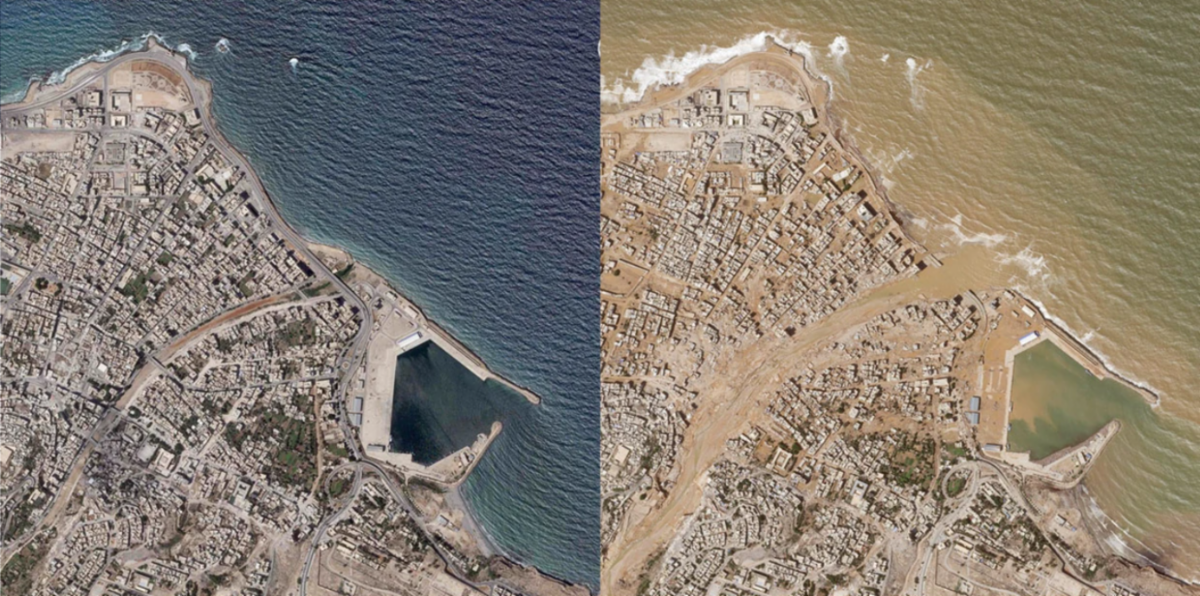
Torrential rain in Libya caused two crucial dams to fail near the city of Derna, resulting in thousands dead or missing. The failed dams were previously flagged as dangerous by engineers due to lack of maintenance. The recent deadly dam breakage and flooding in Libya serves as a reminder of the importance of maintaining critical infrastructure to ensure proper function during extreme weather events. As the age of dams and commercial development downstream of dams increases, properly maintaining dams to ensure public safety is crucial.


In the United States, the integrity of dams has come into question due to their age and recent flooding events. The town of Leominster, Massachusetts sustained significant damage due to historic rainfall and flooding. Of the 24 dams in the city, 2 sustained damage from the floods. Citizens near a dam that was scheduled to get replaced were suggested to evacuate as more rainfall was expected. Similarly in Vermont, historic flooding has put dams into the spotlight. A dam scheduled to be removed failed due to flooding resulting in damage to communities downstream.


In Ohio, there are about 2500 dams with approximately 60% of those being privately owned. According to the Ohio Section of the American Society of Civil Engineers, Ohio’s dams received a C- on the infrastructure report card. Several dams that had hydraulic or structural deficiencies were repaired in 2019. It has been estimated that it will take nearly $300M to repair the deficient dams in Ohio.


Research Spotlight


Disentangling Drivers and Mechanisms of Harmful Algal Blooms Over a Unique Three Year Period on Grand Lake St. Mary's, OH

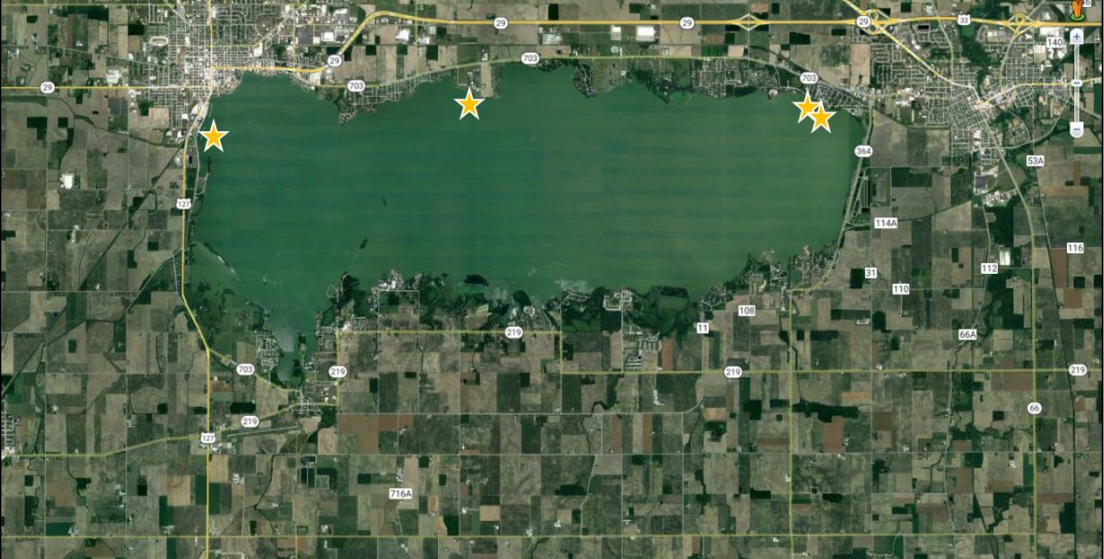
Dr. Steven Jacquemin, a professor at Wright State University Lake campus, completed an Ohio Water Resources Center funded project via an Ohio Water Development Authority subaward. Harmful algal blooms (HABs) pose a serious threat to water quality due to their growing presence and the potential health effects from exposure to cyanotoxins produced during a HAB event. Some models have shown that biomass can be a proxy for microcystin, but challenges remain in regards to understanding toxin variability due varying spring loading. This study aimed to better characterize the algal community at Grand Lake St. Mary's to gain insight into the varying toxins present.


Dr. Jacquemin and his team analyzed the algal community structure, total microcystins, nitrogen uptake generation rates, biomass, physicochemical parameters, and the production of the toxin-producing mcy gene. These measurements were taken at four different sites around the lake across a three-year period covering 2020-2022. Data was collected during years of high and low spring flows. Results showed that nitrogen turnover represents the true availability of nitrogen for toxin production as opposed to nitrogen concentration.


Dr. Jacquemin's research presents data regarding an extreme case of load reduction and how it could impact algal toxicity. These results are important for managers because practices for reducing nutrient runoff is becoming more frequent in the watershed.


USGS Science Highlight


What is 6PPD and its toxic variant, 6PPDQ?

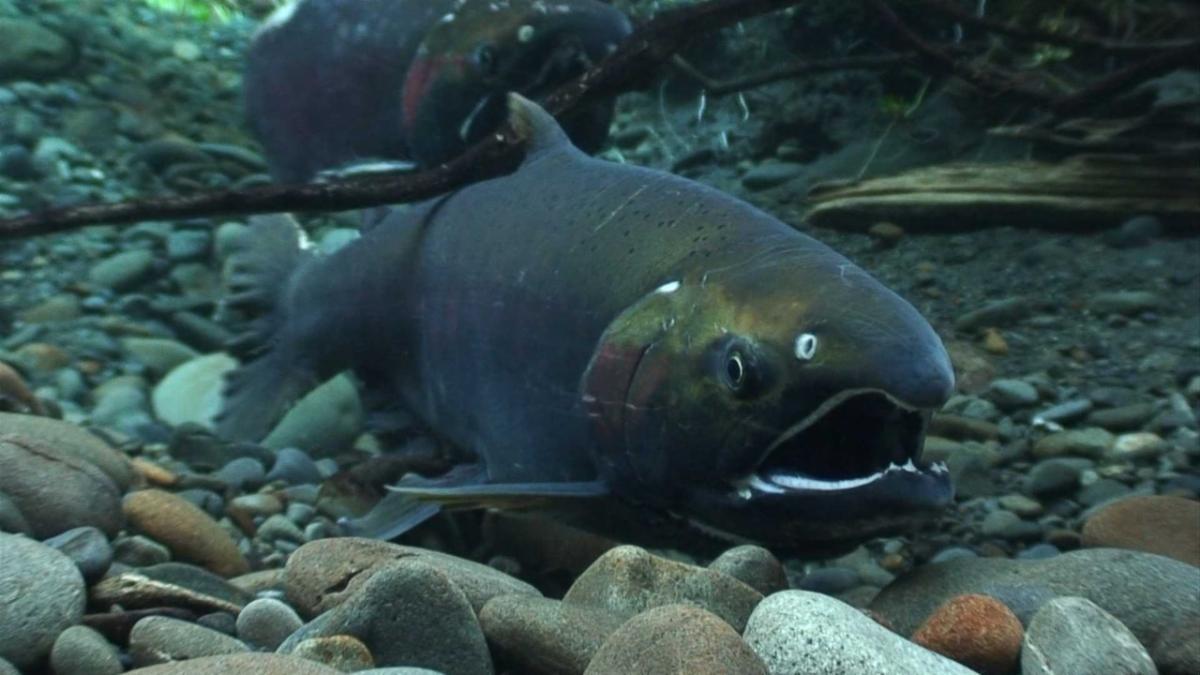
6-phenylenediamine (6PPD) is a chemical that is used to extend the lifetime of automobile tires by preventing cracking. When 6PPD reacts with ozone or oxygen, p-phenylenediamine-quinone (6PPDQ) is generated which is now being recognized as harmful to aquatic life. 6PPDQ comes off tires during wear and is carried into waterbodies via stormwater. Recent research has linked the mass mortality of adult coho salmon in streams of the Pacific Northwest to exposure to 6PPDQ.


Research to further establish cost effective and humane testing methods on the impact of 6PPDQ on aquatic life is being performed by the USGS. Two papers from the USGS Western Fisheries Research Center and Kansas Water Science Center have been published regarding the impact of 6PPDQ on salmon. One study used lab grown fish cell lines to assess the impact of 6PPDQ instead of using live fish. Other research investigating the impact of 6PPDQ on early-life stages of coho salmon found that the fish are vulnerable for the one to two year period in freshwater post hatching. The USGS is continuing research investigating the impact of 6PPDQ on aquatic life and advance the use of fish cell lines.

Twitter
 

News Updates


EPA rolls back wetland protections following SCOTUS decision on Clean Water Act

Via WTAP, Sep. 3, 2023


Ohio Sea Grant releases 2023 summary of ODHE Harmful Algal Bloom Research Initiative

Via Ohio State News , Sep. 6, 2023


Ohio River Water Quality Study Results Available

Via Northwest Signal, Sep. 6, 2023

Miami Valley will be state's starting point in study on how PFAS gets into local water bodies

Via WCPO, Sep. 12 , 2023


Water Well Wish program helps families access clean water

Via Spectrum News 1, Sep. 7, 2023


$4.3M granted to overhaul East Palestine’s water drinking system

Via WKBN, Sep. 15 , 2023

Have a news article you'd like us to feature? Email us at OhioWRC@osu.edu!


Policy Update

Ohio EPA DDAGW: Review of Chapter 3745-81


The Division of Drinking and Ground Waters (DDAGW) at Ohio EPA announced that Chapter 3745-81 of the Ohio Administrative Code (OAC) was reviewed to satisfy the five-year rule review requirements of section 106.03 and 106.031 of the Ohio Revised Code. DDAGW is seeking input from stakeholders during the Early Stakeholder Outreach (ESO) review period, comments are due by October 14, 2023 to ddagw_rulecomments@epa.ohio.gov.


Ohio EPA DSW: Prenotice of Biocriteria rules package OAC chapters 3745-1 and 3745-2


The Ohio EPA Division of Surface Water (DSW) announced the revision of this chapter to satisfy the five-year rule review requirements for 3745-1-07 and create new rule 3745-2-03. The DSW invites all interested parties to comment on these rules. Ohio EPA will hold an in-person and virtual public hearing on the rules at 10:30 a.m. on October 16, 2023. Virtual attendees must register in advance.


Ohio EPA DSW: Public hearing for Water Quality Standards Definitions and Methods rules package


The Ohio EPA Division of Surface water (DSW) announced a public hearing regarding proposed amendments to Water Quality Standards (WQS) rules in Ohio Administrative Code (OAC) Chapter 3745-1. OEPA is seeking input from all interested parties to comment on the rules. An in-person and vitural public hearing on the rules will occur at 10:30am on October 23, 2023. Virtual attendees must register in advance.

Opportunities


Call for Abstracts: First Annual Interdisciplinary Water Symposium

The First Annual Interdisciplinary Water Research Symposium, “Diving into water research across OSU – An interdisciplinary symposium”, is an event organized by students, for students, with the aim of fostering collaboration and knowledge exchange in the field of water resources. Abstract submission for student poster presentations and lightening talks can be found here. The deadline to apply is October 20, 2023.


Call for Abstracts: 2024 Ohio Stormwater Conference

The OH Stormwater Conference is an annual conference dedicated to advancing the knowledge and understanding of comprehensive stormwater and watershed management for those dealing in all aspects of planning, design, implementation, and regulatory compliance.The deadline to apply is October 30, 2023.


Call for Abstracts: 52nd Annual WMAO Meeting and Symposium

Water Management Association of Ohio (WMAO) 52nd annual meeting and symposium, themed "Water: Our Most Valuable Resource", will be held from November 7-8. The deadline for abstract submission for the student poster competition is October 15, 2023.

Request for Applications: Developing and Demonstrating Nanosensor Technology to Detect, Monitor, and Degrade Pollutants 

The U.S. Environmental Protection Agency (EPA) is seeking applications to develop and demonstrate nanosensor technology with functionalized catalysts that have the potential to detect, monitor and degrade pollutants, specifically PFAS. The deadline to apply is October 4, 2023.


Request for Applications: EPA's Drinking Water System Infrastructure Resilience and Sustainability Grant Program

The U.S. Environmental Protection Agency (EPA) is soliciting applications from eligible entities for projects in underserved communities to increase drinking water system resilience to natural hazards. The deadline to apply is November 6, 2023.


Request for Applications: OEPA's Nonpoint Source Pollution Control Funding

The Ohio EPA, Division of Surface Water is requesting proposals for Nonpoint Source Pollution Control funding for projects that aim to improve local water quality and Ohio's water resources. The deadline to apply is November 9, 2023.

To find more resources offered by Ohio WRC, please visit: https://wrc.osu.edu/resources

Upcoming Events

Webinar: NPDES Permitting New & Proposed Rules and Policies

Oct 12, 2023 • Virtual

This webinar hosted by the Ohio Environmental Protection Agency (EPA) will cover new and proposed rules, policies, in-process and upcoming regulations that could impact non-storm water National Pollutant Discharge Elimination System (NPDES) permits. Registration is open.


Webinar: Environmental Microbiomes as Indicators of Coastal Lake Erie Resilience

Oct 31, 2023 • Virtual

During this webinar, hosted by Ohio Sea Grant, Stone Lab, and the Harmful Algal Bloom Research Initiative, Dr. Trisha Spanbauer of The University of Toledo will be discussing their research using genetic sequencing to characterize environmental microbiomes with the goal of documenting the plankton and bacterial community that make up the foundation of the local food web. Registration is open.


Symposium: Interdisciplinary Water Symposium

Nov 3, 2023 • Scott Hall

The First Annual Interdisciplinary Water Research Symposium, “Diving into water research across OSU – An interdisciplinary symposium”, is an event organized by students, for students, with the aim of fostering collaboration and knowledge exchange in the field of water resources. Abstract submission for student poster presentations and lightening talks can be found here.


Webinar: Freshwater Science: Testing Waters and Fish for Pharmaceuticals and PFAS Contamination On-site

Nov 29, 2023 • Virtual

During this webinar, hosted by Ohio Sea Grant, Stone Lab, and the Harmful Algal Bloom Research Initiative, Dr. Emanuela Gionfriddo of the University of Toledo will be discussing their research developing microextraction protocols that will provide a fast, reliable screening and quantitative approach for the analysis of pharmaceutical and PFAS in fish and environmental waters. Registration is open.


Conference: Duke Energy Student Conference

Fall 2023 • Virtual

This is an event for students interested in 2024 paid internships and coop positions to learn about the innovations in clean energy and work experiences at Duke Energy. To receive updates about this event and Duke Energy's 2024 opportunities, text INTERN2024 to 71729.

Have an event you'd like us to feature? Email us at OhioWRC@osu.edu!

Get in Touch


Email: OhioWRC@osu.edu

Phone: 614-292-2807

Website: https://wrc.osu.edu

Address: 475 Hitchcock Hall 

2070 Neil Avenue

Columbus, OH 43210

Follow us on Twitter

Twitter
wrc.jpg

About Us

Research

Outreach

Publications

Resources