“The disparate experiences of providers — often shaped by their geographic location or which inspector shows up — points to the need for local, state and federal leaders to focus not only on the content of the regulation book, but how regulations are playing out in practice. If the goal of childcare regulation is to shape a system that promotes health, safety and quality with abundant supply, then policymakers must think beyond the words on the page and consider how rules and regulations are being implemented in everyday programs.” | | | |  | | |
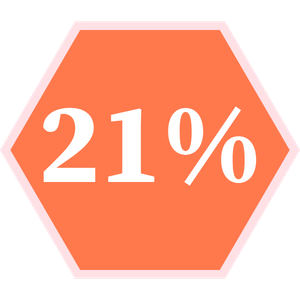
| More than 1 in 5 (21%) pediatricians report that families have trouble accessing developmental and behavioral health services for their children, with common barriers being a lack of available clinicians, limitations with insurance, transportation challenges, and the complexity of referral systems. These findings come from a new fact sheet from the RAPID Survey Project at Stanford’s Center on Early Childhood based on a survey of pediatricians about their experiences serving families with young children (under age 6). The fact sheet also examines family vaccine hesitancy, financial insecurities (including those related to housing and food), and challenges accessing social service programs. | | |
Ohio
Seventeen Head Start programs in Ohio are receiving additional funds as part of a broad release of $225 million in supplemental award funding from the Administration for Children and Families. The Ohio programs are to collectively receive $2.1 million in funds for facility improvements and to address family nutritional needs.
| | |
Federal
New America provides a helpful recap of federal early childhood policy updates, including the new Preschool Development Grant announcement, proposed and recently passed legislation, and the current state of proposed rules changes to large programs including Head Start and CCDBG.
| | The Ohio Department of Children and Youth has launched an updated Step Up To Quality (SUTQ) Payment Estimator. The tool helps childcare programs estimate potential Publicly Funded Child Care (PFCC) payments based on factors such as program type, payment category, location, and SUTQ rating. Programs currently serving PFCC families, or considering participation, are encouraged to explore the estimator to support financial planning and decision-making. | | In-person registration for Crane’s 13th annual Symposium on Children is now full! The keynote and awards ceremony will be available via livestream on Friday, October 16, from 10-11:30 a.m. ET. You can register to receive the livestream link here. | | A small town in Alaska whose economy is closely tied to the cruise industry made a choice to use philanthropic funds to increase childcare slots for local workers. Childcare advocates are examining more permanent funding sources, including a tax on tourism. | New America offers five policy recommendations to states to support quality kindergarten and early elementary grades, including successful examples. For instance, with many states not providing adequate funding for full-day kindergarten, West Virginia is highlighted for funding kindergarten at the same level as first grade. Pennsylvania and Massachusetts have made efforts in teacher licensure to ensure teachers of early grades have adequate early childhood training. | | A project from the Niskanen Center — a think tank focused on several policy areas, including social policy — published a “report card” on U.S. states regarding family benefits. Specifically, it assesses the benefits provided by the social assistance programs TANF and SNAP, and refundable tax credits like the EIC and CTC. Ohio’s scorecard is here. While there is no “grade” given, the state profile outlines several scenarios for hypothetical families (single parent with one child; married parents with two), the amount earned from benefits programs, and the federal poverty level percentage attained with the help of benefit programs. | An analysis from Single Mothers Grants (an online resource and directory website) ranks Ohio as the 20th best state for single mothers to raise a child, factoring in variables including housing cost burden, childcare prices and availability, costs for food and transportation, healthcare access, and more. It also ranks states according to various cost subcategories, and analyzes/ranks several metro areas. | |
This edition was written by Jamie O’Leary and Janelle Williamson.
| | | | |