Okanagan Starts Season at
Highest Drought Level: Check local restrictions and conserve water now
| | |
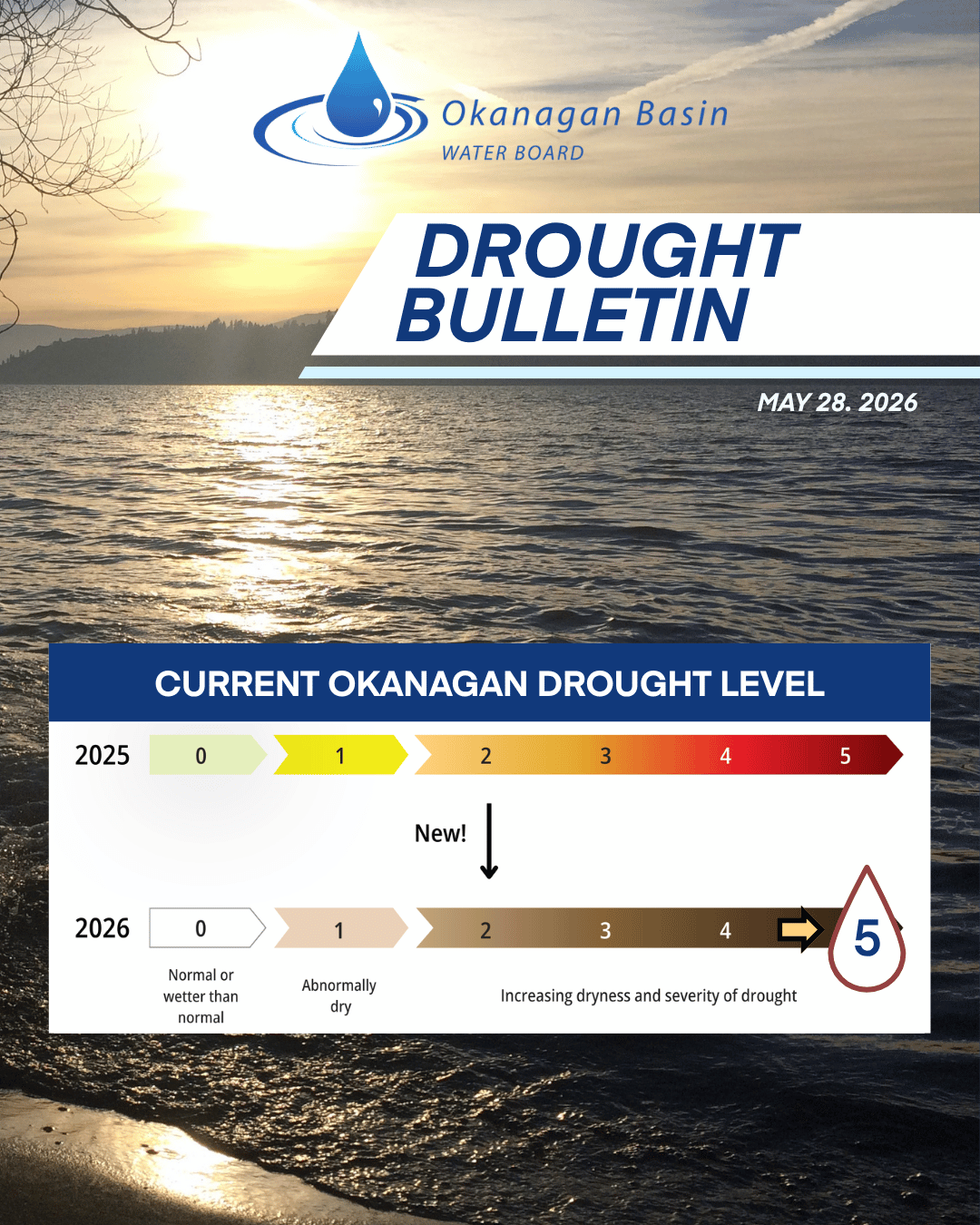
Despite some welcome rainfall in May, the Okanagan continues to face serious drought conditions. Years of below-normal precipitation and low snowpack — which melted earlier than ever recorded in many areas — have led the Province to set the first regional drought level of the season at Level 5, the highest possible rating.
With snowpack gone earlier than usual, streams across the valley have already seen their spring freshets finish. In most cases, these peak flows occurred earlier than normal and at lower-than-average levels.
Looking ahead
There is a chance parts of south eastern B.C. will see some rainfall in the coming days. While any rain is welcome, most sites in the Okanagan have received, at best, only half their typical rainfall through the end of May. A significant and sustained period of wet weather would be needed to improve conditions this season, and even more to make up for several years of accumulated drought.
Given the projected warm summer ahead, it is essential that communities manage water carefully to balance the needs of ecosystems, farms, fish, firefighting, and drinking water supplies.
What this means for your water
Water conditions will vary between communities depending on their water source. Several communities have already introduced watering restrictions. Given the ongoing multi-year drought and projected warm summer conditions, it is critical to look at watering restrictions and conditions information provided by your local provider. Please see the list below, or a full list is available at MakeWaterWork.ca
Snowpack critically low
- Snowpack, a major source of the valley’s water supply, was consistently low across the Okanagan this winter.
- As of May 15, 2026, the average Okanagan snowpack was 16% of normal.
-
Key monitoring sites such as Brenda Mines and Silver Star Mountain are already snow-free, and for both, this is the earliest on record. The previous earliest recorded snow free date was June 8 at Silver Star, and the new record is now May 24. Brenda Mines was snow-free on April 10 this spring, beating the previous 2024 record of April 20.
Spring precipitation far below normal
- May saw several key precipitation events, notably in the second week of May. However, despite this rain, Vernon, Kelowna and Penticton remain well below normal, and the long-term precipitation deficits remain. This long-term precipitation deficit is important as by the end of May about 40% of precipitation typically arrives in the Okanagan.
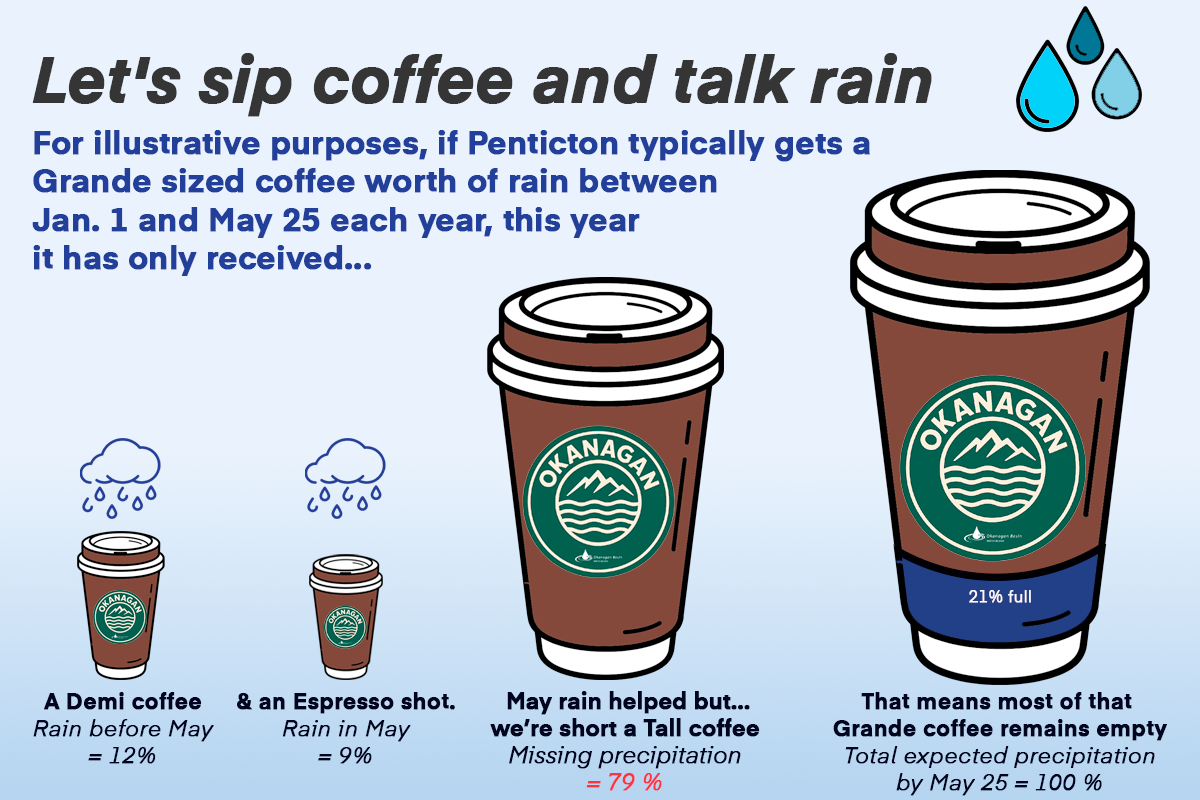
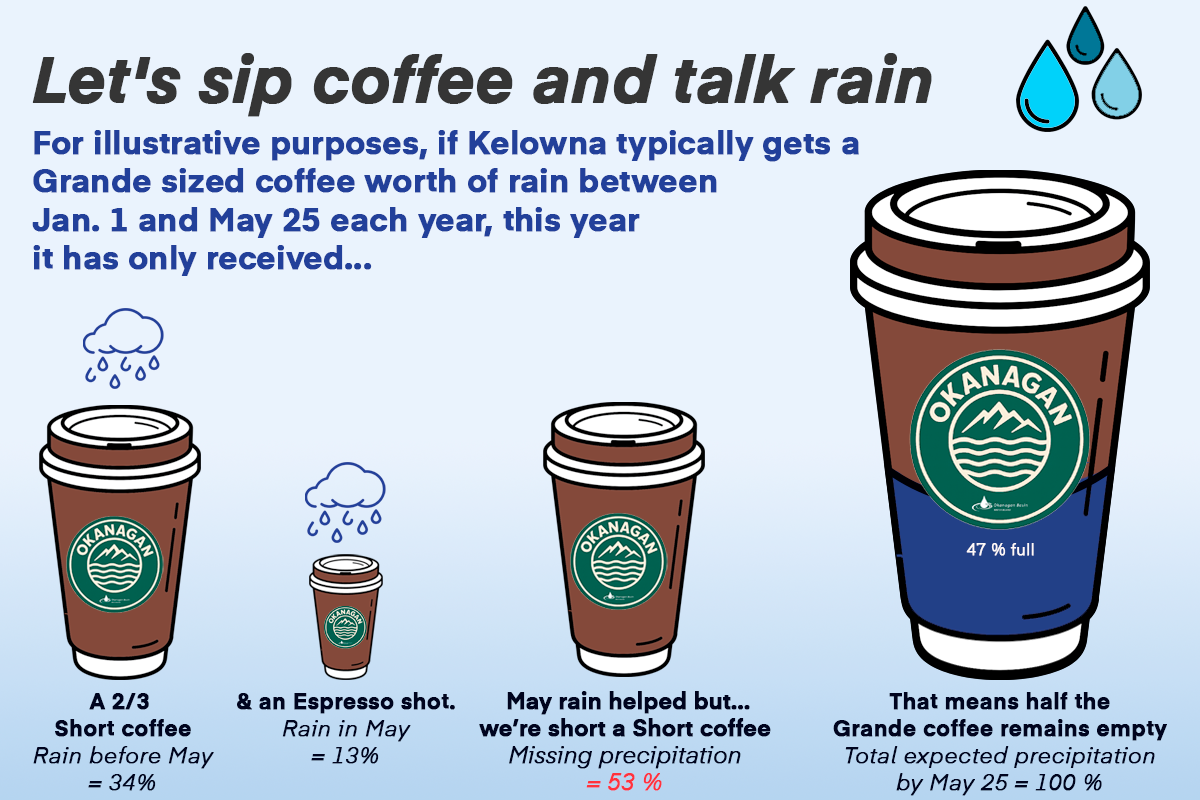
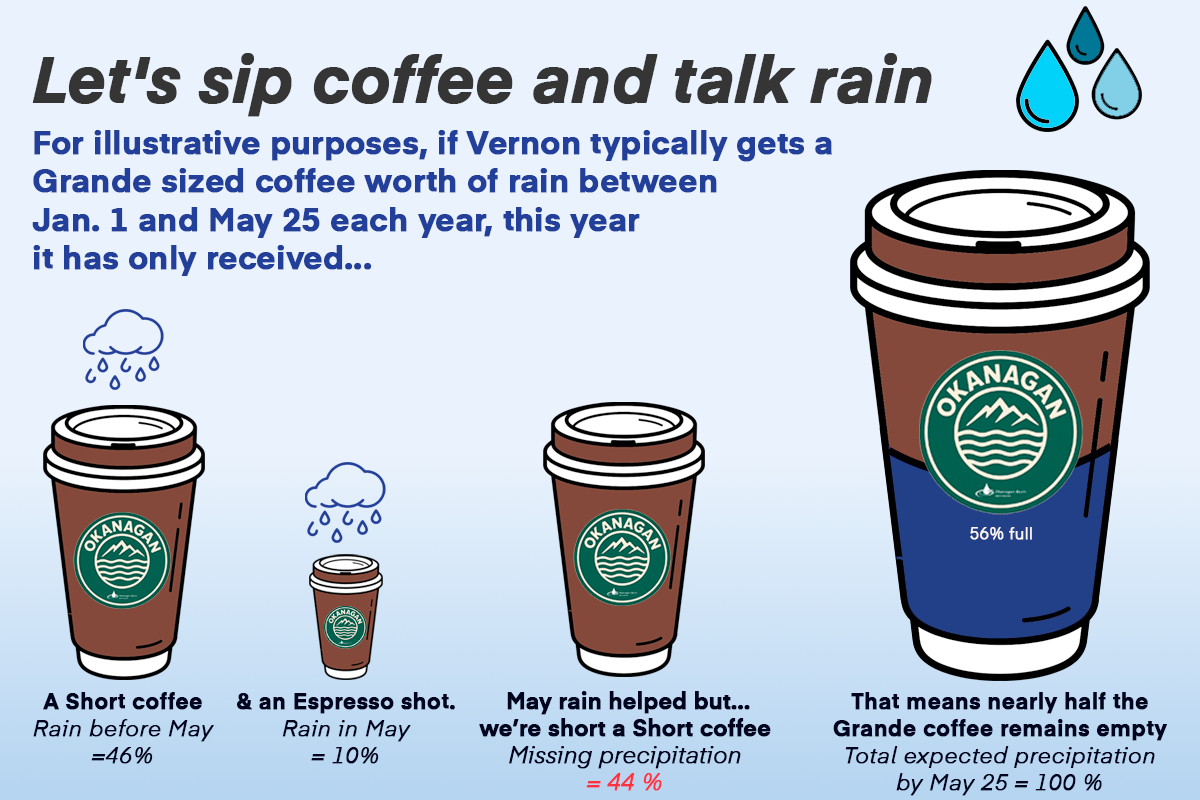
- As of May 25, 2026, Vernon is only at 56% of expected precipitation, Kelowna is at 47%, and Penticton is at 21%.
| | Figure 1: Illustrative percentage of rain received in Penticton from Jan. 1, 2026 to April 30, 2026 vs. May 1-25, 2026 vs. the missing amount of the 1991-2020 historical average expected by May 25 each year. Data from Environment and Climate Change Canada. | |
Summer streamflow risk remains high
- Streams across the valley have passed through their high-flow freshet phase and are likely beginning the lower flow summer phase. As of May 25, 2026, many creeks are already flowing well below normal for this time of year, following very low peak flows during the freshet.
- Stream temperatures are already quite warm, which may impact fish and could lead to water quality concerns.
Hotter, drier outlook increases drought risk
- Seasonal outlooks indicate an increased likelihood of El Niño conditions developing this summer. This increases the probability of warmer-than-normal conditions, although precipitation forecasts are less certain. Given the low snowpack, early freshet, and existing precipitation deficits, the region should prepare for continued drought risk even if periodic rainfall occurs.
- Seasonal forecasts can be used to provide a sense of likely future conditions, but they should not be taken as 100% certain.
What you need to know
- Drought conditions vary widely across the valley.
- Local water restrictions, not provincial drought levels, are what residents must follow.
- Okanagan Lake levels are actively managed as part of the Okanagan Lake Regulation System, so lake level alone is not the best indicator of drought severity. In many areas, drought will be seen first through low streamflows, stressed tributary reservoirs, declining groundwater levels, dry soils, warmer stream temperatures, and reduced water availability for ecosystems and water users.
- Collective action and individual water conservation remain essential to protect fish, agriculture, firefighting capacity, and community water supplies.
Note: Provincial drought levels are different from local water restrictions. To understand how the Province sets regional drought levels, click here.
| | |
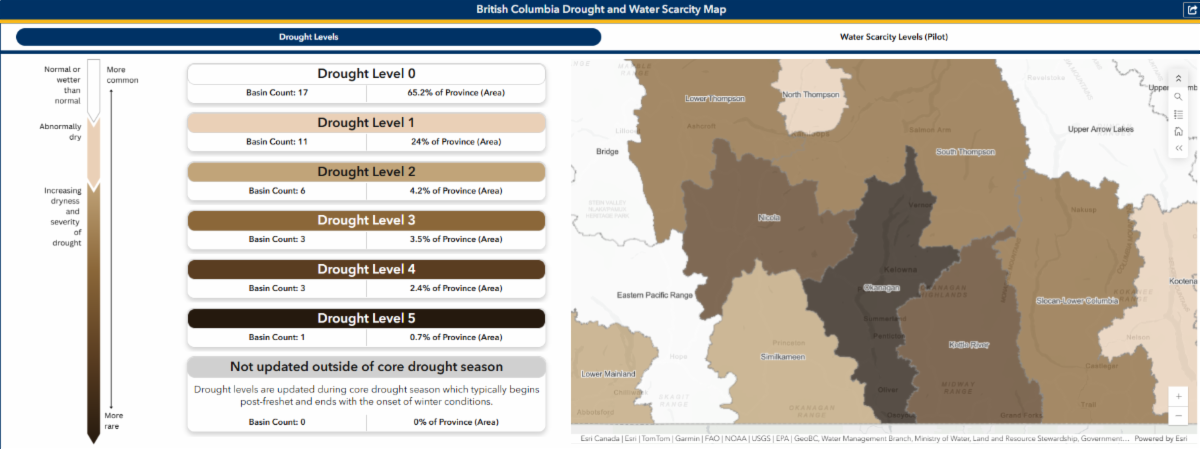
Regional Drought Outlook - The Okanagan is at a LEVEL 5
The Province's drought level colour palette has been updated this year to emphasize its purpose as a source of statistical information, rather than an alert for action. The updated colour palette does not change the meaning of drought levels or how drought conditions are assessed.
| | |
Local Conditions
Your local conditions are what matters most. Most communities have watering restrictions in place. Check out your community below to see what watering stage you are on, determined by your water service area's specific conditions.
If your community isn't listed below, you can find a full list of water providers in the Okanagan at MakeWaterWork.ca.
| | Figure 2: Illustrative percentage of rain received in Kelowna from Jan. 1, 2026 to April 30, 2026 vs. May 1-25, 2026 vs. the missing amount of the 1991-2020 historical average expected by May 25 each year. Data from Environment and Climate Change Canada. | | Figure 3: Illustrative percentage of rain received in Vernon from Jan. 1, 2026 to April 30, 2026 vs. May 1-25, 2026 vs. the missing amount of the 1991-2020 historical average expected by May 25 each year. Data from Environment and Climate Change Canada. | | | | |