On Epigraphs and Beginnings


I recently finished listening to the audiobook version of The Measure, a fascinating novel by Nikki Erlick. I was intrigued by the premise, under which everyone on Earth age 22 and over receives a mysterious box containing a string that reveals the length of their lifetimehow much time they’ve lived and how much time they have left. Some characters choose not to open their boxes, others do. The ramifications of this knowledge, or of one’s refusal to obtain it, are profound for individuals, families, governments, industries, and other parts of society.


As a reader and publisher, I appreciate how paratexts (parts of a book outside of the main text) can enhance one’s reading experience. I especially enjoy a good epigraph, defined as a page with “a quotation set at the beginning of a literary work or one of its divisions to suggest its theme,” according to Merriam-Webster. The epigraph for The Measure quotes the famous closing lines of Mary Oliver’s poem “The Summer Day”:


“Tell me, what is it you plan to do

With your one wild and precious life?”

It’s an ideal way to begin this novel about fictional characters contending with their mortality and planning and living out however many (or few) “wild and precious” days they have left. Woven into plot and characterization are big questions about the meaning of life, how we find purpose, where we put our time and energy, how we treat each other, and tensions between fate, power, and self-determination.


Epigraphs appear in memoirs, too. While I admit bias, one of my favorite such epigraphs is the Bible verse my father chose for his memoir and family-history book: “Those who dwell in love dwell in God, and God in them,” (1 John 4:16). I especially love that these words appear on the page in my dad’s handwriting, underscoring his personal devotion to their message of love and his commitment to sharing it through reflections on his life, his heritage, and his faith.


Here’s a writing prompt you might use to begin writing your own memoir, inspired by an epigraph of your choosing:


  • Identify a line of poetry, words from a sacred text, song lyrics, or a quote that feels something like a personal motto.
  • Imagine including these words as an epigraph that will point your memoir’s readers to the heart of your “one wild and precious life.”
  • Next, write this epigraph out by hand to claim it in your own penmanship as especially meaningful to you, and post it somewhere you can see it when you sit down to write.
  • Then, begin writing just one story or memory, using the epigraph as a springboard for your opening words.


For example, inspired by the epigraphs quoted above, here are a few openings:


At this point in my “one wild and precious life,” I am...


To “dwell in love” is the goal, isn’t it? In my life I’ve worked toward this goal by...


Enjoy! And contact me if you’d like to share how your writing is going. I know I speak for the rest of my team when I say we’d love to help you create a beautiful book, epigraph and all.

Megan St. Marie

President 

AARP Features 
Modern Memoirs, Inc.

by Genealogist Liz Sonnenberg

Are you a member of AARP? If so, you can read an article that I contributed to, which was posted earlier this month: “AARP Smart Guide to Genealogy: 29 Tips to Help You Discover Your Roots and Leave a Lasting Family Legacy by Matt Alderton. I was pleased to share some practical advice and resources, which I hope will inspire genealogy enthusiasts in their family-history research.


And, with several genealogy projects currently underway at Modern Memoirs, I am eager to help new clients take the first steps on their research and publishing journeys in the new year. I am also available to lead a variety of helpful genealogy workshops online or in person.


Contact me today for more information about these professional and practical opportunities.

Welcome to Our 
New Publishing Intern, 
Pam Gainer

In her staff bio on our website, new publishing intern Pam Gainer writes:


“I’m currently a student in Bay Path University’s MFA Creative Nonfiction Writing. During the Spring 2026 semester, I am taking the program’s Immersion in Publishing class, which includes an internship component. I am delighted to meet this requirement by serving as Publishing Intern at Modern Memoirs, Inc., where I hope to learn about different areas of publishing while supporting the staff’s work.”


Read more about Pam on the Meet the Staff page of our website and in her blog post, “Beginning,” linked below.

Featured Blog Posts by Our Staff

No Longer Viral

By Director of Publishing Ali de Groot


“Hope lies in dreams, in imagination, and in the courage of those who dare to make dreams into reality.”

—Jonas Salk, M.D.


Beginnings

By Publishing Intern Pam Gainer


“My internship at Modern Memoirs is a component of my Immersion in Publishing class at Bay Path University. One assignment is to write regular blog posts incorporating our internship experience. Fittingly enough, in our first post for class, we were asked to write about ‘beginnings.’”

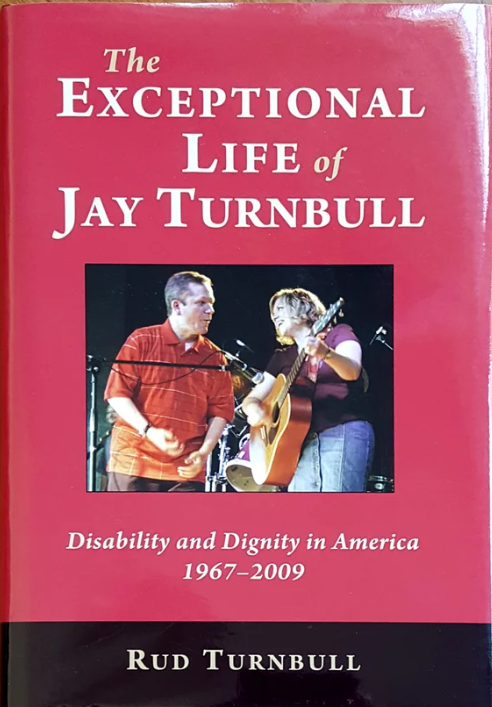
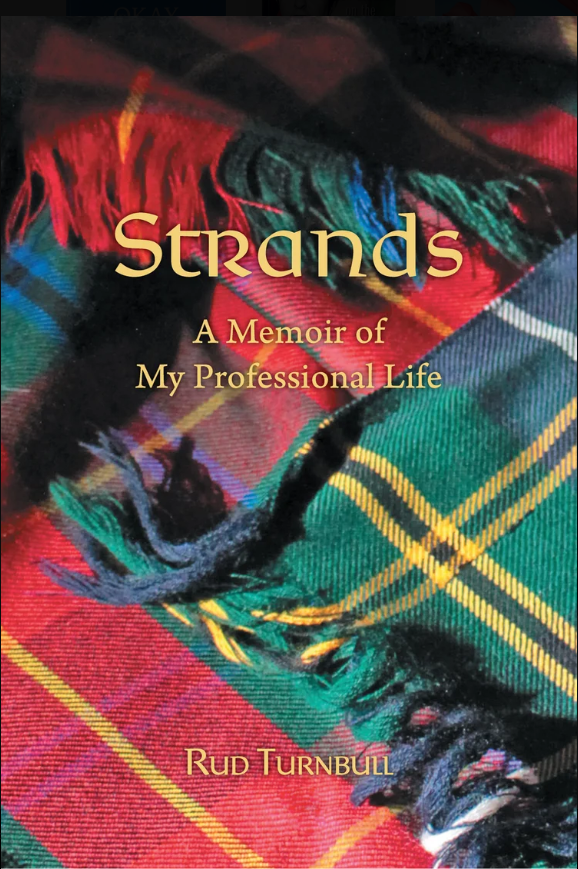
The Exceptional Life of Jay Turnbull: Disability and Dignity in America (1967–2009) and Strands: A Memoir of My Professional Life by Rud Turnbull

A Life Remembered

By Director of Publishing Ali de Groot


It is with a heavy and full heart that I write about the late Rud Turnbull, a former client who produced two impressive books with us. The first is a combined memoir and tribute book entitled The Exceptional Life of Jay Turnbull: Disability and Dignity in America (1967–2009), in which the author describes his experience raising a son with multiple disabilities while simultaneously embarking on a legal career in advancing disability rights. The opening lines:


Disability and dignity, and grief after my son’s unexpected death, are the subjects of this memoir. Jay caused me to use my training in law to reform disability policy and practice at a time when there were few rights for citizens with disabilities. This memoir is about Jay’s transformative power—the power to motivate us and others to declare, and then prove, that less able does not mean less worthy.


The second book, Strands: A Memoir of My Professional Life, covers more specifically Rud’s academic and professional life, ending with a long, yet only partial list of accomplishments, including offices held, publications, committees, and legislation.


There are many strands in my life: my psychological journey, the experiences I have had, and the meanings of those experiences. In this memoir, I weave these strands together to create the tartan of my life...


All the accolades and accomplishments aside, what I learned from Rud’s books is that we each have everything to learn from people with varying abilities.


What I remember most about Rud is that he was always open, curious, and gracious in his communications. Regarding the healing properties of writing, I clearly recall a decisive conversation with Rud. He was working on the first book and arrived at the section about his son’s unexpected demise. Rud told me, “I have an entire body of bereavement writing. But it’s nothing like the rest of the text. How can I incorporate it into this book? It doesn’t really go with it, does it?”


I came to find out that by “bereavement writing,” he meant the hundreds of poems and verse he wrote during several years after his son’s passing. Instinctively, I replied, “Keep it just as is. Simply add that section to the book. Don’t touch the poems; don’t edit them further.” With relief and some trepidation, he added that section, entitled “Grief… and Gratitude.”


The hundreds of poems stand tall in their own right, a singular testament to grief and a chronicle of a father’s bereavement. Here is just one:


Apparitions


Death surprised us. It came suddenly, massively, mercifully.

Jay is gone.

Never and forever: the two cruelest words.

Never to be held again. Forever absent.


Except in our minds and hearts.

And then – as suddenly as Jay died –

He returns.


It takes a kind of strength to grasp one’s grief by the horns, to write it down on paper, to expose one’s self to (seemingly) no one but a cold sharp void, getting nothing in return, only more pain. Yet in writing, the formless takes form, and is remembered, and is indeed present.


new_years_fireworks.jpg

Readers’ Responses to Last Month’s Question


If you were to interview a family member about their life, whom would you choose?


My great-great grandmother, whose portrait hangs on my wall!

Hilde Adler


My parents and grandparents, RIP.

—Ray Lambert


Memory Lane Stroll


January Question: What new beginning is in store for you this year?


We’d love to hear your brief personal reflections on the question of the month. Write your response for a chance to be featured in the next edition of our e-newsletter!

Staff responses:


Megan St. Marie: I will be in my 50s as of my next birthday, which feels like an exciting turning point filled with possibilty.


Sean St. Marie: I am finally taking guitar lessons again.


Ali de Groot: I’m dabbling in watercolor painting with zero goals—just as an escape!


Liz Sonnenberg: Exploring the lives of my ancestors who lived during the American Revolution.


Nicole Miller: Embracing fresh inspiration and bringing new creative ideas to life.


Pam Gainer: My publishing internship at Modern Memoirs.


Stop by to see us in person or online:


417 West Street, Suite 104

Amherst, MA 01002


www.modernmemoirs.com

Facebook  Instagram  LinkedIn

Was this e-newsletter forwarded to you?