Paddi LeShane, Co-Founder & CEO | | |
Just a few years ago, when PR and media pros talked about “narrowcasting,” the term carried an edge of skepticism. It was associated with echo chambers, fragmented audiences, and the fading of a shared public conversation. Today, the landscape has shifted. Narrowcasting is no longer a warning sign — it’s become a respected, even essential, tool in modern communications and thought leadership.
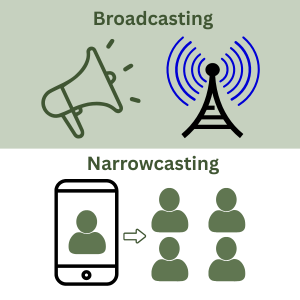
For decades, communicating to the public meant broadcasting: one message, shared widely, intended to reach people across demographics and viewpoints. That approach built a common starting point. Whether it was the nightly news, drive-time radio, or the morning paper, communities and industries alike operated from a shared understanding of events, even when they interpreted them differently.
| | | |
That world has changed. We now live in a firmly narrowcast era — one defined by personalized news feeds, curated stories, and algorithm-driven information flows. As one media analysis recently noted, “the news we get is hyper-tailored to our interests.” That reality reshapes how people consume information, how they form opinions, and how communicators must think about strategy.
For communicators, narrowcasting offers real advantages. It allows us to speak directly to specific audiences — policymakers, investors, community leaders, professional cohorts, or tightly defined customer segments — with greater precision and relevance. It’s efficient, easy to measure, and more capable of generating meaningful engagement than broad, one-size-fits-all messaging. As one recent piece on thought leadership put it, narrowcasting “shares a specialized message to a much more selective target audience,” helping organizations meet people where they are.
But the approach has limits. When audiences live inside separate information bubbles, we risk losing the shared narrative that strengthens trust across sectors, communities, and stakeholder groups. Hyper-targeted communication can unintentionally reinforce silos, distort perceptions, break down civility or leave broader audiences misinformed or disengaged. The result? A fractured information environment that complicates consensus-building — especially in public affairs, policy work, and crisis communications.
Media observers have long warned about the dangers of losing shared context. Gilbert Seldes cautioned that mass communication could slip toward “mass-produced mediocrity,” while FCC Chairman Newton Minow famously described television’s drift toward shallow content as a “vast wasteland.” Their concerns echo today, though the fragmentation now comes not from too few channels, but from too many.
So what does this mean for communicators — especially those of us navigating reputation, stakeholder engagement, and public perception?
It means the strongest strategies balance both approaches. Narrowcast when you need high-impact engagement with high-interest audiences — when nuance, personalization, or targeted mobilization are essential. Broadcast when you need to raise broad awareness, influence public mood, or ensure everyone starts from the same set of facts.
If you only narrowcast, your world shrinks. If you only broadcast, your message thins. The real impact lives in the mix. A few guideposts for today’s environment:
- Segment intelligently, but stay attuned to the larger public narrative.
- Keep authenticity front and center — real voices cut through even in tailored channels.
- Design crossover moments so stories move naturally across audiences.
- Protect credibility relentlessly — trust is the one asset that travels everywhere.
At its best, communication bridges perspectives, not just delivers messages. We help build connections across audiences, across viewpoints, across interests. Use both with intention, and you don’t just communicate — you create momentum - you can make things happen!
| | Beyond the Story: How Local Journalists Strengthen Our Communities | | Dan Tapper, Senior Director | | |
This holiday season, we wanted to take a moment at SLPR to appreciate all that our friends in the local and statewide media do for our communities and our state. Not only do they cover the stories that matter, but they also step up repeatedly to support important community causes.
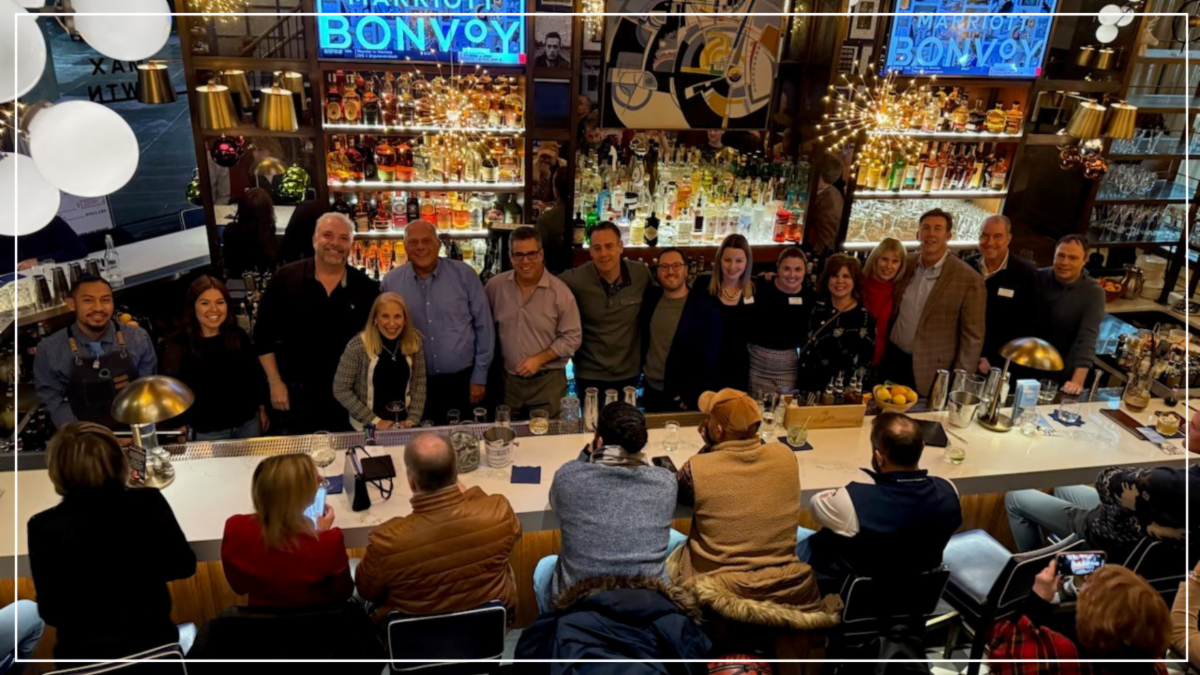
Recently, the Connecticut Brain Tumor Alliance held its annual Celebrity Bartending Night on Giving Tuesday at Max Downtown, with media members from more than half a dozen outlets coming together to tend bar and raise money for a great cause. To see Stephanie Simoni of WFSB working with Ronni Newton of we-ha.com, or Jimmy Altman of Fox 61 and Kara Sundlun of WFSB, high-fiving each other as they joked and laughed together, showcased that true spirit of community participation. It was inspiring to watch.
From the Manchester Road Race on Thanksgiving Day, to the St. Patrick’s Day parades in Hartford and New Haven, to the Salvation Army Holiday Store and more, the Connecticut media understands community partnership because it is important to them. Why? As they have told us many times, because this is where they live, and they want to help. This even applies to events like that recent Giving Tuesday, where they joined forces with competitors and “rivals,” put that aside for a night and worked for a common cause.
We saw this in October at the Connecticut Broadcaster’s Association annual awards dinner, where camaraderie was on full display, regardless of which media network or outlet they were part of. We saw it decades ago at an event celebrating the Old State House, where we pitted members of all the state’s TV outlets against each other riding on street-sweeping vehicles. It was fun, it was for a great cause, and everyone had a good time.
The generosity of their time and talents is always appreciated. We thank them all, and wish them a wonderful holiday season.
| | Tips and Tricks: No ‘buts’ about it: Swap in ‘and’—and watch what happens | | Brian Flaherty, Executive Vice President | | | | |
Few words can slam the brakes on a presentation, article, or speech like the word “but.” Granted, there are times when you want to set up two conflicting ideas to contrast. When that’s not your intent, that little, three-letter word can trip up the message you’re trying to convey.
This month’s tip: Swap in the word “and” instead of “but”—and watch what happens. This tiny change can make you sound more positive, more persuasive, and it might even strengthen the point you want to make.
“But” is a word that behaves badly. It’s like a scratch in the record in the middle of your favorite song.
| | |
How often have you heard someone begin a sentence with praise, only to follow it with a big, deflating “but?” It cancels out everything said before it.
We advise our clients to use positive language whenever possible. The words we choose don’t just convey information; they shape how people feel about what’s being said, and the person saying it.
“And” doesn’t negate. It connects. It allows you to pair honesty with optimism, acknowledge challenges while signaling forward motion. In communications, this matters.
Try these on for size:
“I agree with your idea, but we need a different timeline.”
- Translation: I don’t actually agree with you, and also, something is wrong.
“I agree with your idea, and we need a different timeline.”
- Translation: We’re on the same team, and here’s how we can make this work.
The second version is smoother, more constructive, and removes the feeling of contradiction.
To be sure, this doesn’t mean you need to be relentlessly cheerful. Sometimes “but” is the right word—if there’s a true contradiction or a real boundary involved. Use it deliberately, not automatically.
Effective communication involves a touch of grace, and small language choices make a big difference.
Don’t accidentally trip up your own message. The next time you instinctively reach for “but,” pause for a second, swap in “and,”—and watch how the tone shifts, how people relax, how your message lands more smoothly.
One three-letter word may not change the world—and it might just make your communication a whole lot better!
| | Case In Point: A Night of Recognition for SLPR and Our Clients | | Randi Sussman, Public Relations Associate | | |
Last month, the PRSA Greater Connecticut Chapter hosted its annual Mercury Awards, bringing together nearly 60 communications professionals, students, and guests at Albertus Magnus College. The evening was a wonderful reminder of how vibrant the PR community is here in Connecticut.
SLPR was proud to be part of the celebration. Dan Tapper and I attended alongside two of our clients — Lisa Farren, Director of Marketing and Communications at SoNE HEALTH, and Matthew Wallace, CEO & President of VRSim — as we reflected on the impactful work accomplished over the past year. We were honored to bring home four awards recognizing both our strategic campaigns and our collaborative client partnerships:
-
PR Tactics Bronze Award: VRSim Company Newsletter
-
PR Tactics Silver Award: SoNE HEALTH Launches New Medical Group
-
Strategic Campaigns Silver Award: On Message Digital Newsletter
-
Strategic Campaigns Gold Award: Dutch Point Credit Union New Branch Groundbreaking and Grand Opening
We’re grateful for the opportunity to support these organizations and proud of the creativity our team brings to each project. Celebrations like the Mercury Awards reinforce why we’re passionate about this work and motivate us to continue delivering thoughtful, results-driven communications for our clients.
| | |
Sullivan & LeShane Public Relations, Inc. | (860) 560-0001 | www.ctpr.com | | | | | |