Keeping AM Radio Alive: Why the Fight in Washington Matters to Connecticut and Beyond | Paddi LeShane, Co-Founder & CEO | | | | |
A quiet, but critical debate is unfolding in Washington, D.C. over the future of AM radio in American vehicles. With some automakers planning to drop AM radios from new models—especially electric vehicles—lawmakers from both parties are pushing back through the proposed AM for Every Vehicle Act, now gaining traction in Congress. For Connecticut, where local news, emergency alerts and community voices still rely on AM airwaves, the stakes are high.
For more than a century, AM radio has been a resilient part of American life, especially in emergencies. It remains a vital source of information during storms, power outages, and other disasters when cell networks and internet access fail. In Connecticut, where hurricanes, blizzards and severe storms are frequent threats, AM radio’s reliability is not a relic of the past—it’s a present-day safety net.
| | |
Yet, the AM dial is shrinking. The Federal Communications Commission reports a 20% decline in AM stations nationwide over the last 25 years. In Connecticut, only about a dozen remain, providing essential local news, sports, cultural programming and multilingual broadcasts for immigrant communities. Stations like WDRC 1360 and WTIC 1080 AM in Hartford, and WICC 600 in Bridgeport, still connect people to the issues that shape their daily lives.
Back in Hartford, Stephanie Perl, Senior VP and Market Manager at WTIC NewsTalk 1080, put it plainly: “The AM band has a rich heritage delivering news, content, sports and talk shows to millions of Americans. By retaining the AM band in vehicles, we ensure this valuable content remains accessible to the broad audience that is listening on the AM band.”
Industry observers like Luther Turmelle, a business reporter with Hearst Connecticut Media Group, note that some AM stations have shifted content to FM to stay viable. As Turmelle explains, “Radio industry experts say the reason for the migration of AM programming to FM stations is purely financial… most of the radio audience has moved to FM radio.”
However, that migration overlooks AM’s unique strengths: broad emergency reach, rural access and cost-free availability. Removing AM from cars cuts off a lifeline for many, especially during disasters.
Lawmakers see it the same way. US Senator Ed Markey (D-MA), a lead sponsor of the bill, argues, “AM radio is one of the most reliable ways to communicate with the public during emergencies. Automakers should not tune out the millions of Americans who depend on it every day.”
Federal safety officials agree. FEMA Administrator Deanne Criswell even weighed in and warned, “The Emergency Alert System relies on AM radio infrastructure to deliver critical information to the American people during disasters. Eliminating AM radios from vehicles threatens the resilience of our national emergency communications network.”
Connecticut’s delegation, including U.S. Senator Richard Blumenthal (D) and Congresswoman Rosa DeLauro (US 4th House District), is pushing to preserve AM radio access, especially for rural and suburban areas that don’t always have strong internet or cellular coverage.
Beyond emergencies, AM stations give voice to local culture and leadership in ways social media algorithms and paywalls can’t match. And with many seniors, low-income households and underserved communities still facing a digital divide, AM radio remains a free, reliable connection to the outside world.
The AM for Every Vehicle Act reflects broad bipartisan support, showing that public safety and community connection transcend party lines. If passed, the law would require automakers to keep AM radios standard in new vehicles, electric or otherwise.
As this debate plays out, the question is simple: What kind of connected community do we want to be? In our rush toward the latest tech, we shouldn’t leave people behind when the power’s out, the Wi-Fi’s down, or the next app can’t deliver the news fast enough.
In Connecticut—and across America—AM radio remains a steady voice: keeping us informed during a storm, celebrating our high school teams and holding leaders accountable. Protecting that voice is about investing in safety, resilience and community connection.
Shouldn’t everyone believe that keeping AM radio on the dial—and in the heart of our communities—where it belongs - is essential to our citizens?
| | Meet the Media: Q&A with Brian Schatman, WTIC-AM 1080 | | Dan Tapper, Senior Director | | |
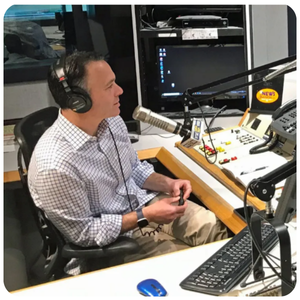
Brian Shactman is a seasoned and well-known member of the Connecticut media, having hosted the popular “Brian & Company” morning radio show weekdays from 5:30-9 am on WTIC-AM 1080 since 2021. A well-respected and award-winning journalist, he previously spent time at NBC Connecticut, MSNBC, ESPN and ESPN Radio. He is a native of Swampscott, MA and lives in Windsor with his wife, Jessica and their three children.
You’ve been hosting your morning talk show, “Brian & Company,” for a few years now. How are you enjoying it? What do like the most about hosting the show?
| | | |
Returning to Connecticut and hosting this show has been one of the most rewarding moves of my career. The reputation of the station and ability to talk with so many impactful people has been inspiring. As the number of news outlets continues to decrease, the importance of covering local issues has increased. I love focusing on communities and trying to share relevant conversations with as many people as possible. It has been energizing to simply talk to people and go beyond the short-answer format. Oh, and we have a lot of fun ... and I don't have to wear makeup!
Your career was largely in television before you made the transition to radio. Was it a difficult switch to make? And what was the biggest adjustment?
It's actually both difficult and easy. I am still adjusting to the different rhythms of radio -- the stops, starts and timing obligations. I consider myself a quick study, but there are still some moments where I say to myself, "What am I supposed to do next?!?!" What's been easy is that I love connecting with people, and I love to talk. The ability to be off-script and simply be myself in a more natural way has been transformative. There's pressure, sure, but it's pressure that I welcome.
You have made a concerted effort on your show to dive into the Connecticut business community, to get to know the people who contribute to our state’s economy and create good jobs for people. What have you learned from doing this? What stands out?
The people who love Connecticut, LOVE Connecticut. There's an underdog mentality that both helps and hurts. There is so much to be positive about, yet sandwiched between New York and Boston, there can be a bit of a complex about that. I have worked in both of those "other places," and I can say confidently that the positives far outweigh the negatives here; and there are things we can provide that they cannot provide. We just need more believers and more investment. That's what stands out: It always feels like certain cities and business interests are one big investment from getting to the ideal spot. Will it come or are we “waiting for Godot?” I don't know, but I will not stop trying to be part of the solution.
The media has changed significantly in the years since you began your career, and that is especially true in radio. Yet there is still something vitally important in keeping the public informed, as you do every day. How does this impact the way you do your job when you speak to the people of Connecticut every day?
The remaining outlets -- radio, TV, print, digital -- are all so vital. Honestly, I don't view anyone as competition, not (just) because I think we are the best, but because I want all to succeed. Again, I fear the impact of news deserts on our communities, and it's crucial that we find a way to continue with a viable business that both holds people accountable yet also promotes great things that are happening. A producer at ESPN once told me that he didn't care what I looked like or what I sounded like ... just tell him something he didn't know. I carry that mantra with me every day.
Finally, for those of us in the public relations world, what advice do you have for us in our efforts to spotlight the good works our clients do? How do you think we can be better and more effective in reaching out to the media?
Let the clients be themselves. Getting caught up in talking points may work with print or even segmented television, but on the radio, we TALK. If people like and connect to the messenger, they are more inclined to retain the message. My view on public relations has changed over the years. In the past, when I was receiving dozens of pitches a day, I was more inclined to ignore many of them. Now, I view it more as a partnership, and I have a deeper and broader appreciation for the goals on the other side of the microphone. I reserve the right to ask whatever questions I want, but unless it's a massively important, controversial or breaking story, I don't need to be pushing a guest all the time.
| | Speak Up! Let Them See What You Say. | | Brian Flaherty, Executive Vice President | | | | |
When you're giving a presentation or speech, you're not writing for the page—you're writing for the ear. That means your words need to be heard, understood and remembered in real time.
If a topic is important enough to warrant a presentation—and your audience has shown up to hear it—it’s important enough to prepare thoughtfully and deliver clearly.
Presenting is fundamentally different from writing an article. An article is like a photograph—rich with detail, dense with statistics and meant to be digested over time. A presentation, on the other hand, is more like a pen-and-ink drawing—simpler, more immediate and designed for impact in the moment.
| | |
Presentations must work within the limits of time, attention spans and what your audience can absorb on the spot. Whether it’s a speech, PowerPoint or webinar, here are five tips to make your message land.
Keep it simple. A clear presentation is often harder to build than a complicated one. Avoid the trap of “death by PowerPoint”—crowded slides, tiny text and complex charts. Use simple, easy-on-the-eye visuals that support your message, not compete with it.
Use visual language. Make your audience see what you say. I once worked with an engineer who cited a statistic on water use down to the ten-thousandth of a percent. I asked, “Can we just say it's a drop in a bucket?” We settled on “a bucket in an Olympic-sized pool.” That picture told the story.
Use humor—not jokes. A little humor goes a long way in helping people remember your message. But skip the canned jokes — like the one about what the duck said to the Pope on the golf course. Instead, let humor come naturally from your stories or delivery.
Use a simple, active voice. Ditch the jargon—avoid using passive words or bureaucratic phrases. Say “finish” instead of “finalize.” Say “talk” instead of “maintain a constructive dialogue.” Speak plainly and directly. Keep the energy going.
Practice it—out loud. Don't just scroll through your slides in silence. Present out loud, as if to an audience. Then do it again. You’ll find your rhythm, smooth out awkward phrases and improve your flow. Preparation is everything. Keep it simple, make it visual and rehearse until it feels natural.
So let them see what you have to say. As Fred R. Barnard, an advertising marketing professional, is credited with saying in 1921, “One picture is worth a thousand words.”
| | Case in Point: Saying “Yes” to Media — A Path to Thought Leadership | | Randi Sussman, Public Relations Associate | | |
When the media calls, say “yes.” That’s the mindset our longtime client Johnson Brunetti brings to media relations, and at Sullivan & LeShane Public Relations, Inc. (SLPR), we appreciate that enthusiasm. That’s how real thought leadership is built.
Since joining our client list, Johnson Brunetti has leaned into our joint media strategy of balancing paid media with earned media opportunities that help to demonstrate their subject matter expertise in all areas concerning finance, the markets and the economy. They have also shown a consistent willingness to jump on all opportunities, no matter how quick the turnaround, with meaningful contributions on topics people want and need to hear about from the experts.
| | | |
That mindset has helped us secure a wide range of placements for them, including commentary on everything from investing during the tariff wars to navigating a volatile economy. Their responsiveness has made it easier for us to position them as accessible experts and for reporters to view them as a go-to resource. Media outlets know they can depend on them not just for availability, but for excellent content and interviews.
At SLPR, we’re always on the lookout for opportunities that allow our clients to speak as thought leaders and offer timely, relevant insights to the public. And when a client like Johnson Brunetti is ready to say “yes” without hesitation, we can help them build visibility, credibility and stronger community recognition — one headline at a time.
| | |
Sullivan & LeShane Public Relations, Inc. | (860) 560-0001 | www.ctpr.com | | | | | |