PR Myths to Leave Behind in 2025—and What to Look Forward to in 2026 | Paddi LeShane, Co-Founder & CEO | | | | |
One month down, 11 to go.
As 2026 unfolds, the message is clear: organizations—and PR teams in particular—can’t afford to cling to outdated habits. The future belongs to companies that embrace strategic integration, human-centered storytelling, and nuanced reputation management. Those that resist change risk being left “home alone” with the dinosaurs of a bygone era. Adapt, evolve, and lead—and you won’t just survive the next wave of change; you’ll set the pace.
Looking back at 2025, one thing is clear: several long-held PR myths are overdue for retirement.
| | |
Myth: PR is only about media coverage
Media still matters—but it’s no longer the whole story. In 2025, the most effective organizations treated PR as a strategic function, integrating stakeholder engagement, internal alignment, digital storytelling, and issues management.
A strong campaign might include earned media, but it may just as easily prioritize executive visibility, stakeholder trust, policy positioning, or employee communications. If your story only lives in the news, it doesn’t live long.
Myth: A crisis is a one-day event
Crises don’t end when headlines fade. Trust recovery takes time, and the organizations that fared best in 2025 were prepared well before trouble hit. Rapid response is still essential—but it’s no longer sufficient on its own.
Crisis readiness now includes scenario planning, cross-team coordination, post-event analysis, and sustained reputation rebuilding. The strongest performers treated crisis communications as an ongoing discipline, not a moment in time.
Myth: Data will solve everything
Metrics matter, but judgment still leads. In 2025, many organizations chased dashboards that looked impressive but delivered little strategic insight.
The advantage going into 2026 belongs to teams that use data with discernment—to clarify audience behavior, measure narrative impact, and inform decisions rather than dictate them. Data is a tool, not a strategy.
Myth: Audiences want perfection
Perfection fatigue is real. In 2025, highly polished, manicured messaging often felt out of step with audiences seeking authenticity, clarity, and values-driven leadership.
Stakeholders responded more positively to organizations that were transparent, responsive, and human—even when the message wasn’t flawless.
Myth: PR success means more noise
In a crowded environment, clarity consistently outperformed volume. Successful PR in 2025 often meant fewer messages, sharper narratives, and a tighter focus on what audiences actually cared about. Being first mattered less than being right, aligned, and credible.
What 2026 Brings
If 2025 was a year of recalibration, 2026 is shaping up as a year of opportunity.
PR and policy will intersect even more
With elections, regulatory shifts, and economic uncertainty ahead, the connection between business strategy and public strategy will continue to deepen. Organizations that understand how policy affects operations, markets, and reputation will hold a competitive edge. PR teams able to translate those dynamics into clear messaging and risk mitigation will be indispensable.
Local credibility will matter more—especially for place-based and regulated organizations
Community relationships, regional identity, and local media will play a growing role in anchoring trust during national volatility. For employers with a physical footprint or policy exposure, investing in state and local credibility—particularly in markets like Connecticut—will be a differentiator.
Internal alignment will shape external reputation
Employees increasingly influence public perception through advocacy, social media, and everyday interactions. In 2026, organizations that align leadership, managers, and employees around clear narratives and shared values will protect and rebuild trust faster than those that focus only outward.
Human-centered storytelling will dominate
AI can support speed and scale, but it can’t replace lived experience, emotional intelligence, or accountability. The most effective strategies in 2026 will combine human judgment and perspective with smart digital tools—not substitute one for the other.
Reputation will increasingly be treated as a core business metric
Boards and executives are paying closer attention to reputation as a strategic asset tied to performance, risk, and long-term value. PR teams that can quantify reputation impact and connect it to operational outcomes will help lead this shift.
The dinosaurs of yesterday are still roaming, but the smart companies of 2026 won’t be stuck in the past. Adapt, evolve, and align strategy with insight—and you won’t just avoid being left behind; you’ll be the ones setting the trends others follow.
| | Meet the Media: Q&A with Ronni Newton of We-Ha.com | | Dan Tapper, Senior Director | | Ronni Newton has lived in West Hartford since 1998. She and her business partners launched the We-Ha.com site in 2014, and has been dedicated to editing, writing, and photographing hyperlocal news about her adopted hometown since 2010, after spending a decade as a freelance features writer and editor for local and regional lifestyle magazines. Journalism is her second career. Previously, she was a vice president for a major international insurance brokerage firm in Washington, DC. During her free time, Ronni enjoys running, strength training, reading novels and walking on the beach, and spending time with her Bearded Collie and husband. | | | |
In an era of declining local media coverage in cities and towns, you have doubled down on it and established yourself and your West Hartford-based news outlet as perhaps the best-known and most reliable source of local town news in Greater Hartford. Why was this so important to you, and to the town?
When I started in hyperlocal news in 2010 (the original version of Patch, when it first launched), I said that West Hartford was an ideal town for hyperlocal news because it "loves itself," and I say that with kindness in my heart. This is a highly-educated and engaged town, and interested in what's happening not only with its restaurants, but also with town government, the schools, and local sports. With fewer legitimate news sources these days, I think it's more important than ever for the community to have access to accurate information, and it drives me crazy when I see social media posts or actual articles that are sensationalized, misleading, or just downright wrong.
What is it about local news coverage that remains so important to you? So vital to the strength of the community?
National and international news may be seen as "sexier" than local news, but what happens on a local level generally has so much more of a direct impact on people's day-to-day life. Why is the road closed? What new business is opening in that vacant space? Who is the new school principal? How can I support (or access) the local food pantry? Why are taxes going up? My reporting answers those types of questions and I think the West Hartford community deserves access to the full and accurate information about what's happening – without a paywall.
Your coverage in West Hartford runs from covering town government activity to local feature stories and everything in between. What are your favorite kinds of stories to do?
The topic I have spent the most time covering over the years is the saga of the former UConn campus. I actually counted 75 stories (since 2012) about 18 months ago, so it's probably closing in on 100 now. I do kind of like the adrenaline rush of breaking news – and love to have the scoop on new restaurants – but my absolute favorite stories are feel-good features, especially when it includes creating impactful photo galleries like the annual Morley Red Wagon Food Drive. Positive features that involve animals are my ultimate favorite stories! I also love being able to write in first-person in my Business Buzz column – a feature on the We-Ha.com site that has really put it on the map.
Your news outlet, we-ha.com, is digital, and you seem to have mastered the art of delivering the news to people in a strictly digital form, rather than print. How have you been able to succeed in doing this?
I tend to write long so I love that I don't have a word limit on a digital site that limits telling a complete story! I came from print – like anyone who is a veteran did – but I love the immediacy of digital, the ability to easily update (and correct typos), and the ease of sharing articles. For the five years that I was also editor of West Hartford LIFE, many of my articles also ran in that publication or the West Hartford Press, which was kind of the best of both worlds.
Finally, a question for those of us in the public relations world. What kind of pitches work best for you? Any advice for those of us in public relations on what works well, and perhaps what does not work?
I greatly value my relationships with PR professionals, especially those who understand what We-Ha.com is, and what it's not. I don't need a print-ready press release, but let me know right away why something is relevant. My "what not to do" list: Pitching stories about something that has no connection whatsoever to West Hartford – and even calling me at 8 a.m. on a Sunday morning to see if I can attend something that day in another town (true story); emails that are a copied and pasted mess of fonts, colors, and links to photo galleries; addressing me as "to whom it may concern" or even worse, as "Mr. Ronni Newton" (but I am forgiving to those who put an "e" at the end of my name, as long as it's not with a "Mr." in front of it). The worst offense in my book is promising an exclusive and then also giving the story to someone else.
| | Tips and Tricks: Going for Gold - Picking the Right Platform for your Message | | Brian Flaherty, Executive Vice President | | |
We are often asked a deceptively simple question by our clients: “What’s the best way to get our message out?”
Our answer is the same one an Olympic judge might give a hopeful athlete: “It depends on the event.”
Rallies, press conferences, and op-eds are three common ways to be seen and heard, and they are very different disciplines. Each has its own scoring criteria, strengths, and risks.
| | | | |
The Rally: Maximum Energy, Variable Execution
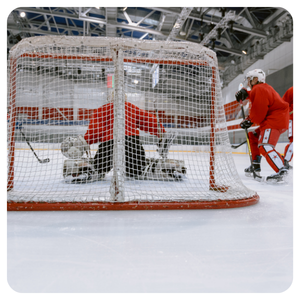
If communications were an Olympic Winter sport, the rally would be the hockey game, with high energy, big visuals, crowd involvement, and the possibility of scoring the goal or falling flat on the ice.
A rally is powerful when you need to demonstrate visible support and galvanize your team of allies. It creates images, emotion, and momentum. Cameras love signs and cheering crowds, reporters and politicians notice turnout, and supporters feel part of something bigger.
| | Rallies, however, are also subject to weather, both literally and figuratively. (Ask Paddi or Dan about the last-minute mini-cellphone fans someday!) A sparse crowd is like a wobbly, untied skate, and people notice. Message discipline can also suffer when enthusiasm runs ahead of strategy. Rallies are best when the goal is to show strength, urgency, or solidarity, and when you’re confident you can fill the stands. | | |
The Press Conference: Technical Precision
Think of the press conference as the slalom. It requires preparation, steadiness, agility, and flawless execution.
Press conferences work best when you have real news to convey: a development, a response to controversy, a significant announcement. They allow you to deliver your message directly, answer questions, and demonstrate transparency. When done well, they communicate confidence and control.
| | | When done poorly, however, they can lose their impact. If there’s no actual news, or if there are so many speakers at the microphone and reporters slip out the door without asking a question, you’ve missed your gates and skied off the course. Clarity and preparation win medals. You might have done better with a rally. | | | | |
The Op-Ed: Artistry and Endurance
The op-ed is more like figure skating: it rewards thoughtfulness, narrative, and persuasive grace.
An op-ed allows you to lay out an argument in full, uninterrupted sentences—something increasingly rare in modern media. It’s ideal for shaping opinion, reframing an issue, or explaining complexity. You control tone and substance, and if it is well-placed, it will reach influential readers. Once published, it’s also shareable on your social media platforms.
| | |
The trade-off? You don’t control publication timing, headline writing, or reader reaction. And unlike a rally, applause is mostly silent.
Choosing the Right Event
In our experience advising clients, the key is matching the event to your objective.
Need to show broad support? Rally. Need to respond to breaking news? Press conference. Need to shift how people think? Op-ed.
Olympians don’t compete in every event at once. Neither should you. The gold medal goes not to the loudest message, but to the one delivered with purpose, precision, and a strategy worthy of earning your spot at the top of the victory podium.
| | Case In Point: How We Build Media Relationships That Deliver | | Randi Sussman, Senior Manager, Integrated Communications | | The cold weather and snow-covered streets of Hartford mark the start of Connecticut’s 2026 legislative session. For many of our clients, this is the moment to clearly and strategically articulate their legislative priorities. For us at Sullivan & LeShane Public Relations, Inc. (SLPR), it is the point at which our advisory role comes into focus: shaping how those priorities are introduced, understood, and contextualized for the media and other key audiences. | | While the 2026 legislative session officially began on February 4, most organizations had their priorities established well in advance. Our role is to ensure the media understands not only what our clients will be focused on during the session, but why those issues matter, how they fit into the broader policy landscape, and identify them as organizations that can credibly speak about their concerns and recommendations with facts, passion, and knowledge. As the session unfolds, it’s what allows our clients to be included when policy debates intensify—and ensures their perspectives are understood when it counts most. It helps to move the needle in a positive and helpful direction to address the ideas or concerns that make up their legislative agenda. | | | |
This year, SLPR hosted two pre-legislative session online media briefings designed to establish that foundation. One briefing was held with the Connecticut Association of Apartments (CTAA), and another with the Connecticut Association of Boards of Education (CABE). Both were well attended by members of the media and provided a disciplined forum for our clients to present their perspectives, frame the issues, and respond to questions in real time. That groundwork matters.
CTAA pre-legislative briefing coverage from Connecticut Public.
CABE pre-legislative briefing coverage from the CT News Junkie and Hartford Courant.
| | |
Sullivan & LeShane Public Relations, Inc. | (860) 560-0001 | www.ctpr.com | | | | | |