Rebuilding Community: Lessons for Connecticut and the Nation | Paddi LeShane, Co-Founder & CEO | | | | |
In recent years and especially this past year, civil discourse in America has felt frayed to the point of rupture. Across the country, political debates regularly descend into personal attacks, rigid tribalism, and reflexive polarization. In Connecticut, too, communities and public forums are wrestling with how to lower the temperature, open space for respectful disagreement, and rebuild habits of democratic exchange.
Nationwide, media incentives amplify outrage, social media rewards rhetorical excess, and many public figures model zero-sum arguments. Heated exchanges are not new to American politics, but as platforms reward extremity, the volume of public conversation has risen to a breaking point. President John F. Kennedy’s reminder still resonates today: “Civility is not a sign of weakness.” The willingness to speak with respect, even in the face of disagreement, is not a concession, but rather a sign of strength.
| | |
In Connecticut, the strain of division shows up in school board meetings, zoning debates, library content fights, and local governance. Many towns are seeing citizens disengage out of frustration, while others come ready to do battle rather than exchange ideas. State leaders are responding. House Bill 6762, for example, would form a civics engagement and media-literacy task force to revitalize education in debate, discussion, and democratic participation. Local advocates are also experimenting with new forums for civil dialogue, giving residents safe spaces to explore issues without fear of attack.
But real change starts with individuals. What can any one of us do when faced with a heated debate on issues we care deeply about? The answer lies in simple, everyday practices. Listen first, rather than rushing to argue. As Barack Obama once advised, “If you’re tired of arguing with strangers on the internet, try talking with one of them in real life.” Sometimes, slowing down and seeing the humanity across the table changes everything.
Another principle is to assume good intent—or at least try to understand another person’s values before judging their motives. Focus on ideas, not personal character. Senator Margaret Chase Smith warned against the politics of smear decades ago, declaring, “I don’t want to see the Republican Party ride to political victory on the Four Horsemen of Calumny—fear, ignorance, bigotry, and smear.” That call to separate issues from personal attacks is timeless.
And perhaps most importantly, look for common ground. President Ronald Reagan once said, “Peace is not the absence of conflict, it is the ability to handle conflict by peaceful means.” Disagreement is natural, but the way we manage it defines the health of our democracy.
Amid all this, the Governor M. Jodi Rell Center for Public Service at the University of Hartford is working to restore civility, integrity, and shared norms as anchors for public life. The Rell Center has been putting those principles into practice since its founding in 2011. Established to honor the values of Connecticut’s 87th governor, the Center emphasizes integrity in government and responsible participation in civic life. Through it’s Keep It Civil! Campaign, it partners with legislative and municipal leaders to improve dialogue in public meetings. Its annual Civility Awards recognize schools and organizations modeling respect and constructive engagement. Debate series, forums, and podcasts further extend the conversation, encouraging students and community members alike to embrace disagreement as part of democracy, not a threat to it.
Governor Rell’s life and career were defined by honesty, humility, and a steady hand in difficult times. The Center that bears her name carries that legacy forward. As former Senator Alan Simpson wisely noted, “If you want to be respected by people you disagree with, you have to show them that you respect them.” That simple truth may be the key to restoring our democracy’s foundation.
Reviving civil discourse will not erase differences, but it can ensure that debate strengthens democracy rather than weakens it. Respect, listening, and shared commitment to the public good are not luxuries—they are the tools that will allow communities in Connecticut, and across the nation, to chart a more constructive path forward.
Or as former Congresswoman Barbara Jordan so powerfully put it: “What the people want is very simple – they want an America as good as its promise.”
| | Meet the Media: Q&A with Abigail Brone, CT Public Radio | | Dan Tapper, Senior Director | | |
Abigail Brone is Connecticut Public's housing reporter, covering statewide housing developments and issues, with an emphasis on Fairfield County communities. She received her master's from Columbia University in 2020 and graduated from the University of Connecticut in 2019. Abigail previously covered statewide transportation and the city of Norwalk for Hearst Connecticut Media.
What made you want to go into journalism, specifically radio?
I grew up knowing writing was a skill of mine and something I wanted to pursue in my career, but wasn’t sure what form it would take. I chose journalism since I feel like the work helps others, inspires change and means something to more than just me. From there, I was drawn to radio by being able to hear a story and play with the surrounding sounds. Setting a scene is so different with audio.
| | | |
What appeals to you about working for a public media outlet?
The accessibility of the work, anyone being able to consume reliable content without cost is valuable to me. The range of possibilities, not only in story subject matter, but in formats is fun as well. One day I am working on a quick, one-minute daily story and the next I am recording a video for our social media or appearing live on a talk show or podcast.
You are currently covering housing in Connecticut, which has become one of the top and most passionate issues in the state; few issues have gotten as much attention for the past year or two. What is it like to cover a story that you know so many people—from so many different perspectives—are watching so closely?
It hammers home the importance of double-checking my work and ensuring I work with reliable sources, companies and materials. Working with such a debated and hot topic is definitely more pressure, but it also increases the reward and the value of my work to audiences.
Working for Connecticut Public affords you the opportunity to do longer-form news stories than more traditional “quick hit” radio reports. What do you enjoy about this? And are there any stories that stand out that you have been pleased to have reported?
I often enjoy my longer-form pieces more than my daily stories. Despite being infinitely more work, the reward is also far greater. They allow me to capture more elements of each story, often tracking down someone who has experienced what I am writing about and can offer compelling first-hand accounts. My favorites are always the ones that are accepted and aired nationally by NPR. The first that comes to mind is this story on burnout among homeless service providers.
Finally, one for our friends in the public relations world. Is there any advice you would give those pitching you stories on how to best make that pitch? Things they should touch on? Things they should avoid?
In a pitch, try to ensure the subject matter is relevant to the reporter you’re contacting. I often receive generic pitches that don’t pertain to housing. While more detail is always the way to go, make sure the crux of the pitch is upfront. Sometimes I read three sentences into a pitch and am still unsure what the story is supposed to be.
| | Tips and Tricks: Flip the script - When speaking, begin at the end | | Brian Flaherty, Executive Vice President | | | | |
As hard as it is, every October, most baseball fans have to remember that “There’s no crying in baseball,” just as everyone who is speaking to a group or giving a presentation should remember that “There’s no spoiler alert in a speech.” In other words, it’s okay—in fact, it’s imperative—when giving a speech, to begin at the end.
It has been said that “the ear is one-tenth the organ of the eye,” which means that people take in far less information when listening than they do when reading an article or book. And giving a speech is not the same as reading a “whodunit,” walking through a recipe, or a step-by-step instruction manual.
| | |
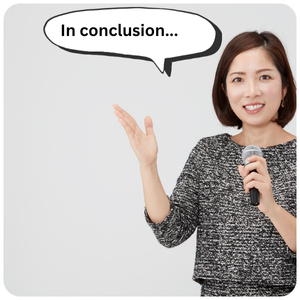
We tell our clients that a speaker has precious few seconds to capture their audience’s attention, so it’s critical to start with your conclusion—get your key message out first, and then firm it up with supporting points.
Case in point: When my children were young, I’d ask them how their school day went. They would start with something like, “We rode the bus, said the Pledge of Allegiance, went outside for gym, I got an ‘A’ on my paper…” and so on, in sequence through their day, invariably ending with, “It was a great day!”
Using this example, we’d say, start with “It was a great day!” and then use the other points to illustrate how and why it was a great day.
Flipping the script like this doesn’t come naturally. Beginning at the end can feel like you are giving away a secret. But you’re a speaker, not John Grisham, so deliver the goods up front, and then support them, repeat them (always important in a speech), and you’ll make a stronger impact on the audience!
| | Modern Public Relations: Strategies for Connecting with Today’s Audiences | | Randi Sussman, Public Relations Associate | | |
Public relations is an evolving field, and a lot has changed in the past 20 years. I’ve seen that transformation firsthand, having started my career in 2004. At that time, media relations and press releases were the backbone of public relations. They remain powerful tools, but the field now includes so much more than it used to.
The industry has grown to include:
-
Digital communications: websites, podcasts, and video content that explain complex topics and showcase expertise
| | |
-
Social media: real-time engagement with audiences, customers, and communities
-
Owned content: blogs, newsletters, and thought leadership pieces that deliver your message directly
At Sullivan & LeShane PR, we understand the importance of using each platform effectively to share our clients’ messages. Modern public relations requires a thoughtful blend of traditional public relations and digital strategies.
Today, we continue to be strategic storytellers. We work with our clients to craft compelling messages that resonate across news outlets, social media, blogs, podcasts, and more. With so many channels, public relations has become more conversational—it’s about building relationships and engaging directly with audiences, not just pushing out messages. Our role is to help clients navigate this landscape and use the right tools to strengthen those connections.
Having lived through the continuing evolution of the public relations industry, I’ve learned how to tailor messaging so it reaches the right audience with the right message at the right time. And as the industry continues to evolve, our entire team at Sullivan & LeShane PR remains committed to helping clients stay ahead of the curve and connect with the audiences who matter most.
| | |
Sullivan & LeShane Public Relations, Inc. | (860) 560-0001 | www.ctpr.com | | | | | |