|
Cultures and civilizations tend to overestimate the stability of their states, only to find themselves regularly discomposed by internal pressures and tensions too great for the system to hold. And yet always in them there are those who harness from the chaos the creative force to imagine, and in the act of imagining to effect, a phase transition to a different state.
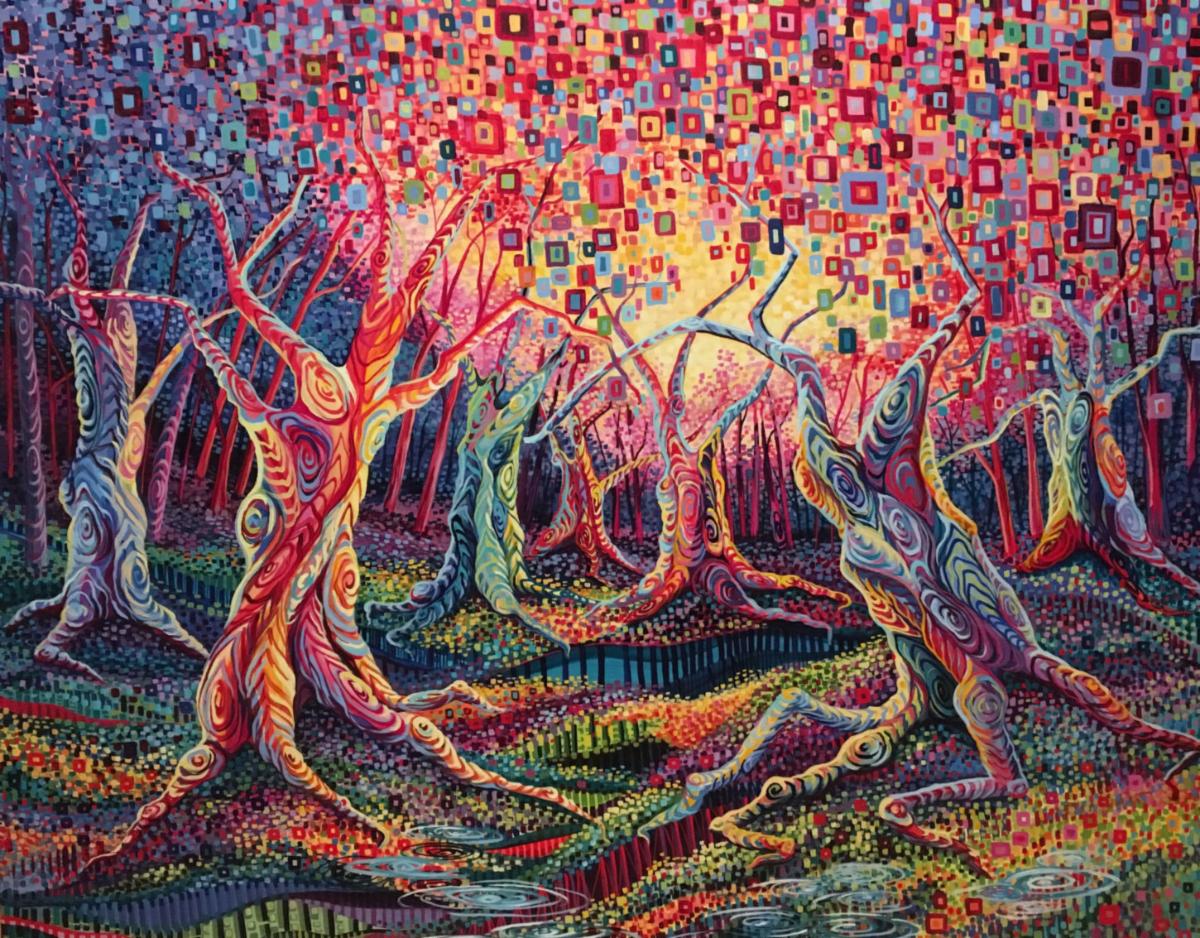
We call those people artists — they who never forget it is only what we can imagine that limits or liberates what is possible.Hesse observes that artists feel these painful instabilities more deeply than the rest of society and more restlessly, and out of that restlessness they make the lifelines that save us, the lifelines we call art. A century before Toni Morrison, living through another upheaval, insisted that “this is precisely the time when artists go to work,”
Hesse insists that artists nourish the goodness of the human spirit “with such strength and indescribable beauty” that it is “flung so high and dazzlingly over the wide sea of suffering, that the light of it, spreading its radiance, touches others too with its enchantment.”
The next war did come, the world’s grimmest yet — a phase transition that nearly destroyed every particle of humanity. And yet something was left standing, stirring — that same creative force that made of the chaos a new era of possibility never previously imagined: civil rights and women’s liberation, solar panels and antibiotics, One Hundred Years of Solitude, and Nina Simone.
|