Click Image Below to View Rep. Ford's Special Edition for December Holidays | Rep. Ford Stands with the People | |
On This Day in History
December 15, 1791
| |
History Reports
December 15, 1791
| Bill of Rights is finally ratified | |
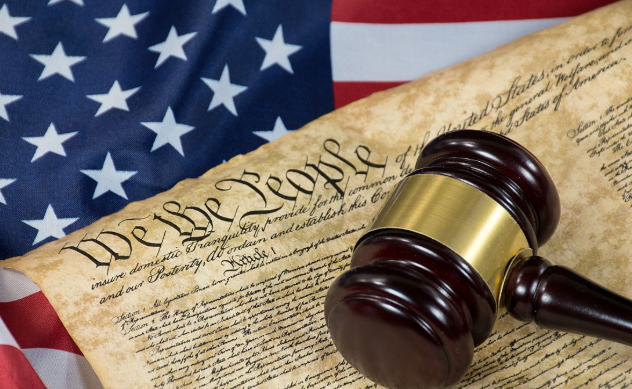
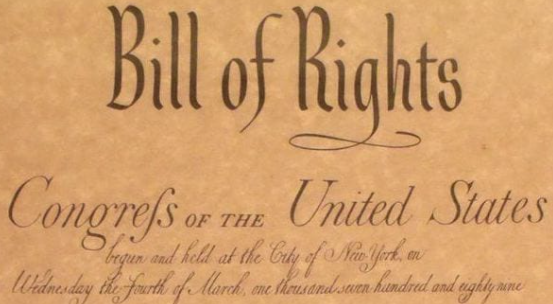
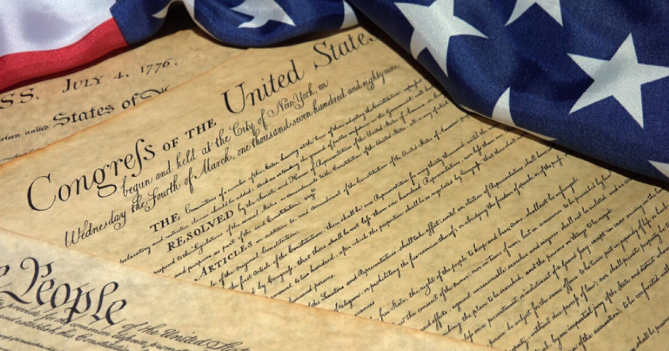
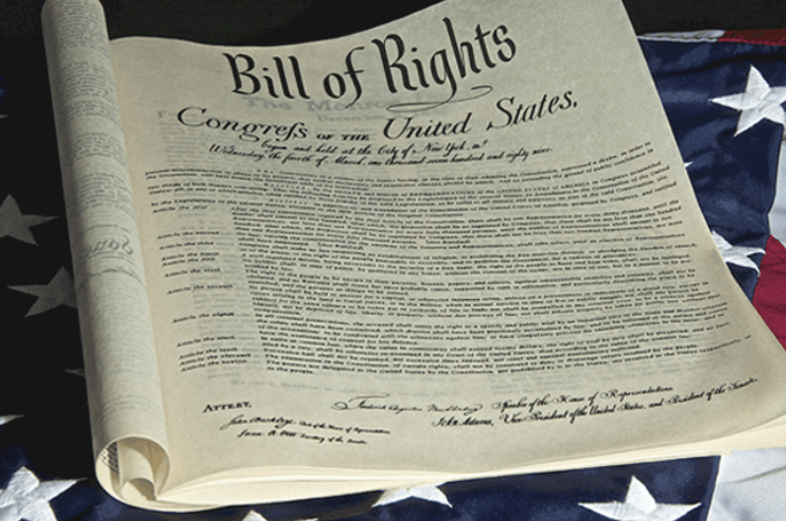
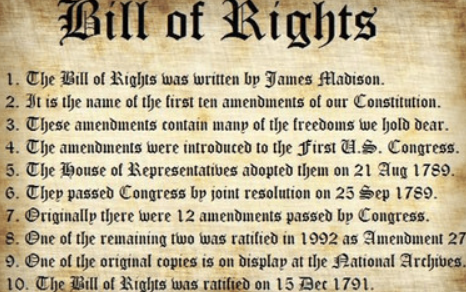
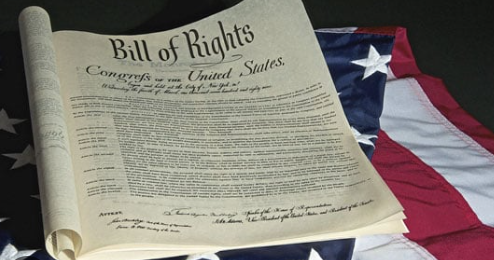
Following ratification by the state of Virginia, the first 10 amendments to the U.S. Constitution, known collectively as the Bill of Rights, become the law of the land.
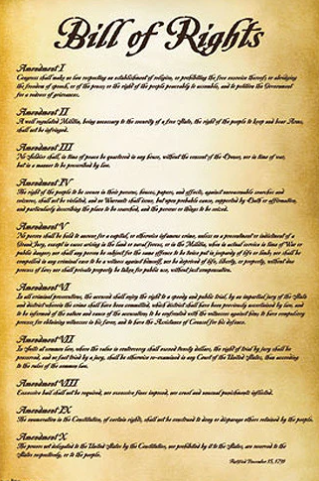
In September 1789, the first Congress of the United States approved 12 amendments to the U.S. Constitution and sent them to the states for ratification. The amendments were designed to protect the basic rights of U.S. citizens, guaranteeing the freedom of speech, press, assembly, and exercise of religion; the right to fair legal procedure and to bear arms; and that powers not delegated to the federal government would be reserved for the states and the people.
| The United States Bill of Rights: Ratified December 15, 1791 | |
The need for the Constitution grew out of problems with the Articles of Confederation, which established a “firm league of friendship” between the States, and vested most power in a Congress of the Confederation. This power was, however, extremely limited—the central government conducted diplomacy and made war, set weights and measures, and was the final arbiter of disputes between the States. Crucially, it could not raise any funds itself, and was entirely dependent on the States themselves for the money necessary to operate. Each State sent a delegation of between two and seven members to the Congress, and they voted as a bloc with each State getting one vote. But any decision of consequence required a unanimous vote, which led to a government that was paralyzed and ineffectual.
| Why wasn't the Bill of Rights originally in the US Constitution? - James Coll | |
The American Civil Liberties
Union Reports
March 4, 2002
| The Bill of Rights: A Brief History | |
"[A] bill of rights is what the people are entitled to against every government on earth, general or particular, and what no just government should refuse."
- Thomas Jefferson, December 20, 1787
In the summer of 1787, delegates from the 13 states convened in Philadelphia and drafted a remarkable blueprint for self-government -- the Constitution of the United States. The first draft set up a system of checks and balances that included a strong executive branch, a representative legislature and a federal judiciary.
The Constitution was remarkable, but deeply flawed. For one thing, it did not include a specific declaration - or bill - of individual rights. It specified what the government could do but did not say what it could not do. For another, it did not apply to everyone. The "consent of the governed" meant propertied white men only.
| The Bill of Rights: What Does it Say? | |
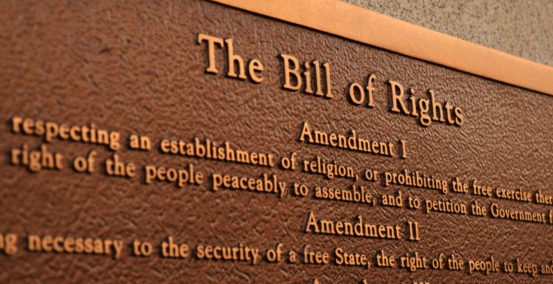
The Bill of Rights is the first 10 Amendments to the Constitution. It spells out Americans’ rights in relation to their government. It guarantees civil rights and liberties to the individual—like freedom of speech, press, and religion. It sets rules for due process of law and reserves all powers not delegated to the Federal Government to the people or the States. And it specifies that “the enumeration in the Constitution, of certain rights, shall not be construed to deny or disparage others retained by the people.”
| Click Image Below to View Bill of Rights Transcription | The Bill of Rights: Every Amendment, Why it's important, and How it limits the government |
Blueprint for an AI Bill of Rights
| Among the great challenges posed to democracy today is the use of technology, data, and automated systems in ways that threaten the rights of the American public. Too often, these tools are used to limit our opportunities and prevent our access to critical resources or services. These problems are well documented. In America and around the world, systems supposed to help with patient care have proven unsafe, ineffective, or biased. Algorithms used in hiring and credit decisions have been found to reflect and reproduce existing unwanted inequities or embed new harmful bias and discrimination. Unchecked social media data collection has been used to threaten people’s opportunities, undermine their privacy, or pervasively track their activity—often without their knowledge or consent. | |
A 3-minute guide to the Bill of
Rights - Belinda Stutzman
| |
Debate Over the Bill of Rights
A History of Controversies and Conflicting Interpretations
| The Bill of Rights, while foundational to American democracy, has sparked numerous controversies since its adoption in 1791. Critics have debated the extent of its protections, particularly regarding the balance between individual freedoms and government authority. Issues such as the scope of the Second Amendment, the application of the First Amendment in the digital age, and the interpretation of due process under the Fifth and Sixth Amendments continue to provoke legal and political disputes. These controversies reflect ongoing tensions over civil liberties, national security, and the evolving understanding of the Constitution's intent. | What were some of the key debates over the framing of the Bill of Rights? | The Center for the Study of the American Constitution Reports | The Debate Over the Bill of Rights | |
Antifederalists argued that in a state of nature people were entirely free. In society some rights were yielded for the common good. But, there were some rights so fundamental that to give them up would be contrary to the common good. These rights, which should always be retained by the people, needed to be explicitly stated in a bill of rights that would clearly define the limits of government. A bill of rights would serve as a fire bell for the people, enabling them to immediately know when their rights were threatened.
Additionally, some Antifederalists argued that the protections of a bill of rights was especially important under the Constitution, which was an original compact with the people. State bills of rights offered no protection from oppressive acts of the federal government because the Constitution, treaties and laws made in pursuance of the Constitution were declared to be the supreme law of the land. Antifederalists argued that a bill of rights was necessary because, the supremacy clause in combination with the necessary and proper and general welfare clauses would allow implied powers that could endanger rights.
| |
From 1791 to Today
The Bill of Rights' Ongoing Influence on U.S. Law and Society
| The Bill of Rights, adopted in 1791, has had a profound and lasting impact on American society, shaping the nation's legal and political landscape. By enshrining fundamental freedoms such as freedom of speech, religion, and the right to a fair trial, it set a critical precedent for protecting individual liberties. Over time, these ten amendments have influenced countless legal rulings, civil rights movements, and debates about the balance between personal freedoms and government authority. The Bill of Rights remains a cornerstone of American democracy, ensuring that the rights of citizens are safeguarded in the face of changing social and political dynamics. | |
The United States Courts Reports
December 12, 2019
| Now Cherished, Bill of Rights Spent a Century in Obscurity | |
The Bill of Rights is among our nation’s most admired documents, guaranteeing broad personal liberties and inspiring some of the federal courts’ most famous and polarizing cases. And yet for well over a century, the Bill of Rights was one of America’s best kept secrets.
Ratified on Dec. 15, 1791, a day now celebrated annually as Bill of Rights Day, the first 10 Amendments to the U.S. Constitution were a response to broad public fears that a new national government might run roughshod over individuals and states.
| |
The New Hampshire Bar
Association Reports
January 1992
|
The Bill of Rights: Why Has It Succeeded
| |
January 1992
U.S. Senator Joseph R. Biden, Jr., who chairs the Senate Judiciary Committee, was featured as the keynote speaker during the Bar’s recent 1992 Mid-Winter Meeting Banquet on January 24. A written copy of Senator Biden’s speech on the
Bill of Rights was provided to Bar News and appears below.
Just a month ago – as our public life was dominated by talk of the recession and the crisis in our health care system, and our private lives were filled with final preparations for the holidays – a very important occasion passed by, largely unnoticed. Though we celebrated it hardly at all, it was, in fact, a landmark in the history of human freedom: the 200th anniversary of the ratification of our Bill of Rights.
Unlike the 1976 bicentennial, for this anniversary, no tall ships sailed. There were no televised parades; few bands played, and no floats rolled. No markets were shut down, and no shops were closed. It was, in short, simply another day in the
life of America.
Yet nothing testifies more eloquently to the success of our Bill of Rights than the fact that millions of Americans passed its 200th anniversary going about their own business – laughing and loving; arguing and agreeing; buying and selling; praising and protesting – without having to give a moment’s thought to the document that protects their right to do whatever it was that they were doing.
| |
UC Santa Barbara Music
January 22, 2024
| The Bill of Rights — Past, Present and Future | |
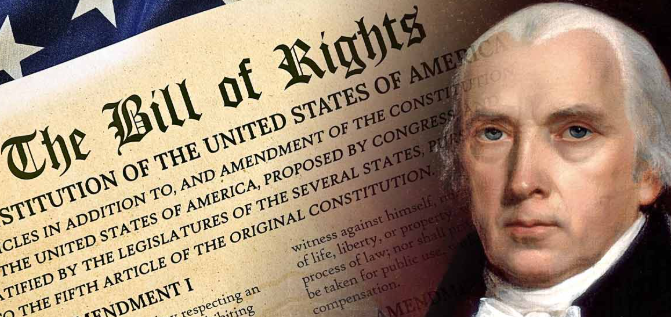
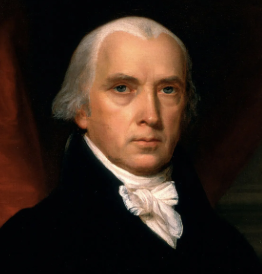
Two hundred and twenty-five years ago, James Madison, statesman, political theorist and future fourth president of the United States, penned a series of amendments — 17 in all — designed to guarantee each citizen’s personal freedoms and to limit the power of government. Whittled down to 10, they eventually became the Bill of Rights.
An exhibition in the Special Collections department at the UC Santa Barbara Library offers a rare glimpse into the history of this important document. “The Emergence of the Bill of Rights” features a selection of books, documents and other artifacts that explore how the Bill of Rights came to be and how the principles contained therein represent Americans’ sensibilities regarding civil rights and liberties.
| |
Plural Policy Reports
June 13, 2024
| The Bill of Rights and Civil Liberties | |
According to the Declaration of Independence, people are born with “certain unalienable Rights, [and] among these are Life, Liberty and the pursuit of Happiness.” The Bill of Rights expanded on this idea, listing rights that the government could not violate. Over time, the U.S. Constitution has been amended to add more civil liberties.
What are these civil liberties, and how do we define them? What controversies surround them today? Let’s dive a little deeper into the history of the Bill of Rights and other constitutional amendments.
| Rep. Ford Asks for Your Input | Do you believe the Bill of Rights adequately protects individual freedoms in modern society? | Please select the option that most accurately reflects your opinion and vote accordingly. | Which of the following amendments in the Bill of Rights do you believe is the most important? | Please select the option that most accurately reflects your opinion and vote accordingly. | Key Facts Every Illinoisan Should Know | |
Click Image Below to Learn More About Federal Safety and Security Grants available to
NonProfit Organizations Statewide
| |
Click Image Below to Learn 10 Things You Should Know About Filing Unemployment Insurance
| Click Image Below to Learn About Cash, SNAP and Medical Assistance | |
Click Image Below to Read a List of Important Words Americans Should Know | |
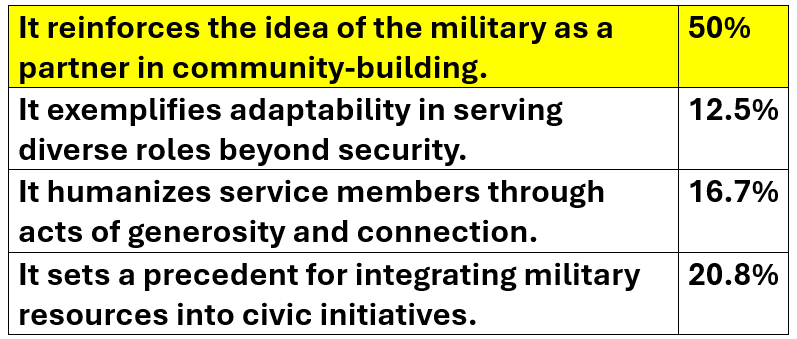
What lessons can be learned from the 25-year legacy of the "Chicago Christmas Ship"? | |
What role does the U.S. Coast Guard play in shaping perceptions of service and dedication beyond its traditional responsibilities? | |
Click Image Below to Learn More About Health Insurance | Click Image Below to Learn More About Homeowners Assistance | Knowing History Spotlight Moment | |
Lead Story
U.S. Constitution
1791
Bill of Rights is finally ratified
LGBTQ+
History
1973
The American Psychiatric Association removes homosexuality from its list of mental illnesses
Sports
1925
Madison Square Garden formally opens with NHL game
Sports
1974
“Catfish” Hunter becomes MLB’s first free agent in modern era
1970s
1973
Kidnapped grandson of Getty billionaire found
Holocaust
1961
Architect of the Holocaust sentenced to die
Landmarks
2001
Leaning Tower of Pisa reopens
World War II
1945
General MacArthur orders end of Shinto as Japanese state religion
Sports
1973
Jockey Sandy Hawley wins record 500th race
Native American History
1890
Sitting Bull killed by Indian police
Art, Literature and Film History
1944
Legendary bandleader Glenn Miller disappears over the English Channel
Art, Literature and Film History
1993
“Schindler’s List” opens, wins Steven Spielberg his first Oscar
Crime
1988
James Brown begins his prison sentence
Cold War
1978
United States announces that it will recognize communist China
World War I
1917
Russia reaches armistice with the Central Powers
| |
It's National Ugly Sweater Day | |
|
Ugly sweaters have been around for as long as people created a concept of fashion. They weren’t always made purposefully — maybe someone made a mistake in their knitting, or tried a new design that didn’t turn out as cool as they thought it would. However, it wasn’t long before grandmas everywhere were knowingly (maybe while chuckling to themselves) knitting their grandchildren ugly Christmas sweaters complete with baubles and “I love Grandma” lettering. They knew what they were doing. We’re watching you, grandmas.
| |
|
Cash in on Holiday Cheer
The Surprising Benefits of Starting an Ugly Sweater Business
| |
|
Click Video Below to Learn More
Ugly Sweater Company - Create your own custom ugly sweater
| |
|
Help is available; speak with someone today:
Suicide Prevention & Crisis Lifeline - Dial 988
| |
|
“Knowledge will forever govern ignorance, and a people who mean to be their own governors, must arm themselves with the power knowledge gives. A popular government without popular information or the means of acquiring it, is but a prologue to a farce or a tragedy or perhaps both”
-James Madison, 4th U.S. President
| |
Employers
Learn How to Start an Ugly Sweater Business
| |
Click Image Below to View Job Highlights From Previous Days | |
Click Image Below to View Jobs Based on Industry | |
Click Image Below to View
Federal, State and City Jobs
| | Eighth District Community | |
Explore Local Small Businesses Through the Eighth District Chamber of Commerce | |
|
Despite losing 9.1 million jobs in the first two quarters of 2020, small businesses job growth rebounded swiftly following the COVID-19 recession. In the four quarters following, small businesses have gained 5.5 million jobs, making up for 60 percent of the decline during the early pandemic.
Small businesses have generated 12.9 million net new jobs over the past 25 years, accounting for two out of every three jobs added to the economy. For more, read Advocacy’s latest fact sheet, “Small Business Job Creation”.
| Click Image to Connect with a local Chamber of Commerce and Explore Job Postings in the Eighth Legislative District | Ford's Upcoming Events and Community Events | |
Rep Ford's Special Edition Newsletters | |
Stay connected with Rep. Ford to stay up-to-date with the latest news and upcoming events! | | | | |