|
Private equity firms depend on key performance indicators (KPIs) to evaluate portfolio company performance, identify opportunities, and make informed investment decisions. Revenue growth, EBITDA margins, customer retention, operating costs, and cash flow all help investment teams understand how individual businesses are performing. But what happens when three portfolio companies report the same KPI using three different definitions? On the surface, the numbers may appear comparable. In reality, they may tell entirely different stories. For private equity firms managing multiple investments, inconsistent KPI definitions can create a misleading picture of portfolio performance and make it difficult to distinguish genuine improvements from differences in reporting practices.
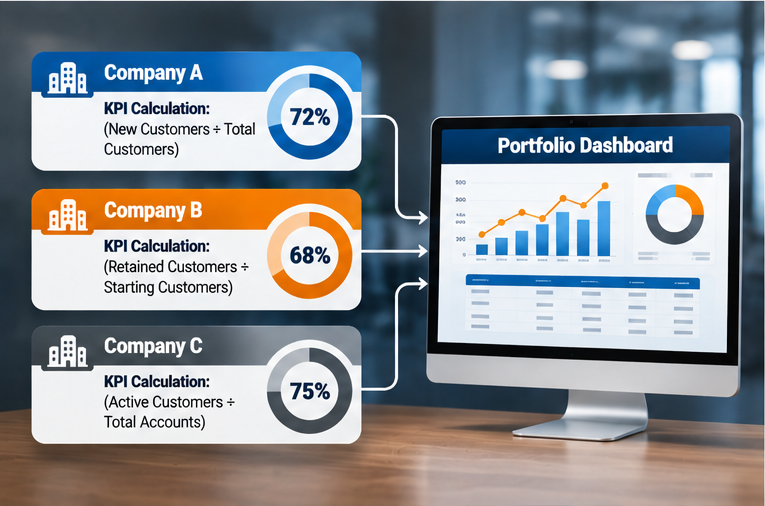
The problem often begins with how individual companies define success. Consider three portfolio companies reporting customer retention. Company A measures the percentage of customers who remain active at the end of the year. Company B calculates retention based on recurring revenue, accounting for upgrades and downgrades. Company C excludes certain customer segments or uses a different reporting period. Each company may be accurately reporting its results according to its internal methodology, yet the investment firm is left comparing three fundamentally different measurements. Without a consistent definition, portfolio-level dashboards can create an illusion of clarity while masking important differences in business performance.
These discrepancies extend well beyond customer retention. EBITDA calculations may include different adjustments, revenue reporting may reflect different recognition practices, and operational metrics may vary according to how each business collects and categorizes information. When these differences are not clearly documented, investment professionals spend valuable time reconciling reports, questioning assumptions, and requesting additional explanations from portfolio company management. What should be a straightforward performance review becomes an exercise in validating the numbers before meaningful analysis can begin. More importantly, inconsistent reporting can influence decisions about capital allocation, operational improvements, and strategic priorities.
The challenge becomes even more significant as private equity firms expand their portfolios. Each acquisition brings its own financial systems, reporting processes, spreadsheets, and management...Click the link below to finish the article
|