|
If you can't raise the drawbridge, lower the river.
-Edward A. Doherty
| | |
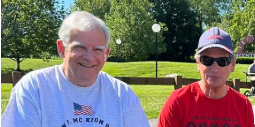
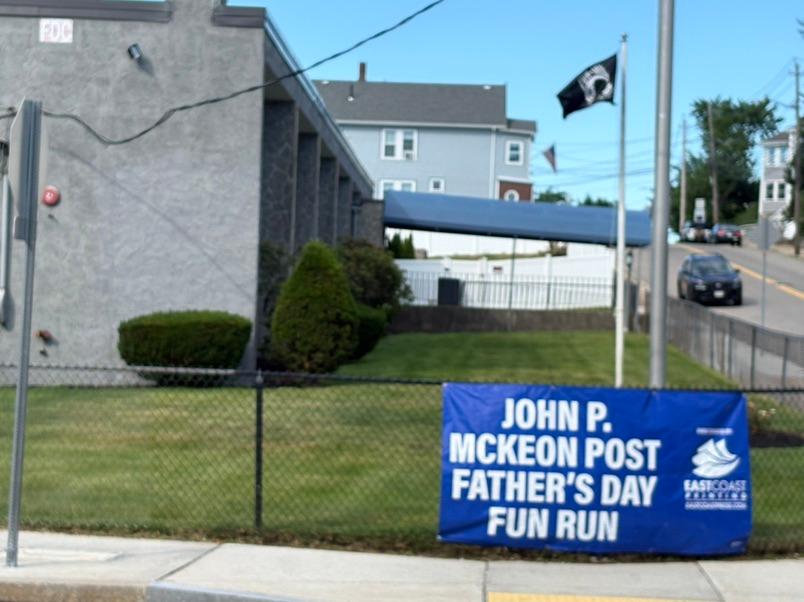
Each year for the past ten to twelve years, my brother Paul and I have run in the McKeon Post 5k in the Dorchester area of Boston. It was my Dad's veteran's post, and the event is on Father's Day, so we do it in his memory and to refresh our memories of him.
I am proud to announce that with very little training, I was able to finish the event and I did not finish last, close, but not last.
Of course, the day after, my legs were killing me, but I'll get over it. The important thing? I still have it, or at least part of it.
| | One MInute to Go in the Period, One Minute. | | |
Father’s Day has a way of sneaking up on you.
It is not always the holiday itself that gets me. It is not the cards in the store, the restaurant ads, the golf shirts, or the annual reminder that fathers are apparently very hard to buy for unless they need a grill, a tie, or a gadget that solves a problem they never knew they had.
What gets me is the quiet part of the day.
- The drive.
- The cemetery.
- The song that comes on at the wrong time.
The memory that shows up without being invited.
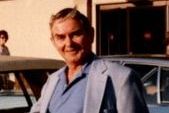
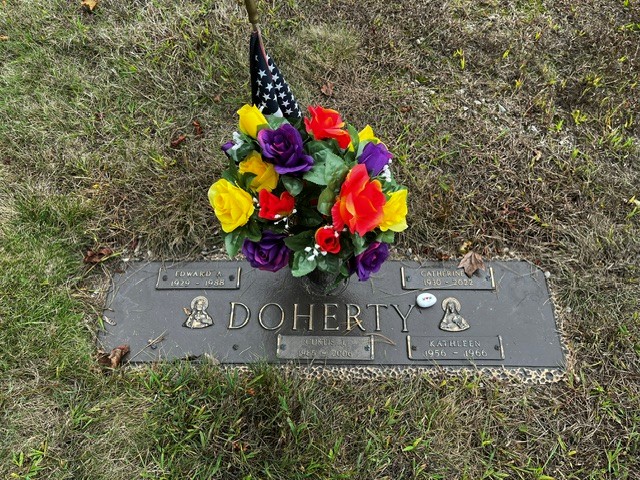
My father, Edward Ambrose Doherty, has been gone 37+ years. He was only 59 when he died, which seems younger to me every year. When you are 30, 59 sounds old enough. When you get closer to 75, 59 sounds like someone left the movie before the plot had a chance to develop.
| | |
I have said many times that I would love to have five more minutes with him. Not a day. Not a week. Not some grand Hollywood reunion scene with violins and soft lighting. Just five minutes. Five minutes where he could speak, I could listen, and I could ask a question or two that I was too young, too distracted, or too stubborn to ask when I had the chance.
The problem, of course, is that I would never be able to keep it to five minutes.
I would want to ask him about his life, not just the parts of his life that overlapped with mine. I would want to know what he was proud of, what he regretted, what scared him, what made him laugh when no one else was around, and whether he knew how much of him quietly took up residence in me.
When your father is alive, he is a person. When he is gone, he becomes a collection of scenes.
Mine appears to me that way now. Not as one continuous story, but as flashes.
- A hockey rink.
- A frozen pond.
- The old Boston Garden.
- A veterans’ post in Dorchester.
- A hospital hallway.
- An ugly sweater.
None of them would seem dramatic enough for a movie. But together, they explain a lot.
| | |
My father had a bad heart. Not the kind people mention casually when they say they have to watch their diet or take it easy.
His heart was so bad that by the time he was 40, he was disabled, uninsurable, and unemployable. His cardiologist told him he had less than five years to live.
That is a sentence no one should have to carry around. But he carried it. And because families carry what one person is handed, we carried it too.
He outlived the prediction by years, which always felt less like medicine and more like stubbornness. If determination could be prescribed, my father would have had a pharmacy full of it.
| | |
One of my earliest powerful memories of him is from Ridge Arena in Braintree. When Bobby Orr and the Bruins had Boston in a hockey trance, new rinks started appearing around Massachusetts.
Ridge Arena in Braintree was one of them, a 7,000-seat building that felt to a kid like Madison Square Garden, the Boston Garden, and heaven all rolled into one.
My father drove me there when I was around 13 or 14. I remember standing next to the glass behind the goalie and looking out at the ice. It was bright. It was cold. It was alive. I remember thinking that someday I wanted to be on the other side of that glass.
That is where the dream started. Not in a speech. Not in some formal father-son life lesson. Just a ride across town and a few minutes standing near the glass.
That is one of the things I understand better now. Parents are often shaping their children when they think they are just driving them somewhere.
| | |
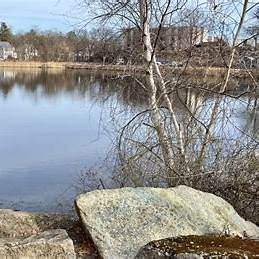
Hockey was part of the family language. We lived near Eaton’s Pond, and when winter cooperated, that pond became our neighborhood rink. My father had played on the U.S. Army All-Star Hockey Team while stationed in Germany in the early 1950s, and even years later, everybody knew he could skate.
I learned a humbling lesson on that pond. Whenever we were both available to be picked for a pickup game, he was chosen before me. Always. Even after I was playing organized hockey, even after Ridge Arena was part of my life, the old man still went first.
That is hard on a young ego. It is wonderful for an older memory.
| | |
Then there was the old Boston Garden. My father and his brothers had Bruins season tickets back when the tickets were expensive at $3 each. I did not get to go often because the brothers were serious hockey fans and, apparently, children were not always the highest and best use of a Bruins ticket.
When I did go, I had a job.
Near the end of a period, the public address announcer would say, “One minute to go in the period. One minute.” That was my cue. I would head downstairs under Section 41 and claim space at the beer rail, which was basically a narrow shelf against the wall. I would spread out my arms and guard that territory like I was protecting a national landmark. My father and uncles would watch the end of the period, come down for their beers, and have a place to stand.
When I turned 21, the job description changed. I still saved the space. But now I was also old enough to buy the beer.
This was not exactly a Hallmark commercial, but it was family. And sometimes family is not found in perfect words. Sometimes it is found in knowing where to stand when there is one minute to go in the period.
| | |
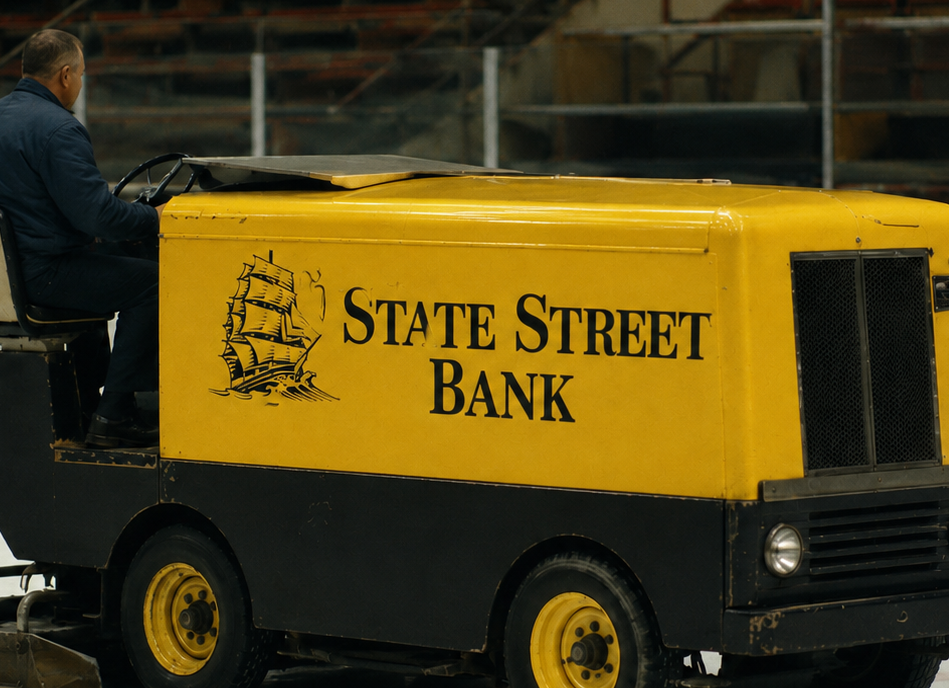
My father also had one of the better business ideas I ever saw up close. At Bruins games, he watched the Zamboni circle the ice between periods and had a simple thought: that moving machine was advertising space. He was working for State Street Bank at the time and suggested that the bank put its name on the side of the Zamboni.
The next time I went to a game, there it was.
Was it the first Zamboni ad ever? I cannot prove that. Wikipedia may not support my family legend, and I am not going to hire a research team to settle the matter. But in my mind, every advertisement on every Zamboni in every rink in America traces back to my father looking at that ice and seeing something other people had missed.
To this day, when the Zamboni comes out, I think of him.
| | |
Another place that belonged to him was the John P. McKeon Post 146 in Dorchester. It was more than a veterans’ post to him. It was a community, a clubhouse, a second home, and at times a stage for the kind of humor only veterans and Irishmen can fully explain.
The day he was supposed to depart this world, the guys at the Post threw him a party that was half celebration and half funeral. Sick humor? Irish humor? Veteran humor? Probably all three. Because he lived for years after that, it made the party both premature and strangely perfect.
I spent some time at the Post with him over the years. I was there for quick beers after work. I was there for Thanksgiving dinners they served to local senior citizens. I was there for Super Bowl parties where the squares were worth enough money to make the game almost secondary. I was there for my son’s baptism.
My father loved that place, and that place loved him back.
That is another thing I appreciate more now. Every person needs somewhere they are known. Not just recognized. Known. A place where people understand your jokes, your flaws, your history, and your usual seat.
| |
My father gave me advice over the years, though my willingness to receive it depended entirely on my age.
- When I was young, he was the smartest man alive.
- When I became a teenager, he went through the temporary parental decline that turns fathers into idiots.
- Then, when I reached my twenties, he started becoming smart again.
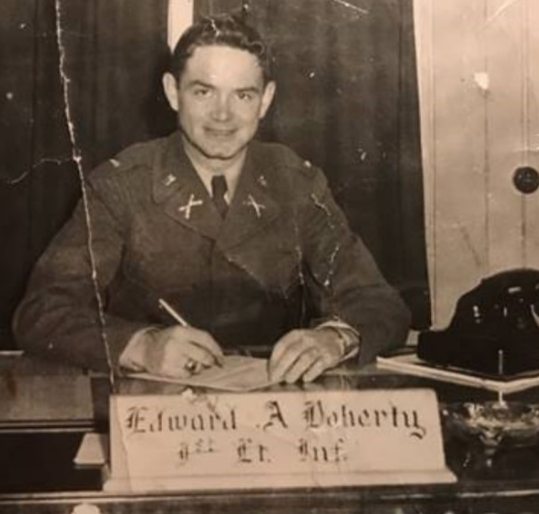
The advice I remember most came from his Army experience. He had been, according to family lore, the youngest First Lieutenant in the history of the modern Army. Whether that is precisely true or slightly polished by time, the advice was real.
“Take care of your people and your people will take care of you.”
That sentence probably did more to shape my management style than any business book I ever read. He did not say, “Create alignment.” He did not say, “Build engagement.” He did not say, “Leverage human capital.”
He said, “Take care of your people.”
The language belonged to his era. The lesson belongs to every era.
| |
There is also a story about my wife and my father that still makes me laugh.
The McKeon Post used to hold a Father’s Day picnic on Long Island in Boston Harbor, which had once been part of the harbor defense system during the Civil War. My wife, early in our marriage, volunteered to prepare food for the picnic. She and my father did not always have the easiest relationship, and I think she was trying to make things better.
She asked him repeatedly what he wanted. He was no help. “Doesn’t matter.” “Whatever you think.” “Something easy.” “Keep it simple.”
So she did. Sandwiches, chips, pickles, and the kind of picnic food any reasonable person would consider acceptable.
When we arrived, other families had more elaborate setups. Some were grilling. Some looked like they had brought a field kitchen. My father began complaining. Then he crossed the line with a comment aimed at my wife.
She looked him straight in the eye and told him exactly where he could go, including sentences I can't publish, including the one that ends with '...yourself.'
That was the moment he totally fell in love with her.
He started laughing, hugged her, and from that day on, they got along beautifully. She had earned his respect in a way no etiquette book would recommend.
| |
My father was not perfect. That is important to say. Sometimes memory turns people into statues, and statues are not honest. He could be difficult. He could be stubborn. He could be unfair. He could be a jerk from time to time.
So can most fathers. So can most of us.
But love does not require perfection.
On Thanksgiving Day in 1988, I was speaking with my father on the phone when he coughed, stopped talking, and would not respond. I called my brother Paul, who lived closer to him, and Paul rushed over. An ambulance took Dad to Deaconess Hospital in Boston, but he never regained consciousness.
Paul and I were there when the end came.
| |
Afterward, a physician asked to speak with us in the hallway. He asked if they could perform an autopsy because, given the condition of my father’s heart, they had no idea how he had lived as long as he had and wanted to study the heart.
My brother and I thought about it. Then we gave our answer. “No,” we said. “Let it be his secret.” I still like that answer.
Some things should remain between a man and God, or a man and his own toughness, or a man and whatever invisible force kept him going longer than the experts expected.
| |
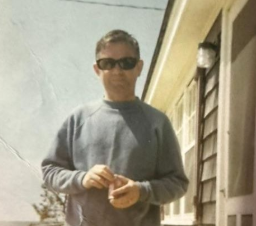
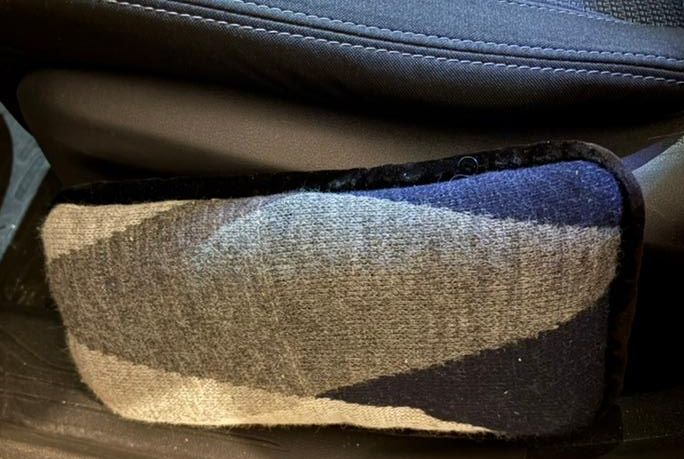
After he died, my sister Susan took one of his old sweaters and had it made into small pillows for his kids. It was not a beautiful sweater. I would not call it a fashion statement unless the statement was, “I have given up on fashion.”
But I keep my pillow in the car near the driver’s seat.
I suppose I could say it is sentimental. I suppose I could say it reminds me of him. Both are true. But if I am being honest, I also like to think it provides an extra layer of protection.
You take comfort wherever you can find it.
Each Father’s Day now, I think about him in pieces. The rink. The pond. The Garden. The Post. The hospital. The sweater.
I think about the fact that when I was young, I did not know enough to ask him the questions I would ask today. I think about how easy it is to assume there will be another visit, another call, another holiday, another chance to say the thing you have been meaning to say.
| |
Then one day there isn’t.
If your father is still here, call him. Visit him. Ask him a question you have never asked. Listen to a story you have heard before. Let him repeat himself. Tell him something kind while he can still hear it.
And if your father is gone, do what the rest of us do. Take the drive. Visit the grave. Hold the old photograph. Keep the ugly sweater. Tell the stories.
My father had a short life compared to many. He was not perfect. None of us are. But I have always believed that I am a reflection of both my parents, and if there is anything decent, resilient, funny, stubborn, loyal, or useful in me, some of it came from him.
I still wish I had those five minutes.
But I also know this: in a strange way, I have been talking to him for years.
- Every time the Zamboni comes out.
- Every time I pass a hockey rink.
- Every time I am in Dorchester.
- Every time I hear “one minute to go in the period.”
- Every time I try to take care of the people depending on me.
- Every time I reach over and touch that ridiculous little sweater pillow in the car.
Maybe that is what memory really is. Not the conversation we lost. The one that keeps going.
| | Surprise Photo at the End: | | If you are reading this on a social media platform, click below and you'll automatically receive a 'different' story every week on Wednesday. | | |
The Roll Call of states and countries where readers reside: Arizona, California, Colorado, Connecticut, Delaware, Florida, Georgia, Hawaii, Illinois, Indiana, Iowa, Kansas, Kentucky, Louisiana, Maine, Massachusetts, Michigan, Mississippi, Missouri, Montana, New Hampshire, New Jersey, New Mexico, New York, North Carolina, North Dakota, Ohio, Pennsylvania, Puerto Rico, Rhode Island, South Carolina, South Dakota, Tennessee, Texas, Vermont, Virginia, Washington and Washington DC, Wisconsin plus Canada, Conch Republic, Australia and the United Kingdom.
| | |
Ed Doherty
774-479-8831
www.ambroselanden.com
ed-doherty@outlook.com
Forgive any typos please.
| | | | | |