|
In this issue:
-
Member Spotlight: Saginaw County Animal Care & Control
- Position Statement: Conversational Adoptions
- Legislative Update
- YouTube Series: H5N1 Avian / Bird Flu
- April Member Events
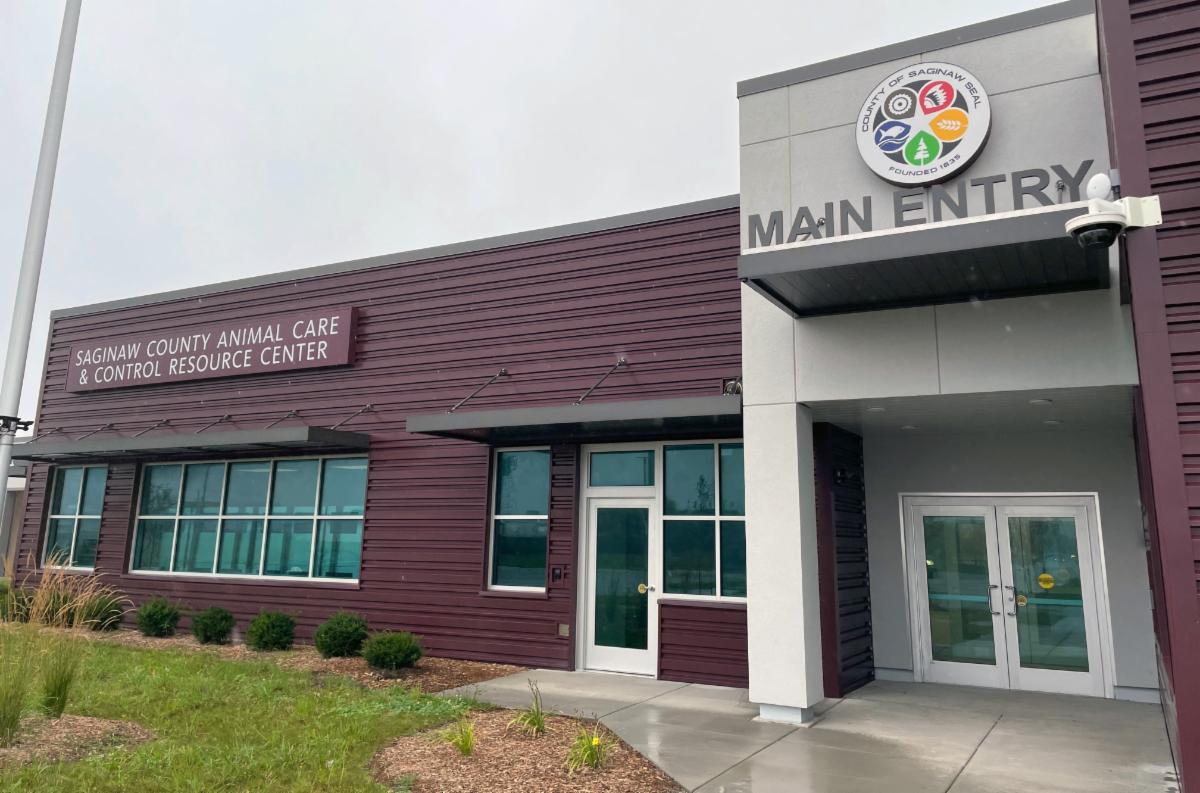
| | Along Bay Road in Kochville Township, you’ll find a shiny new 23,000-square-foot animal shelter and resource center, under new leadership, and bursting with passion and ideas for the future while embracing change for the animals of Saginaw County. | | | In fall 2023, Saginaw County Animal Care & Control (SCACC) moved to its current location, more than doubling the size of its previous space. Now, the staff and volunteers prepare to celebrate the April 30 grand opening of a new surgical center to provide affordable, accessible vet care to pet owners. | | “Saginaw County faces several challenges when it comes to animal welfare,” said SCACC Director Rachel Horton. “Many residents struggle with access to affordable veterinary care, leading to preventable medical surrenders and unaltered pets contributing to overpopulation. Economic hardships also make it difficult for some pet owners to afford basic pet care, which is why our community resource programs have been vital. Our goal is to remain proactive in our approach to animal welfare.” | | |
Director Rachel Horton
Saginaw County Animal Care & Control
(Photo Credit: Cole Waterman | mlive.com)
| | |
When a shelter recognizes its communities’ greatest challenges, it is better prepared to create and execute plans to meet those challenges. Saginaw County’s choice to stay connected to its community is a contributing factor to the shelter’s live release rate (LRR) nearly doubling in just one year.
“Saginaw County’s LRR increased to 76.7% in 2024,” said Michigan Pet Alliance (MPA) CEO Sarah Devaney. “Considering the shelter was struggling at 55.4% in 2023, that significant increase demonstrates the achievable success that results from an organization’s commitment to increasing adoptions, reunifications and rescue partnerships. A key message from MPA is the importance of partnerships and working together with one voice.”
| | |
“SCACC joined Michigan Pet Alliance because we believe in the power of collaboration and shared knowledge,” said Horton. “Animal welfare is constantly evolving. By working together with other shelters, rescues and advocates across the state, we can create meaningful change.
"MPA provides invaluable resources, advocacy and support to help us implement best practices, improve animal outcomes and navigate the challenges we face. By being part of this network, we can strengthen our mission to serve both the animals and people of Saginaw County.”
| | | |
Another key to the accomplishments at SCACC is detailing the organization’s goals each year, re-evaluating the community’s needs and developing plans to address them.
This year, SCACC plans to:
-
Host its surgical center grand opening: provide affordable, accessible veterinary care to the community
-
Reduce length of stay: prevent overcrowding and improve outcomes, while strengthening relationships with transfer partners
-
Expand community resource programs: support pet owners and ensure ACOs are equipped with tools, such as food, microchips and fencing supplies
-
Enhance pathway planning for animals: implement playgroups and more enrichment programs to support behavioral health and socialization
-
Increase RTO: dedicate more resources and staff efforts toward lost pet reunification strategies
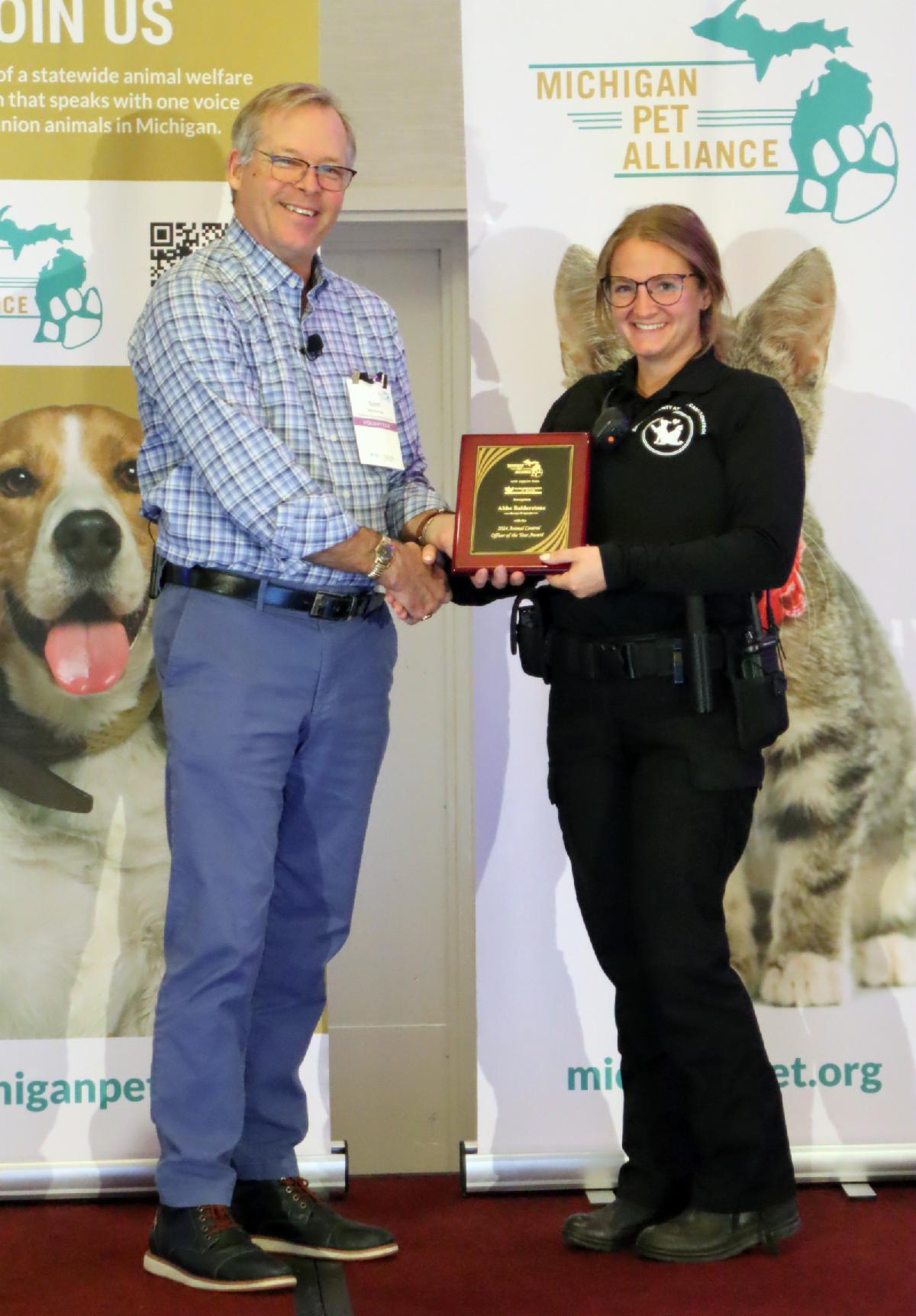
| | Abbe Balderstone (right) receives the 2024 ACO of the Year Award from MPA conference emcee Scott MacKenzie. | | |
“One of SCACC’s greatest achievements has been the resilience and dedication of our staff during a period of rapid transformation,” said Horton. “Over the past year, we introduced data-driven decision-making and tracking positive outcomes, significantly improving the efficiency and impact of our operations."
Just last October, Abbe Balderstone, Saginaw County animal control officer, received the 2024 ACO of the Year Award from Michigan Pet Alliance at the 2024 One Voice Conference in Grand Rapids for her tireless work and dedication to animals in the field.
| | |
“Our team also successfully launched three pilot programs designed to redefine our role as a community resource. We established a pet food pantry, equipped our ACOs with more resources and expanded our staff to meet growing demands.”
SCACC also completed multiple construction projects, improved operational efficiency and recorded significant progress in every key performance area.
“Throughout these changes, our staff remained committed to our mission and core values, demonstrating exceptional adaptability and dedication,” Horton continued. “Their efforts have allowed us to serve more animals and residents than ever before, reinforcing our role as a vital resource within the community.”
Michigan Pet Alliance is proud of the life-saving and life-changing accomplishments at SCACC. The staff and volunteers, led by a creative, proactive, forward-thinking director with the support of the county, are a shining example of passion-driven, dedicated results.
| | Follow Saginaw County ACC and its life-saving initiatives at: | | |
MPA's policy and advocacy committee researches and creates position statements to clearly declare where the organization stands on important animal welfare issues and programs.
Studies show the ultimate success of conversation-based adoptions versus extensive application processes and blanket restrictions, such as "all dogs must have a fenced yard."
Remember that adopters are already trying to do the right thing by going to a shelter or rescue, rather than purchasing a pet online or from a store. Instead of "yes" or "no," think "which pet is the right match for you." The most effective way to make that match is through a conversation, not a checklist.
USA TODAY: "Strict pet adoption rules frustrate and defeat some animal lovers"
MEMBERS-ONLY WEBINAR: "Decrease Length of Stay With Conversational Adoption Counseling." Become an MPA member today for exclusive access to more educational opportunities.
Conversational Adoptions Position Statement
Conversational/open adoption is a compassionate, effective way to connect homeless animals with loving homes while making the process enjoyable and accessible for adopters. Unlike traditional methods involving extensive paperwork and rigid criteria, open adoption focuses on creating a good match through meaningful conversations. This approach prioritizes the needs and preferences of both the adopter and the animal, focusing on education and fostering trust and a shared commitment to the pet’s well-being.
Adoption counselors use open-ended questions to understand the adopter’s lifestyle, experience and expectations. Topics like daily routines, family environment, and preferences for an animal’s energy level or temperament are explored. This dialogue also highlights the animal’s specific needs, such as medical care or behavioral tendencies, and the resources required to meet these needs, ensuring a thoughtful match.
By removing barriers like lengthy applications, home checks and vet record requirements, the process becomes more inclusive, attracting adopters who may provide an excellent home, but feel intimidated by traditional methods or lack certain documentation. This streamlined approach is particularly valuable for finding homes for harder-to-adopt animals by broadening the pool of potential adopters.
Ultimately, open adoption, based on conversation rather than a pass/fail checklist, shifts the focus from scrutinizing adopters to supporting them, creating lasting, happy matches for both pets and people.
| | |
Michigan Pet Alliance is excited to announce that SB 106, a bill to create Michigan's first pet license plate to help fund spay/neuter initiatives and training programs for animal shelters across the state, has been introduced. Thank you to bill sponsors Senators Dayna Polehanki (District 5) and Paul Wojno (District 10). We appreciate your dedication to animal welfare in Michigan.
Help us pass this critical legislation. Please send your letters of support for SB 106 to sarah@michiganpet.org by April 2, 2025.
More great news! With bipartisan support, Queenie's Law has been reintroduced to prohibit canine experiments at publicly funded Michigan institutions. Outlawing painful dog experiments, funded by Michigan tax payers, has been a key animal welfare issue in our state for a long time.
Thank you to Senator Paul Wojno (D-Warren) for introducing SB 127 and to Representative Joe Aragona (R-Clinton Township) for introducing a companion bill. SB 127 has been referred to the Committee on Regulatory Affairs.
Watch your your email and follow MPA's Facebook page for action alerts and updates. Lend your voice to help us pass this important life-saving, life-changing legislation.
| | |
In this educational video series, which we encourage you to share with your community, learn more about H5N1 avian / bird flu:
- who is at risk
- how it is transmitted
- symptoms
- treatment
- how to keep cats, shelter populations and colonies safe
Thank you to Dr. Courtney White and the Humane Society of Huron Valley for this informative video series. Subscribe to MPA's channel to stay up-to-date and add our videos to your playlists, too.
| | |
A benefit of MPA membership is free promotion for the upcoming events and fundraisers of member organizations. Here are a few opportunities to support animal welfare organizations next month:
-
April 2025: Virtual Flower Power Fundraiser, Copper Country Humane Society
-
April 2025: Detroit Tigers Promotion, Shelter to Home
-
April 1: Karma Kat Dashery Launch, Karma Kat Cafe & Rescue
-
April 4-6: Pet Expo, Cleveland, Ohio, Great Lakes Boxer Rescue
-
April 5: Community of Women, Manistique, Eva Burrell Animal Shelter
-
April 5: Cause for Paws Gala, Marquette, UPAWS
-
April 7: Bingo Night Every Monday, Boyne City, Charlevoix Area Humane Society
-
April 7-17: Paws for Life Draws for Life, Paws for Life Rescue
-
April 9: Bingo Night Every Wednesday, Muskegon, Noah Project
-
April 12: Shelter Buddies Reading Event, Osseo, Greater Hillsdale Humane Society
-
April 12: Pictures with Easter Bunny, Lexington, Sanilac County Humane Society
-
April 13: TNR Training, Warren, All About Animals
-
April 14: PF Chang's Dinner Fundraiser, Grand Rapids, Pleasant Hearts Pet Food Pantry
-
April 17: Volunteer Orientation, Mason, Ingham County Animal Control & Shelter
-
April 18: The Great Cardboard Challenge: Feline Greenhouses, Humane Society of Huron Valley
-
April 19: Pet Easter Egg Hunts, DeWitt, Happy Feet Pet Rescue
-
April 20: Virtual TNR Training, All About Animals
-
April 24: 12th Annual Online Auction, Pet Angel Adoption & Rescue Inc
-
April 25: 2025 Fur Ball Gala, Bath, Capital Area Humane Society
-
April 25: Bark Crawl 2025, Petoskey, Little Traverse Bay Humane Society
-
April 27: Paws on Parade, Grand Blanc, Humane Society of Genesee County
-
April 30: Surgical Center Grand Opening, Saginaw, Saginaw County Animal Care & Control
Lend your voice and enjoy the benefits of being a member of Michigan Pet Alliance. Become a member today!
| | About Michigan Pet Alliance | | |
MPA Vision:
To achieve the best quality of life for Michigan’s companion animals.
MPA Mission:
To work in collaboration and speak with a single voice to eliminate abuse and neglect of Michigan’s companion animals and to save all healthy and treatable homeless companion animals through training, technical assistance, education, and advocacy.
313-731-2244
info@michiganpet.org
michiganpet.org
Michigan Pet Alliance is a 501(c)3 charitable organization as defined by the IRS
(EIN 20-0399162) and is a GuideStar Exchange Platinum Participant.
| | Contributions are tax deductible. | | | | |