|
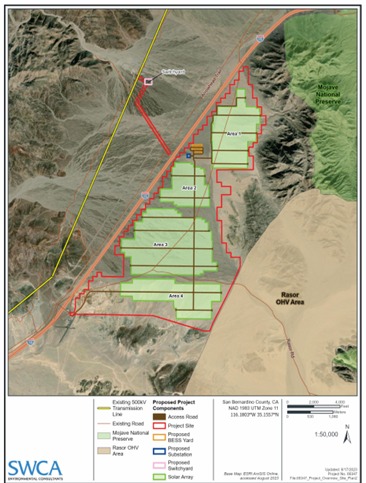
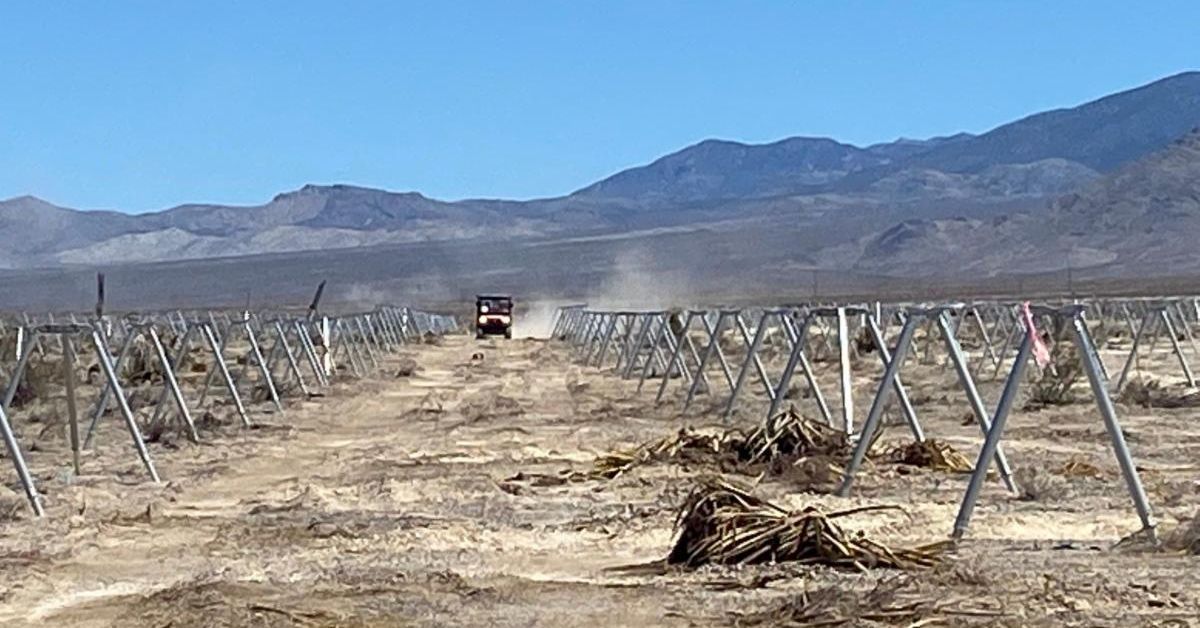
Soda Mountain Solar, LLC proposes to construct, operate, and maintain a utility-scale solar photovoltaic (solar panels) generating and storage facility to generate renewable electricity which will be exported to Southern California. The project would be built right next to the Mojave National Preserve. The Soda Mountain Solar Project would generate up to 300 megawatts (MW) of solar energy and include up to 300 MW of battery storage. The project will impact 2,670 acres (4 square miles) of land administered by the U.S. Bureau of Land Management (BLM), California Desert District.
The Soda Mountain Solar Project is a true zombie solar project. We have opposed this same project since 2009. While the BLM approved the project against the will of the public in 2016, it was rejected by San Bernardino County stating "“It is hard to justify damaging sensitive desert lands when we have disturbed lands near transmission corridors that are ideally suited". The Los Angeles Department of Water and Power also cancelled their power purchase agreement with the project in 2015 over the impacts it would have on the California Desert.
Prior to the June 30, 2022, signing of Assembly Bill (AB) 205, the California Energy Commission's (CEC) powerplant licensing jurisdiction was limited to thermal powerplants 50 megawatts or larger. To accelerate the state’s transition to renewable energy, AB 205, as modified by AB 209 expands the types of facilities that can be certified by the CEC. This is how the state ignored the wishes of San Bernardino County.
During the February 5, 2026, California Energy Commission meeting on the Soda Mountain Solar Project, Staff recommended that the Commission issue a Statement of Overriding Considerations—a rubber stamp that ignores significant and unmitigable impacts. Over the years we have watched CEC issue these overriding considerations numerous times, and the entire commenting process begins to seem like a waste of time for the public.
The project will inflict unnecessary impacts to:
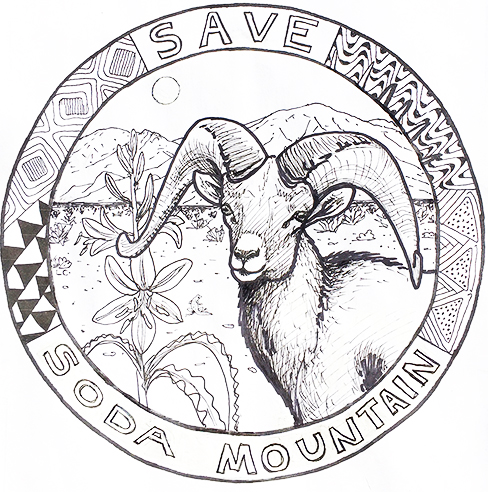
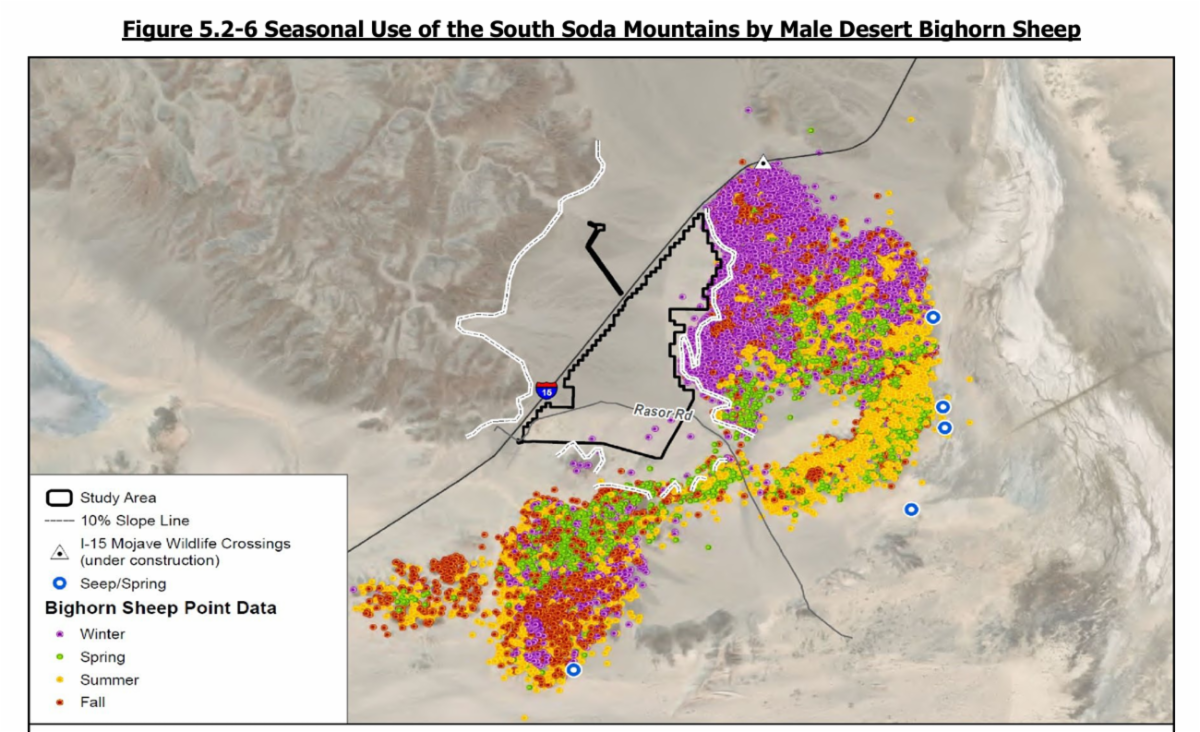
Desert Bighorn Sheep: The Soda Mountain Solar Project is adjacent to an essential bighorn herd in the Cady Mountains that uses the south Soda Mountains extensively. A movement corridor would be partly blocked by the solar project, which needs 8-foot-tall chain-link security fences surrounding the project and which excludes large wildlife, completely blocking any movement by bighorn. The California Energy Commission admits that construction and operation of this solar project would have significant and unavoidable impacts that cannot be fully mitigated.
The Soda Mountain Wildlife Crossing over I-15 has been in the works for years, and that project has become a necessity with the future Brightline West high-speed rail project in the planning stages to parallel the interstate highway, further blocking any remaining bighorn connectivity.
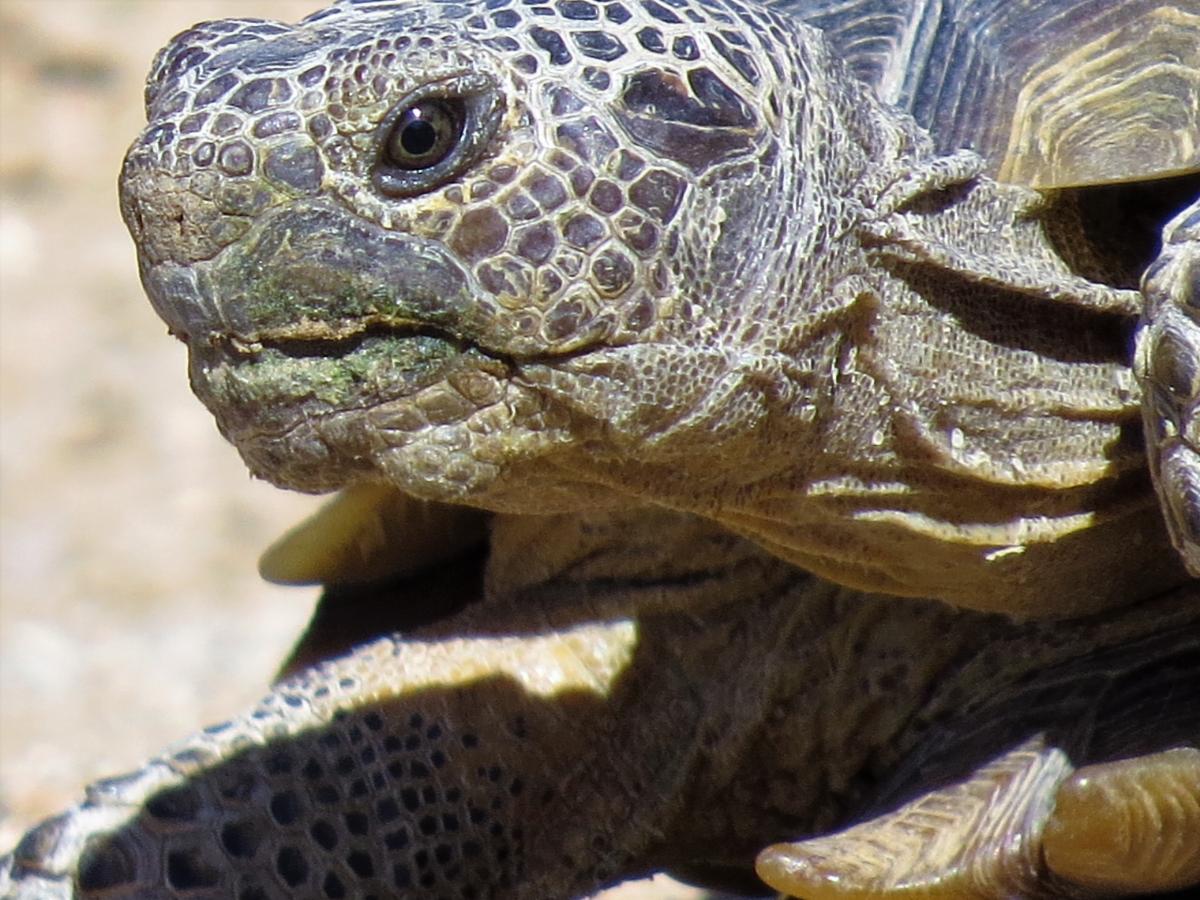
Mojave Desert Tortoise: Federally threatened Mojave desert tortoises also inhabit these alluvial fans. Already in severe decline, habitat for this federally threatened species is being chopped up little by little each year. The site is an important connectivity corridor for tortoises.
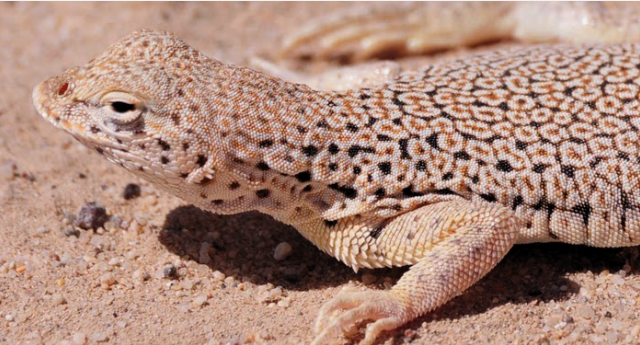
Mojave Fringe-Toed Lizards: Mojave fringe-toed lizard populations have been significantly impacted by large-scale solar developments in Chuckwalla Valley, Riverside County, CA, and the cumulative impacts of the Soda Mountain Solar Project as well as sand transport impacts need to be considered.
Kit Foxes, American Badgers and Burrowing Owls will also lose 4 square muiles of habitat.
Groundwater Resources: The project would use water sourced from up to five new on-site groundwater wells within the Soda Lake Valley Groundwater Basin in San Bernardino County, California. The project will need 320 acre feet for construction and 6 acre feet per year for operation. Groundwater eventually ends up in the Mojave River. While the CEC determines that impacts would be less than significant, we are concerned that water use could impact the springs at Zzyzx in the Mojave National Preserve where the federally endangered Mojave tui-chub resides. Water should be trucked in, not depleted.
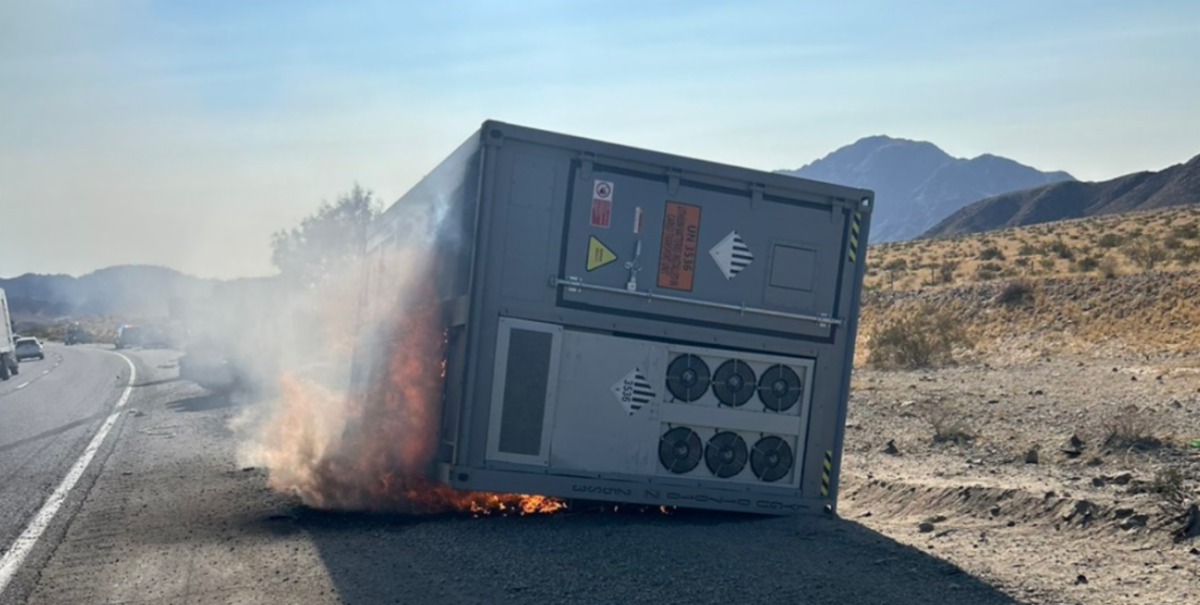
Lithium Battery Fires: 300 MW of Battery Energy Storage System (BESS) Lithium battery storage is proposed with the solar project. The City of Baker fire and emergency response services is concerned during public comments over the lack of equipment to fight thermal runaway from lithium battery fires, which have been shown to burn hot for long times Interstate 15 was closed for two days in 2024 due to a truck tipping over and causing a BESS Lithium fire which burned for 2 days.
Old Spanish National Historic Trail: The congressionally designated alignment of the Armijo Route of the Old Spanish National Historic Trail (OSNHT) is present just outside of the visual analysis area to the east and south of the project. The visual analysis determines the project will not be seen from the trail, yet the trail is only 3.4 miles from the project site.
The Interior Department (Bureau of Land Management/National Park Service) has for a long time failed to implement a required Old Spanish National Historic Trail Comprehensive Management Plan, but suggets a 5 mile buffer. The analysis of this project should be paused until a Comprehensive Management Plan can be established for the Old Spanish National Historic Trail.
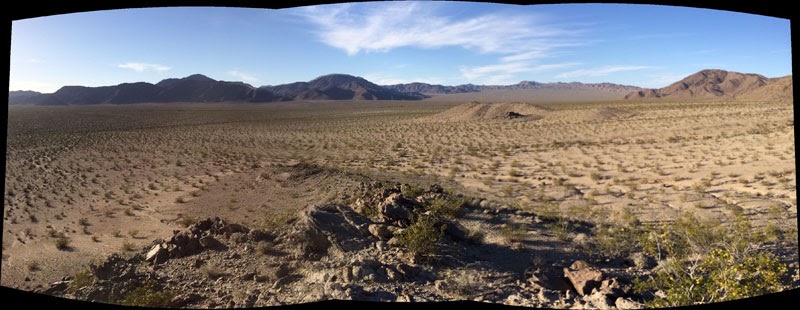
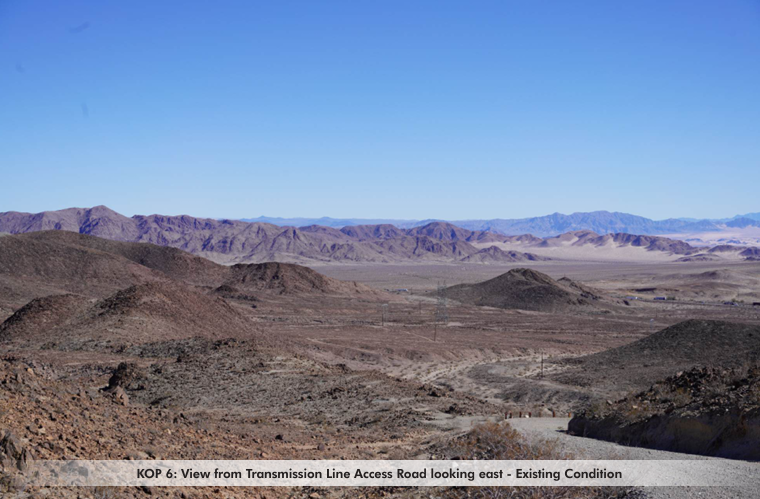
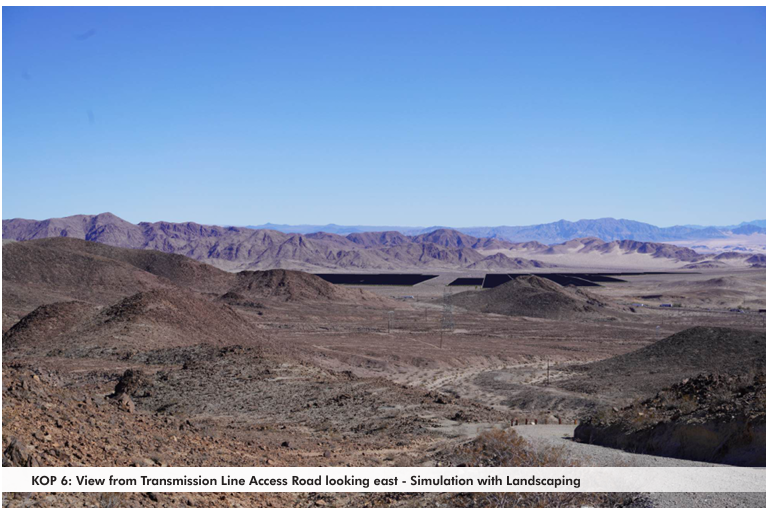
Visual Resources: Located directly adjacent to the Mojave National Preserve, the CEC has concluded that "Visual impacts would be significant and unavoidable. Project components would appear as a collection of geometric shapes and complex industrial forms that would exhibit considerable industrial character, which would contrast with the natural forms, lines, and textures of the existing desert landscape character."
The BLM has designated the region as a Visual Resource Management (VRM) Class IV project but the designation has been updated to include the standards of the Desert Renewable Energy Conservation Plan. This review could be paused until a plan amendment could be made to upgrade the VRM Class to VRM Class II. The objective of VRM Class II is to: “To retain the existing character of the landscape. Allowed Level of Change: The level of change to the characteristic landscape should be low. Management activities may be seen, but should not attract the attention of the casual observer"
|