|
VCSEL used in LiDAR for Automated Vehicles
|
|
From the Executive Director
|

The lead article in this issue describes the enormous growth in the use of Vertical-Cavity Surface-Emitting Lasers and VCSEL diode arrays. A brief introduction to VCSELs is included in module 6 of OP-TEC's Course 2,
Laser Systems and Applications. More in-depth information on VCSELs and their applications can be found from several commercially-available texts such as Vertical-Cavity Surface-Emitting Lasers: Design, Fabrication, Characterization, and Applications, Cambridge Studies in Modern Optics.
I strongly suggest that faculty and administrators intensify their efforts on photonics technician student recruitment for the fall 2019 term. The article on Faculty Resources in this issue presents proven methods for using current students to recruit new students. Infusion of this strategy into a current photonics course will enable students to gain and practice the soft skills they will need to be successful in their career as photonics technicians.
Optics and Photonics College Network (OPCN) faculty have an opportunity for vital professional development by attending the CREOL Industrial Affiliates Symposium, and OPCN meeting, March 13-15, 2019. OP-TEC will provide airfare and hotel accommodations in Orlando, FL for OPCN Coordinators.
Faculty who wish to receive online training for either of OP-TEC's courses should register before the end of January.
This week, the OP-TEC offices were moved to a new location: 1224 Austin Avenue, Waco TX 76701. Phone number (254-751-9000) remains the same.
Dan Hull
|
 |
|
Vertical Cavity Surface Emitting Lasers
|
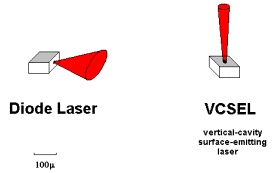
A vertical-cavity surface-emitting laser (VCSEL) is a semiconductor-based laser diode that emits a highly efficient optical beam vertically from its top surface. Because VCSELs emit light perpendicular to the surface of the laser, tens of thousands of VCSELs can be processed on a single 3 inch wafer.
Given their electro-optical characteristics and ability to modulate at frequencies up to and exceeding 25 Gbps, VCSELs are ideal for high-speed communications and precision sensing applications. They also provide reliable operation at distances ranging from very close proximity links (i.e., centimeters) up to 500 m in data center, enterprise, and campus networks.
VCSEL technology has been established and matured within the datacomm industry, serving in data infrastructure links for more than 15 years. From this established foundation, VCSELs are emerging as an enabling technology across a wide range of applications, including touchless sensing, chip-to-chip interconnect, and gesture recognition.
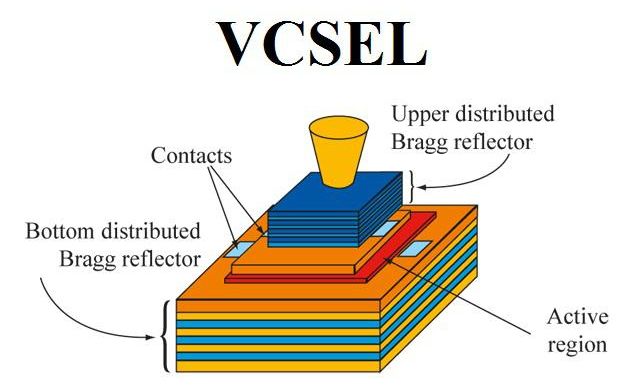
 |
|
|
VCSEL Array |
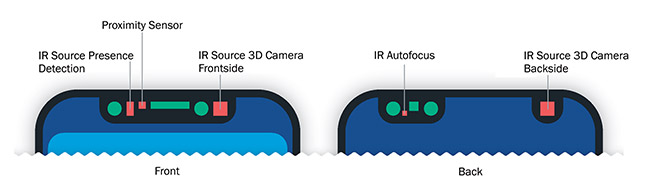
manufacturers, such as Apple, are capitalizing on the compact nature, and low power consumption of VCSEL arrays. Another rising application for VCSELs is in lidar and advanced driver assistance systems for automated vehicles.
The VCSEL market in the U S was $1.43 billion in 2017; it is expected to reach $15 billion by the end of 2025.
References:
|
|
|
OPCN Meeting Planned for Orlando, Florida
March 13-15, 2019
|
VISIT FLORIDA IN MARCH!
RSVP BY FEBRUARY 1st
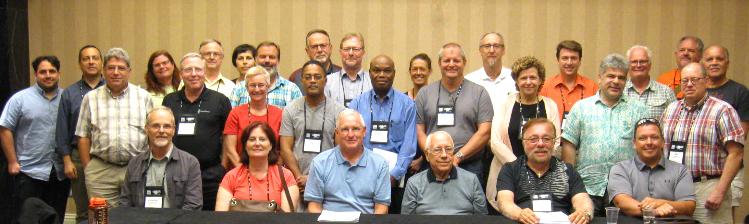
OP-TEC will host in-person meetings of the Optics and Photonics College Network in conjunction with the CREOL Advances in Optics and Photonics Industrial Affiliates Symposium which will be held March 14-15 at the University of Central Florida in Orlando.
Complimentary registration and hotel (nights of March 13 and 14) is included for OPCN Coordinators or college lead faculty who reserve by February 1st!
OP-TEC is also offering reimbursement of eligible airfare or mileage for travel to Orlando on March 13 and return March 15. Depending on availability, our hotel will also honor our discounted rate for up to five days before or after these dates if you care to extend your trip at your own expense.
Tentative Agenda:
Wednesday, March 13
Travel to Orlando
OPCN/SPIE dinner meeting at our host hotel
Thursday, March 14
9:00-12:15 90-minute short courses (choose 2 of 4)
12:15-1:00 Lunch break
1:00-2:15 OPCN Meeting
2:30-4:30 Student posters, exhibits, CREOL lab tours
4:30 Tribute to Boris Zeldovich
Friday, March 15
Continental Breakfast
Welcome to CREOL
Technical Speakers & exhibits
Product Reviews
Lunch
Technical Speakers & exhibits
Travel home (or extend your stay at our discounted hotel rate)
|
|
|
LASER-TEC Releases Updated Light & Optics Experiment Kit and Lab Manual
|
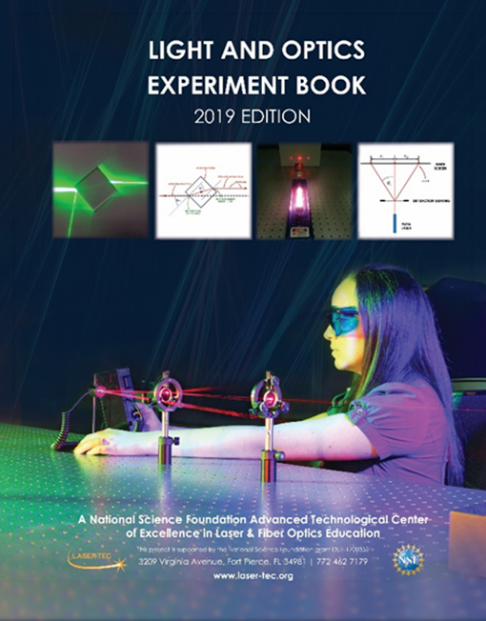
LASER-TEC has completed the 2019 edition of the Light and Optics Experiment Book. This student lab manual includes 23 experiments and is supported by the Light and Optics Experiment Kit, which has also been updated.
The book (lab manual) has been updated with new learning objectives, technical information, images, experiment instructions, and further student investigation assignments.
 The major additions to the kit include replacements of relatively expensive optical components such as circular pinhole, vertical slit, and set of polarizing filters on a rotating wheel with the items developed and manufactured in-house. Introduction of the new items have drastically reduced the cost of the experiments without sacrificing their quality, repeatability, and reproducibility. The major changes to the kit include replacements of relatively expensive optical components such as circular pinhole, vertical slit, and set of polarizing filters on a rotating wheel with the items developed and manufactured in-house. Introduction of the new items have drastically reduced the cost of the experiments without sacrificing their quality, repeatability, and reproducibility.
To be able to host all 23 experiments, a school will need to purchase a 1 mW HeNe or diode laser, a digital photometer, optical cleaning kit and scissor jacks. LASER-TEC will provide the information about recommended items and vendors to simplify the implementation process.
This package (book and kit) is best suited for high school AP STEM classes, physics classes, electronics or related programs in state and technical colleges, piloting courses or modules in lasers and fiber optics on limited budgets.
To learn more about the Light and Optics Experiment Book and Kit, please contact Dr. Chrys Panayiotou at (772) 462-7621 or cpanayio@irsc.edu.
|
|
|
MPEC to Offer Professional Development
|
|
|
The Midwest Photonics Education Center will be offering 3 professional development opportunities in 2019. Registration is free for all three activities and travel expenses will be provided for a limited number of participants.
* A two-day Fundamentals of Photonics workshop will be offered
on August 5-6, 2019
|
* A four-day Laser Material Processing (LMP) workshop will be
offered on June 10-13, 2019 at Indian Hills Community
College. LMP participants will also tour local manufacturers to
observe live laser based manufacturing processes.
|
|
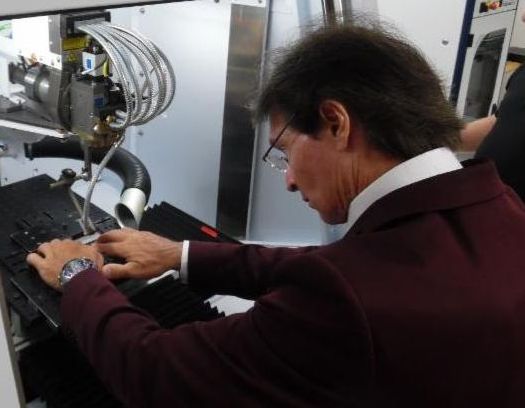
Jeff Smallwood of Ottumwa Job Corps Center makes an adjustment before laser welding parts with the TRUMPF TruLaser Station 5005 Laser Welding System at the Laser Material Processing workshop held by MPEC in 2018.
|
Both of these workshops include curriculum materials laboratory activities. These workshops qualify for CEUs and also for recertification credits through the regional (GPAEA) Great Prairie Area Education Agency. A laser welded stainless steel part is pictured below.
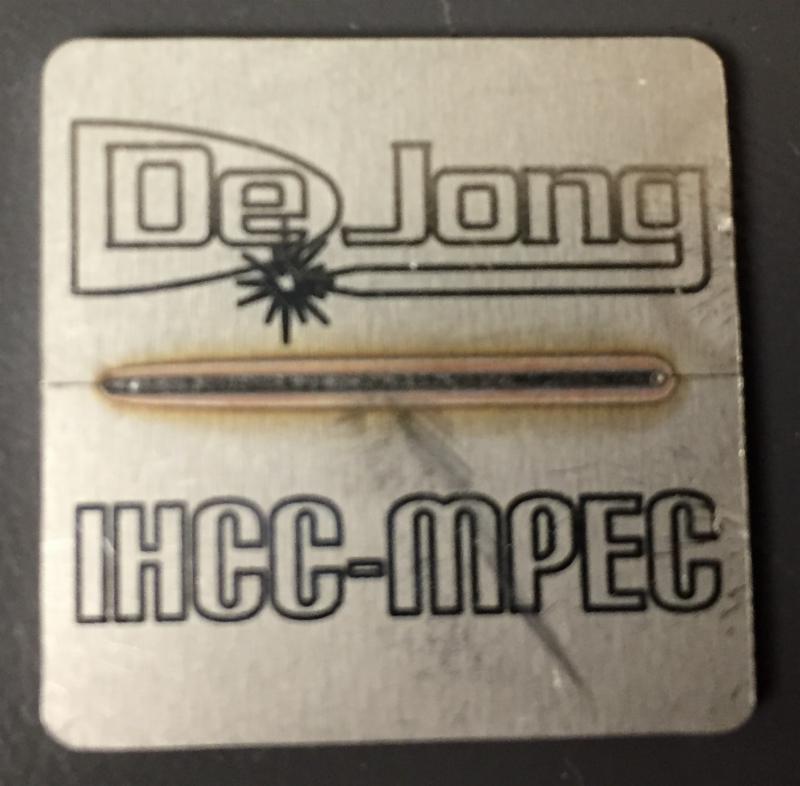
A free open entry Hybrid Online Laser Material Processing course will be offered from now until July 5, with the on-site laboratory activities being held at IHCC on July 8-12, 2019. This LMP course includes 10 units of coursework with online lectures, PowerPoint presentations, and quizzes. Attendees will perform laboratory activities with a variety of laser based equipment including a TRUMPF TruLaser Station 5005 welding system, an Epilog Laser Helix engraving/marking system, and an IPG Photonics Fiber Laser.
Anyone interested in registering for either of these workshops or the hybrid online LMP course may do so through www.midwestphotonics.org.
For more information please contact Greg Kepner at
greg.kepner@indianhills.edu
or Frank Reed at
frank.reed@indianhills.edu
.
|
|
|
Student Recruitment: A Key Factor in Photonics Program Success
|
Successful, lasting photonics technician education programs rely heavily on large student enrollments. When enrollment is high, more completers will ultimately be available for employment-and photonics employers are provided with the quality workforce they need to accomplish their mission.
Relentless student recruitment is required to assure that future enrollments will grow with new, capable students who know about photonics and are engaged in education/training to prepare themselves for rewarding careers as photonics technicians.
Most institutional outreach organizations are not sufficiently focused on student recruitment for technologies such as photonics. The primary recruitment responsibility rests with program faculty, and this can place a large demand on faculty time and effort. OP-TEC has developed and accumulated useful recruitment resources and successful strategies from mature photonics programs in 5-6 colleges.
One successful strategy is "Using Current Photonics Students to Recruit New Students". OP-TEC has created a monograph that describes this process, along with a compilation of resources that can be acquired for outreach and recruiting. Using current students for recruitment not only relieves a heavy load from faculty, it also develops "soft skills" that students will need in their careers.
Copies of the OP-TEC student recruitment monograph can be reviewed and obtained on the OP-TEC store website at
www.optecstore.org.
|
|
|
|
2/2/19 - 2/7/19
San Francisco, CA
|
|
03/13/19 - 3/15/19
OPCN Meeting
CREOL Industrial Affiliates Symposium
Orlando, FL
|
|
07/22/19 - 0725/19
St. Louis, MO
|
|
Photonics West Events for OPCN Members
|
You are cordially invited to join Indian Hills Community College, OP-TEC, Midwest Photonics Education Center (MPEC), LASER-TEC and the IEEE Photonics Society for a Photonics Workforce Development "Meet & Greet" at Photonics West 2019.
The event will include a networking reception for conference attendees, college alumni, local IEEE members and industry partners to discuss the vital role community and technical colleges play in cultivating photonics innovators of tomorrow. This is also an opportunity for alumni from community and technical colleges to meet prospective employers and IEEE fellows as well as be paired into "Mentor Matches."
Date: Wed., February 6, 2019
Time: 5:00 p.m. - 7:30 p.m.
Location: Tabletop Tap House
175 4th St, San Francisco, CA
(Across from Moscone Center)
RSVP at this link to attend.
Also at Photonics West, IHCC and MPEC representatives will be attending the SPIE sponsored Happy Hour input session to address the photonics industry's shortage of qualified optics and photonics technicians. This event will take place at the Intercontinental Hotel, Suite #3103, Tuesday, February 5, 2019 from 5:15 - 6:30 p.m.
|
|
|
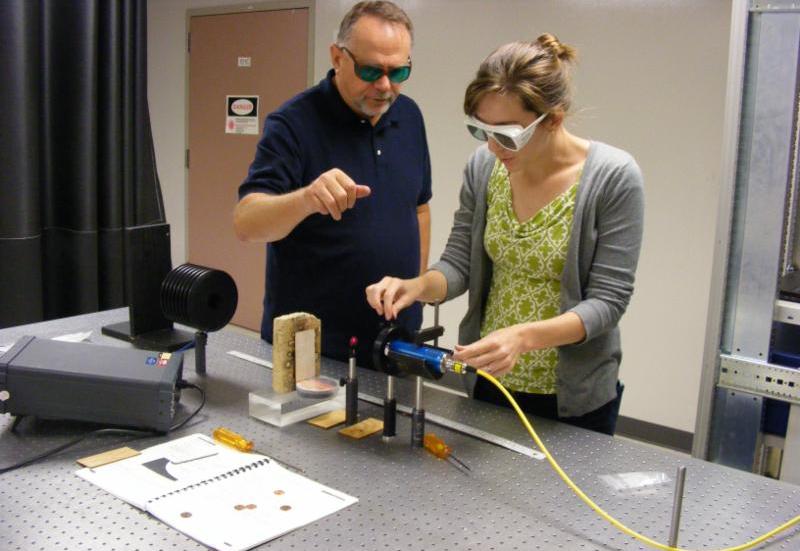 |
A new year and a new semester have begun! Spring is a great time to complete one of OP-TEC's online professional development courses developed to prepare faculty and laboratory staff to teach with OP-TEC's Fundamentals of Light and Lasers (Course 1) or Laser Systems and Applications (Course 2).
This will be the last offering of these courses by OP-TEC!
If you've been thinking about taking one of them, now is your last chance!
The open entry/open exit courses are available through the Canvas online learning management system 24/7 through May 31. Participants gain access to course syllabus, end of module tests, video links, and other resources that support teaching with these textbooks. Participants who successfully complete their online course will be invited to a hands-on laboratory capstone experience during the week of June 24-28 at Indian Hills Community College in Ottumwa, Iowa.
For more information or to enroll in Course 1, visit www.op-tec.org/faculty.
For Course 2, please email cdossey@op-tec.org.
|
|
|
Alcon Day
at Irvine Valley College
|
Irvine Valley College's new School of Integrated Design, Engineering and Automation (IDEA) is partnering with Alcon, the trusted leader in eye care, to provide an opportunity for students to experience new technology in education.
Students will experience a day in IDEA laboratories with IVC faculty to learn how the college's curriculum can prepare students to manufacture and maintain Alcon's cutting-edge products and breakthrough technologies.
Demonstrations will be conducted by faculty from Laser, Electronics, Manufacturing and Engineering technology departments.
February 28, 2019
8:30 am - 1:00 pm
IDEA Building at ATEP
1624 Valencia Ave.
Tustin, CA 92782
For more information, contact Neda Arab, Vital Link Career Exploration Program Coordinator, at 949-646-2520 or neda@vitallinkoc.org.
|
|
SPIE Education Outreach Grants
|
January 31 Application Deadline
SPIE's Education Outreach Grants Program offers small grants twice a year to non-profit organizations and educational institutions for photonics education outreach activities. This is a potential funding source for OPCN colleges planning summer camps, teacher workshops, and similar outreach activities. Proposed activities must take place sometime between April 2019 and March 2020. Applications are due January 31, 2019. Notifications will be made in March or April.
At least four OPCN college faculty members have received these grants:
1. Brian Sweeney, OPCN Coordinator at Northwestern Michigan College, received a grant in 2014 that covered half the purchase price (matched by college funds) of an isolation table used for outreach & recruiting activities.
2. Andres Diaz/Jonathan Friedman at Puerto Rico Photonics Institute, received a grant in 2014 to buy equipment and supplies for their optics and photonics outreach program.
3. Feng Zhou, OPCN Coordinator at Indiana University of Pennsylvania, received a grant in 2007 for conducting a photonics summer camp.
4. Texas State Technical College, has received two grants to support teachers attending summer photonics institutes.
SPIE awards over $80,000 in education outreach grants to more than 20 organizations annually. Most of the grants are $2,000-$3,000. The key criterion in evaluation and ranking applications is the potential to increase optics and photonics awareness among students or the larger community. For information about the grant program, last year's recipients, and applications visit the program webpage. You will need to use your SPIE login (or create one) to start an application form.
|
|
|
 |
Michael L. Smith, Jr.
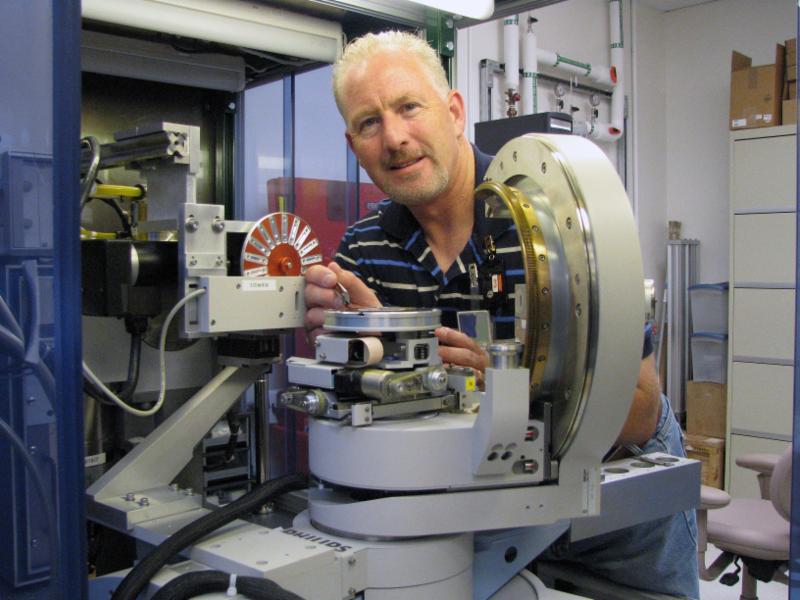
had a bit of a false start after high school. "I thought I was going to college, but I wasn't really well prepared," he recalls. "I started at the University of New Mexico and found out rather quickly that I wasn't ready."
Knowing he needed to further his education, Michael checked out the Albuquerque Technical Vocational Institute, now New Mexico Community College and was really interested in the laser electro-optics technology (LEOT) program. He says. "It had good job placement, a good starting salary, and potential for growth in the area." Michael struggled at first, but once he got his study habits down, "it was a lot of fun." "The teachers at ATVI seemed to care more about the students," he says. "We had study groups to help each other." "Before graduation, Michael was offered a position at Texas Instruments in Dallas.
Today, Michael is employed at Sandia National Labs in their energy laboratory working with semiconductor materials and device sciences. Michael is a principal technologist and works with engineers on cutting-edge applications. In his mind, Michael gets to do the most exciting part of research: turning ideas into realities. "The technologists do most of the hands-on work," he says, while scientists interpret the theories and engineers create the designs. "We get to see if it works."
|
|
For Previous Issues of the OPEN Newsletter please visit OP-TEC's
News Page.
|
|
|
|