June 7, 2023

For Immediate Release


Orangeburg County removing foliage along Chestnut Street, making SC State more visible

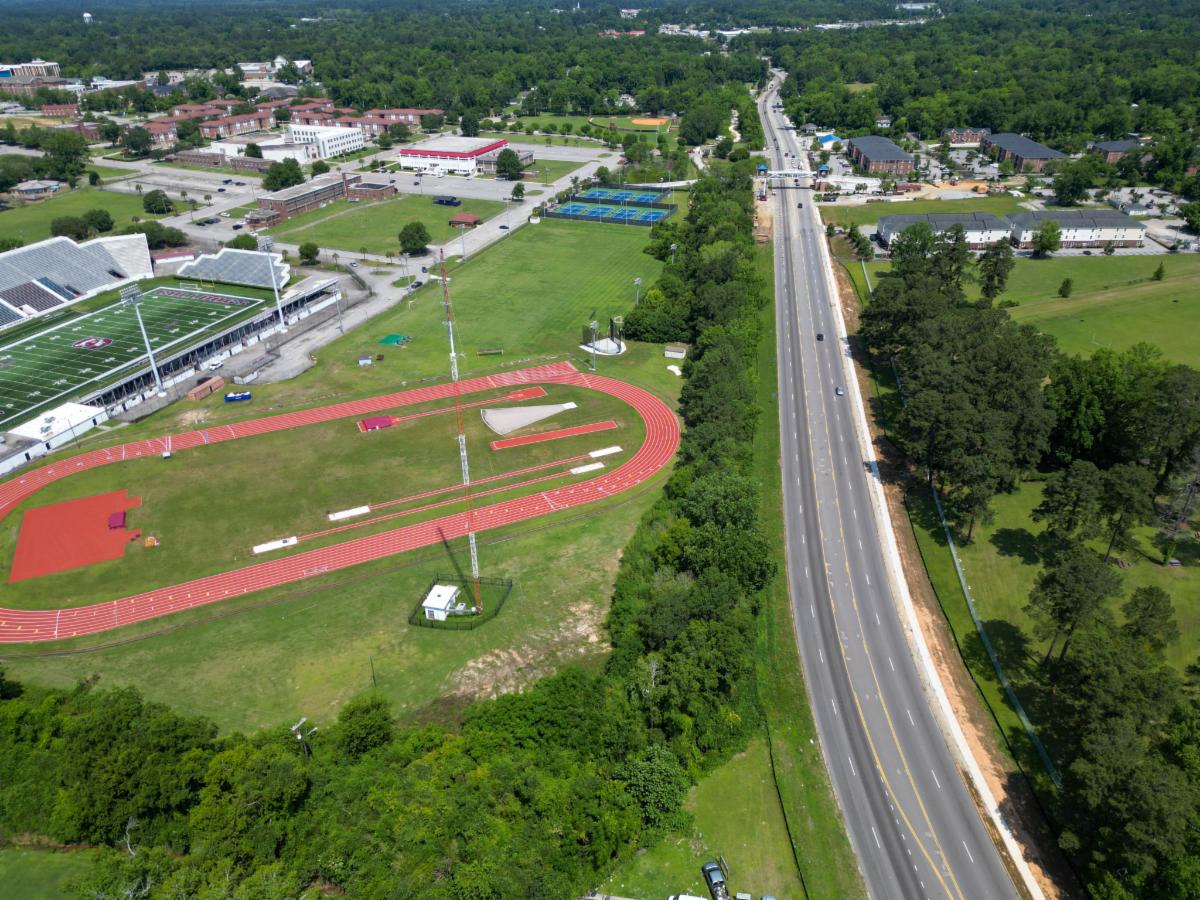
Aerial video view of Chestnut Street

A video aerial view of the northern area of the South Carolina State University and the 2.75 acres of wooded foliage hindering the public's visibility of the campus. Orangeburg County is removing the vegetation. Video/Keith Gilliard/SC State.

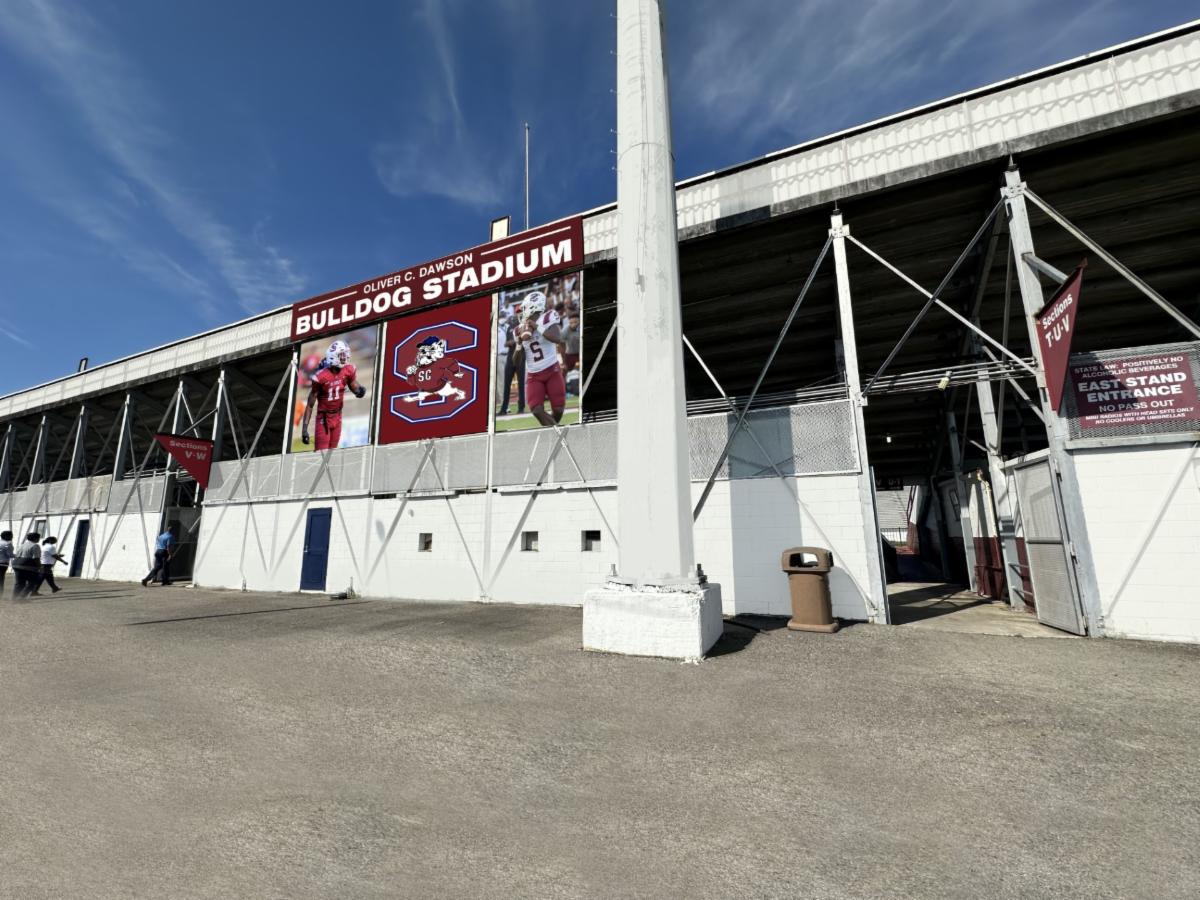
SC State plans to replace unsightly fencing around Oliver C. Dawson and make other improvements to the northern end of campus.

ORANGEBURG, S.C. – South Carolina State University’s visibility at the northern side of campus has been limited for decades by wooded growth and vegetation along Chestnut Street.


That’s about to change. Orangeburg County is removing the foliage in concert with two projects:

·        SC State’s enhancements to the northern perimeter of campus and Oliver C. Dawson Stadium.

·        The $12 million pedestrian access project along the U.S. Highway 21/178 Bypass corridor (Chestnut Street.)


The project extends from the SC State radio tower to the Robert S. Wilkinson Gate, commonly referred to as the back gate.


“Orangeburg County is excited to see the upgrades to the rear entrance of South Carolina State University,” Orangeburg County Administrator Harold M. Young said. “We are happy to participate in this project of the additional tree removal, allowing for an improved view of the campus.


“The county is proud to partner with South Carolina State University to upgrade the university and campus we have all grown to love,” Young said.


SC State President Alexander Conyers thanked Young and the county for helping enhance SC State’s brand.


“Both Orangeburg County and the City of Orangeburg are essential partners for SC State,” Conyers said. “None of us could thrive without the other, and this project shows Orangeburg County’s enthusiastic commitment to that relationship.”


According to Young, the foliage project entails:

·        Clearing approximately 2.75 acres of foliage between the pedestrian bridge east to the end of the SC State/City of Orangeburg property by means of forestry mulching.

·        Removal and disposal of all excess mulch and tree debris not used for ground cover.

·        Removal and disposal of the existing chain link fence.

·        Ground stabilization by leaving 4-6 inches of mulch ground cover.

SC State sits adjacent to three major arterial roads in Orangeburg – Chestnut, Magnolia and Russell streets. A small segment also sits along a side street, Goff Avenue.


Still, only a fraction of the campus can be seen from the roads. Even what is considered the main entrance to campus -- the M. Maceo Nance Jr. Gate-- offers just a glimpse of SC State, since SC State is neighbored along Magnolia and Goff by Claflin University.

Aerial view of SC State’s northern perimeter showing vegetation growth along Chestnut Street. At left are the SC State radio tower, recently refurbished track and Oliver C. Dawson Stadium.

“This Chestnut Street project is really going to open it up for people to see our campus on the bypass,” said Ken Davis, SC State associate vice president for facilities management. “You will be to see more on this side than you can from the Magnolia Street side.


“We have lots of good things planned to beautify this area, including some painting projects, new fencing and branding of the stadium,” Davis said.


Removing the overgrown foliage to make the area more visible will enhance safety for pedestrians using the walking path, which will be lighted, and for students and visitors on the north side of campus. The result will be a more visible area to both the Orangeburg County Sheriff’s Office and SC State Campus Police, who will monitor the area.


SC State also will extend its brand along Chestnut to better promote the university’s academic and athletics programs.


“In the agreement for this new walking path, we will be taking care of the maintenance, and the path will be lighted, so we will be able to put our banners on those light poles,” Davis said.

SC State’s adjacent to Oliver C. Dawson Stadium will not only beautify the area, but it will also allow the university to restructure traffic in and out of the stadium area.


The university also is considering moving the stadium’s scarcely used northwest endzone bleacher section to the campus track, which would open up views of Willie Jeffries Field. The

Rendering shows additional branding behind the visitor’s side of Oliver C. Dawson Stadium, as well as removal of unsightly fencing.

stadium has a seating capacity of 22,000, which would be reduced by about 2,000 seats. Davis said engineers are investigating the feasibility of moving the bleachers.


The walking path project necessitated improvements to the pedestrian bridge that connects the campus to apartments and businesses across Chestnut, as well as SC State’s Robert S. Wilkinson Gate. Crews already have begun work on a new guardhouse for that entrance. The existing guardhouse sits on the walking path’s trajectory.


Davis estimated the county will complete the foliage removal project with two or three weeks depending on weather. The overall project should be complete by September.


###


Media Contact

Sam Watson

Director of University Relations

South Carolina State University

swatson2@scsu.edu

803-747-1223 (Cell)


About South Carolina State University

Founded in 1896 as a land grant institution with a mission of providing service to the citizens of the state, South Carolina State University has evolved from a small teachers’ college into a major University center of learning and research. Located in Orangeburg, S.C., South Carolina State offers more than 50 different fields of study on the undergraduate and graduate levels. South Carolina State University is accredited by the Southern Association of Colleges and Schools and is a member of the Council of Graduate Schools.