Product Stewardship Updates

July 21, 2025

IMPLEMENTATION UPDATE: OREGON’S PACKAGING EPR PROGRAM GOES LIVE 

On July 1, Oregon became the first state in the U.S. to officially launch a fully operational packaging extended producer responsibility (EPR) program—marking a major turning point for the national movement. The program, administered by the Circular Action Alliance (CAA) and overseen by the Oregon Department of Environmental Quality (DEQ), requires producers to begin funding improvements to the state’s recycling system, including expanded access, public education, and data transparency. 


The rollout represents the culmination of years of work—and the beginning of a new chapter in packaging EPR program implementation. Early questions are emerging around compliance, definitions, and producer onboarding, with state and industry stakeholders working closely to navigate the transition. 


A huge shoutout to our dedicated members in Oregon, including OR DEQ and Metro, which led the way from policy development through implementation. Their leadership continues to shape what’s possible for EPR in the U.S. Stay tuned for our August PSU, where we’ll go beyond the launch to explore how the first month is unfolding. 


ONTARIO PROPOSES DELAY TO BLUE BOX TARGETS AND EXPANSION OF SERVICES

The Ontario government has proposed amendments to the province’s Blue Box Regulation, Ontario’s extended producer responsibility (EPR) program for packaging. The amendments, among other things, propose to delay recovery targets for paper, metal, glass, rigid plastic and beverage containers by 5 years and cancel the planned expansion of the Blue Box Program for multi-residential buildings, schools and specified long-term care homes and retirement homes.


The government cites unanticipated cost increases for blue box collection and recycling services during the transition period to full producer responsibility have creating affordability concerns that could negatively impact both businesses and consumers in Ontario. The government believes that the proposed changes will help to manage costs and ensure a stable and sustainable residential recycling system that focuses on maintaining current services.


Ontario’s EPR program for packaging will continue its planned three-year transition, occurring between July 1, 2023 and December 31, 2025, at which point all Ontario municipalities who had previously operated the system will cease to be operationally responsible and producers will assume full control of the system, including becoming responsible for 100% of the cost of the program, as well as operating it.


The Ontario EPR program remains one of North America’s most ambitious packaging EPR systems. 


Ontario’s original Blue Box (packaging) program was enacted in 1994 via regulation, which required municipalities (with a population over 5,000) with curbside garbage collection to implement and operate recycling programs for printed paper and packaging. In 2002 the Waste Diversion Act (WDA) evolved the Blue Box program into a system where producers reimbursed municipalities for 50% of the net Blue Box program costs, making it one of the earliest and most extensive EPR efforts in North America. Municipalities, however, retained operational control of the system.  


In 2016, the Resource Recovery and Circular Economy Act (RRCEA) replaced the WDA with a full individual producer responsibility (IPR) framework which moved away from a cost sharing arrangement to producers taking full producer responsibility, whereby producers will finance and manage the residential recycling system. The enabling regulation (Ontario Regulation 391/21) under the RRCEA passed in 2021 and established the framework for transitioning the Blue Box program to full producer responsibility. The gradual transition by municipalities began in July 2023 and, by January 2026, all municipalities are expected to be fully transitioned. Oversight is administered by the Resource Productivity and Recovery Authority (RPRA).


Q&A WITH PSI PARTNER PAINTCARE: 82 MILLION GALLONS AND COUNTING 

This Q&A has been edited for length – to read the full version, head to our Blog.  


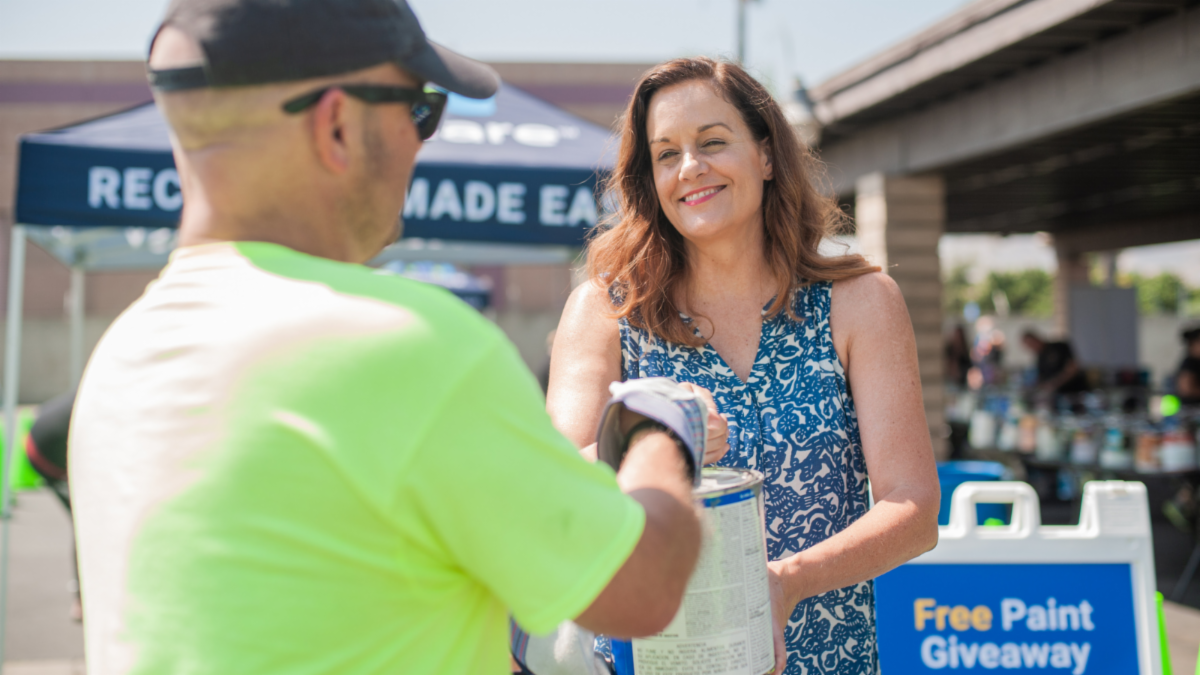
For over 15 years, PaintCare and the Product Stewardship Institute have worked together to expand convenient paint recycling nationwide. PaintCare, a PSI Partner, has collected over 82 million gallons of leftover paint across 11 operational programs—with new programs launching soon in Illinois and Maryland. 


Q: What is PaintCare, and how does it work within EPR laws? 

A: PaintCare is the nonprofit organization that plans and operates paint stewardship programs in states that pass the paint stewardship law. PaintCare currently collects more than 8 million gallons annually from 11 operational programs. 


Q: What’s the secret behind PaintCare’s long-term success? 

A: The PaintCare model has three key elements that contribute to its success: industry commitment, close coordination with stakeholders, and a clear vision for delivering a cost-effective and convenient program that maintains high standards. It cannot be overstated how important it has been to hold fast to the principles established during the PSI-structured dialogue between ACA and stakeholders in the early 2000s. It shaped the coatings industry’s commitment to making PaintCare what it is today. 


Q: What happens to the paint after collection? 

A: Water-based products make up 86% of the paint collected... Last year 4% was reused, 79% was recycled into new paint, 4% was used as alternative daily landfill cover, 12% was landfilled... Oil-based products make up 14%... 5% was reused, 76% was recycled into new paint, and 18% was sent to a hazardous waste incinerator. 


Q: What’s next? 

A: PaintCare is planning two additional paint stewardship programs in Illinois and Maryland... bringing paint recycling to about one third of the US population. 


Curious how PaintCare became one of the most successful EPR programs in the U.S.—and what’s next for paint recycling nationwide?


PAINTCARE EXPANDS IN VERMONT AND MOVES FORWARD IN ILLINOIS 

On June 11, Vermont Governor Phil Scott signed H.484 into law, expanding the range of products managed by PaintCare beyond architectural coatings. The new law allows PaintCare to collect additional paint-related materials under its existing program, shifting them from the state’s household hazardous waste (HHW) system. In exchange, the American Coatings Association (ACA) has agreed to fully reimburse municipalities for the cost of managing these additional materials. Implementation plans are currently under development and require approval from the Vermont Agency of Natural Resources. 


Meanwhile, in Illinois, the PaintCare Program Plan and fee structure were conditionally approved by the Illinois Environmental Protection Agency on June 20. The program will officially launch on December 1, 2025, with fees ranging from $0.45 to $1.95 per container based on size. Manufacturers are encouraged to notify dealers and customers about the program start date and ensure systems are ready to apply and communicate the fee. Learn more about H.484 here and more about Illinois implementation here.  


SPOTLIGHT ON PACKAGING DIVE, ONE OF OUR FORUM MEDIA SPONSORS 

Since EPR for packaging took off in the U.S., many waste, recycling, and industry publications have joined PSI in covering the latest developments. Among the most consistent and insightful is Packaging Dive—a media sponsor of PSI’s 2025 U.S. Product Stewardship Forum. 


As part of Informa TechTarget, Packaging Dive delivers in-depth coverage on packaging policy, recycling, design, and manufacturing, reaching more than 14 million decision-makers across sectors. Their reporting regularly features updates on EPR implementation and perspectives from government, industry, and advocates—including recent coverage of PSI’s Forum and California’s SB 54. 


Looking to get a daily update? Subscribe to Packaging Dive’s free daily newsletter and explore their interactive EPR policy tracker for a real-time look at packaging EPR developments nationwide. 


PSI IN THE NEWS


WHAT WE'RE READING

(StudioThreeDots / Canva Teams)

  • California’s final SB 343 report is out, setting enforceable standards for what can be labeled “recyclable.” The findings clarify how claims must align with material recovery realities—impacting packaging design and EPR compliance moving forward. Read more  
  • Switzerland’s Federal Council has endorsed a nationwide mattress recycling system, following successful pilots that demonstrated cost-effectiveness and strong public participation. The move positions circular design and recovery as national priorities. Read more 
  • Vietnam is drafting a national circular economy roadmap that prioritizes EPR, eco-design, and recycling market development. Leaders aim to strengthen environmental governance while aligning with international trade and climate goals. Read more 


The Product Stewardship Institute is a policy expert and consulting nonprofit that pioneered product stewardship in the United States. Since 2000, PSI has helped enact 146 extended producer responsibility (EPR) laws across 21 product categories in 34 states — the bedrock on which the circular economy is built. We work with businesses, nonprofits, academia, and governments to ensure that products are responsibly managed from design to end of life. Join us at www.productstewardship.us. 

The Product Stewardship Institute, Inc. is an equal opportunity employer and provider. Persons with disabilities who require alternatively formatted materials to ensure effective communication should contact Amanda Nicholson at info@productstewardship.us or 617.236.4855.

STAY CONNECTED
Facebook  Twitter  Linkedin  Youtube