|
I love stories. Whether they are fact or fiction, there’s something about a good story that touches the heart and mind in ways analysis and argument don’t. Philip Yancey’s book Soul Survivors first convinced me of the power of storytelling as a legitimate way of describing the human condition. He directed me to Russian writers, and in the pages of some of the classic Russian novels, you can read exquisite descriptions of shame and doubt and see how desperately people try to justify their actions even when they know they are wrong (try Anna Karenina). The insight they offer into the human condition can’t be matched.
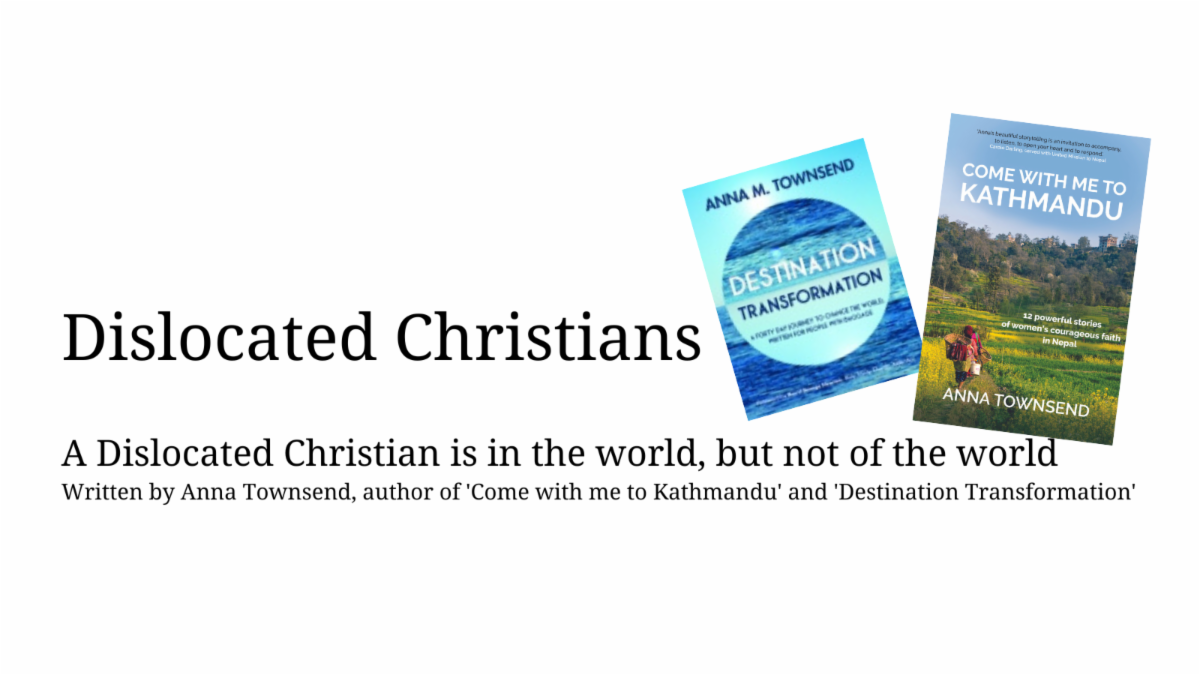
Though I’m not a novelist, I’ve tentatively followed up on this idea by trying to tell stories that are examples of broader paradigms. That was certainly the case in Come With Me to Kathmandu, where each woman exemplified a particular aspect of life in Nepal. As I write Our Sisters, I’ve also been fortunate to discover people with incredible stories.
Remarkably, I’ve already finished writing the first half of my book about persecuted Christian women in Pakistan. I’ve wrapped the section up by attempting to grapple with the theology of persecution. I want to know why God allows teenage girls to go through abduction and rape, and I suspect my readers will have similar questions.
Suffering is a vast subject and probably one I could spend the rest of my life trying to understand, but God has been good concerning my book, and he’s led me to people with astonishing stories that help resolve my uncertainties. I’ve been fortunate to interview a pastor from Jaranwala, where orchestrated violence against Christians was carried out last August. He is young and was taken into police custody after the violence, where he was tortured. Now free, his very personal story of holding onto his faith despite everything he endured is a powerful testimony to his congregation. I suspect that sometimes we need examples to follow rather than more theory. Of course, that was often Jesus’ approach, too.
I also had an overwhelming experience when God led me to spend two days reflecting on 1 Samuel 11 for Pentecost. It’s one of those Old Testament passages with gratuitous violence that’s difficult to get our heads around. I even wrote to the professor who compiled the reading plan to ask why he had chosen that passage for Pentecost.
Immediately after grappling with the chapter, I received news of an extraordinary rescue operation in Pakistan. It was clear to me that the same Spirit that had worked through Saul in the Old Testament was still at work among brave Christians in Asia. I’m afraid you’ll have to wait around 18 months to read more about the remarkable links between the two situations; Our Sisters will be released towards the end of 2025.
Please pray for me as I now shift gear and examine honour-based violence in developed countries. I have already begun this section, but I still need a few more contacts willing to share their stories with me.
At the end of next week, I’m leading a women’s weekend retreat, and among many other topics, we’ll be considering how to cope with all the stories of bad news we encounter in daily life and how it sometimes feels as if we’re about to be overwhelmed. As a writer who relays upsetting stories to others, I find it challenging to consider how best to do this. While it's clear that, as Christians, we shouldn’t bury our heads in the sand, I don’t think God wants us to feel depressed and powerless, either. Please let me know if you have any advice about this.
|