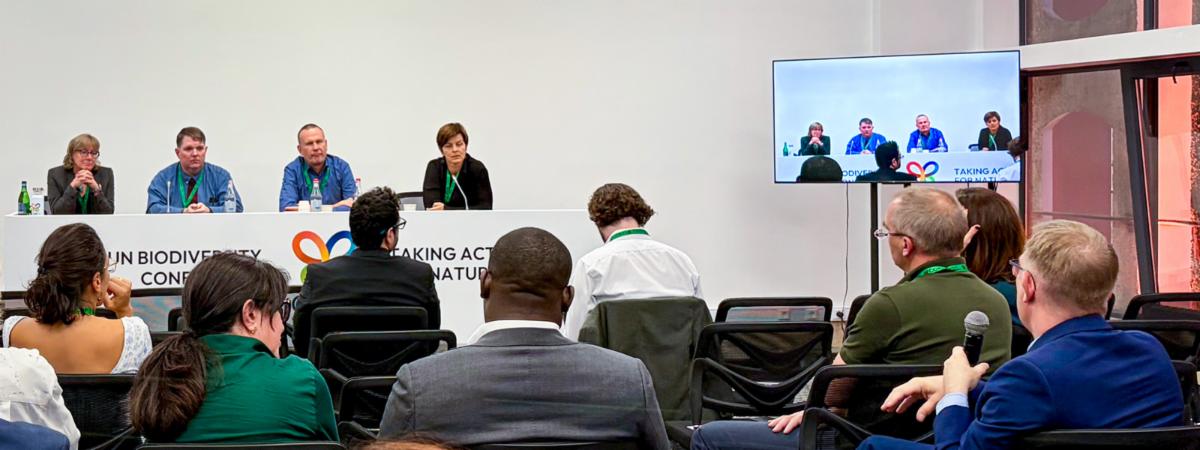
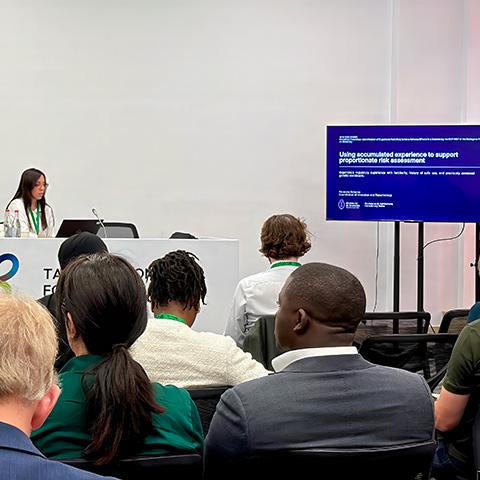
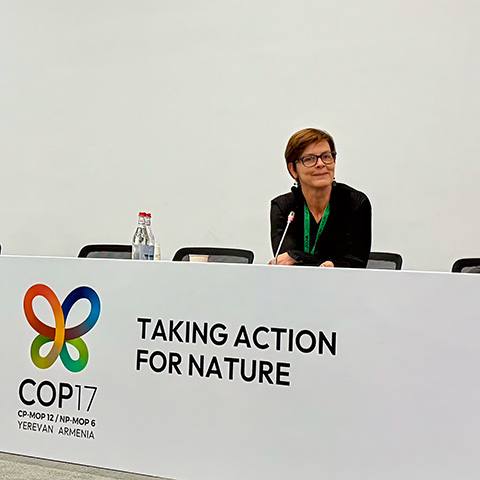
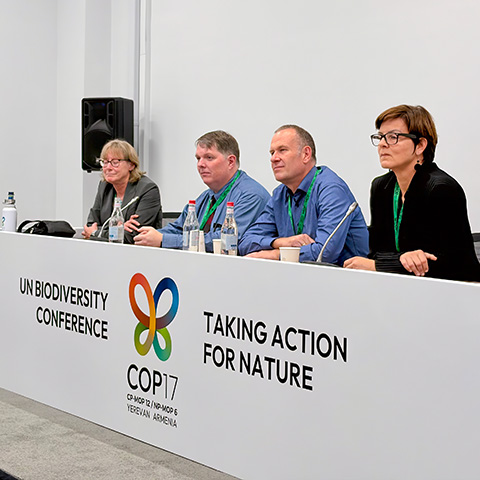
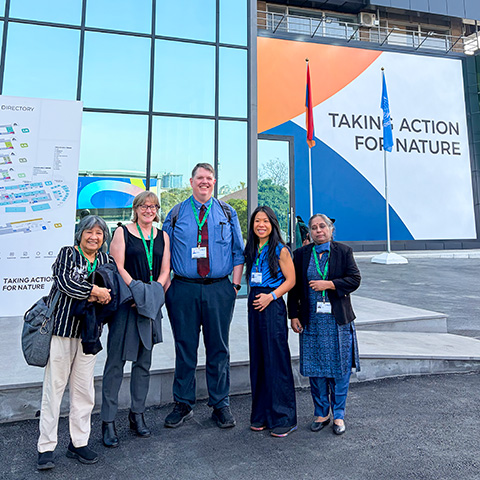
AFSI Newsletter - November 2026 | | Our Team at the UN Biodiversity Conference in Yerevan | | The Agriculture & Food Systems Institute (AFSI) joined Parties, observers, and stakeholders in Yerevan, Armenia for the UN Biodiversity Conference 2026 (COP-17 / CP-MOP-12), held October 19-30, 2026. On the conference’s opening day, AFSI hosted its own side event, “A Simplified Procedure: Identification of Organisms Not Likely to have Adverse Effects in a Decision by the COPMOP of the Cartagena Protocol on Biosafety,” which brought together speakers from Argentina, Brazil, Switzerland, and the United States to consider how Parties to the Cartagena Protocol on Biosafety could build on more than twenty years of experience with living modified organisms (LMOs) to simplify procedures under the Protocol. Using two insect-resistance proteins from Bacillus thuringiensis (Bt), Cry1Ab and Cry2Ab, as a case study, the speakers examined how Parties might coordinate risk assessments, share data, and take decisions together. | | | | Using the Protocol’s Provisions | Our Senior Scientific Program Manager, Dr. Karen Hokanson, opened the event by outlining how Parties could build on experience with risk assessments of living modified (LM) crops to simplify procedures under the Protocol. She considered the relevant articles: Article 7(4), which allows exemptions for LMOs identified in a decision of the COPMOP as not likely to have adverse effects on biological diversity; Article 13 on simplified procedures; Article 14 on bilateral, regional, and multilateral agreements; and Article 20 on information sharing, including summaries of risk assessments, through the Biosafety Clearing-House (BCH). | | Effects on Non-Target Organisms | Dr. Jörg Romeis from Agroscope, Switzerland, presented on assessing the risks of Bt crops to non-target organisms (NTOs), the primary potential adverse effect on biodiversity considered for crops modified to produce a pesticidal substance. Environmental safety assessments of crops expressing Cry1Ab and Cry2Ab in more than 20 countries have applied a common approach to NTO assessment, and all have reached the same conclusion: that adverse effects on biodiversity are not likely. | | | | | Our CEO, Dr. Andrew F. Roberts, presented on data transportability: the ability to use data collected in one country to inform a risk assessment in another, avoiding costly duplication of effort for applicants and regulators alike. He drew a clear line between data and assessment. Much like a passport, transportable data can be recognized anywhere, while each country keeps the authority to make its own decision. Laboratory data are geographically neutral, and agrophenotypic data from field trials are also transportable, since environments differ but not in ways likely to change how a genetically engineered crop compares with its conventional counterparts. | | Ms. Florencia Goberna from Argentina’s Secretaría de Agricultura, Ganadería y Pesca presented on Argentina’s expedited review of familiar plants and traits, describing how Argentina draws on accumulated experience, including familiarity, history of safe use, and previously assessed genetic constructs, to support proportionate risk assessment. | | | | | Dr. Luciana P. Ambrozevicius from the Brazilian National Biosafety Commission (CTNBio) presented on regional regulatory cooperation and how shared risk assessments can streamline decision-making. Article 14 of the Protocol encourages exactly these kinds of bilateral, regional, and multilateral agreements, which may serve as a starting point for broader agreements among Parties. | | Dr. Roberts moderated the discussion that followed. One participant pointed out that Parties can already use these procedures without further approval, noting that EU member states accept decisions made by others. In response, Dr. Roberts observed that many of the roughly 160 countries yet to make cultivation decisions look to the Protocol for direction: “Many of them are waiting, and they look to forums like the Cartagena Protocol to provide guidance and leadership.” | | | | | Building Risk Assessment Capacity | While our side event was underway, our Senior Advisor, Dr. Vibha Ahuja, and Dr. Flerida Cariño, who consults with AFSI from the Philippines, spoke at “From Guidance to Practice: Building Capacity for Risk Assessment of Living Modified Organisms,” a side event organized by the Foundation for the National Institutes of Health (FNIH) and the GeneConvene Global Collaborative. Speakers shared lessons from regional biosafety initiatives, capacity building for laboratory and LMO detection, and country experiences adapting risk assessment approaches to national contexts. | | Beyond the side events, members of our team took part as observers in working sessions throughout the conference, following the discussions on biosafety under the Protocol. For anyone who wants to explore the case study behind our side event, AFSI’s Cry1Ab and Cry2Ab Protein Monographs, published in 2026, document the regulatory decisions on both proteins and the common information and approach to risk assessment that may be considered in a simplified procedure for familiar LMOs. All four monographs are free to download, each with a DOI for easy citation. AFSI would like to take this opportunity to thank our speakers for their contributions, and everyone who joined us in Yerevan. | | | | |