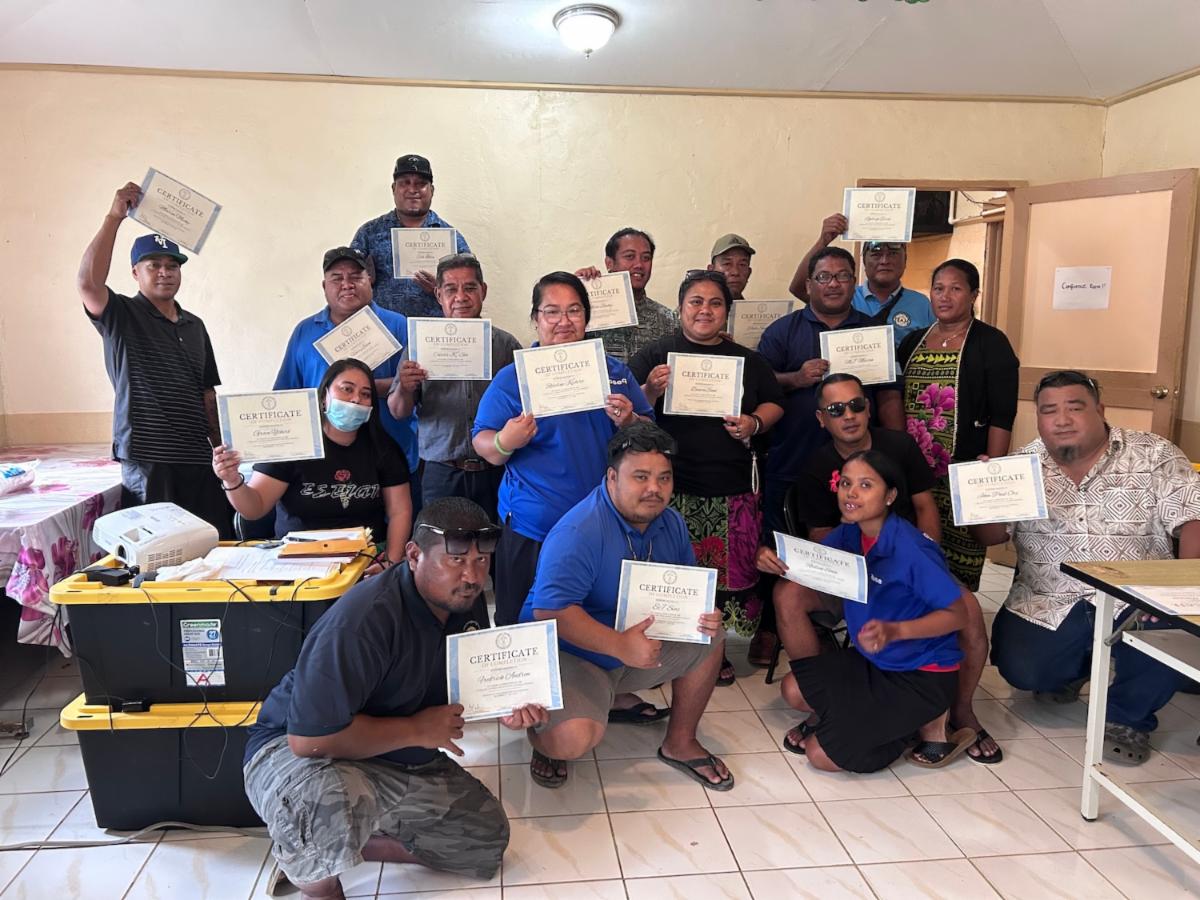
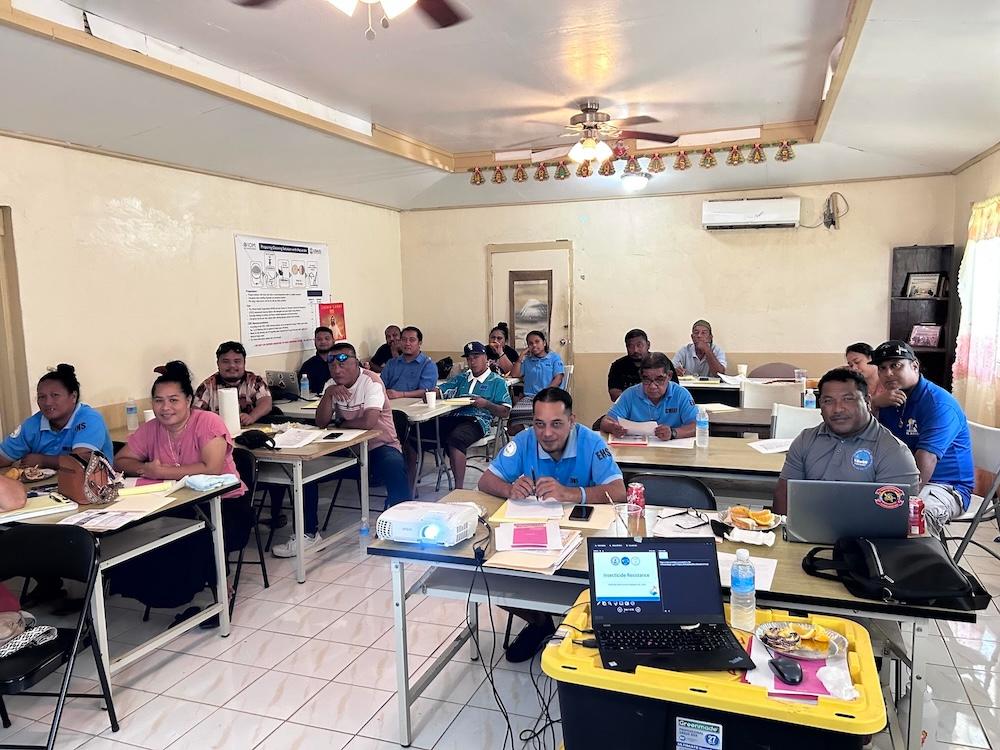
Strengthening Public Health Resilience: Integrating Dengue Response and Vector Control in Chuuk State | | The PIHOA Secretariat mosquito vector team with Chuuk’s State Department of Health Services, and the Chuuk State Environmental Protection Agency attendees at the Category 8 Public Health Pest Control Training. | | |
Chuuk, FSM - Cases of dengue fever were confirmed in Chuuk State in December 2025, coinciding with a scheduled Category 8 Public Health Pest Control training, and underscoring the critical importance of Early Warning Systems (EWS) for the timely detection of mosquito-borne disease threats in the Federated States of Micronesia (FSM). The series of cases highlighted the urgency of routine mosquito surveillance, rapid disease screening, and the ability to translate early signals into immediate public health action.
The Category 8 training was delivered by Pacific Island Health Officers’ Association (PIHOA) Secretariat in collaboration with the Chuuk State Department of Health Services (DHS) and the Chuuk State Environmental Protection Agency (EPA). The four-day training program focused on the detection, monitoring, and suppression of pests of public health concern, with an emphasis on controlling mosquitoes and the diseases they transmit.
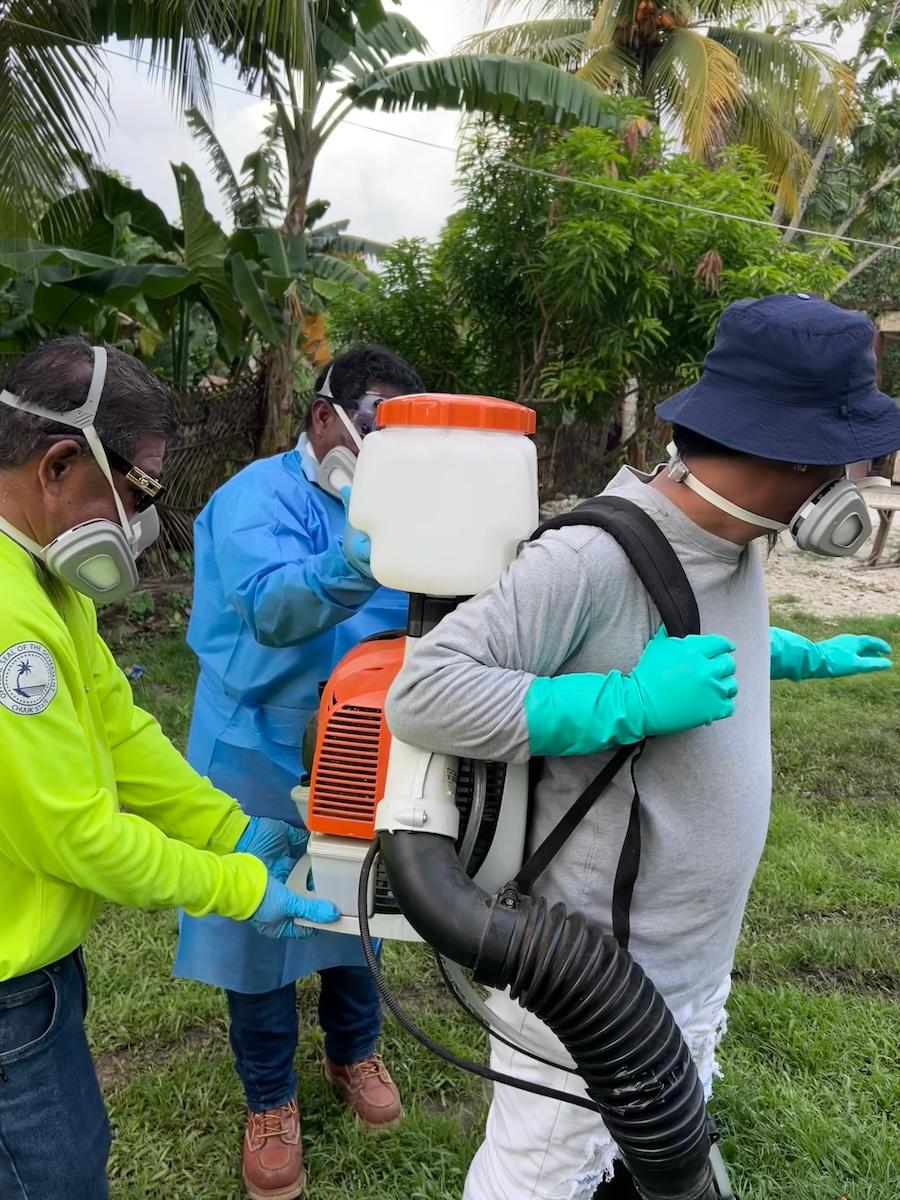
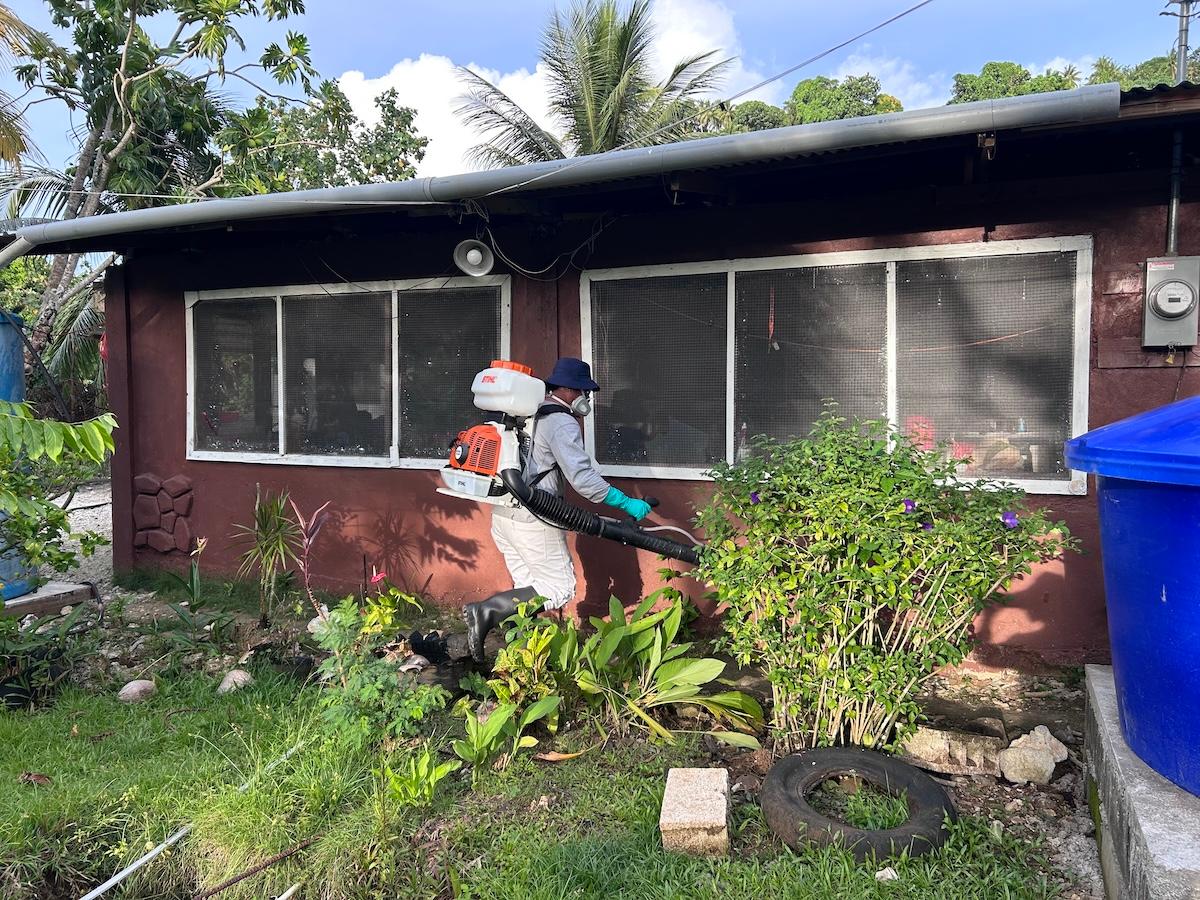
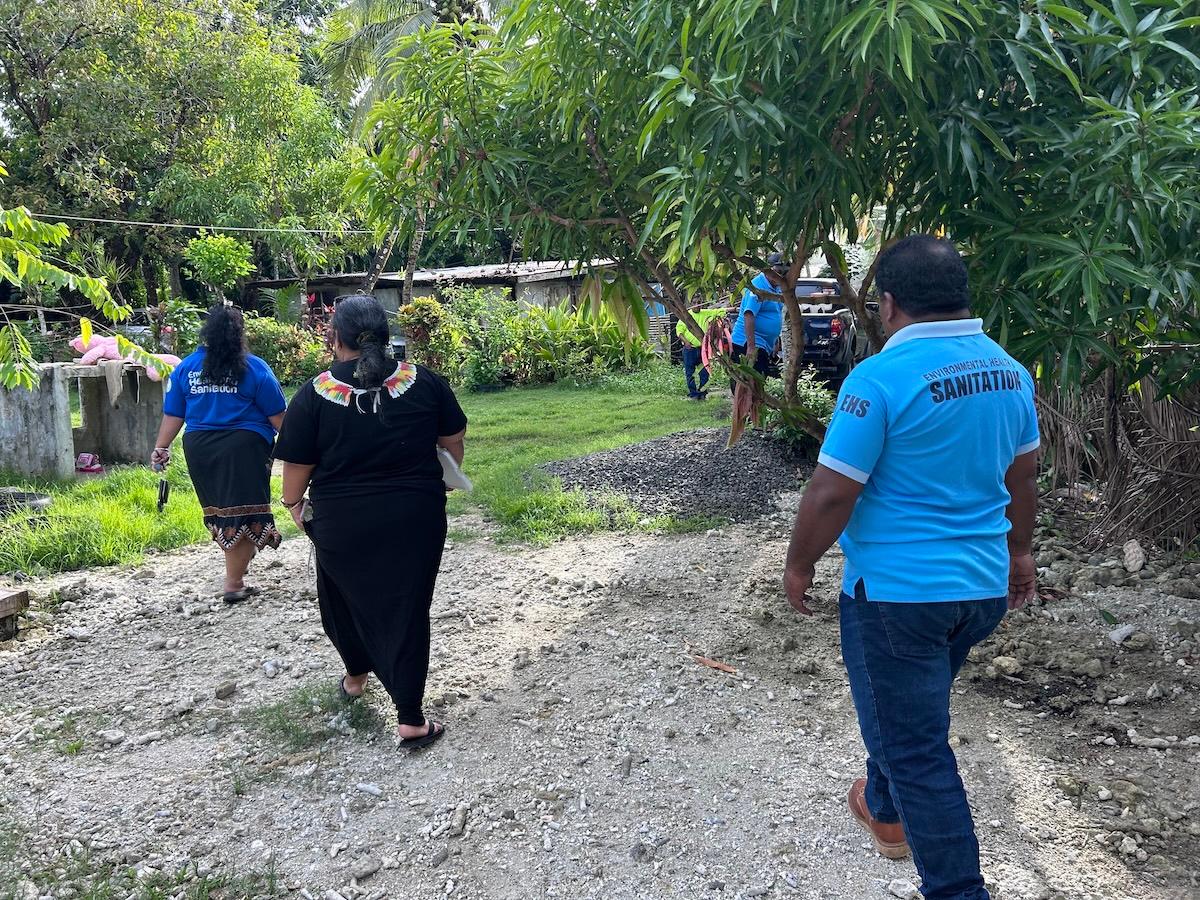
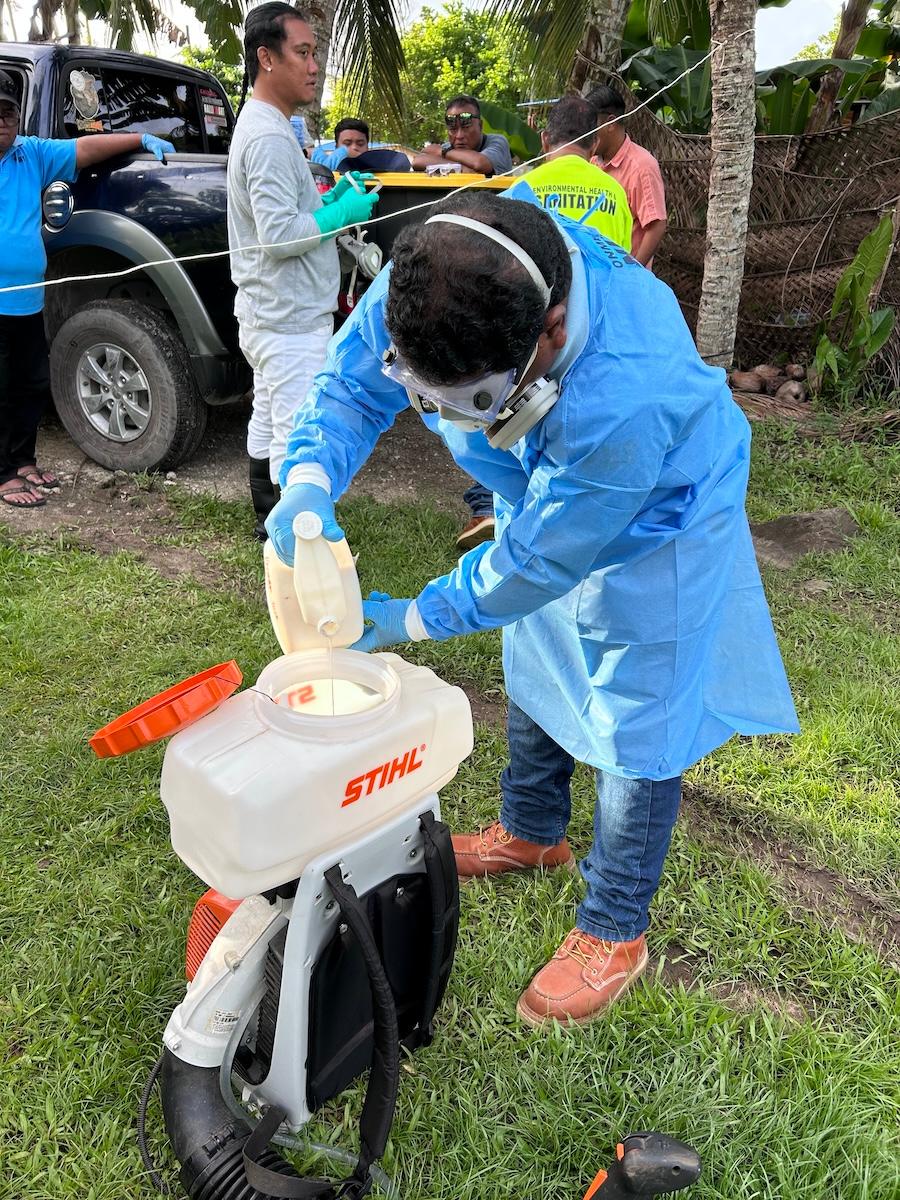
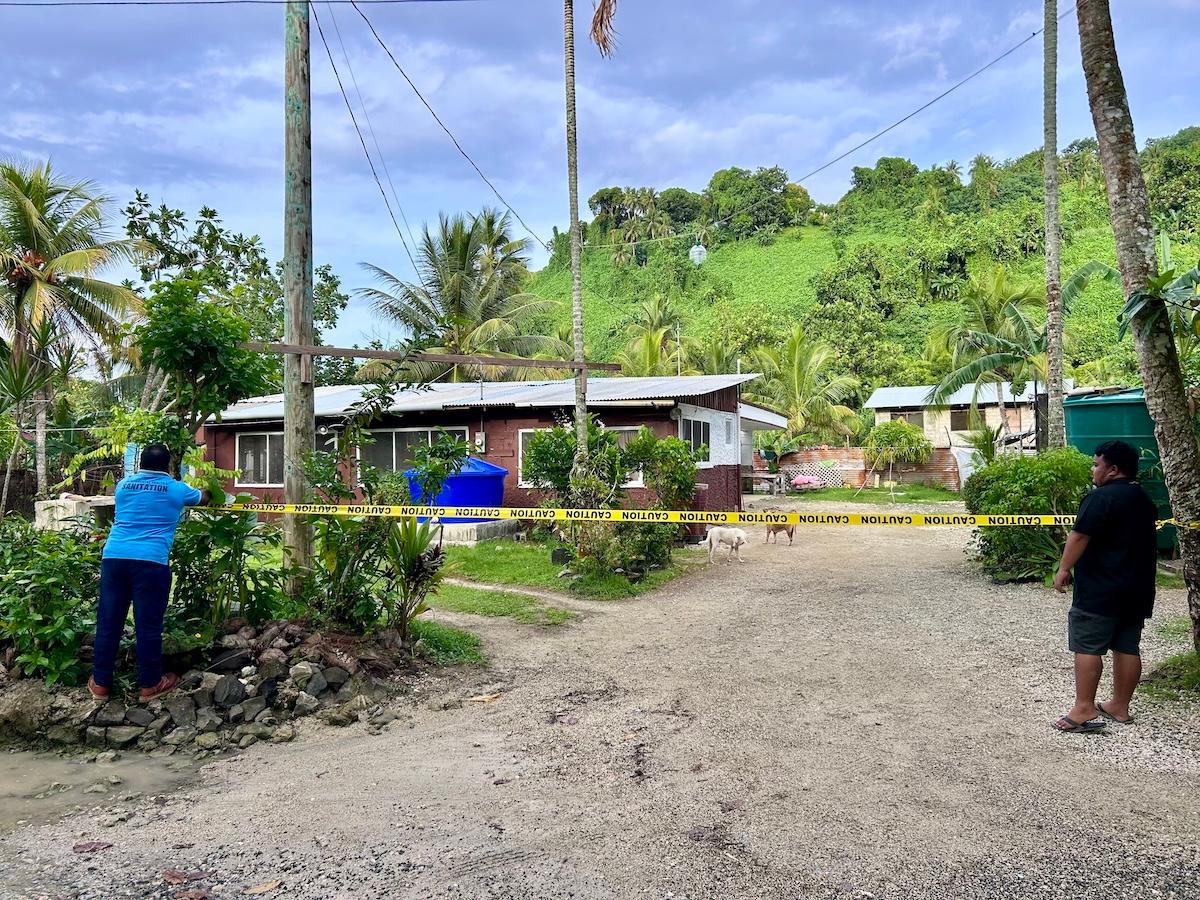
The emergence of the dengue cases while the training was in progress motivated organizers to adapt in real-time, demonstrating how EWS-informed decision-making can guide rapid and targeted responses, said Cynthia King, PIHOA Secretariatʻs Technical Consultant - Tropical Island Training and Evaluation Center Training Coordinator. “We had planned to conduct a spray exercise at the port,” King explained. “However, when Director Buliche requested assistance with the response, we redirected our efforts toward inspection and treatment of a property where the first confirmed dengue patient had been staying.”
| | |
The Chuuk State DHS coordinated additional response efforts through EpiNet, the coordinating body for FSM. According to Curtis Sos, DHS Chief of Environmental Health and Sanitation, a multidisciplinary team composed of the DHS Director, Health Chiefs and doctors, responded to cases across multiple islands within Chuuk State, where a total of nine cases of dengue fever were ultimately confirmed.
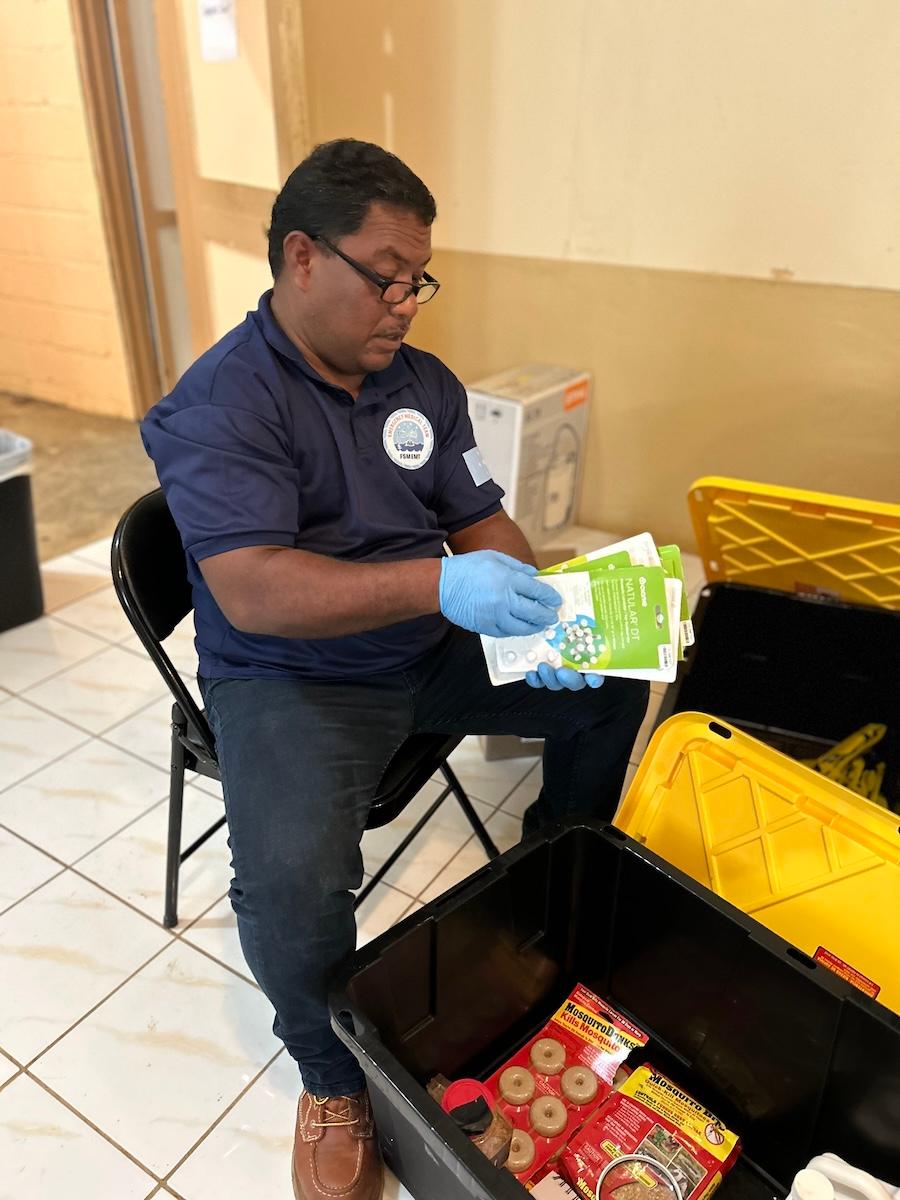
The team conducted community outreach, vector surveillance, and mosquito control treatments. Chief Sos expressed gratitude to PIHOA and emphasized that the December Category 8 training provided crucial “support to enlighten our environmental health inspectors and gain more knowledge and skills in vector control.”
| | |
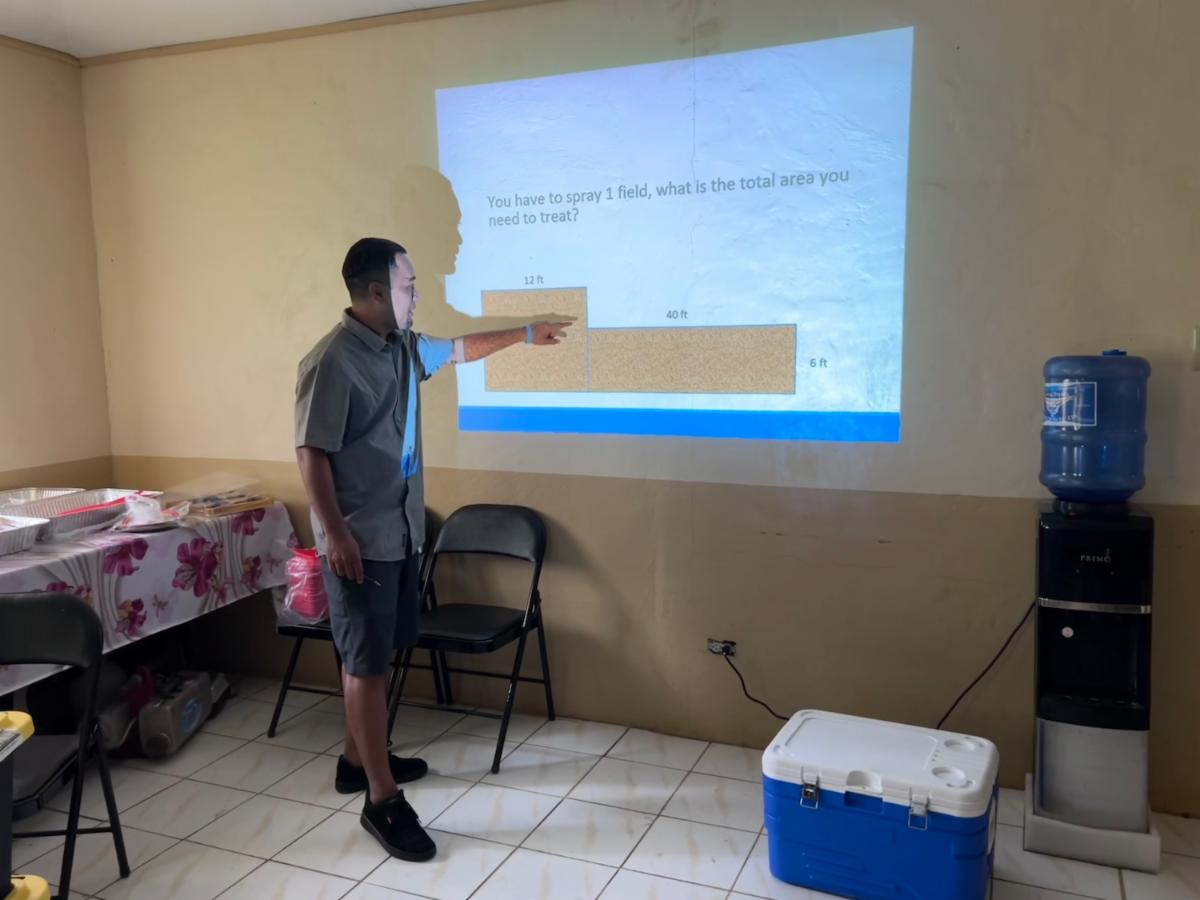
The Category 8 training included both classroom and field exercises, designed to prepare public health vector control personnel to respond safely and efficiently in the event of vector-borne disease transmission, such as this. Given the timing, Sos stated, “I encouraged our team to apply what we just learned out of our training.”
The PIHOA Secretariat continues to track the outbreak, communicating with FSM National, and providing ongoing technical support to EHS staff in Chuuk. In addition, two follow-up visits have been conducted by PIHOA Secretariatʻs Regional Medical Entomologist, Dr. Limb Hapairai. The most recent visit was to support Chuuk DHS Environmental Health teamʻs post-Typhoon Sinlaku response and mosquito control risk mitigation efforts.
| | This work is supported by funds made available from the U.S. Department of State (DOS), through its cooperative agreement with PIHOA entitled, Diminishing Dengue in the Indo-Pacific with Climate Services: Developing Predictive Models Towards a Regional Early Warning System (EWS) Against Dengue, U.S. Centers for Disease Control and Prevention (CDC) of the U.S. Department of Health and Human Services (HHS), PIHOA’s Partnership Cooperative Agreement OT21-2101: Strengthening the Public Health Systems in the US-Affiliated Pacific Islands, and sub-contract from the Puerto Rico Science, Technology and Research Trust to PIHOA. The contents are those of the author(s) and do not necessarily represent the official views of, nor an endorsement, of the U.S. Government. | | |
###
About the Pacific Islands Health Officers' Association
PIHOA's mission is to improve the health and well-being of the USAPIs by providing, through consensus, a unified, credible voice on health issues of regional significance. Established in 1986, PIHOA is governed by and represents the collective interests of the USAPI health leadership from American Samoa, Federated States of Micronesia, Guam, Republic of the Marshall Islands, and the Republic of Palau.
PIHOA’s Secretariat, comprised of executive, administrative, and technical staff and consultants, provides support to the USAPI health agencies and leadership in the following priority areas: health workforce development; epidemiology and surveillance; health systems performance improvement; laboratory services; regional health leadership and policy advocacy; Pacific health security; and, partnership engagement and coordination. PIHOA has two offices in Honolulu, Hawai’i, and Hagåtña, Guam.
Media Contact
Billie Hiraishi
Communications Officer
billieh@pihoa.org
Limb Hapairai
Regional Medical Entomologist
limbh@pihoa.org
Cynthia King
Technical Consultant
cynthiak@pihoa.org
|
| | | |