|
It’s the Spring Edition!
In this issue, we spotlight our key upcoming events: Innovate4Climate and the Global Knowledge Forum! You’ll also find updates on PMI programs, country engagements, and recent knowledge products that help shape the carbon pricing and market landscape. Dive in and stay informed on the latest insights and updates throughout the year.
| | |
The 2025 PMI Global Knowledge Forum will bring together policy makers from implementing and donor countries, and knowledge partners and experts, to foster insightful exchange on key advancements, address challenges with implementing carbon pricing instruments, and participate in carbon markets.
The forum will foster insightful exchange to advance global climate and development goals through collaborative dialogue and innovation Learn more.
| | Innovate4Climate 2025 will convene key players from government, international organizations, finance, business, and civil society around the theme: “Harnessing Carbon Markets and Carbon Pricing for Smarter Development and Stronger Economies”. The event will feature high-level panels, technical workshops, and showcase innovative initiatives. It also offers a chance to connect with public and private sector leaders and meet new partners, investors, and innovators. Learn more. | | |
Coming Soon: The World Bank’s Landmark Carbon Pricing Report
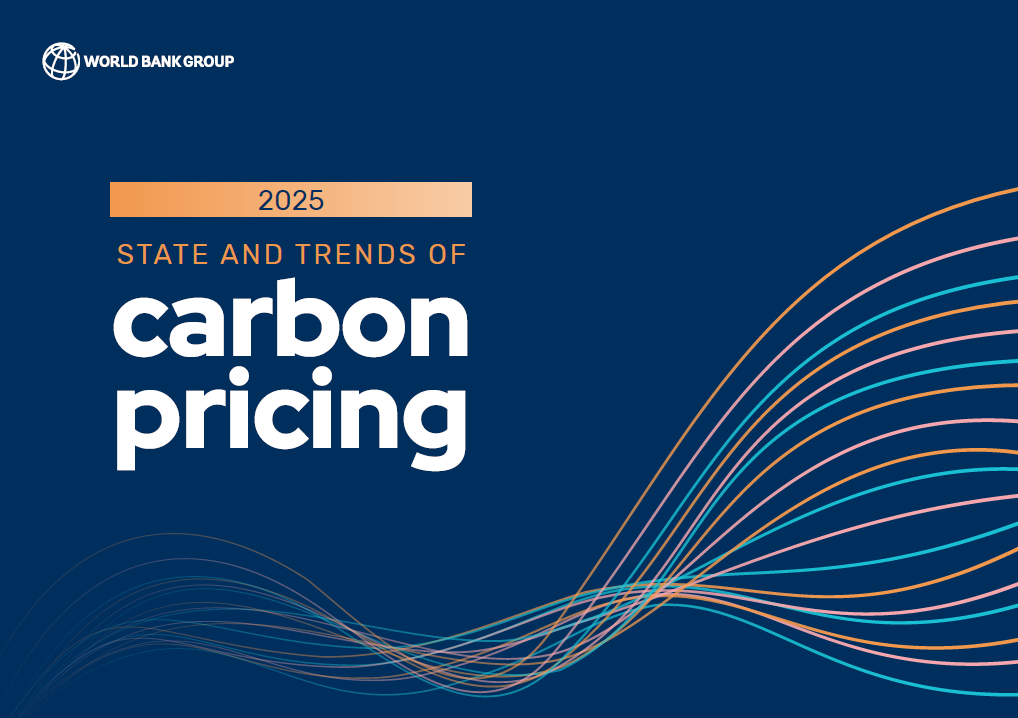
The World Bank is gearing up to release its much-anticipated "State and Trends of Carbon Pricing 2025" report, a leading global reference on carbon pricing and markets. Widely read by policymakers, industry leaders, and climate experts, the annual report offers the latest data and insights on carbon pricing developments around the world.
The launch event will take place at the I4C conference in Sevilla, Spain, from June 10-12, featuring a panel of World Bank and external experts. The report offers a trusted evidence base to compare trends and inform decision-making across countries.
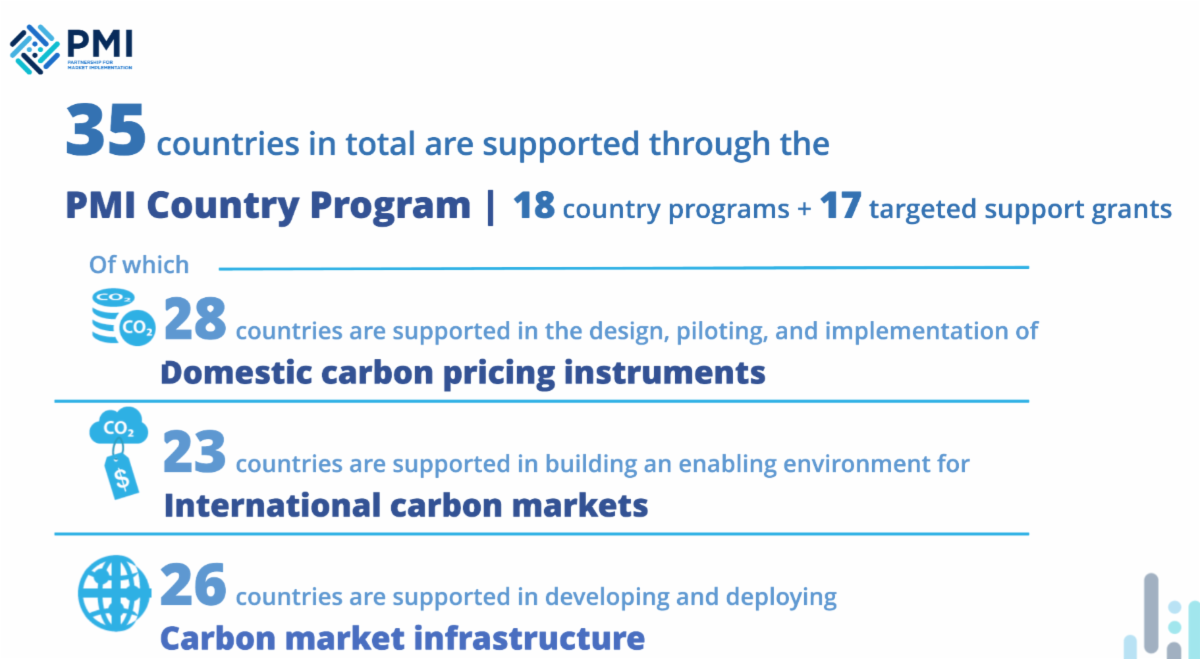
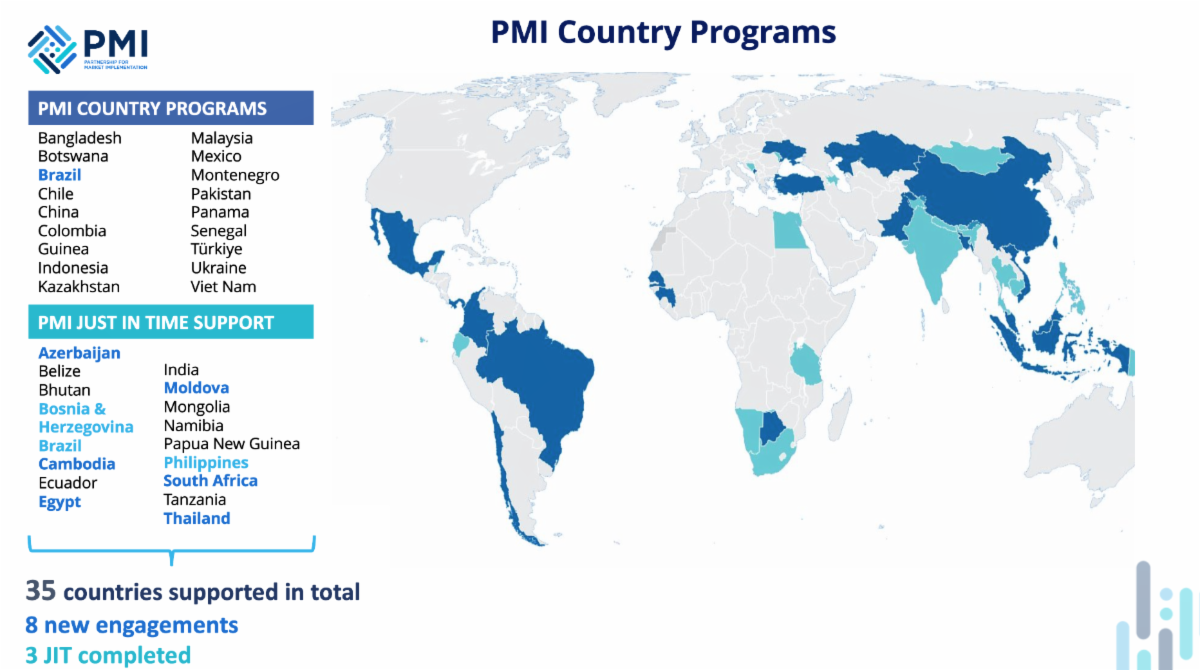
| | | COUNTRY ENGAGEMENT PROGRAM | | With a growing coalition of over 35 implementing countries, PMI has established itself as a key platform for helping countries design and operationalize carbon pricing and catalyze market instruments, build institutional capacity, and respond to evolving global demands. For more information on PMI's country programs and targeted support activities, check out our latest update below and visit our website. | |
Momentum Accelerates as Seven New Countries Join PMI
Seven new countries joined PMI in fiscal year 2025, signaling growing momentum for carbon pricing information around the world. PMI’s flexible model—designed to deliver rapid, targeted support—has helped unlock reforms in countries at early stages of engagement. Brazil, following the enactment of its national Emissions Trading System (ETS) law, is now moving from upstream support toward full implementation. This includes developing a national strategy for integrating carbon credits into the ETS and for enabling international markets, including Article 6 and Voluntary Carbon Markets.
| | Other countries are also making progress through PMI’s Just-in-Time support: Egypt is advancing a broad carbon pricing framework, Moldova is aligning climate policies with EU accession goals, South Africa is expanding its carbon tax and offset programs, and Thailand is developing an ETS implementation roadmap. Countries are increasingly turning to PMI, not only for ETS design, but also for carbon taxes and crediting mechanisms. This rising demand highlights PMI’s broad support and the growing role of carbon pricing in helping countries to mobilize resources for holistic economic development. | |
Türkiye-China South-South Exchange: Building Carbon Markets for Development
| |
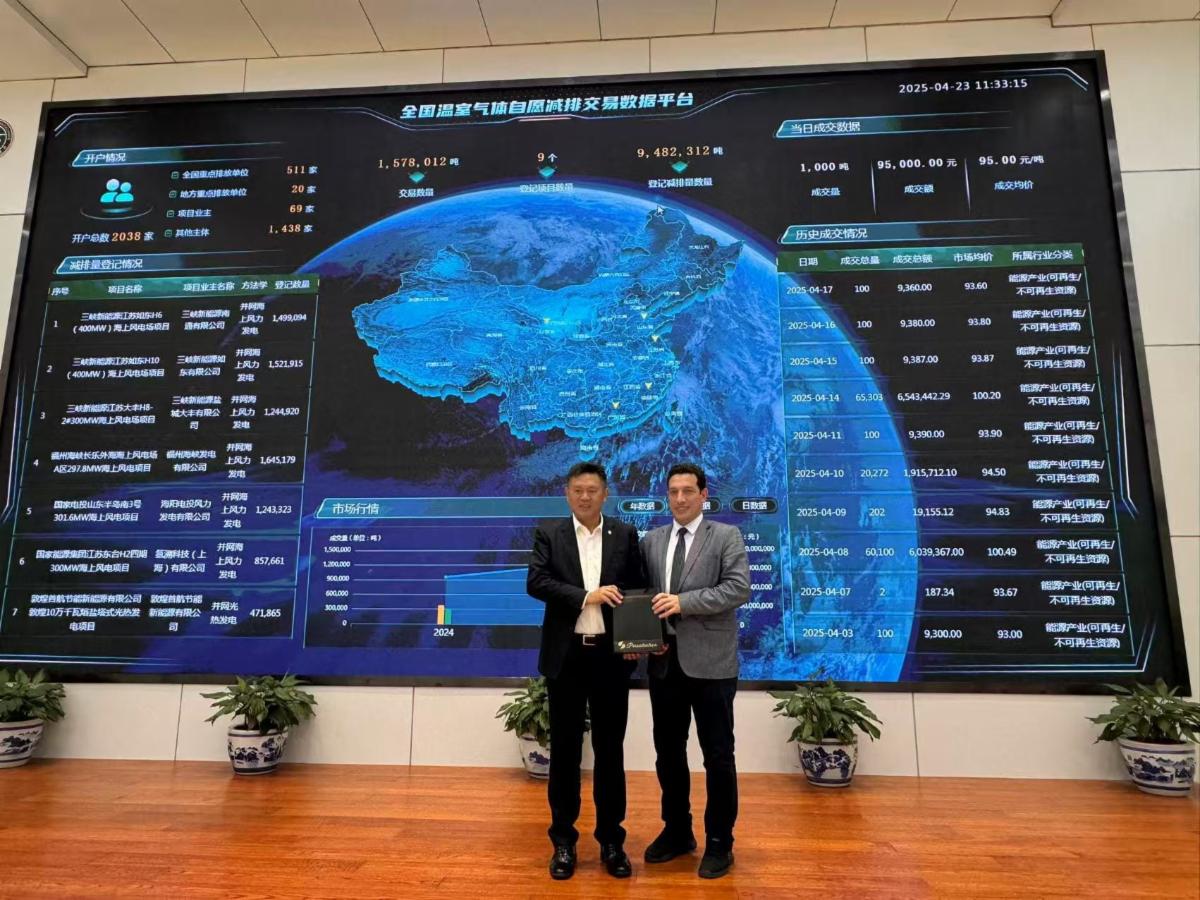
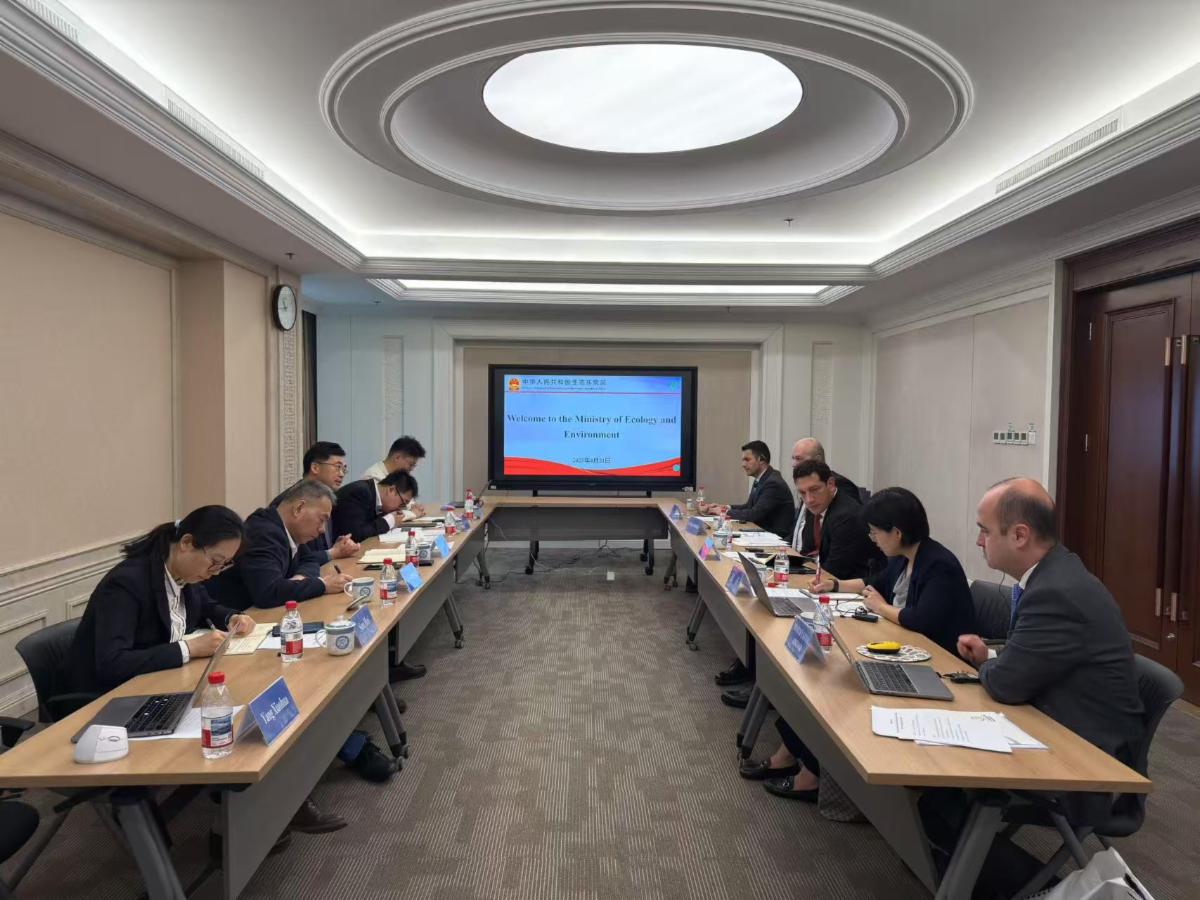
As part of the Türkiye Carbon Market Development Project under the PMI, a technical study tour to China took place from April 20 to 25, 2025. Led by Deputy Director of the Directorate of Climate Change at Türkiye’s Ministry of Environment, Urbanization and Climate Change—Orhan Solak, who is also the director of the PMI Türkiye Project Implementation Unit—the delegation engaged with Chinese institutions to draw lessons from the design, implementation, and scale up of China’s national ETS as well as the integration of a carbon crediting mechanism. The delegation explored China’s experience in balancing national priorities with regional pilot schemes and sequencing system development through phased implementation—insights that will directly inform Türkiye’s plans to develop their own ETS and crediting framework. This first official exchange marks an important step toward sustained technical collaboration between Türkiye and China. The visit also reinforced the value of South-South knowledge exchange between PMI countries, highlighting the power of peer leaning in advancing effective, country-driven carbon pricing strategies.
| |
Brazil Scales to Higher Ambition with PMI Support
| |
In November 2025, Brazil will host COP30 against the iconic backdrop of the Amazon rainforest. The country—supported by the Partnership for Market Implementation—seeks to lead efforts on climate resilience and economic transformation. The conference will spotlight the nation’s efforts and progress towards expanding economic opportunities, raising living standards, and cutting emissions. Discover how Brazil’s emission trading system initiatives have been strengthened through technical support from PMI. Read more.
| | | | GLOBAL KNOWLEDGE & INNOVATION | | |
Guidance Notes
As countries shift from planning to implementation, demand for practical carbon pricing support is rising—especially in the Global South. PMI is meeting this need by serving as a global hub for knowledge and innovation, offering tools, data, and technical expertise co-developed with knowledge partners to help countries assess readiness and implement carbon pricing solutions.
| | |
Article 6 Approach Paper - Letter of Authorization
This template, published ahead of COP29, offers guidance and documents for acknowledging or authorizing carbon market activities. It details essential terms and conditions to optimize investment and value for selling countries. Includes an additional template developed by highlighting required terms to facilitate insurance for authorization. View Report.
| | | | | |
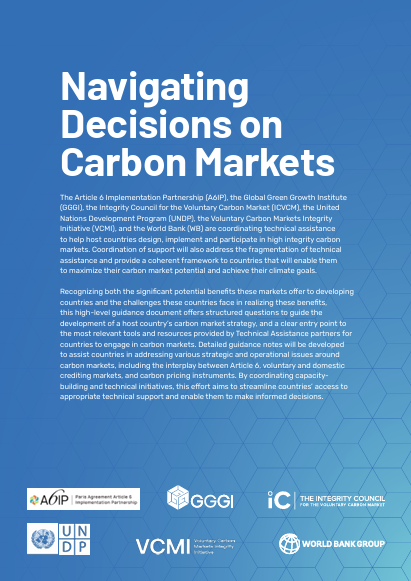
Navigating Decisions on Carbon Markets
The World Bank collaborated with key capacity building partners to launch an important resource at COP29. This note, developed in response to persistent fragmentation in capacity building support for carbon markets, establishes a common foundation for harmonized approaches and aligned messaging to help guide host countries in navigating critical decisions and highlights access points to key tools and resources for engaging in carbon markets.
View Report.
| | |
Bhutan-Singapore Investor Roundtable: Implementation Agreement Signed
The World Bank recently hosted an Investor Roundtable on the Bhutan Climate Fund (BCF). Nearly 30 stakeholders—including investors, carbon traders, and project developers—joined the session to explore investment opportunities and strategic partnerships around Bhutan’s growing carbon credit portfolio. The Government of Singapore and the Royal Government of Bhutan signed an Implementation Agreement under Article 6 of the Paris Agreement in February 2025, providing a basis for entities in Singapore to engage with carbon projects in Bhutan. The workshop produced rich insights on buyer priorities, desired credit characteristics, and key risks to be addressed. It also offered an avenue for Bhutan to showcase the substantial progress it has made in creating enabling conditions for carbon market participation, including in developing a clearer policy and regulatory environment.
| | |
Upcoming: Detailed Guidance on International Carbon Market Engagement
As a follow up to the Navigating Decisions note, the World Bank is launching “Detailed Guidance for Host Countries on International Carbon Market Engagement” in June 2025 with key capacity building partners, including Article 6 Implementation Partnership (A6IP), Global Green Growth Institute (GGGI), GIZ, Integrity Council for Voluntary Carbon Markets (ICVCM), United Nations Development Program (UNDP), United Nations Framework Convention for Climate Change (UNFCCC), and Voluntary Carbon Markets Integrity Initiative (VCMI). This detailed guidance will provide an inclusive, development-focused framework for national carbon market strategy development structured around 7 key questions.
| | |
A Roadmap for Safe, Efficient, and Interoperable Carbon Markets Infrastructure
This report outlines critical bottlenecks and priority action areas identified by the Carbon Market Infrastructure Working Group to achieve efficient, secure carbon market infrastructure that works seamlessly across systems and jurisdictions.
View Report.
| | |
Carbon Asset Registry Training: A Foundational Learning Journey
This immersive, hands-on learning experience provides practical tools and peer learning opportunities to support countries in the early stages of registry development. The current cohort—comprising Belize, Nepal, and Bhutan—will conclude in August 2025, with the next cohort, which includes Tanzania and Mexico, is scheduled to begin in September 2025.
The training is designed to equip participants with the technical and functional knowledge required to establish and operate National Carbon Registries. Tailored to both policy professionals and IT experts, this foundational training introduces core principles aligned with Article 6 of the Paris Agreement. Over about 3 months, the training combines weekly live sessions with self-paced testing guided by user scripts and real-world registry simulations. Participants gain exposure to key processes like project registration, credit issuance, transactions, and retirement using a platform tool. Training modules include:
• Introduction: Preparatory Session
• Module 1: Registry Foundation – Reporting requirements and project data input
• Module 2: Transactions & Retirements – Practical use of the "Wallet" feature
• Module 3: Tracking & Transparency – Auditability and system integrity
• Module 4: Deployment Options – Customizing registry implementation
| |
Upcoming: Detailed Guidance on Priority Areas for Carbon Market Infrastructure
This series of technical guidance notes will be published in June 2025. It includes five technical guidance notes developed by the Carbon Market Infrastructure Working Group convened by the World Bank. These notes provide targeted recommendations on: ecosystem governance, transaction integrity, information security, data interoperability, and digital Monitoring, Reporting, and Verification (dMRV) systems. This series builds on the Carbon Market Infrastructure Roadmap launched at COP29, and draws on the expertise of over 40 entities across the carbon market infrastructure ecosystem.
| | |
Upcoming: South-South Knowledge Exchanges on Carbon Asset Registries
As part of ongoing efforts to strengthen country capacities on carbon market infrastructure, two targeted South-South knowledge exchanges will convene technical teams to foster peer-to-peer learning on carbon asset registries.
Virtual Peer Learning on Carbon Asset Registries (Guyana, Bhutan, Nepal, Belize): This virtual session, taking place in May 2025, will bring together countries at varying stages of registry design and implementation. Guyana and Bhutan will present lessons learned from their operational experiences, while Nepal and Belize will share early-stage challenges and engage in interactive dialogue with peers to inform their registry development pathways through peer exchange.
In-Person Technical Exchange on Carbon Asset Registries (Nepal, Thailand): This in-person engagement, scheduled for May 2025, will enable Nepal’s technical teams to engage directly with counterparts in Thailand. Drawing insights from Thailand’s experience in building and scaling up its carbon asset registry, the session will focus on practical tools, system architecture, and institutional arrangements to support Nepal's registry development efforts.
| | COMPACT WITH AFRICA - GREEN BUSINESS FUND | | The Compact with Africa—Green Business Fund (CwA-GBF) is a PMI-associated trust fund dedicated to supporting small and medium enterprises (SMEs) in boosting development with positive climate impacts along with country partners in the Compact with Africa G20 initiative. The fund achieves these objectives through policy dialogue, fostering an enabling environment, capacity building, technical assistance, and in designing and piloting innovative financial instruments. | | |
Africa Green, Resilient and Inclusive Housing De-Risking (GRIHD) Facility Project
The World Bank Board approved the third CwA-GBF investment pilot with $95 million from the International Development Association (IDA) and a $5million CwA-GBF grant to the Eastern and Southern African Trade and Development Bank on April 1, 2025. This project aims to attract private investment into green housing in East Africa by offering financial de-risking products and mobilizing an estimated $440 million in private capital through partnerships with financial institutions. It also addresses business constraints and capacity gaps related to mass housing construction across the region. The CwA-GBF plays a crucial role in offering blended finance options to facilitate these efforts.
| | |
Sustainable Finance Knowledge Center
The virtual center, established in collaboration with the World Bank, International Finance Corporation (IFC) and partners, aims to empower African corporations and financial institutions with the knowledge and tools needed to shift toward more sustainable business and finance models. Focusing on professionals from the private sector, financial institutions, and governments across Africa, the center seeks to elevate their role as global leaders in addressing climate change. Learn more.
| | |
The First Training Cohort: Launched on March 20, 2025, the tailored program delved into the fundamentals of sustainable finance for capital market participants, financial institutions, and SMEs across Africa. The training brought together 35 participants from both the public and private sectors in Francophone African countries and was received positively.
The Second Training Cohort: Targeting professionals from Anglophone African countries, began on May 20, 2025. The program offers a valuable opportunity to build practical skills, integrate sustainability into business strategies, network with peers, and drive meaningful change. Between December 2024 and March 2025, the center also hosted a series of webinars focused on Sustainable Bond Issuance in Francophone Africa and broader topics in climate finance. The next session on “Creating a National Ecosystem for Green Bond Issuance: An Investor Perspective,” takes place on May 22, 2025.
| | | | |
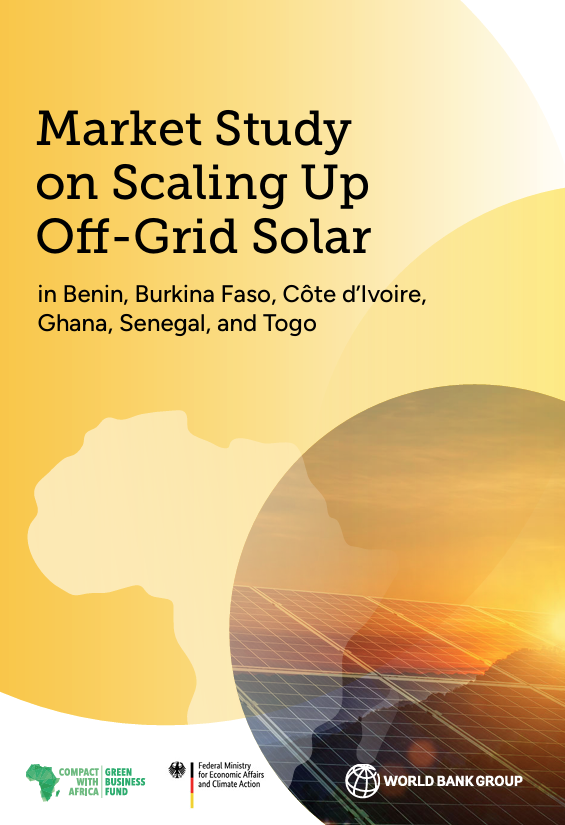
Market Study on Scaling Up Off-Grid Solar in Benin, Burkina Faso, Côte d’Ivoire, Ghana, Senegal, and Togo
The report, published in February 2025, was developed in collaboration with the World Bank’s Energy practice. Field surveys were conducted with regulators, SMEs, and financial institutions to identify key barriers limiting the adoption of off-grid solar systems in West Africa. The study outlines strategic entry points for policy dialogue and capacity building for SMEs, financial institutions, and regulators. It also presents practical design options for risk mitigation facilities tailored to the needs of local financial institutions, aimed at encouraging them to provide loans for the off-grid solar sector.
| | Beyond shaping the design of the Compact with Africa supported risk mitigation facility for the region, the findings also informed the redesign of an existing $67 million risk-sharing instrument that had previously shown limited effectiveness. Properly crafted risk-sharing mechanisms like these are essential for unlocking financing for SMEs in the off-grid solar sector across the region. | | | |
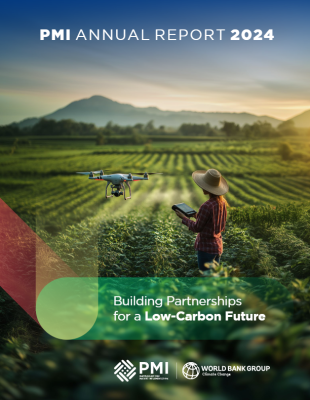
The 2024 annual report of the Partnership for Market Implementation (PMI) Facility showcases a landmark year of advancing implementation, with 30 client countries now supported in designing and establishing effective carbon pricing instruments and carbon markets. PMI’s collaboration with country policymakers, international agencies, and financial institutions also strengthens its role as a global knowledge hub that is fostering framework harmonization, capacity building, a broader ecosystem for carbon pricing and carbon markets.
| | | |
The Partnership for Market Implementation (PMI) is a platform for development that helps countries design and operationalize carbon pricing and catalyze market instruments, build institutional capacity, and respond to evolving global demands.
Launched in 2021, PMI currently provides technical assistance to over 35 countries to create an enabling environment that enhances country readiness for decision-making and carbon pricing policy implementation, while also building capacity to access carbon markets. PMI also serves as a trusted convener, facilitating alignment between recipient countries, donors, and technical partners across regions.
PMI is supported by 11 donors: Australia, Canada, the European Commission, Finland, Germany, Japan, Norway, Spain, Sweden, Switzerland, and the United Kingdom. PMI programs are implemented in collaboration with World Bank Group regions, country management units, and global practices to leverage expertise and support operational activities for global development.
| | |
Partnership for Market Implementation (PMI), World Bank
For contributions to our newsletter, please reach out to us at:
pmiclimate@worldbank.org.
| | | | |