|
Earlier this month, PON was invited to present to a study group convened by the California Assembly’s Education Committee. The group, which includes staff and consultants from the legislature, the California Department of Education, the State Board of Education, researchers, and advocates has been meeting to explore how the state’s current EL reclassification system is functioning.
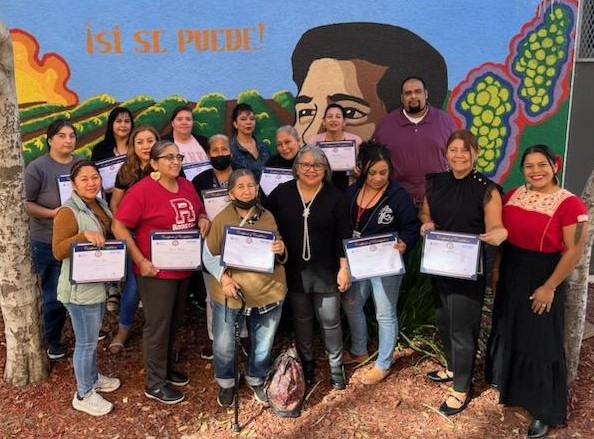
PON’s presentation was grounded in our 5 Key Learnings from Working with Parents of English Learners since 2021, drawing on experience working with and listening to 370 parents. We lifted parent concerns, shared real examples of reclassification challenges and offered policy recommendations that aim to simplify criteria, reduce barriers, and improve communication between families and schools.
Although the discussions and results of a legislative study group do not have to be made public, ideally, this effort will lead to legislation being introduced that improves the reclassification process and criteria to better serve students.
PON’s Policy Recommendations on EL Reclassification
-
Simplify Criteria: Reduce reclassification to a single criterion, passing one of multiple testing options such as SBAC, ELPAC, or Lexile/reading scores.
-
Remove Symbolic Requirements: Eliminate teacher evaluation and parent consultation as formal criteria. The current requirements look like engagement, but evaluations and consultations once the student passes two tests create unnecessary hurdles for students to reclassify. For example, given the wide variation in how teachers evaluate ELs, this requirement is sometimes replaced with another test or review process students must pass. In some cases, students have not been reclassified because a parent was not reached for consultation, despite meeting all the other criteria. Furthermore, these engagement opportunities are not meaningful for students who need support most, because they do not ever become candidates for reclassification.
-
Enhance Parent-Teacher Collaboration Throughout the ELD Journey: Require two parent-teacher conferences per year at the beginning of each semester to review ELD data (i.e., ELPAC scores, language domains, reading level) and progress toward reclassification. Fall: Identify ELD areas of growth and need. Develop a plan to continuously improve and share strategies to support learning at home. Spring: Review progress, testing, and strategies. These meetings promote shared understanding and can address broader learning challenges.
-
Automate Reclassification: Streamline the process to reduce dependence on individual school or district staff capacity.
|