In a new PONARS Eurasia Policy Memo, Botakoz Kassymbekova and Erica Marat argue Russia’s state and society need to confront their imperial identity to resolve antagonistic relations with their neighbors. Maria Popova says scholarship on Russia originating outside its borders must also decolonize. Volodymyr Kulyk calls on Western institutions to sever ties not only with Russian institutions that support the invasion, but also with those that fail to condemn it.
 
In another new PONARS Eurasia Policy Memo, Katharina Bluhm and Mihai Varga find Russia’s mainstream and extreme far-right have merged into one pro-war camp, though with different expectations. Russia’s “ancestral Cossacks” have been increasingly questioning the Kremlin’s war narratives, however, even as thousands of “state-organized” Cossacks fight in eastern Ukraine, writes Richard Arnold. Yuri Zhukov says framing the main enemy as NATO rather than just Ukraine helps the Kremlin explain its large military losses to its own population. Looking at the Soviet roots of Russia’s current anti-fascist narratives, Marlene Laruelle argues the war has largely ended their “ideological patchwork” quality.
 
Yoshiko Herrera argues full European energy sanctions would profoundly harm the Russian economy and their ability to wage war, also posing a “big crossroads for China” on whether to participate. At the same time, commenting on risks involved with sanctions, Samuel Charap cautions that nobody wants Russia to become “a total basket case” reminiscent of the 1990s. Also looking to the future, Brian Taylor thinks the end of Putin’s rule cannot be counted on to bring a peaceful Russia.

For Lucan Way, Russia’s invasion has rallied democracies around a common enemy and weakened the “authoritarian international,” though democracies need to maintain solidarity for this shift to be permanent. Scott Radnitz points out conspiracy theories are widespread in both democracies and autocracies, arguing they can be countered.
 
Events
 
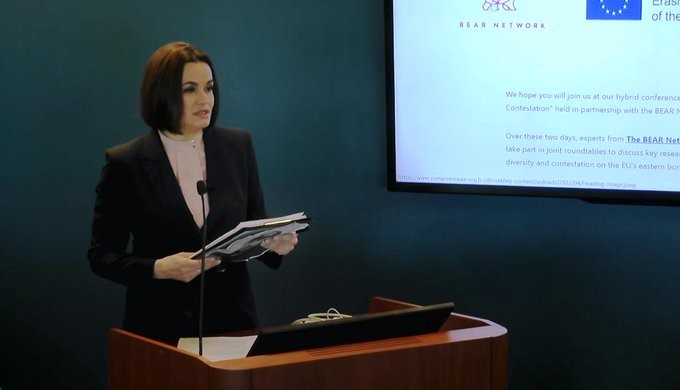
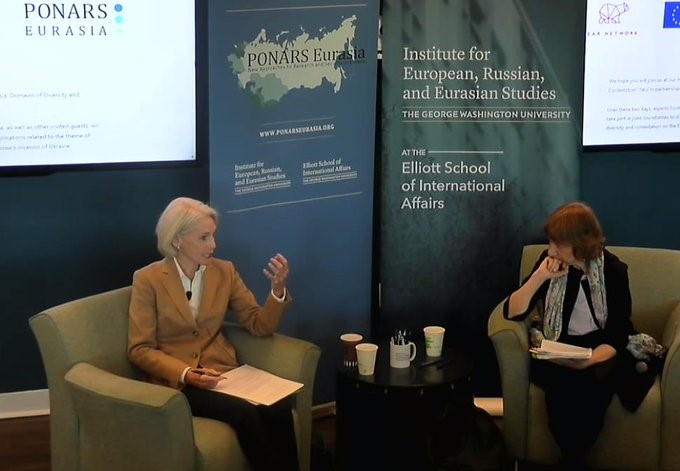
The video is now available for last weekend’s PONARS Eurasia & BEAR Network conference, “Between the EU and Russia: Domains of Diversity and Contestation.” Along with a wide range of leading thinkers from North America and Europe, guest speakers included Belarus pro-democracy leader Sviatlana Tsikhanouskaya, who said “Putin’s army turned out to be a big fake; our actions right now will define the future of Europe,” along with former CNN Moscow bureau chief Jill Dougherty.