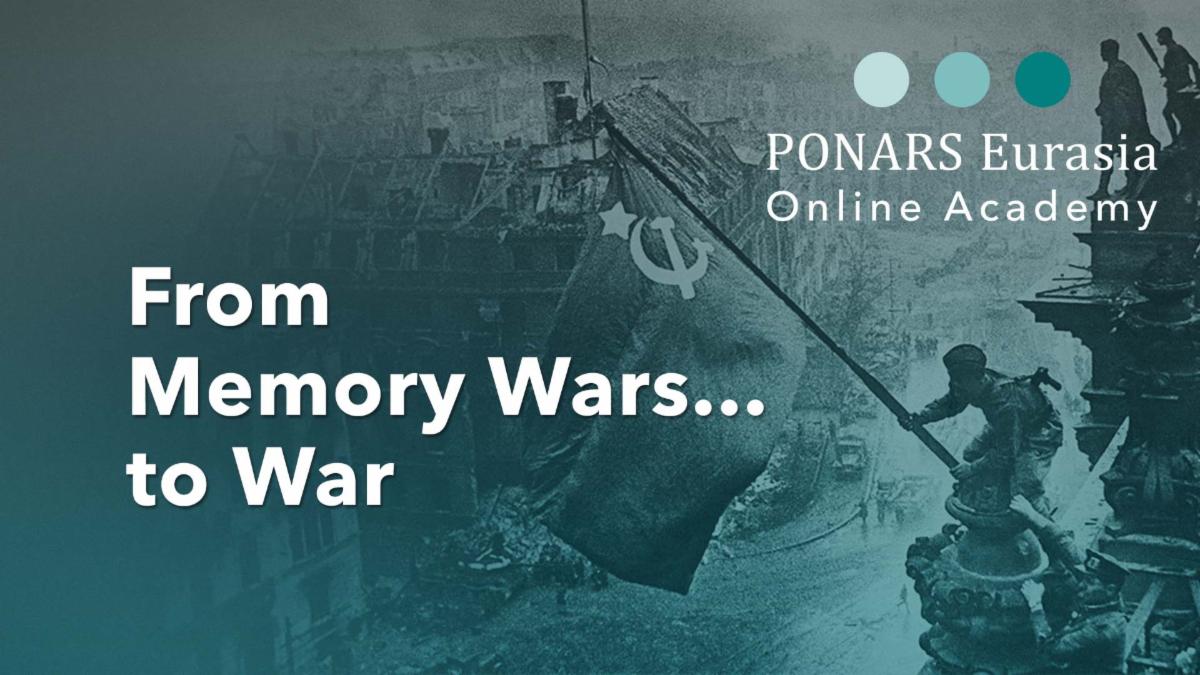
New PONARS Eurasia Online Academy video: From Memory Wars... to War, which draws a line from conflicts of the past to rhetoric of the present around Russia’s invasion of Ukraine.
|
|
|
Commenting on the killing of Darya Dugina, daughter of right-wing philosopher Alexander Dugin, Marlene Laruelle clarifies that he, though having been prominent in the 1990s, is marginalized in Russia’s global ideological production and even more in the Kremlin’s thinking. Peter Rutland calls Dugin a “Putin gadfly,” positing someone within the security agencies targeted his daughter to help Putin with his “troublesome critic.” Examining other fields of repression in Russia, David Szakonyi finds incumbents are abandoning straightforward vote-rigging in the face of intense public backlash and migrating to more subtle forms of election manipulation.
Following the passing of former USSR President Mikhail Gorbachev, Brian Taylor characterizes him as one of the 20th century’s transformational figures, a symbol of greater freedom to some and of collapse and humiliation to others. Mark Kramer adds that Gorbachev’s record is unquestionably marked by both enormous achievements and monumental failures; Russian public opinion focuses on the failures, while Western views are more favorable. Gorbachev’s record contrasts dramatically with leaders like Lenin, Stalin, and Mao, who Lucan Way argues recklessly created enemies but forged strong authoritarian institutions through the resulting counterrevolutionary struggles.
- - - - - - -
Save the date! PONARS Eurasia Annual Fall Policy Conference, Friday, September 30, 2022: Agenda & Registration
|
|
|
|
|
PONARS Eurasia is an international network of scholars advancing new approaches to research on security, politics, economics, and society in Russia and Eurasia. The program is based at the Institute for European, Russian, and Eurasian Studies (IERES) at the George Washington University's Elliott School of International Affairs. PONARS Eurasia is supported in part by a grant from Carnegie Corporation of New York.
|
|
|
|
|
|
|