|
By Randy Hoyle, PRCR Maintenance Manager
In this month’s installment of Maintenance Matters, we’re digging into the basics of planting spring bulbs and sharing a few tips to help you get the most out of your landscape.
As the days grow shorter and temperatures begin to cool, it’s time to start thinking about one of the best ways to bring color back to the landscape after winter: spring-blooming bulbs!
We all enjoy the vibrant reds, oranges, pinks, purples, and yellows that tulips bring to our gardens. And who doesn’t appreciate the bright yellow blooms of daffodils brightening up the cold, gray days of late January and February? While spring may seem far away, fall is the perfect time to prepare for that early-season burst of color. Considers these tips below!
Timing Is Everything
Most spring-blooming bulbs need to be planted in the fall, typically six to eight weeks before the ground freezes. Here in the Wake Forest area, late October through early November is generally a good time to get started, although weather conditions can vary from year to year.
Planting at the right time allows bulbs to establish roots before winter and prepares them for a beautiful spring display.
Start with Healthy Soil
Before planting, take a look at your soil. Bulbs perform best in loose, well-drained soil that allows their roots to develop properly. Good drainage is especially important because standing water can cause bulbs to rot.
Adding organic matter, such as compost or other commercially available soil amendments, can help improve soil structure and provide a better growing environment.
Fertilizer is another important consideration. Choose a quality fertilizer with a relatively low nitrogen content and higher phosphorus and potassium levels. A blend such as 5-10-10 can be a suitable option, depending on your soil conditions and the product’s instructions. Organic amendments, such as bone meal or earthworm castings, may also be used when appropriate.
A little preparation before planting can go a long way toward producing healthy plants and vibrant blooms.
Choose Your Bulbs & Planting Method
There are several types of spring-blooming bulbs that can perform well in our area, including tulips, daffodils, crocuses, and certain lilies. Irises are also popular spring garden plants, although their planting requirements vary by species.
Many hardy bulbs can remain in the landscape and return in subsequent years when growing conditions are suitable. Tulips may not reliably rebloom year after year in our climate, so consider your variety and local growing conditions when planning your garden.
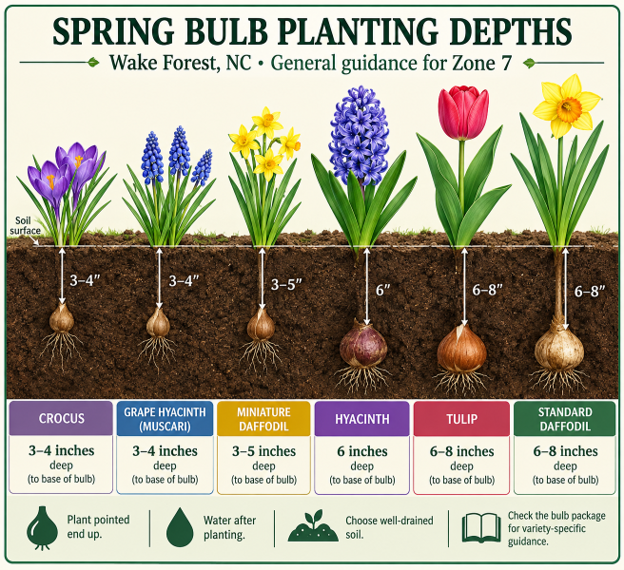
When it comes to planting depth, a common rule of thumb is to plant bulbs at a depth of approximately two to three times their height, measured from the base of the bulb. Always check the recommendations for the specific variety, as planting requirements can differ.
For example, a bulb that is two inches tall may need to be planted approximately four to six inches deep.
When digging your planting hole, make it wide enough to accommodate the bulb without forcing it into place. Position the bulb according to its planting instructions, cover it with loose soil, and gently firm the soil to eliminate large air pockets. Avoid compacting the soil too tightly, and make sure the planting area drains well.
Two Common Approaches to Planting Bulbs
Individual holes: This method works well when placing bulbs strategically throughout an existing garden. It allows you to mix bulbs among established plants and create pockets of color throughout the landscape.
Trench planting: If you want a more dramatic display, trench planting is a great option. This method works especially well for mass plantings along garden borders, sidewalks, and other landscape features. Dig a trench to the appropriate depth, arrange the bulbs according to their spacing requirements, and cover them with soil.
Both methods can produce beautiful results when bulbs are planted at the proper depth and given adequate drainage and growing space.
Get Planting for Spring!
With the right timing, proper soil preparation, and a little planning, you can create a landscape that welcomes spring with vibrant color. Whether you prefer a few strategically placed tulips or a sweeping display of daffodils, planting bulbs in the fall is an easy way to make a big impact on your garden.
As the weather cools, take some time to prepare your beds and get those bulbs in the ground. Your efforts now will help bring a welcome splash of color to the landscape when spring arrives.
I hope these tips help with your landscaping endeavors. Until next time, happy planting!
|