SEATS ARE RUNNING OUT FAST!
The Long Island Regional Technical Assistance Center
for Pre-K and Early Childhood presents its
SUMMER INSTITUTE
Best Practices for Meeting the Needs
of All Learners Pre-K & K
Registration is Open!
The Long Island Regional Technical Assistance Center for Pre-K and Early Childhood will be holding its annual Summer Institute. The program will focus on the strategies for meeting the needs of all learners. Dr. Linda Espinosa, a nationally known expert in teaching students who are English Multi-Language Learners, will be the keynote speaker on the topic "Early Care and Education for Young Multilingual and Dual Language Learners: Research and Classroom Practices That Promote School Success.” Participants will be able to attend two workshops. Workshop sessions will focus on developmentally appropriate practice, child development, classroom management strategies, mindfulness, outdoor education, play, SEL and more. A continental breakfast and a light lunch are included.
Date: Wednesday, June 28, 2023
Time: 8:30am – 2:30pm
Location: Western Suffolk BOCES
(on Lee Avenue in Wheatley Heights)
Cost: $75
|
|
Long Island Children's Museum Workshop:
Loops and Hoops
Join the staff at the Long Island Children's Museum to explore the newest exhibit, Loops and Hoops. You will learn to apply the principles of rollercoaster arcs and racetrack designs with some exciting hands-on learning that can be replicated in your classroom! Participants will have an opportunity to work in teams to create rollercoaster arcs and to observe Pre-K students identified as emergent multi-language learners. The session will end with a ride on the famous Nunley’s Carousel! Enrollment is limited. This session is only open to registered participants.
Date: Wednesday, July 12, 2023
Time: 9:00am – 11:00am
Location: Long Island Children's Museum
11 Davis Avenue, Garden City
Cost: $20
|
|
How block building supports
understanding of early math concepts
|
|
For more than one hundred years, block building has been an essential part of homes and classrooms. However, the importance of using blocks is often underestimated. In an article by Emily Linsay, Hal Menick and
Robie H. Harris in Community Playthings, the classroom teacher, mathematics professor, and children’s book author look at the use of blocks from unique perspectives.
Linsay, a Pre-K teacher, writes of how her classroom block area allowed children to understand balance, height and measurement. The teachers in the room noted that children worked on size and shape, number, pattern, spatial organization and arrangement. Linsay suggests that educators “gather the class around the block area to listen as builders share thoughts about their structures.” She goes on to add that “by working in the block area children experience the math that blocks offer, leading to more complex math understandings in future years.”
Melnick, professor of mathematics, feels that wooden blocks are a perfect hands-on medium to understand the relationships between measuring, comparing and counting objects. “Young students are learning math naturally every time they ‘do’ something with objects,” says Melnick. Children need to have basic neuro-developmental skills to build a strong, steady tower. These include eye-hand motor coordination, spatial ordering and even sequencing actions. These executive functions are life skills that everyone needs.
When children design roads, buildings, bridges, etc., they are problem solving. These activities allow them to work with volume, area, mass, and the physics of equivalence, non-equivalence, and the impact of gravity. These activities help with math as well as other STEM concepts.
Children’s book author Harris feels that the experience of using building blocks allows children the chance to think, question and solve a problem. For example, when children make towers as tall as themselves, it involves mathematical thinking and problem solving. “Block building clearly nurtures children’s ability to observe, assess, calculate, plan, and take action,” says Harris.
|
|
Picture Books that show
children how to treat animals
|
|
If you want to teach children about pets and pet care, Brightly’s Jennifer Ridgway has a great list to help. Here are just a few of her suggestions:
-
What Pet Should I Get? By Dr. Seuss. A new book in the Seuss collection, this story demonstrates how it can be tough to choose a pet and make decisions. It even includes a note about his own pets.
-
Sparky! by Jenny Offill. This story of a sloth is about accepting pets for what they are, rather than what we want them to be.
-
I Found a Kitty! by Troy Cummings. Arfy finds a homeless kitten, but Scamper can’t live with Arfy because Arfy’s family is allergic to cats. Arfy works to find Scamper a forever home.
-
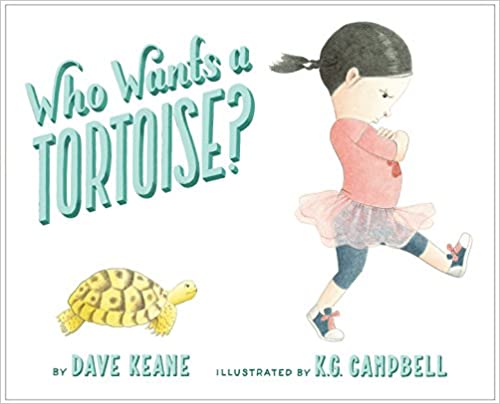
Who Wants a Tortoise? by Dave Keane. A little girl has always wanted a puppy; she finally gets her pet, but it is a tortoise instead. This book shows that the dullest pet can sometimes surprise you.
|
|
What's Great in Our State?
"Ruler: A Whole School Approach to
Social & Emotional Learning"
Virtual Workshop
Join the Office of Mental Health to explore federal, state, and local sources and strategies to enhance the mental health of children, youth and the adults that support them.
Date: Wednesday, May 31, 2023
Time: 11:00am-12:00pm
|
|
Apply for a Mini Grant
Webinar
Applications are being accepted for the 2023-2024 Mini Grant Awards. Mini grants are available (up to $500) to develop and put into practice projects designed to enhance programs for young children (birth to age eight).
Each year NYAEYC awards five or six small grants, in amounts up to $500, to applicants who have submitted the most effective proposals for mini projects to enhance programs for young children. These proposals must contain developmentally appropriate objectives. Also, other groups should be able to replicate the project easily and at minimum cost.
Proposals are judged on Rationale, Objectives, Activities, Evaluation Measures, Budget, and Replication. You must be a member of NYAEYC to apply.
Deadline: Saturday, July 15, 2023
|
|
HELP WANTED
Quality Improvement Specialist, Nassau County
POSITION SUMMARY:
The Quality Improvement (QI) Specialist is responsible for providing key support in the implementation of QUALITYstarsNY. The QI Specialist is assigned a caseload of participating programs to provide ongoing technical assistance and resources as part of continuous quality improvement. The QI Specialist works in partnership with the leadership of participating programs to effectively use data to create and implement an individualized Quality Improvement Plan (QIP). The QI Specialist works in their assigned region(s), visiting participating program sites to support their continuous QIP. The central office provides each QI Specialist with the equipment needed to manage extensive record keeping and filing timely reports. QI Specialists also participate in regular virtual meetings and on-site meetings as needed.
Early Childhood Regional Coordinator, Nassau County
POSITION SUMMARY:
The Regional Coordinator at The New York Early Childhood Professional Development Institute will report to the Senior Director of Career Development and Higher Education, to coordinate a system of career development supports for individuals in the pursuit of a career in early childhood and those seeking to develop their leadership skills and competencies.
Equipped with a wide range of experience in the field, the ideal candidate will have intimate knowledge of the professional development needs of the early childhood workforce, with particular focus on early childhood leadership, and in their region specifically. Knowledge of the academic and professional development resources available in their community and region is also an important aspect of the role.
|
|
71 Clinton Rd. Garden City, NY 11530-9195
For questions or more information, call us at
|
|
|
|
|
|
|