|
Handwriting involves the coordination of a number of motor and cognitive skills. According to an article by Lindsay Barrett in Brightly, there are many helpful experiences that educators can share with children that will fit this developmental stage and lead to strong writing skills.
Hand strength and fine motor skills are integral for writing and so many other daily tasks, like using forks or opening containers. A great way to build these skills is through play. Barrett suggests using Play Doh or clay because squeezing, rolling, and pinching help to work out children’s hands. Educators might also offer small building toys, such as LEGOs, magnetic tiles, and snap toys (“anything you press, fit, clip, or manipulate is excellent for kids’ hands"). Scissors and glue offer a great time, and help children learn how to hold the tricky tool while mixing beans and paper with lines of goo! All of these activities are the perfect preparation for writing.
There are also many activities that will prompt children to move the thumb and forefinger, thus giving them practice grasping a pencil. Educators can have children play fast-flipping games, such as flipping bottle caps or coins on a line of painter’s tape. They might also play pick-up games in which they dump out a collection of small items (like cereal or beads) and pick them up with tongs. Using short pencils or broken crayons naturally force children to grasp them correctly. They can use these items to color or pretend to take orders at a restaurant.
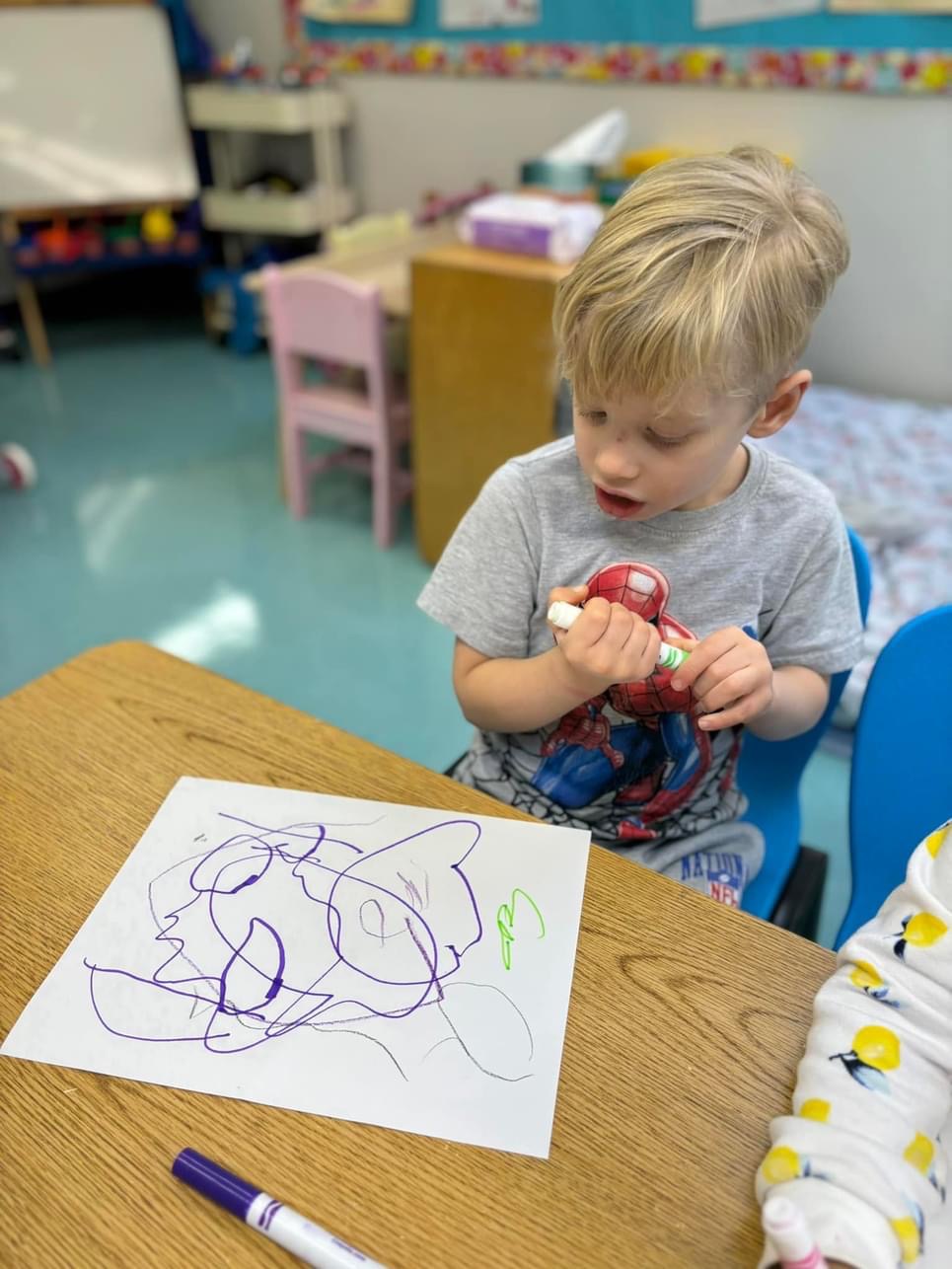
Barrett suggests making sure that, as adults, educators review the correct way to hold a pencil and form each letter. “A three or four-finger pinching pencil grasp and consistent strokes, starting at the top every time, are the most efficient ways to write letters,” she says. Educators can model the correct way to hold a pencil while explaining the difference between drawing and writing letters. “There are many ways to draw a flower; there is only one correct way to write the letter ‘F.’”
There are many fun activities with which children can practice writing. It may be a bit messy, but children can squirt shaving cream or paint onto a tray and write letters in it. Educators might also make sensory bags by putting paint or liquid in a zipped plastic bag (taped shut, of course). Children can then “write” letters on the bag with a fingertip or a cotton swab. There are also many videos and songs that teach letter formation. “Kids love to watch or listen and write letters in the air with the prompts,” says Barrett. She recommends using Jack Hartmann’s Alphabet Workout and his song, “I’m So Excited to Read and Write.” Lastly, educators should work on name-writing; this empowers children, which is why they usually want to learn to write it first!
Click here to read more about pre-writing activities.
|