PRISE Center
Spring 2025 Newsletter
We advance health equity through community partnerships and
transformative implementation research
| | In Celebration: Women's History Month | | To view images in this email, click "download external images" in your mailbox. | | |
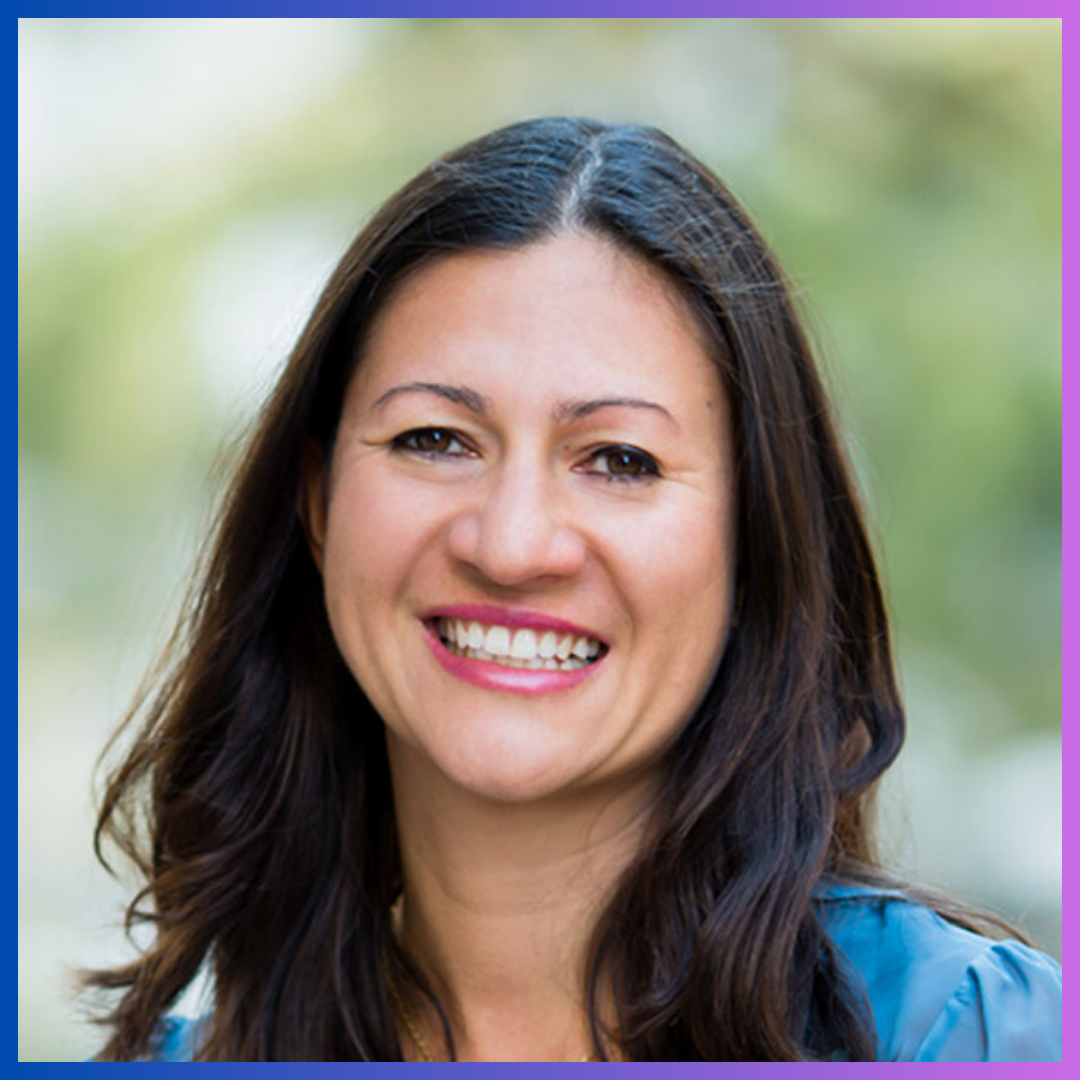
In celebration of International Women’s Day and Women’s History Month in March, we asked Dr. Elaine Khoong and Dr. Maria Garcia—faculty at the PRISE Center—to reflect on their journeys in academic research, sharing moments of resilience, sources of support, and words of encouragement for the research community.
From overcoming personal and systemic barriers to honoring the mentors and colleagues who helped pave the way, their stories offer both inspiration and guidance in a challenging landscape.
| |
| | |
What’s one barrier you’ve overcome in your academic research career, and what helped you move past it?
One micro-barrier I've encountered many times is writing block. There are times when writing becomes hard or does not seem to flow. One thing that has helped me in those moments is to remember the empowering principle of the 'Shitty First Draft,' as described by Anne Lamott in her book, Bird by Bird. It can be really liberating to dissociate from a polished or 'final' product, to dissociate from reaching 'perfection' in your writing, and instead to embrace the process and getting something, anything, down on paper. I find that editing is always easier and the 'SFD' is a way to start the writing.
Who has accelerated your academic research journey?
There are so many individuals who have contributed to my academic growth! We are truly lucky at UCSF to be surrounded by so many amazing and inspirational mentors. It really seems impossible to choose just one! I am grateful to Leah Karliner, my main mentor in my division, for her dogged determination and commitment to ensuring language access, research rigor, and supporting her mentees. I am grateful to Margaret Handley and Adithya Cattamanchi for their introduction and mentorship in implementation science, which has opened so many professional and research doors. There are many others I could name but you only wanted a few!
Given the current challenges researchers are facing at the federal level, what words of encouragement or advice would you share with the PRISE network to help us stay motivated and keep moving forward?
I would encourage researchers to maintain their communities. The work will become harder, but more necessary in the coming years, so working with individuals you like, trust, and respect will be doubly important. I think it will also become increasingly vital to take a step back and remember the 'why' of what motivates you in your research to find the strength to keep it going and get creative to find and secure funding.
| | | |
| | |
What’s one barrier you’ve overcome in your academic research career, and what helped you move past it?
One thing challenging about an academic career is that there is a bit of a hidden curriculum on how to succeed and how to make a soft money environment sustainable over the long term. I feel that this barrier never really goes away but just continues to evolve and change as your career progresses. None of my family was in academia, so having a strong community of mentors who have been honest and transparent about how they've made it to where they are today and the bumps they have hit along the way has been crucial.
Who has accelerated your academic research journey?
I've been so fortunate to have had excellent mentorship from a large community of women mentors. I would not be where I am today without their support. This includes mentorship, sponsorship, and advocacy from leaders in the UCSF implementation science community - Alicia Fernandez, Courtney Lyles, and Urmimala Sarkar.
Given the current challenges researchers are facing at the federal level, what words of encouragement or advice would you share with the PRISE network to help us stay motivated and keep moving forward?
It is absolutely a tough time to be in academia conducting equity-oriented work. I find it helpful to remember that I am not alone in facing these challenges. Discussing strategies for navigating this environment with others has been helpful and reminds me that there is a large community trying to nudge us closer to equity. I also find that the tangible actions we discuss help me feel that there are at least some small actions that I can take even with all the uncertainty.
| | | | Upcoming Events & Opportunities | | |
PRISE Center Spring AIMS Review
Date and Time: May 22, 1 pm to 2 pm PST
Location: Online/Zoom
We are excited to offer our next PRISE Center AIMS Review session! The purpose of this session is to provide constructive feedback on our junior colleague’s NIH (R & K level) or PCORI grant AIMs, especially those that include an implementation science (ImS) AIM. Everyone learns a lot from one another, and we hope you will join the session!
Grant writers! If you plan to submit an NIH (R or K level) or PCORI award that includes an ImS AIM and would like to participate in the review, please send Tiese Etim-Inyang tiese.etim-inyang@ucsf.edu an e-mail with the topic, grant type NIH (R or K award) or PCORI award, and a draft of your AIMs by Tuesday, April 29. This will help us find the best-fitting reviewers. Please note that we will only be able to review 3 AIMS pages during the session.
PRISE Center AIMS Review at a Glance
WHAT IS IT?
A one-hour meeting for faculty, post-doctoral scholars and other trainees who want to have their NIH (R or K-level), or PCORI grant AIMs reviewed, serve as a reviewer, or learn more about the grant process. Grants chosen for review will have at least one implementation science (ImS) AIM.
WHO CAN REQUEST PEER REVIEW OF A GRANT?
Any PRISE Center Affiliate, including faculty, post-doctoral scholars, and other trainees.
WHAT TYPES OF GRANTS WILL BE REVIEWED?
NIH (R or K-level) and PCORI awards. This review session is best suited for grants with an ImS AIM.
WHAT WOULD BE SUBMITTED
-
For NIH R-level and PCORI awards: AIMS page only.
-
For K award: AIMS page, candidate statement and training plan.
WHAT DOES THE REVIEW INCLUDE?
The grant review is a concept review of the AIMs only. Those requesting a review should indicate the grant topic and type of award (R, K, or PCORI award) and submit their draft AIMS page. Ideally, reviewers will be matched to the applicant’s subject-matter discipline and/or ImS expertise to provide feedback on the ImS AIM.
For K Awards only: Feedback will also be provided on the training plan, and the candidate statement. Feedback on the candidate statement will be provided to the grant writer via email, not in the open session.
HOW MUCH TIME WILL PEER REVIEWERS DEVOTE?
Reviewers are expected to allocate time to review the AIMS page and attend a one-hour AIMS review session. Faculty are typically asked to serve as reviewers approximately once per year. This service may be listed under the teaching section of your CV.
UCSF welcomes everyone, including people with disabilities, to our events. To request reasonable accommodations for our events, please contact Tiese Etim-Inyang, PRISE Center Program Manager, by emailing tiese.etim-inyang@ucsf.edu as soon as possible.
| | |
CPR3 and the PRISE Center co-hosted the "Research Uptake for Policy" Panel Event on March 27.
Speaker: Laura Schmidt, PhD, MSW, MPH
Professor, Institute for Health Policy Studies, UCSF
Panelists: Tomás Aragón, MD, MPH
Former Director and State Public Health Officer, California Department of Public Health
Jim Kahn, MD, MPH
Emeritus Professor, Institute for Health Policy Studies, UCSF
Priya Shete, MD, MPH
Associate Professor and Principal Investigator of CPR3, UCSF
Neeta Thakur, MD, MPH
Associate Professor and Co-Director of the PRISE Center, UCSF
This event aimed to close the gap between researchers and policymakers, ensuring that critical public health research informs policy decisions. Speakers discussed identifying federal, state, and local policymakers, framing research findings for a policy audience, and contextualizing return on investment. In case you missed it, a recording is available via the link below.
| | |
Patient-Centered Outcomes Research Institute (PCORI) Funding Announcements
Broad Pragmatic Studies: PCORI is seeking to fund patient-centered comparative clinical effectiveness research (CER) projects.
Phased Large Awards for Comparative Effectiveness Research: PCORI is seeking to fund high-quality patient-centered comparative clinical effectiveness research (CER) projects that will address critical decisions faced by patients, caregivers and the broader healthcare community and for which there is insufficient evidence.
Advancing the Science of Engagement in Research: PCORI is seeking to fund studies that build an evidence base on engagement in research, including:
1) Measures to capture structure/context, process, and outcomes of engagement in research. 2) Techniques that lead to effective engagement in research. 3) How effective engagement techniques should be modified and resourced for different contexts, settings, and communities.
Letter of Intent (LOI) Deadline: May 13, 2025; 5 pm (ET)
LOI Status Notification: June 10, 2025
Application Deadline: Sept. 3, 2025; 5 pm (ET)
Funding announcements are linked below:
| | |
NIH Dissemination and Implementation Research in Health Funding Announcements
These FOAs encourage investigators to submit research grant applications that will identify, develop, test, evaluate and/or refine strategies to disseminate and implement evidence-based practices into public health, clinical practice, and community settings. In addition, studies to advance dissemination and implementation research methods and measures are encouraged. These FOAs expire in 2028. Check the notices (linked below) for details.
R01 Research Project Grant [next submission date: June 5, 2025]
R21 Exploratory/Developmental Research Grant [next submission date: June 16, 2025]
R03 Small Grant Program [next submission date: June 16, 2025]
| |
What We're Reading:
PRISE Center Faculty, Affiliate & Staff Publications
| | |
Balico LCM, Thakur N, Long D, da Silva ER, de Souza VC. Pediatrics ACES and related life event screener (PEARLS): translation, transcultural adaptation, and validation to Brazilian Portuguese. J Pediatr (Rio J). 2025 Mar-Apr;101(2):262-268. doi: 10.1016/j.jped.2024.10.003. Epub 2024 Oct 29. PMID: 39481457; PMCID: PMC11889689.
Velloza J, Poovan N, Meisner A, Ndlovu N, Ndimande-Khoza N, Grabow C, Zwane P, Mbele S, Molefe M, Donnell D, Baeten JM, Hosek S, Celum C, Delany-Moretlwe S. Adaptive HIV pre-exposure prophylaxis adherence interventions for young women in Johannesburg, South Africa: a sequential multiple-assignment randomised trial. Lancet HIV. 2025 Feb;12(2):e105-e117. doi: 10.1016/S2352-3018(24)00268-6. Epub 2024 Dec 13. PMID: 39681126.
Shih JJ, Kuznia M, Nouri S, Sherwin EB, Kemper KE, Rubinsky AD, Lyles CR, Khoong EC. Differences in Telemedicine Use for Patients With Diabetes in an Academic Versus Safety Net Health System: Retrospective Cohort Study. J Med Internet Res. 2025 Mar 24;27:e64635. doi: 10.2196/64635. PMID: 40126552.
Singhal S, Mause E, Garcia ME, St Pierre M, Ochoa-Frongia L, Dempsey AG. Quality of Psychiatric Care for Immigrants and People With a Non-English Language Preference: A Systematic Scoping Review. Psychiatr Serv. 2025 Apr 1;76(4):381-392. doi: 10.1176/appi.ps.20240227. Epub 2025 Jan 23. PMID: 39844637; PMCID: PMC11961333.
Steiner G, Suen LW, Martin M, Skinner S, Crouch P, Nguyen OK, Slown K, Logan A. Treatment of Inpatient Opioid Withdrawal with Short-Acting Full Agonist Opioids at a Safety-Net Hospital. J Gen Intern Med. 2025 Jan 6. doi: 10.1007/s11606-024-09321-5. Epub ahead of print. PMID: 39762677.
León TM, White LA, Spindler H, Schwab J, Petersen ML, Vargo J, Wheeler W, Shete PB, Jain S, Watt J, Pan ES, Kilpatrick AM. Fostering public health and academic partnerships during and beyond a public health emergency: lessons learned from COVID-19. Am J Epidemiol. 2025 Jan 16:kwaf007. doi: 10.1093/aje/kwaf007. Epub ahead of print. PMID: 39825492.
Bikinesi L, Spinelli MA, Nyoni N, Mouton D, Mengistu A, Kamangu J, Konstantinus I, Kalimugogo P, Mutandi G, Negussie F, Wang G, Welty S, McFarland W, Beard RS, Haberer J, McCluskey S, Gandhi M, Hong SY. The impact of adherence counseling incorporating a point of care urine tenofovir assay on virologic suppression among individuals failing tenofovir-lamivudine-dolutegravir: A pre-post intervention study. Int J Infect Dis. 2025 Feb;151:107328. doi: 10.1016/j.ijid.2024.107328. Epub 2024 Dec 6. PMID: 39647577; PMCID: PMC11748914.
Murphy LD, Nguyen A, Morrison A, Bernabe AA, Martinez G, Liao M, Yu W, Thakur N. Building Partnerships to Identify and Address Wildfire Smoke and Extreme Heat Health Effects in Priority Populations. Environmental Justice. 2025 Feb; doi: 10.1089/env2024.0030.
| | |
Thoughts or questions? We’d love to hear from you!
Connect with us at PRISE@ucsf.edu
.
Follow us on Twitter @ImSatUCSF
| | | | |