|
In This Issue:
MPA CEO Perspective
MPA News
- Participate in the 2023 MPA Economic Survey
- Save the Date: MSHP Annual Meeting Oct. 27
- Michigan Pharmacist Journal Published
- Save the Date: UP Division Fall Conference Oct. 7-8
- Promote with the MPA Social Media Form
- Law Books Available for Purchase
MPA Member Updates
- Now Accepting MPA Executive Board and Practice Section Board Nominations
- MPF 2023 Golf Classic — Register Today
- Wrigley's Pharmacy Grand Opening Celebration for Second Tele-Pharmacy June 16
CE Events
- Upcoming CE Opportunities
Upcoming Events
- Pink Book Registration Now Open
Professional Practice
- Implicit Bias Training Through Pharmacist's Letter Does Not Meet State Requirements
National Association News
- PTCB Launches Nonsterile Compounding Certificate
Legislative and Regulatory News
- SB 219 Passed by Michigan Senate, Moves to House
- FDA Advisors Recommend Birth Control Pill, Opill, to be Sold Over-the-Counter
- Ban on Medicaid Spread Pricing Advances in Energy and Commerce Committee
- Senators Introduce Bill to Give Pharmacists Provider Status in Medicare
- Message from LARA on Medicaid Coverage
- FDA Approves New Overdose Antidote, but Concerns Raised About Cost, Adverse Effects
- MDHHS Multi-Dose Vial Vaccine Update
- CE Broker Communication Not Issued on Behalf of LARA
COVID-19 Updates
- Holiday Delivery Schedule for COVID-19 Vaccines
| |
Networking at Its Finest in Maryland | |
MPA President-Elect Sarah Hill and I joined other state pharmacy association presidents-elect and executives from across the country over the past three days for the 2023 NASPA Leadership Conference at USP headquarters in Rockville, Maryland. It was a great opportunity to network and learn from our peers. The event also served as an orientation for Hill as she prepares to lead MPA as president in 2024.
The programming was highlighted by a panel of national pharmacy association CEOs, including our own Ilisa Bernstein, American Pharmacists Association (APhA) interim CEO. All shared what they learned from guiding their respective organizations through the COVID – and now post-COVID –years. They also provided tips on how they have adjusted their staffs’ workplace environment to improve morale and productivity.
We also had the opportunity to dine with Berstein and APhA President-Elect Alex Varkey, along with other meeting attendees. This was networking at its finest!
Thanks to the NASPA staff and to USP for holding and hosting this great event!
| |
|
Every two years, the Michigan Pharmacists Association (MPA) conducts an economic survey of pharmacy professionals in Michigan to evaluate salaries, benefits received, and other practice issues.
Please take a few minutes to anonymously add your responses to help provide pharmacy professionals and employers with valuable salary and benefit information. Links to the surveys are listed below.
Survey responses must be received no later than Friday, June 9, 2023.
The 2023 Michigan Pharmacy Economic Survey results will be published and available to MPA members in the July issue of the Michigan Pharmacist Journal.
Questions? Please contact MPA.
Thank you in advance for your participation!
Please select the appropriate survey based on your pharmacy profession:
Pharmacist Survey
Pharmacy Technician Survey
Student Pharmacist Survey
| |
|
Save the Date: MSHP Annual Meeting Oct. 27
| |
Michigan Pharmacist Journal Published | |
|
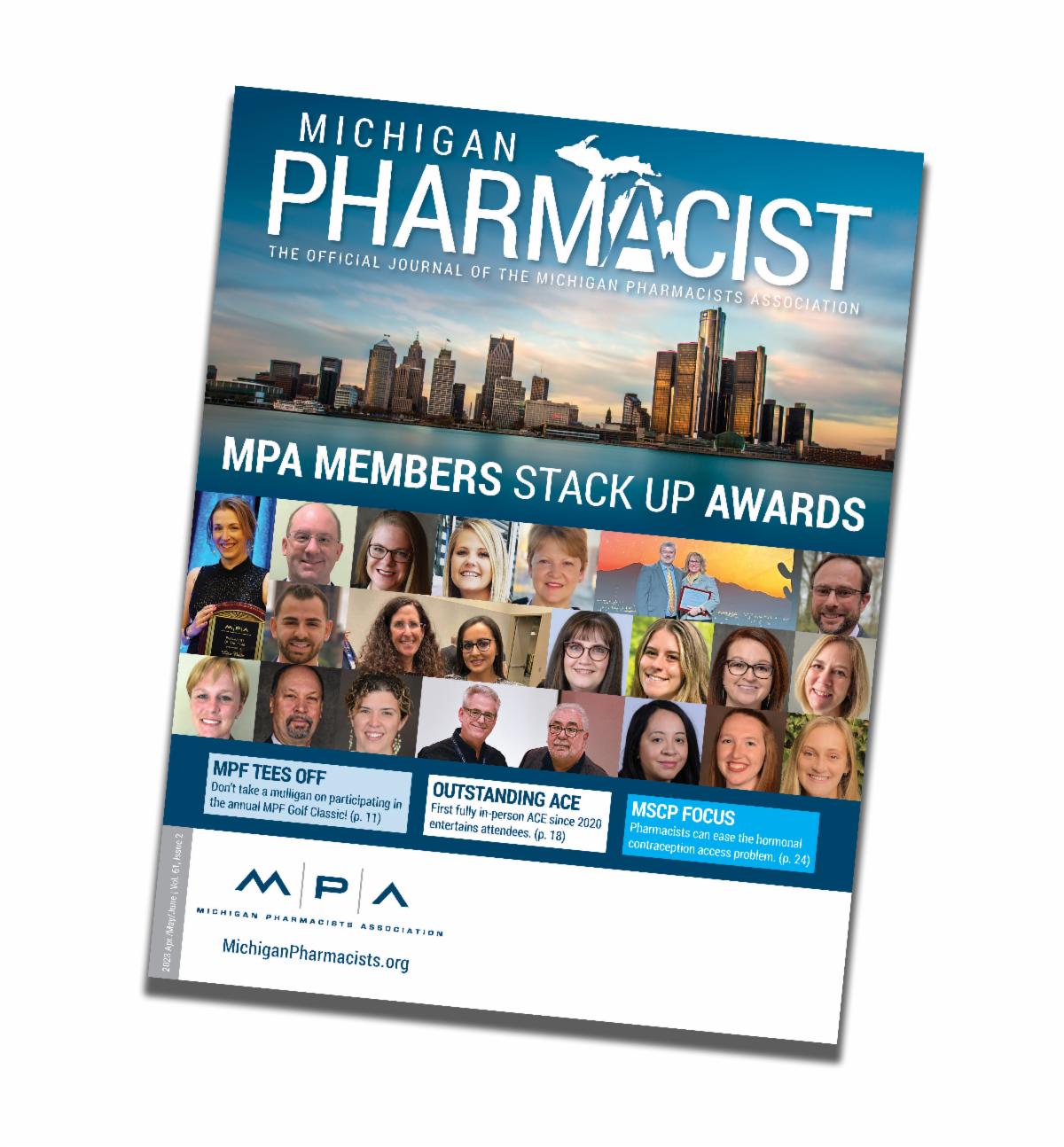
The April/May/June 2023 edition of the Michigan Pharmacist Journal is now available online! Click the cover image to the right to read about the following topics:
-
MPA Members Stack Up Awards: At home and nationally, MPA members bring home hardware.
-
President's Platform: MPA President Hope Broxterman looks at opportunities ahead for pharmacists.
-
From the Foundation: Don't take a mulligan on the annual MPF Golf Classic June 21.
-
Advocacy Update: Read up on how you can promote pharmacy priorities at the state and federal levels.
-
MSCP Focus: MSCP President Brooke Roe gives pharmacists some phrases to live by, while Thomas Burns looks at how pharmacists can help women have greater access to hormonal contraception.
-
New program: Wayne State professors and students give a glimpse of the school's new ambulatory care concentration.
-
Free CE for Members: Lessons Learned Across Ambulatory Care Telehealth Practices in Michigan. See page 9 for more details.
Please note: The Michigan Pharmacist will be available in digital format only. Printed copies may be requested via email at MPA@MichiganPharmacists.org.
| |
|
Promote with the MPA Social Media Form
Have something you think is worth sharing on MPA social media channels? The MPA Social Media Request Form may be right for you!
This form, available on the MPA website here, allows members to promote events or resources, recognize member accomplishments, or share other messages and information. Submitting this form does not guarantee that your content will be shared. MPA will reach out to you if your content cannot be shared.
To get started, fill out the form and return it to MPA Communications Manager Ryan Weiss at RWeiss@MichiganPharmacists.org.
| |
Fourth Edition Pharmacy Law Books Available to Purchase | |
|
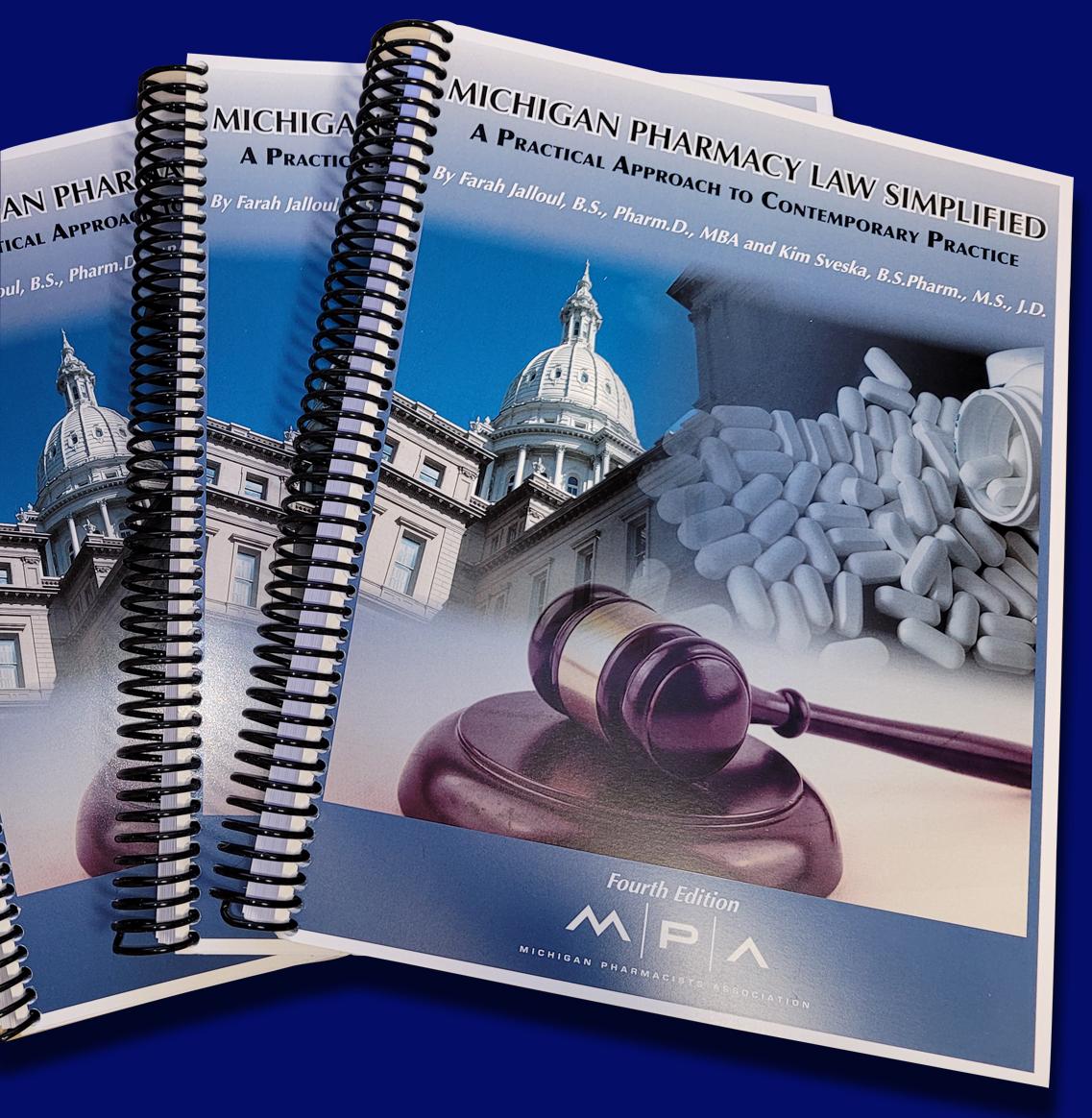
The fourth edition of the Michigan Pharmacists Association's "Pharmacy Law Simplified: A Practical Approach to Contemporary Practice" is now available for purchase!
"Michigan Pharmacy Law Simplified" is intended to be informative and provides additional guidance to pharmacy professionals in relation to pharmacy practice in Michigan. The book compiles state and federal laws and rules relevant to pharmacy practice, avoiding legal jargon.
To get a copy, visit the MPA store, fill out the Online Store Order Form and email it to MPA@MichiganPharmacists.org.
| |
|
Now Accepting MPA Executive Board
and Practice Section Board Nominations
| |
|
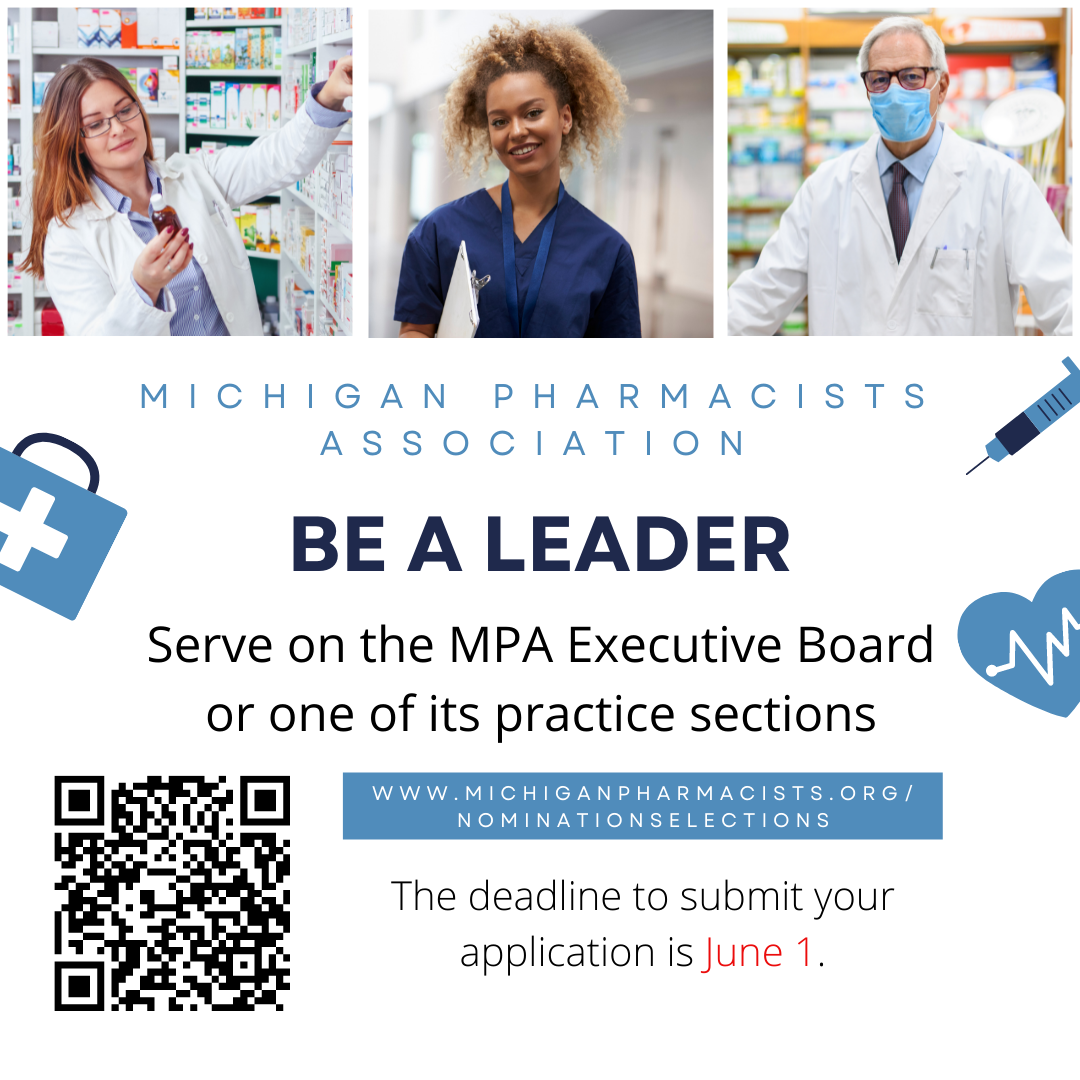
The Michigan Pharmacists Association (MPA) is successful because of the volunteer efforts of engaged pharmacy professionals. MPA is guided by the leadership of its Executive Board as well as practice section and affiliated chapter leadership.
Learn more about each Board and the election process (you must be logged in to your MPA account to view this page).
Please note that the deadline for MSHP Board nominations was May 15, 2023.
Submissions for the Executive Board and other practice sections are due June 1, 2023.
| |
Michigan Pharmacy Foundation Golf Classic | |
|
Wrigley's Pharmacy Grand Opening Celebration
for Second Tele-Pharmacy June 16
| |
|
Implicit Bias Training
4-6 p.m. June 15
| |
|
APhA Pharmacy-Based
Immunization Training
9-11 a.m. July 19
| |
|
Implicit Bias 2.0:
Education, Practice and Teams
10 a.m.-noon Aug. 25
| |
|
Implicit Bias 2.0:
Education, Practice and Teams
4- 6 p.m. Oct. 24
| |
|
Pink Book Registration Now Open
Registration for the Pink Book Conference is now open. This live, two-day course is intended for state, county and regional immunization programs. Two speakers from the Centers for Disease Control and Prevention (CDC) will provide an overview of vaccination principles, general best practices, immunization strategies and specific information about vaccine-preventable diseases and the vaccines that prevent them.
The conference will be held June 13-14, 2023, at the Lansing Center. Registration and a light continental breakfast begin at 7:30 a.m. A light lunch will also be served. There is no charge for this event.
Due to limited space, registration for this event will close at 450 participants and a waiting list will begin.
Contact Connie DeMars at demars@anr.msu.edu with any questions, or if you sign up for the event and cannot attend. This will allow an individual from the waiting list to attend instead.
| |
National Association News | |
|
PTCB Launches Nonsterile Compounding Certificate
The Pharmacy Technician Certification Board (PTCB) has launched its Nonsterile Compounding Certificate. This new, specialized credential recognizes pharmacy technicians in community settings creating customized formulations for patients requiring medications or dosage forms that are not commercially available.
“We are pleased to offer technicians this new opportunity to advance their careers,” PTCB Executive Director and CEO William Schimmel said. “Not only will this certificate benefit technicians, but it also expands the ability of community pharmacies to safely provide medication formulations tailored to each patient’s unique needs.”
Technicians who pursue this specialty will "gain the critical knowledge and skills required to address the risks involved with compounded medications, ensuring the quality of the product and protecting their patients," PTCB said in a press release. The certificate complements PTCB’s Certified Compounded Sterile Preparation Technician (CSPT) Program, which assesses technicians’ knowledge and skills to prepare medications in sterile environments such as hospitals, home infusions centers and other compounding facilities to prevent contamination.
| |
|
Implicit Bias Training Through Pharmacist’s
Letter Does Not Meet State Requirements
The Michigan Pharmacists Association (MPA) is advising its members that implicit bias training originally offered through Pharmacist’s Letter does not meet the state of Michigan’s requirements for certification. Pharmacist’s Letter is working on a new implicit bias program.
MPA members who took the Pharmacist’s Letter training prior to March 23, 2023, will need to retake IB training before license renewal time.
MPA’s next implicit bias training is in June. Interested participants can click the link below to register. More information can be found here about the change.
| |
Legislative & Regulatory News | |
|
SB 219 Passed by Michigan Senate, Moves to House
Lawmakers in the Michigan Senate passed legislation May 11 to allow pharmacists in the state to administer vaccines independently. Without a change to state law, Michigan pharmacists will lose their authority to administer vaccines without delegation from a physician.
Senate Bill 219, passed by the Senate on May 11, would allow (without delegation) pharmacists to administer ACIP-recommended and Food and Drug Administration (FDA) emergency-use authorized vaccines to those at least 3 years old, provided they have completed a board-approved training program. It also requires pharmacists to provide information about the Vaccines for Children Program to individuals younger than 19 years of age. Finally, it requires pharmacists to report all immunizations they administer to MCIR.
In addition, SB 219 will codify pharmacist authority to independently order and administer a CLIA-waived test for COVID-19, influenza, or other respiratory illness, provided they have completed a board-approved training program. This statutory authority does not preempt a pharmacist's ability to order and administer CLIA-waived tests as otherwise authorized under federal law or pursuant to a collaborative practice agreement. Based on a COVID-19 or influenza test result, pharmacists may dispense antiviral therapy to a patient without a prescription.
"The pharmacy community is not asking to provide any services that it has not already proven itself capable of delivering," said Eric Roath, director of government affairs for the Michigan Pharmacists Association, during a health policy committee hearing on the bill in April. "Our goal is to reach patients who may not have access to the traditional health care system. Pharmacies represent a critical access point for services that patients very likely would not receive in their absence, especially preventive health care services like vaccines."
The bill passed out of the Senate and moved on to the House of Representatives, where it was referred to the House Health Policy Committee.
Read More (may require paid subscription)
| |
FDA Advisors Recommend Birth Control Pill, Opill,
to be Sold Over-the-Counter
A panel of advisors from the U.S. Food and Drug Administration (FDA) voted in favor of making a once-daily oral contraceptive pill over-the-counter (OTC) for the first time in the United States. The vote was nearly unanimous, with 18 members in favor and one opposed. The pill, manufactured by Perrigo and sold under the brand name Opill, contains norgestrel, a progestin-only birth control pill. This differs from the more commonly prescribed “combination” formulations that also use estrogen. Progestin only pills have been available since the 1960s and are prescribed when the risks of the combination formulations outweigh the benefit.
The panel made this recommendation based on a review of clinical studies, which found that the benefits of OTC access to the pill outweigh the potential risks. Some advantages and potential risks are outlined below.
- Improved access to patients without insurance or those who live in rural or low-income areas
- Better adherence due to better drug availability (no prescription or doctor visits necessary)
- Reductions in unwanted pregnancies
Potential risks include:
- Bypass essential health screenings and counseling
- Reduce follow-up with health care providers and increase risk of hormonal side effects
To address these concerns, the FDA has recommended that patients who have not previously used hormonal birth control consult a healthcare provider before using the OTC pill. The FDA will also require drug manufacturers to include clear and concise labeling on the packaging, outlining the risks and benefits of the product. While the committee’s vote is only a recommendation, it must go through several more rounds of review before it can be officially approved by the FDA.
| |
|
FDA Panel Recommends RSV Vaccine
to Protect Young Infants
Members of the U.S. Food and Drug Administration (FDA) advisory panel voted May 19 in support of Pfizer's respiratory syncytial virus (RSV) vaccine (Abrysvo) for the prevention of RSV in infants via administration to pregnant women.
The panel's 14 advisers unanimously deemed the vaccine effective, while 10 of 14 said the vaccine was safe. A study by Pfizer indicated that premature delivery was reported in 5.6 percent of the pregnancies in the treatment group, compared with 4.7 percent in the placebo group. FDA officials said the difference was not statistically significant, but Pfizer said if the drug gets approval, it would track health records for cases of preterm birth and other potential health issues. However, the advisers expressed doubt about a plan to use healthcare billing records data to monitor safety.
The Centers for Disease Control and Prevention (CDC) estimates that up to 80,000 children younger than age 5 are hospitalized with RSV each year and up to 300 die. The vaccine was tested in approximately 7,300 women after the 24th week of pregnancy, with about one-half receiving the vaccine and one-half receiving a placebo. A recent study in the New England Journal of Medicine found that during the first 90 days after birth, six infants in the vaccination group contracted a severe case of RSV compared with 33 in the placebo group, indicating an efficacy of almost 82 percent.
For six months after birth, the vaccine was found to be 69 percent effective. During that time, there were 19 babies who became seriously ill in the treatment group compared with 62 in the placebo group.
Read more (paid subscription may be required)
| |
|
Ban on Medicaid Spread Pricing Advances
in Energy and Commerce Committee
This week the House Energy and Commerce Health Subcommittee held a markup of 17 health-related measures, including the National Community Pharmacists Association's (NCPA) priority legislation, H.R. 1613, the Drug Price Transparency in Medicaid Act.
This legislation sponsored by Reps. Buddy Carter, R-Ga., and Vicente Gonzalez, D-Texas, would prevent the use of spread pricing in Medicaid-managed care programs, moving to a fair and transparent pharmacy reimbursement system based on the National Average Drug Acquisition Cost survey plus the state’s Medicaid fee for service dispensing fee. The committee added the provisions of H.R. 1613 and other related bills to H.R. 3281, the Transparent PRICE Act, sponsored by Chairwoman Cathy McMorris Rodgers, R-Wash., and ranking member Frank Pallone, D-N.J. This new legislative package promotes hospital, insurer, and PBM transparency and was advanced by a vote of 27 to 0.
It is expected that the full Energy and Commerce Committee will hold a markup on the legislation next week.
| |
|
Senators Introduce Bill to Give Pharmacists
Provider Status in Medicare
Recently, Sens. Charles Grassley, R-Iowa, Peter Welch D-Vt., Sherrod Brown, D-Ohio, Ben Ray Luján, D-N.M., Robert Casey, D-Pa., and Cindy Hyde-Smith, R-Miss., introduced S. 1491, the Pharmacy and Medically Underserved Areas Enhancement Act.
This legislation is a reintroduction from previous years and would authorize Medicare payments to pharmacists to provide certain healthcare services, such as wellness screenings, immunizations and diabetes management. Currently, this bill would only allow payments in states where the licensure allows pharmacists to perform these services. This is particularly critical for patients in rural or underserved areas where pharmacists may be the closest medical provider.
| |
|
Message from LARA on Medicaid Coverage
Medicaid beneficiaries nationwide will have to renew their coverage starting this year to comply with federal legislation. In Michigan, annual eligibility renewals will begin in June. The Michigan Department of Licensing and Regulatory Affairs (LARA) is advising health care providers to be aware of this federally required process because it has the risk of leaving some patients without health insurance.
If you have Medicaid beneficiaries as patients, LARA is asking health care providers to do the following:
-
Make sure their address, phone number and email address are up to date at Michigan.gov/MIBridges. They can also call their local MDHHS office. If they do not have an online account for MI Bridges to access their Medicaid case or report changes, they can sign up for an account. They can also locate organizations that can provide local help by searching for community partners.
-
Report any changes to their household or income by visiting Michigan.gov/MIBridges or by calling their local MDHHS office.
- If they receive a renewal packet, make sure to fill it out, sign the forms, and return it by the due date with any proof requested. If they do not complete and return the renewal, they may lose Medicaid coverage even if they are otherwise eligible.
If a patient receives notice that a member of their household is no longer eligible for Medicaid or MIChild benefits, they should take quick action to avoid a lapse in coverage. For more information about options, including purchasing a low- or no-cost health plan on the Health Insurance Marketplace, visit Michigan.gov/StayCovered. A communications toolkit is available online that includes a flyer, sample newsletter articles and more.
For patients with questions about purchasing a health plan on HealthCare.gov, they can visit Michigan.gov/HealthInsurance, or call the Michigan Department of Insurance and Financial Services (DIFS) at (877) 999-6442 from 8 a.m. to 5 p.m. Monday through Friday. More information about changes to food assistance and Medicaid benefits connected to the COVID-19 Public Health Emergency can be found at Michigan.gov/2023BenefitChanges.
| |
|
FDA Approves New Overdose Antidote,
but Concerns Raised About Cost, Adverse Effects
The Food and Drug Administration (FDA) has approved Indivior's nasal-spray version of nalmefene (Opvee), which is indicated for reversing overdoses caused by opioids, including fentanyl. Indivior says nalmefene is a rapidly acting, potent medication that reverses overdoses while possibly shielding the patient from additional overdoses for hours.
Some physicians, community groups and public health experts warn the drug could be burdensome for taxpayers compared with less expensive reversal medications such naloxone, while causing severe, long-lasting withdrawal symptoms for some substance users. The Centers for Disease Control (CDC) has estimated that more than 109,000 people died of overdoses in 2022, including more than 83,000 deaths linked to opioids. Indivior CEO Mark Crossley expects the company's prescription 2.7-milligram spray of nalmefene will be available this fall.
In April, he said the company estimated the drug could generate $150 million to $250 million in sales annually and be widely used by health departments, fire departments, law enforcement agencies, and school districts.
States that have received billions in opioid lawsuit settlement funds could also potentially purchase the drug. Both naloxone and nalmefene work by binding to receptors in the brain to impede the action of opioids and enable overdose patients to breathe.
Read more (paid subscription may be required)
| |
|
MDHHS Multi-Dose Vial Vaccine Update
The Michigan Department of Health and Human Services released the following update on multi-dose vials (MDV) which contain more than one dose of vaccine:
“MDVs typically contain a preservative to help prevent the growth of microorganisms, they can be entered or punctured more than once. MDVs can be used until the expiration date printed on the vial unless the vaccine is contaminated or compromised in some way or there is a Beyond Use Date (BUD) noted in the package insert. Any vaccine not used within the BUD should be discarded. Specific information regarding the BUD can be found in the product information. Inactivated polio (IPV) vaccine in an MDV can be used through the expiration date on the vial, however, only the maximum number of doses listed in the manufacturers package insert are allowed. If there is residual vaccine in the vial after reaching the maximum number of doses or the expiration date, the vial should be discarded.”
Additional resources
Immunize.org | Ask the Experts – Vaccine Storage and Handling
Vaccine Storage and Handling Toolkit – Updated Jan. 2023
MDVs – Expectations for Managing Vaccines
The Joint Commission | Management MM
CDC | Questions About MDVs
| |
|
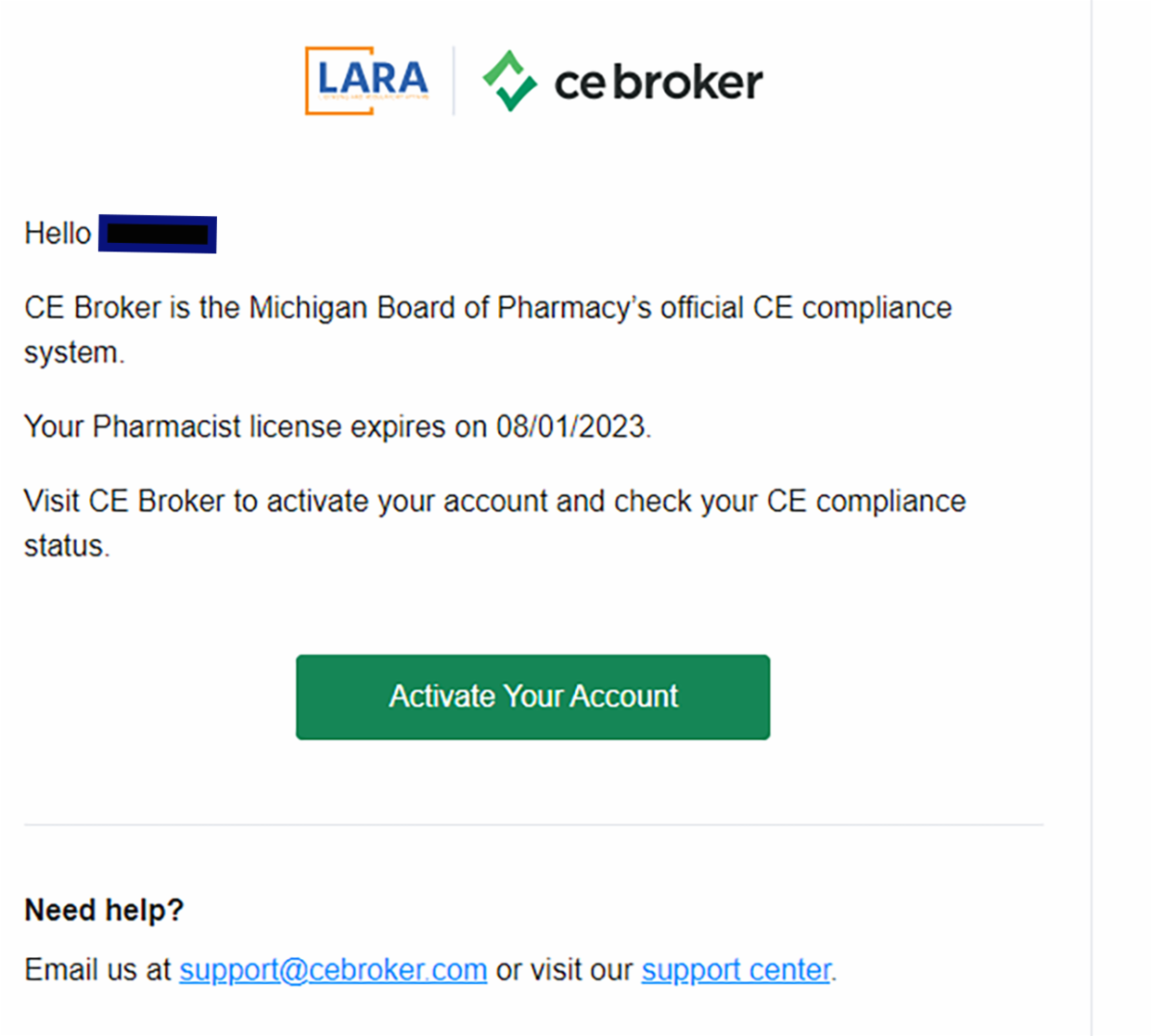
CE Broker Communication Not Issued on Behalf of LARA
The Michigan Pharmacists Association (MPA) has received many inquiries regarding CE Broker’s communication to licensees stating that the recipient's pharmacist license is about to expire. MPA would like to stress that the communication was not sent on behalf of the Michigan Department of Licensing and Affairs (LARA). If audited, a licensee must provide proof of meeting the requirements outlined in the Board of Pharmacy Pharmacist Continuing Education Rules.
CE Broker is LARA's official partner, however, use of the system by licensees is optional. All communication from the Bureau of Professional Licensing (BPL) regarding CE Broker has stated it is optional for licensees.
For additional questions, please contact MPA Director of Professional Development Farah Jalloul or visit the the Bureau of Professional Licensing (BPL) website.
| | |
|
|
A sample of the CE Broker email communication is pictured at left.
| |
|
Holiday Delivery Schedule for COVID-19 Vaccines
The Michigan Department of Health and Human Services (MDHHS) has released its COVID-19 vaccine delivery schedule for Memorial Day.
- No COVID-19 vaccine deliveries will be made from Saturday, May 27 to Monday, May 29.
- Pfizer will not process orders over the holiday weekend and deliveries are expected to resume on Tuesday, May 30.
- McKesson will not process orders over the holiday weekend or on Tuesday, May 30. Deliveries are expected to resume on Wednesday, May 31.
-
Information on ordering, including shipping timelines, is available on the MDHHS COVID-19 Provider Guidance website’s Orders and Shipments page.
If you have questions, please contact checcimms@michigan.gov.
| | | | |