|
"CALLING ALL PLEIN AIR PAINTERS"
Next Month We’d Love to Feature Your Plein Air Setup and Favorite Spot — Take Us to the Places You Love to Paint, Whether Forest, Field, or Shore — Send 2–3 Photos of Your Easel, Your View,
and the Moment That Inspires You
Submit Button Below
| | |
Marie Tippets PSA
Dana Point, CA
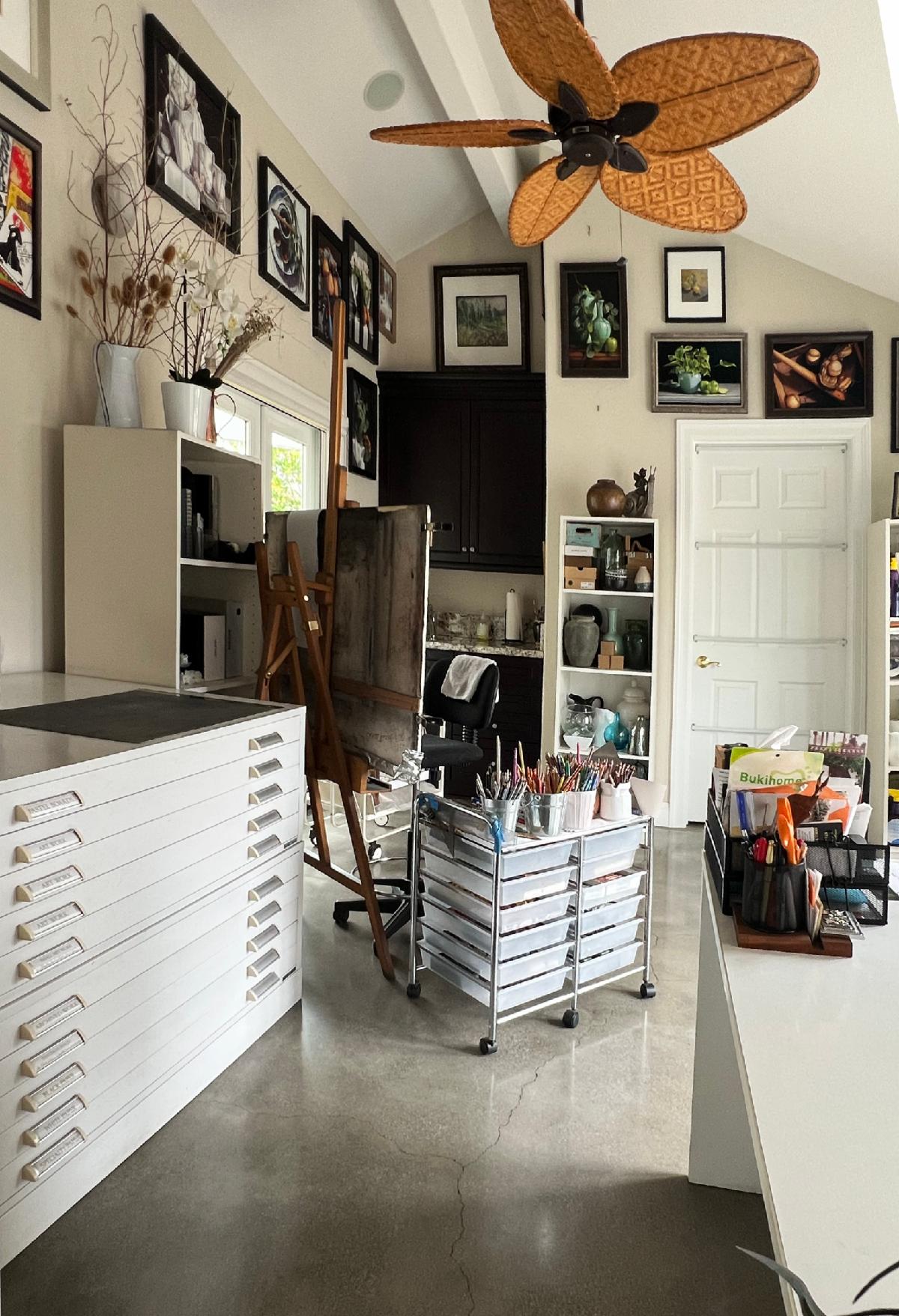
| | This is my studio, which has been operating as my full-time working habitat since 2010. It is an addition to the front of our home which was added in 2008. Previous to that, I was a full time owner of a graphic design ad agency specializing in the home-building industry. After the financial crisis caused by bank failures, the housing market collapsed, and we were forced to close our doors. Blessing of blessings, the addition at home was complete and I was able to dig in full time to what I loved - art! | |
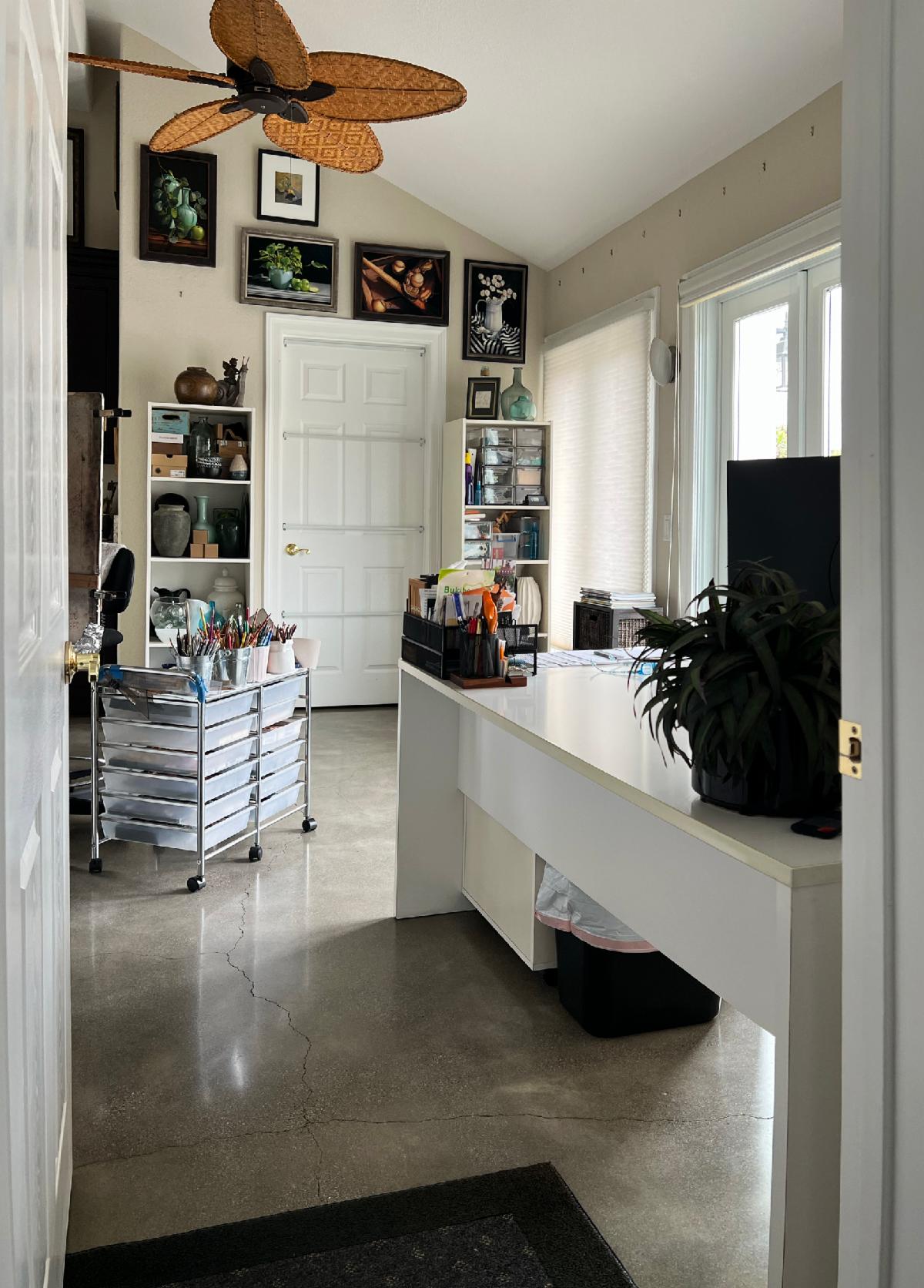
This beautiful workspace has four sets of French doors, three of which open to a patio in front of the house facing northeast, while the other, nearest to my easel, opens southwest to a smaller more private patio to the side of the house, so I have beautiful light all day long.
You may be laughing at the ceiling fan. It sounded like a great idea when our contractor suggested it. What was I thinking?? It rarely gets used as it blows pastel dust into every conceivable corner. (Nice resale feature when our children decide to sell the house)
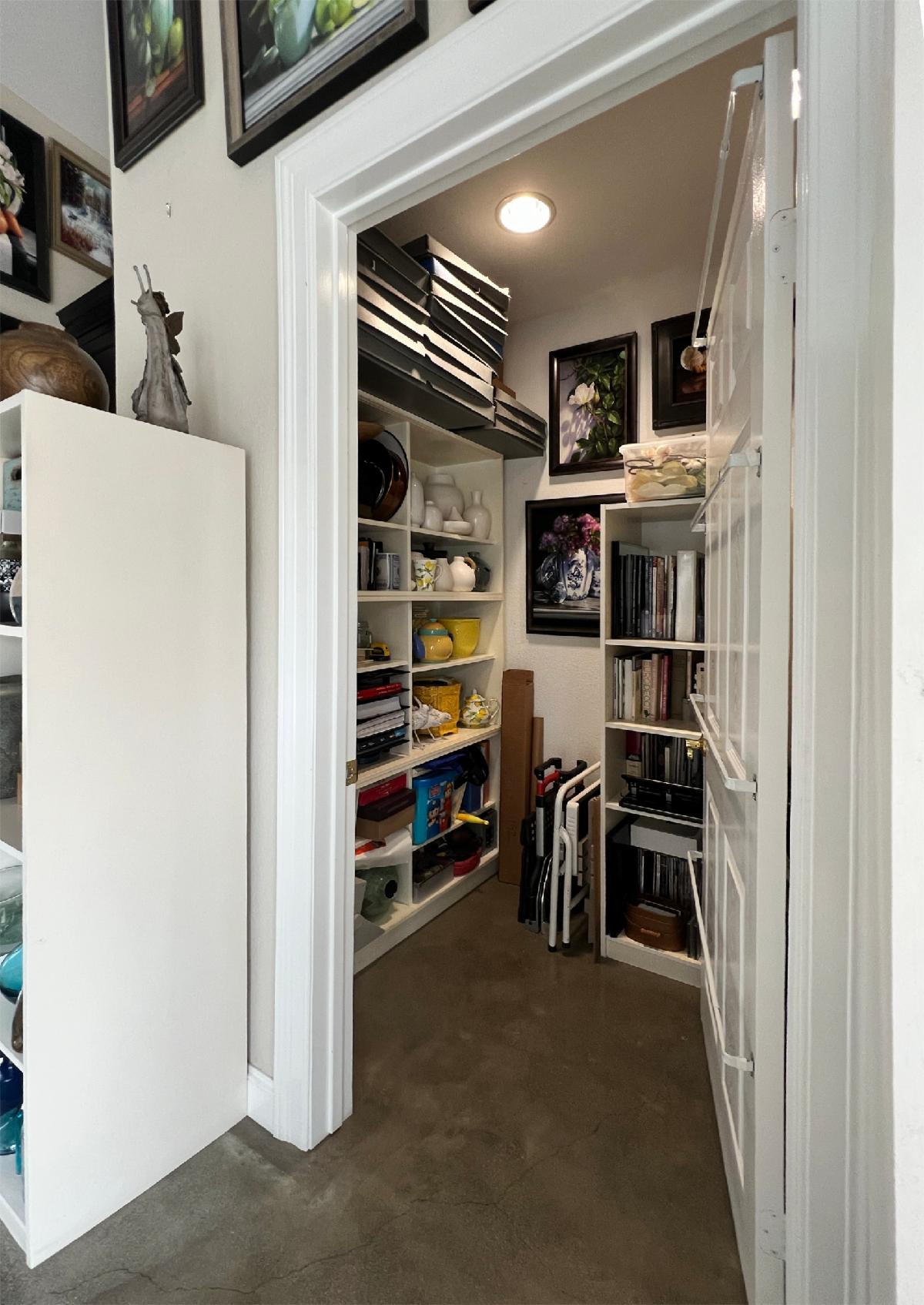
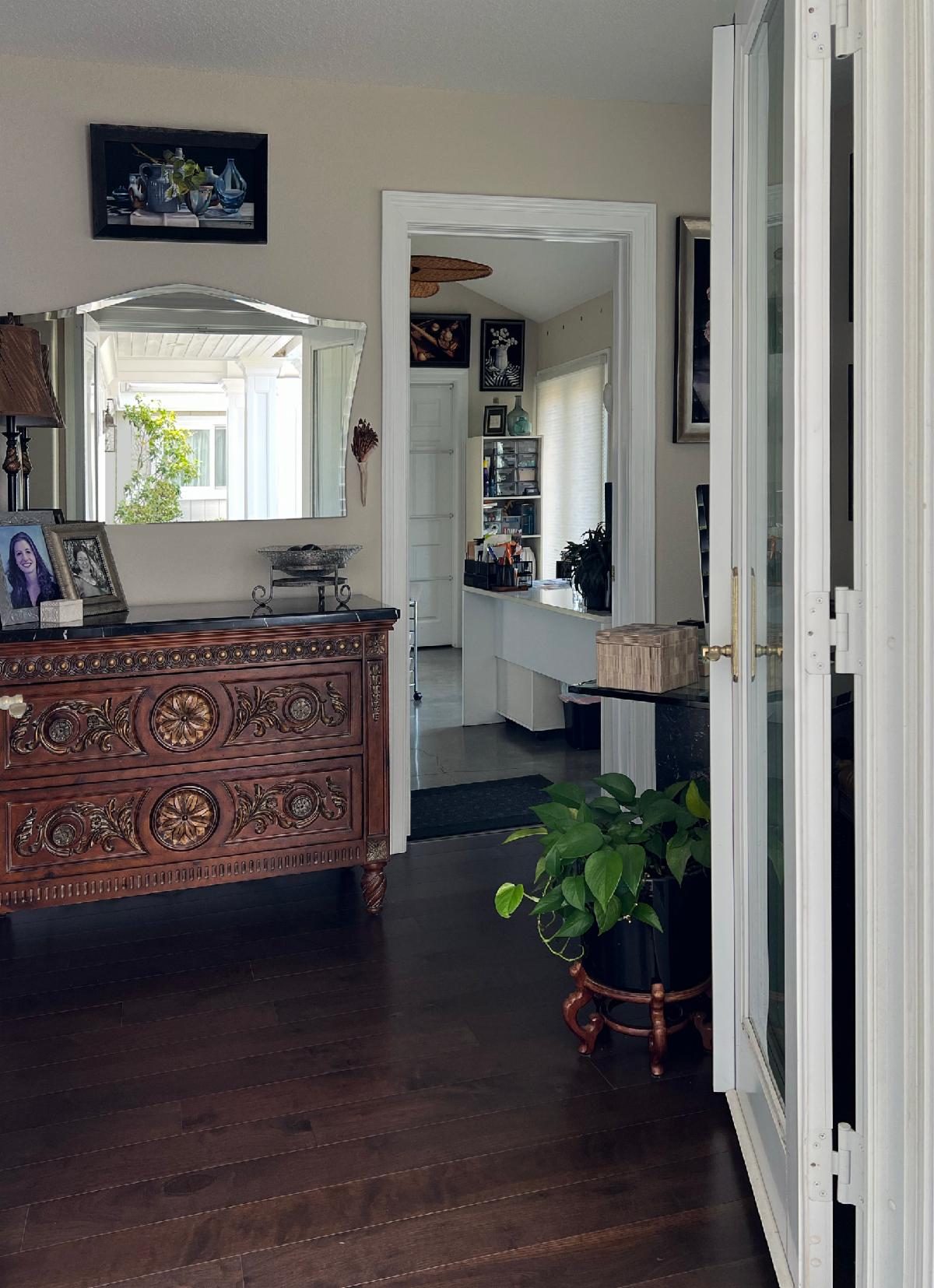
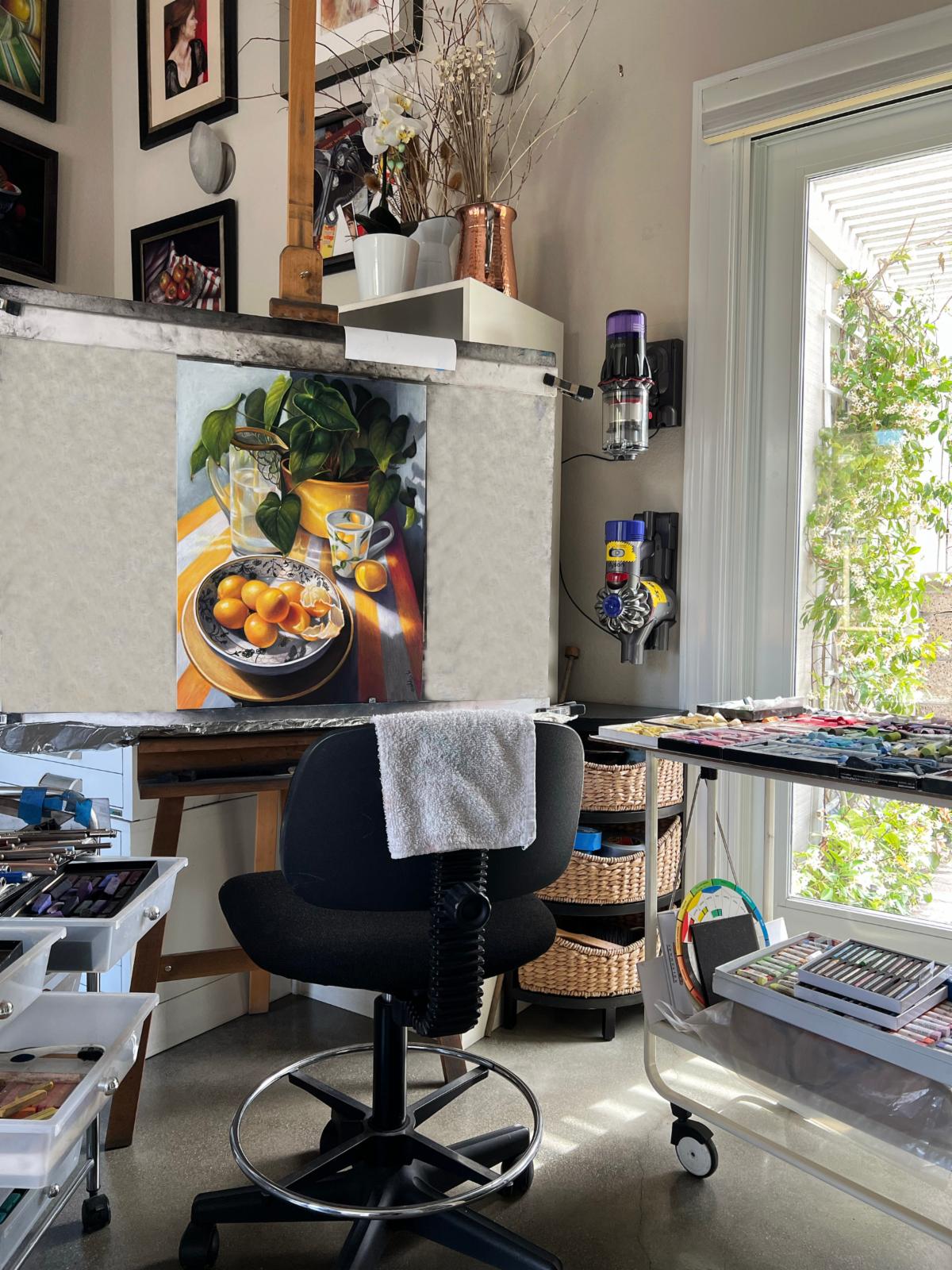
| | The storage closet at the far end of the studio conceals a variety of things. The boxes up top hold old art deemed worthy of saving (and reviewed every 5 years), the shelving holds office supplies, still life props, and books and reference material; and, hidden from view behind the door, there’s a hanging system for studio attire (rags) and room for folded easels and transportation wagons. It’s quite amazing! | | This photo shows the entrance to the studio space from the front of the house. It has its own separate entrance, so that I can welcome clients for private viewing of selected work with no need for them to walk through our entire home. | | Here is a painting that I am making a few final corrections to. I work on a large sheet of Gatorboard mounted on my easel. Attached to the Gatorboard are two adjustable trim moldings secured with heavy-duty clips. Each molding has two small L-shaped brackets (about the width of a mirror clip), allowing my UArt 8-ply boards to slide securely into place without the need for tape. I do occasionally, however, work on Pastelmat, which does require tape. In those cases, I just move the moldings out of my way, up and down. I keep a piece of aluminum foil at the bottom of the gator board to catch the dust, and I change it with every new piece. Even so, I have to do a quick mop every day to avoid tracking pastel color throughout the house. I'm sure you can relate!! | | |
Julia Lesnichy
Crozet, VA
| |
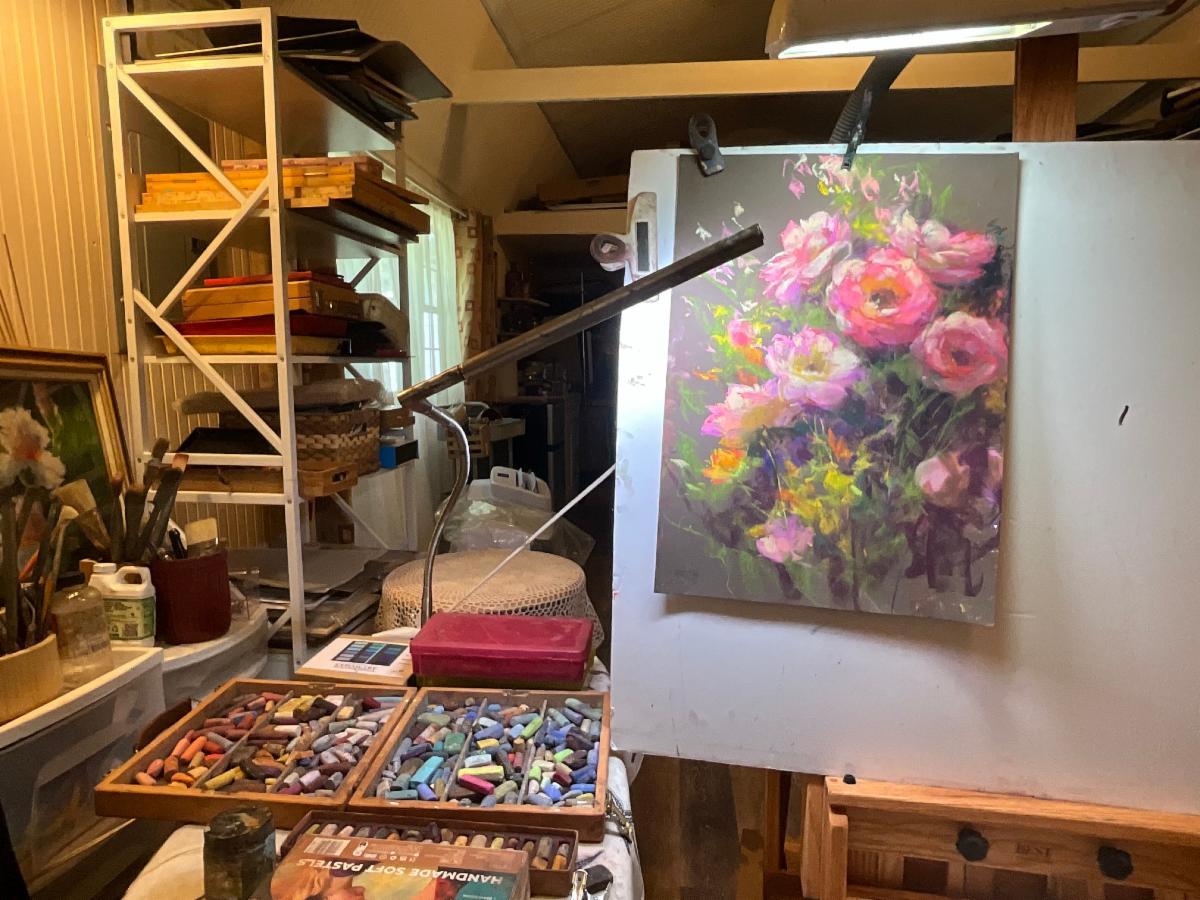
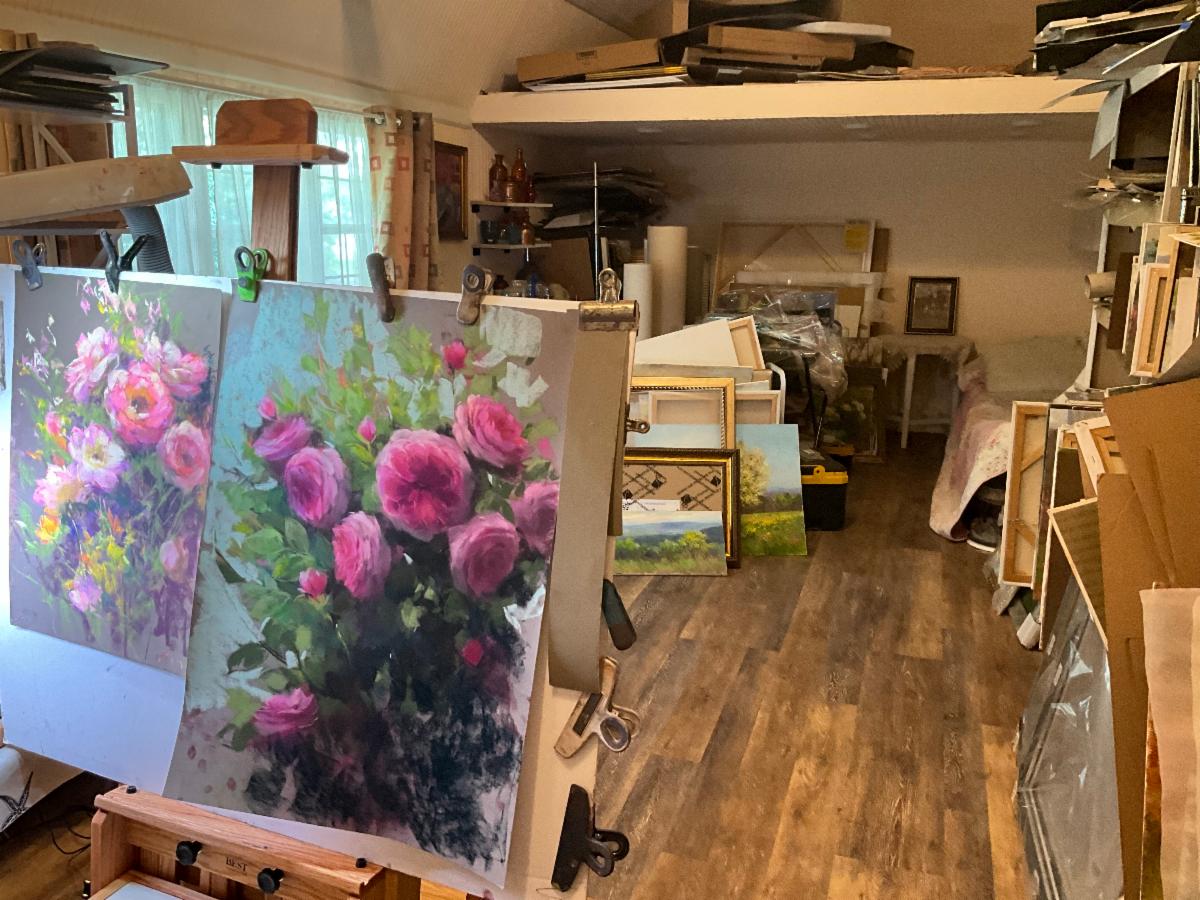
This image is of my easel, with my pastel painting of roses, that I am currently working on. I have some pastel sets on my side folding table when I am painting. I mostly have Unison, Great American, Terry Ludwig and Lightwish pastels. The two lamps that I use in my studio are both day light lamps. I can regulate the lighting in one of them, and have additional wall and ceiling lights in the studio.
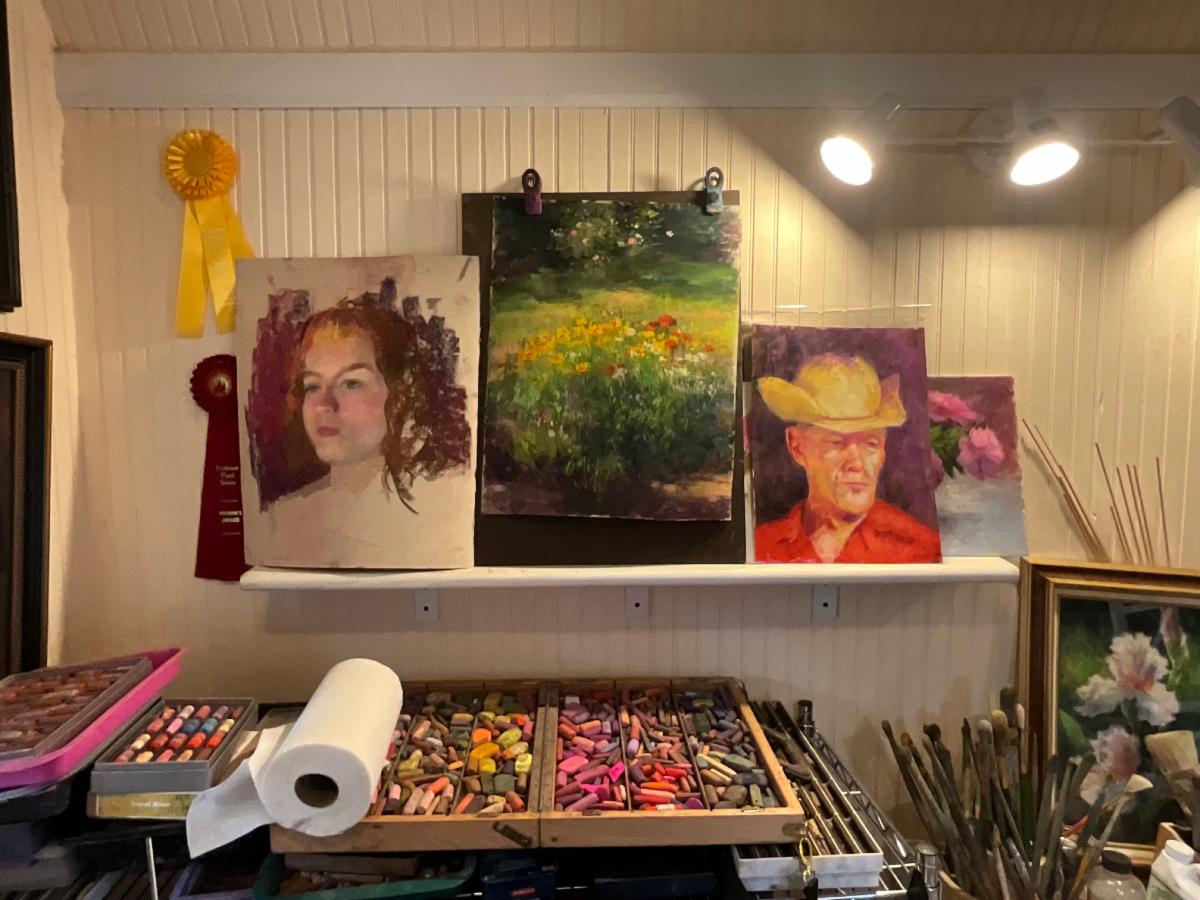
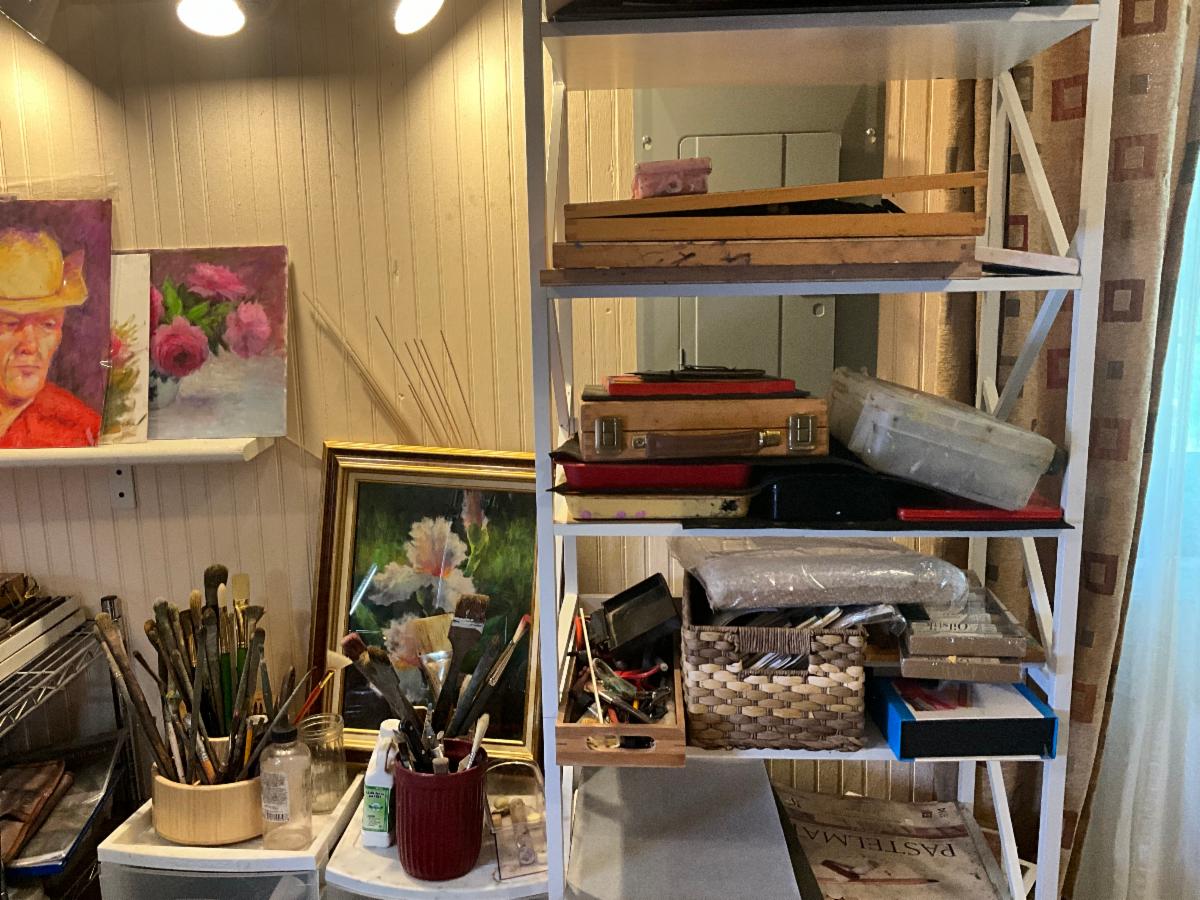
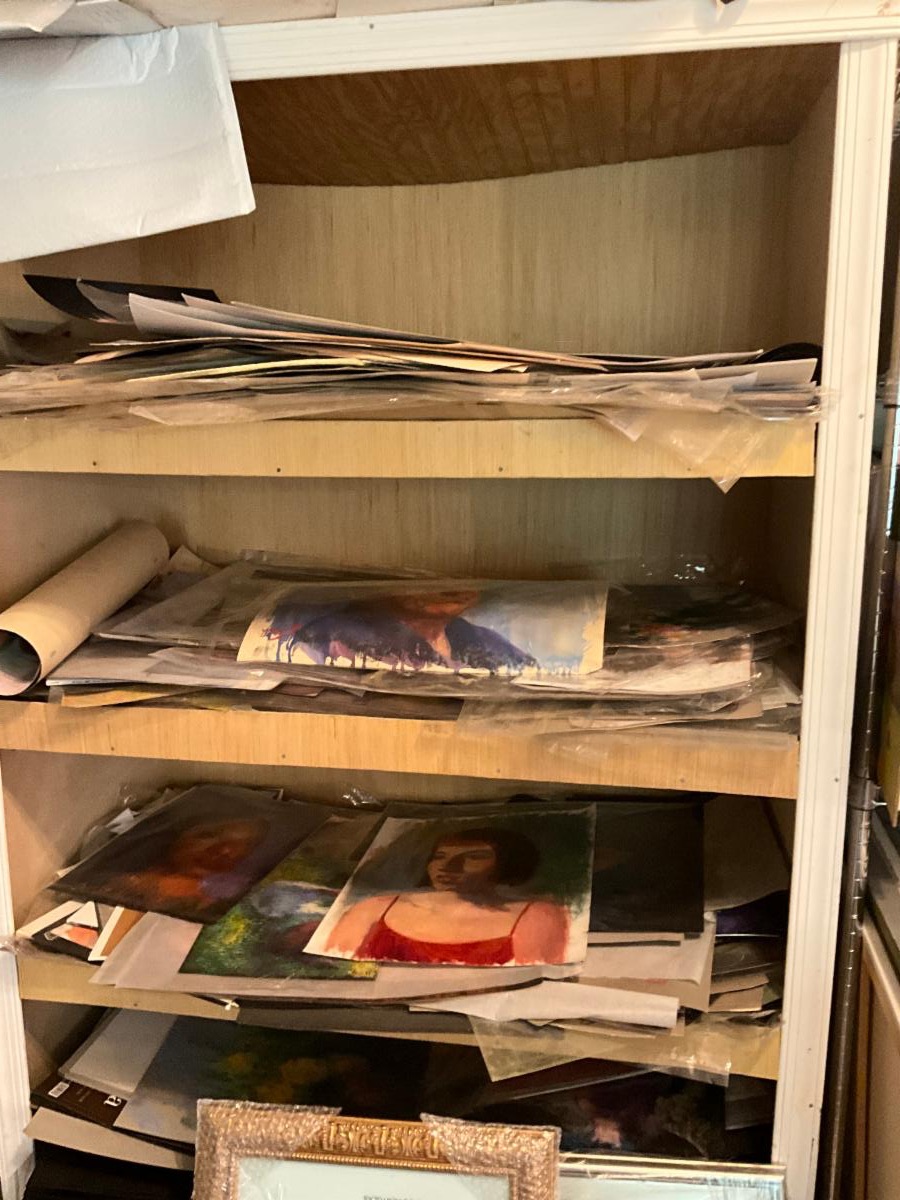
| | I have a wide range of pastels when I paint. Florals, portraits or floral still life are my major subjects right now. I love to paint my roses and flower garden too. | | I keep pastel papers of medium and small sizes close in the cabinet, as well as some additional sets of soft and oil pastels. I keep gouache and watercolors sets there too when I need to do an underpainting for my pastel works. | | This large cabinet is where my finished and unfinished works are kept. Each shelf keeps either pastel paper, unfinished works, pastels or oil pastels | | This photo is the overall space of my studio. | | |
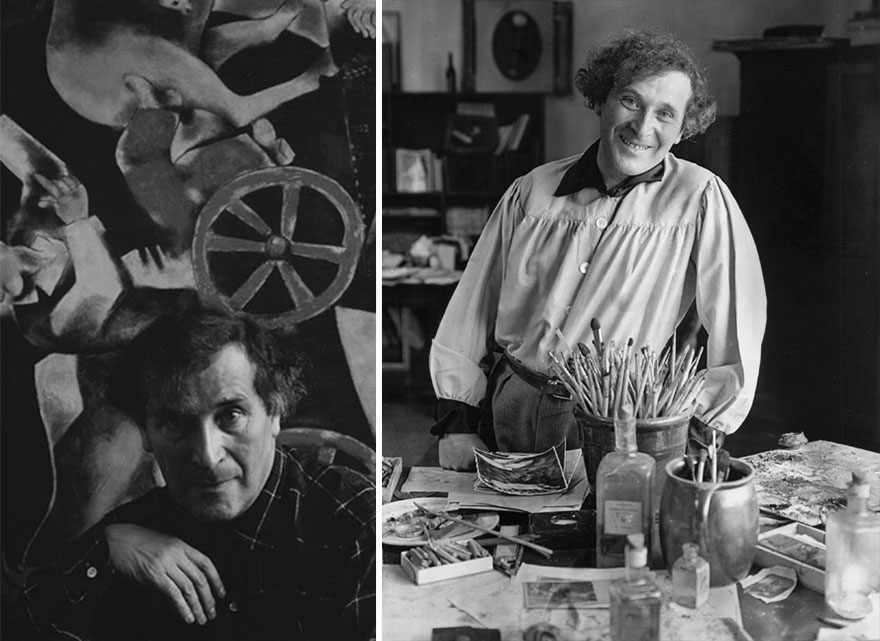
Marc Chagall (1887 - 1985)
He was born in Vitebsk, Belarus as Moïsche Zakharovitch Chagalov, but spent most of his life in France. His work was much more colorful than that of other Jewish artists such as Jacques Lipchitz and Chaïm Soutine. Chagall's artworks are characterized by a free, imaginative, and dreamlike expression. For the creation of his works, he used a wide range of materials and techniques. His oeuvre consists of drawings, paintings, prints, ceramics, mosaics, and stained glass. In his work, he aimed for the revelation of the inner impulse rather than a deliberate, methodical use of color and/or form. Chagall may be called the greatest color poet of all time.
| | | | |