|
Departments of Medicine, Neurology, and Pediatrics
| | |
Dear Physician-Scientist Community,
Welcome to the quarterly newsletter of the Physician-Scientist Career Development Program (PSCDP)! Our program is focused on supporting scientific success and fulfillment amongst laboratory-based physician-scientists in the UCSF Departments of Medicine, Neurology, and Pediatrics.
It's been a challenging few months on many levels, and many of us are deeply concerned about the current and future federal support for laboratory research. We know from conversations with many of you that a pervasive uncertainty can make it hard to keep going with an already challenging career. However, we also know that you're doing incredible and essential work, whether it is curiosity-driven basic science or translational research. We hope in this time of uncertainty, we can take refuge in our community. Please reach out to us if we can help you navigate these tough times. We have two PSCDP gatherings planned in May, which we hope will provide the opportunity to support one another, but also to take constructive steps to promote and fund our research!
First, we have a panel discussion on Tuesday, May 13th, focused on the Academic Job Market. Young physician-scientists who recently transitioned to full independence will discuss their experience with finding a faculty position, and senior faculty who evaluate potential faculty hires will share their perspectives. We will repair to Spark for early dinner after the panel. Details below. Sign up here.
Second, we have a panel discussion on Tuesday, May 27th, focused on diversifying your funding, which is likely to be even more critical in the years to come. Building Your Funding Portfolio will include perspectives from both junior and senior faculty on how to strategically obtain and use research funds from private foundations, philanthropy, and biotech/pharma. These sources of funding can complement federal funding, and we will discuss how they can fit into your portfolio at different stages. We will have pizza and drinks. Details below. Sign up here.
We look forward to seeing you!
Sincerely,
Alexandra, Cathy, Sanjeev, and Camille
| | |
"Navigating The Academic Faculty Job Market" Panel Discussion & Social Hour at Spark Social!
Date: Tuesday, May 13, 2025
Time: 3:30-5:00 PM PDT (Panel Discussion); 5:00-6:30 PM PDT (Social Hour)
Location: Mission Hall, 2nd Fl., Room 2103, and Spark Social SF, 601 Mission Bay Blvd. North
Panelists:
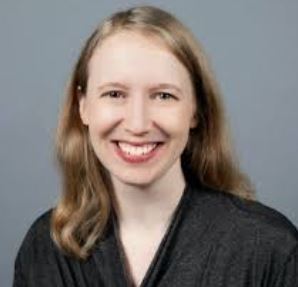
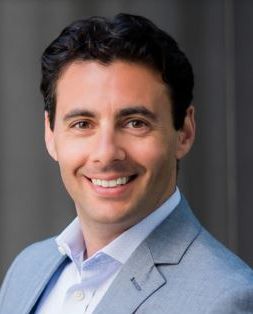
| | Audrey Brumback, MD, PhD Assistant Professor, Departments of Neurology and Pediatrics, Dell Medical School, The University of Texas at Austin | | |
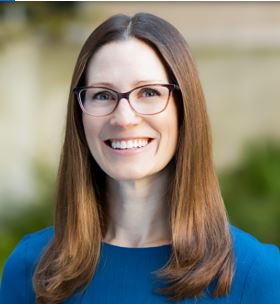
Elizabeth Crouch, MD, PhD Assistant Professor, Pediatrics & Stem Cell Biology, Department of Pediatrics, UCSF
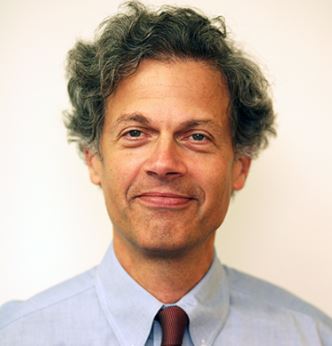
| | Robert Edwards, MD
Cahill Professor, Neurology and Physiology; Vice Chair for Basic Science Research, Weill Institute of Neuroscience, UCSF | | Ross Okimoto, MD Associate Professor, Hematology and Oncology, Department of Medicine, UCSF | | Prescott Woodruff, MD,MPH Professor & Chief, Division of Pulmonary, Critical Care, Allergy, and Sleep Medicine, Department of Medicine, UCSF | | |
Jingshing Wu, MD, PhD Assistant Professor, Department of Pediatrics, Cardiovascular Research Center, University of Wisconsin
| | Please RSVP and submit your question(s) for the panel using the button below. | | |
"Building Your Portfolio: Diversifying Funding" Panel Discussion and Pizza & Drinks!
Date: Tuesday, May 27, 2025
Time: 4:00-6:00 PM
Location: Mission Hall, 1st Fl. Room 1406
Panelists:
| | Please RSVP using the button below. | | Meet our Fellows and Junior Faculty | | In this section, you will find interviews from our remarkable fellows and junior faculty from each of our participating departments. | | |
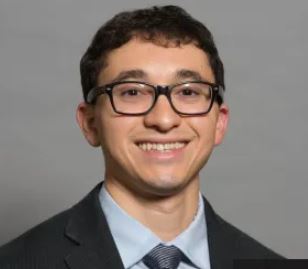
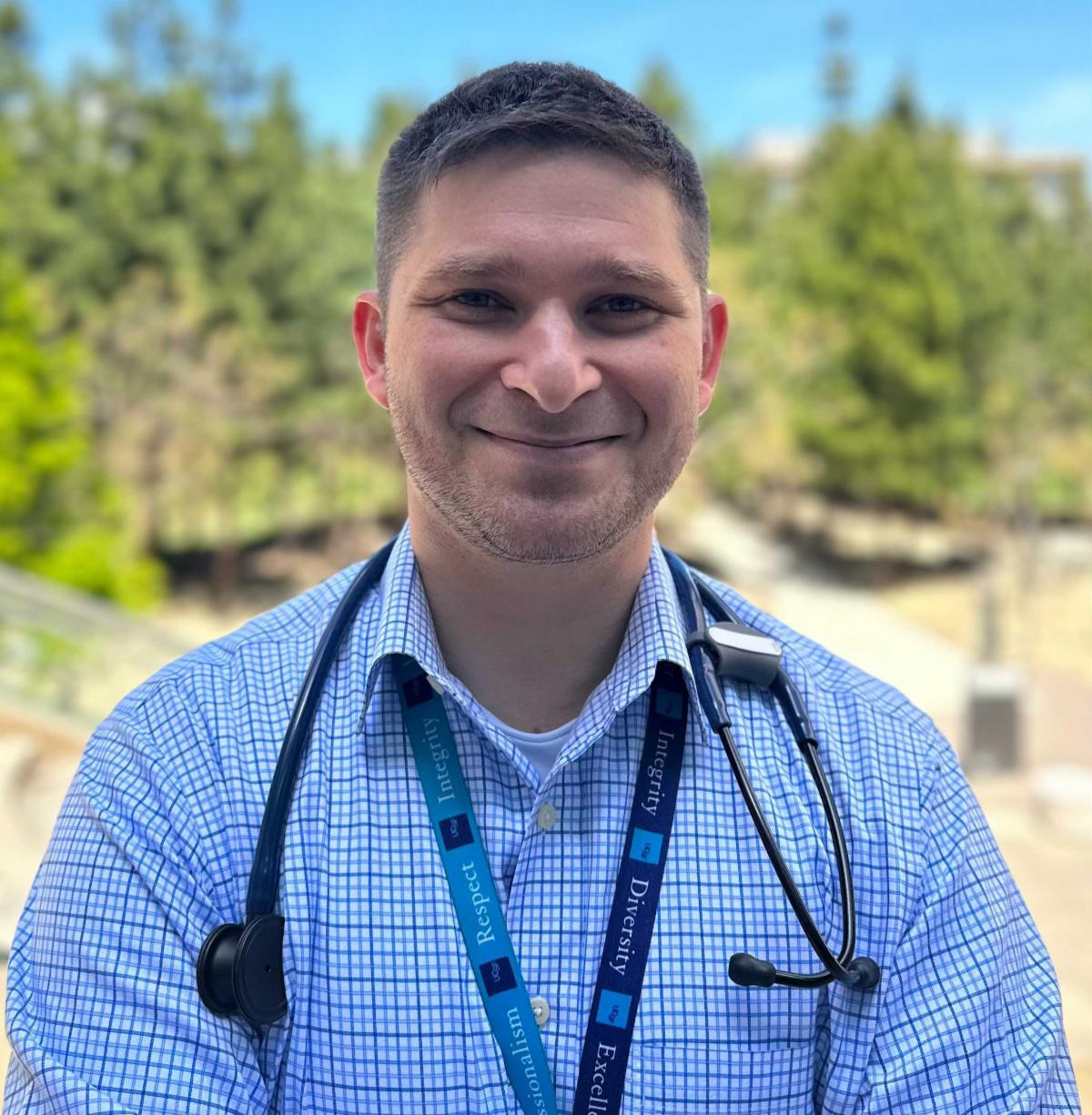
John P. Huizar, MD
Adjunct Professor
Postdoctoral Fellow, Barton Lab at UC Berkeley
Attending Physician, ZSFG Rheumatology Clinic
Department of Medicine, Division of Rheumatology
| | |
What stage of training are you currently in?
I am in my third year of an immunology postdoc in Greg Barton's lab at UC Berkeley, and clinically I attend in the outpatient Rheumatology clinic and inpatient Rheumatology consult service at San Francisco General Hospital.
Describe your laboratory research.
Our innate immune system has evolved to code nucleic acid as a microbe-associated molecular pattern, and this is a bedrock feature of immunity that defends us against viral and bacterial pathogens. But this host defense strategy can also backfire for us when genetics or environmental exposures create excess nucleic acid or lower the threshold for nucleic acid sensing, and the result is inflammatory disease, often involving antinuclear-antibodies as we see in diseases like lupus. My work uses human genetics as a lens to understand what controls the threshold for innate immune detection of nucleic acid - we know that coding allelic variation in certain genes can enhance innate immune responses to extra cellular RNA and DNA, and I’m interested in 1) defining the mechanisms and consequences of this in cells and mouse models, and 2) broadening our understanding of which genes specifically can do this.
What made you want to become a physician-scientist or choose your area of research?
A few months before I started medical school, I attended a symposium to honor Jim Allison, a Nobel laureate who led foundational early work to understand inhibitory receptors on T cells including CTLA4, paving the way for immune-checkpoint blockade as a therapeutic strategy for cancer. At that point I had been working as a technician in a structural biology lab, and it wasn't yet clear to me that I wanted to stay in science after medical training. The talks I heard (many from physician-scientists), the questions people asked and the conversations I had with speakers afterwards convinced me that there was an inspiring throughline between mouse biology and human disease, and I realized that I wanted to be a part of this. The person who ultimately helped me do that was Julie Zikherman, who mentored me for two years in the lab while I was in medical school, inspired me to pursue rheumatology training and to this day continues to be an inexhaustible source of ideas, advice, and inspiration.
Describe a major challenge you have encountered in your career as a physician-scientist.
The biggest struggle for me is balancing the long hours of experimental biology with the need to be present as a father and husband. I don't think I have broken anything irreversibly in these domains yet, and my personal approach to this balancing act is to wake up early, to do as much kid-adjacent work and household work as I can, and to put my phone and computer in a hard-to-reach place when I get home. Paying for childcare is also very tough, and frankly insufficient childcare sometimes constrains my work.
Describe something that gives you joy in your current stage as a physician-scientist.
One of the cool things about the UC Berkeley campus is the opportunity to mentor undergraduates - I have had a fantastic undergraduate student this past academic year and it has been very rewarding to grow together in the lab.
Do you have a recent accomplishment you would like to highlight?
A very exciting recent collaboration for us has been one with Mark Anderson and Joe DeRisi here at UCSF to define the autoantibody repertoire in mice with disease-associated human variant alleles of the UNC93B1 gene. We made these to model the disease that occurs in patients with these mutations (to date mostly childhood-onset lupus), but the autoantibodies we are finding are giving us new hints about human disease states that might be driven by these mutations. Even in these really hard times, I am continually suffused with gratitude for the generous and brilliant colleagues that surround me at UCSF.
Do you have a hobby or fun fact you want to share?
I think even if I didn't have kids, I would probably go to Disneyland more than the average person. My favorite land at this point is probably Fantasyland because of how happy it makes my older daughter Fern (for those that don't know, there is a "Royal Hall" where you can interact with Disney princesses and Fern just goes gaga...). Sometimes when I'm alone in lab in the early morning, I'll actually listen to Tchaikovsky's Sleeping Beauty waltz (which is what they seem to be playing in Fantasyland half the time) and it really propels me.
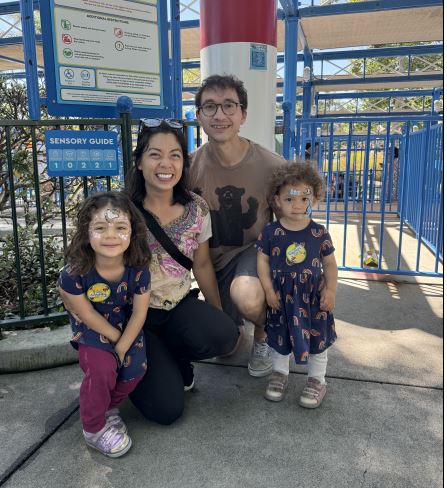
| | Pictured John and his beautiful family last summer at another favorite place - Legoland! | | |
What stage of training are you currently in?
I am in my final year of residency.
Describe your laboratory research.
I am interested in the overlap between autoimmunity and neurodegeneration. How does the immune system modulate cognitive function in rare autoimmune encephalitides and common dementias?
What made you want to become a physician-scientist or choose your area of research?
I started working in a lab in high school, and all my mentors were physician-scientists. I always thought that they had the coolest jobs, and I was motivated early on to pursue this career. The thrill of discovery in the lab with direct or even distant applicability to my patients in clinic is unmatched.
Describe a major challenge you have encountered in your career as a physician-scientist.
I've had many challenges, but the only thing I can think of right now are the ongoing cuts to biomedical research.
Describe something that gives you joy in your current stage as a physician-scientist.
Collaborating with colleagues that are also friends.
Do you have a recent accomplishment you would like to highlight?
We published our findings on a new autoimmune cause of CNS-restricted B12 deficiency last year (https://www.science.org/doi/10.1126/scitranslmed.adl3758.) My wife named the disease!
Do you have a hobby or fun fact you want to share?
I was in a sketch comedy group in college, but I was mainly relegated to the writers' room and rarely made it on stage. Apparently, I'm monotone.
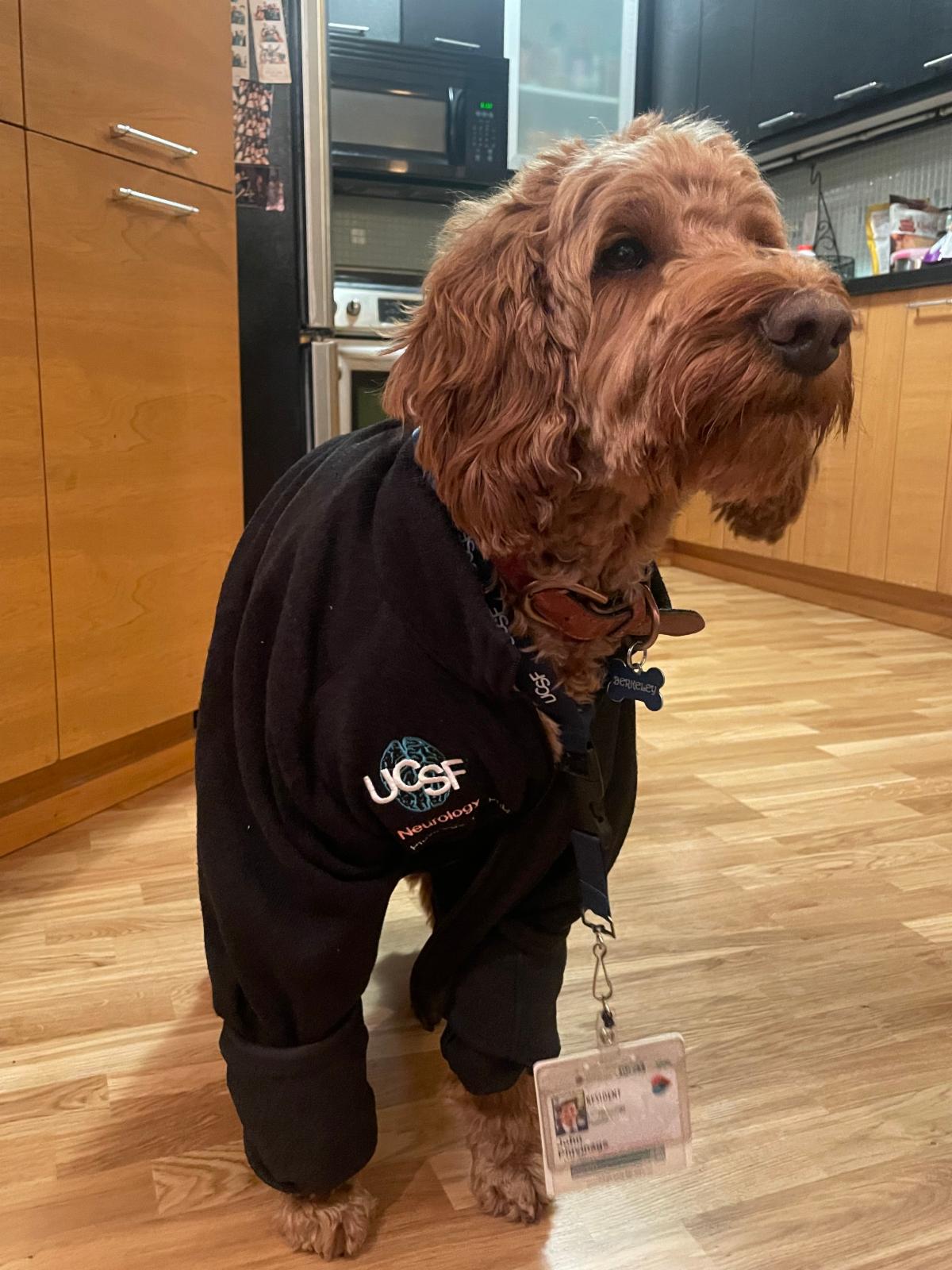
| | Pictured John's adorable dog! | | |
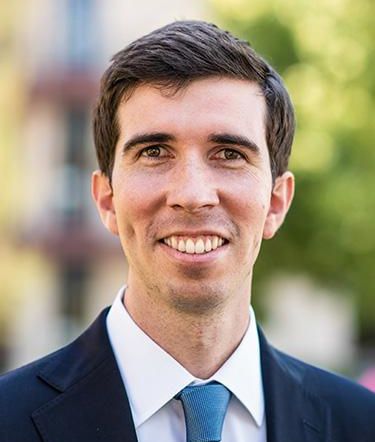
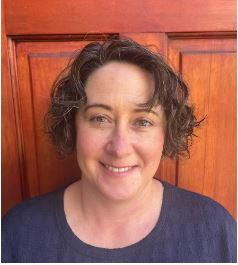
Cheryl Peretz, MD
Assistant Professor
Department of Pediatrics, Division of Pediatric Oncology
| | |
What stage of training are you currently in?
I'm technically an Assistant Professor, functionally I'm a clinical attending and a research postdoc.
Describe your laboratory research.
I am interested in understanding the oncogenesis and clonal evolution of high-risk hematologic malignancies and using that information to improve treatments and cures for our patients. We use a combination of cool new technologies and pre-clinical models to study leukemia pathogenesis and its path to drug resistance and relapse. Armed with this biologic knowledge, we can focus on biomarker identification and targeted therapeutics.
What made you want to become a physician-scientist or choose your area of research?
My patients! I have known I wanted to be a pediatric oncologist since I started working with kids with cancer in high school. While standard risk ALL is the poster child for using increased biologic understanding to increase cure rates for pediatric cancer, other types of leukemia have not all had the same targeted therapy success stories or recent improvements in outcomes. My patients with AML and MPAL inspired me to learn more about these diseases, to try and understand them and work to bring more cures to patients.
Describe a major challenge you have encountered in your career as a physician-scientist.
Balancing being both a physician and a scientist along with all our other professional and personal responsibilities. This is not only a challenge of timing, but also of accepting that at any given moment, any one of my "jobs" may need to move up or down on my priority list.
Describe something that gives you joy in your current stage as a physician-scientist.
The people I work with - co-workers, mentors, trainees, and patients.
Do you have a recent accomplishment you would like to highlight?
I'm very excited about the publication of our most recent paper: https://www.nature.com/articles/s41467-024-52317-2.
| | Career Development Awards | | NIH K08 Grant Writing Workshops | |
In March, Alison Nair, MD; Ken Nakamura, MD, PhD; and Rachel Rutishauser, MD, PhD, along with PSCDP leadership, hosted an in-person workshop at Parnassus to review K08/R01 Aims pages from our physician-scientist cohort. A previous session in November provided an overview of the grant mechanism, along with guidance, resources, and strategies for preparing and revising applications.
Looking for more support? Our K08 Library of Resources includes slide presentations from these workshops and sample grant submissions. To access it, please sign the required confidentiality agreement using the button below.
| | |
PSCDP-Sponsored Writing Consultations
PSCDP is pleased to offer a limited number of complimentary writing consultations for physician-scientists with Vanessa Bender, PhD—an expert in scientific communication with over a decade of experience as an editor and consultant.
Selected participants will submit a draft manuscript or grant proposal for detailed written feedback. Vanessa will provide in-depth suggestions and meet 1:1 to discuss her comments and core principles of effective scientific writing.
If you’re interested, apply via the button below!
| | |
Confidential Consultations
Are you facing a significant challenge in your scientific or professional life as a laboratory-based physician-scientist? If you’d benefit from speaking with someone beyond your primary or career mentors, PSCDP offers one-time confidential consultations with a member of our leadership team.
Request a session using the button below.
| | |
Mentoring Committees
PSCDP assembles mentoring committees for laboratory-based physician-scientists in Medicine, Neurology, and Pediatrics during their fellowship and junior faculty years. These committees provide ongoing scientific and career guidance tailored to your professional growth.
If you're interested, register using the button below, and we’ll reach out to start the process.
| | Please visit our website for access to all resources | | | | |