The FootForward Report
Volume 1 | Issue 5 | Summer 2026
| |
Summer Edition
Insights in Modern Foot & Ankle Care from Manhattan Podiatry Associated PC
| | |
PAIN IN THE BALL OF YOUR FOOT?
It May Not Be What You Think
| |
Pain behind the toes is often called metatarsalgia, but that term describes a symptom—not a specific diagnosis.
Several conditions can cause pain in the same area, and each may require a different treatment.
| | Quick Tip: Don't Ignore Persistent Ball-of-Foot Pain | Pain in the ball of the foot can come from several different problems, including pressure overload, a neuroma, plantar plate injury, stress injury or loss of cushioning. If the pain persists, worsens, or is accompanied by swelling, numbness or a change in toe position, have it evaluated. | |
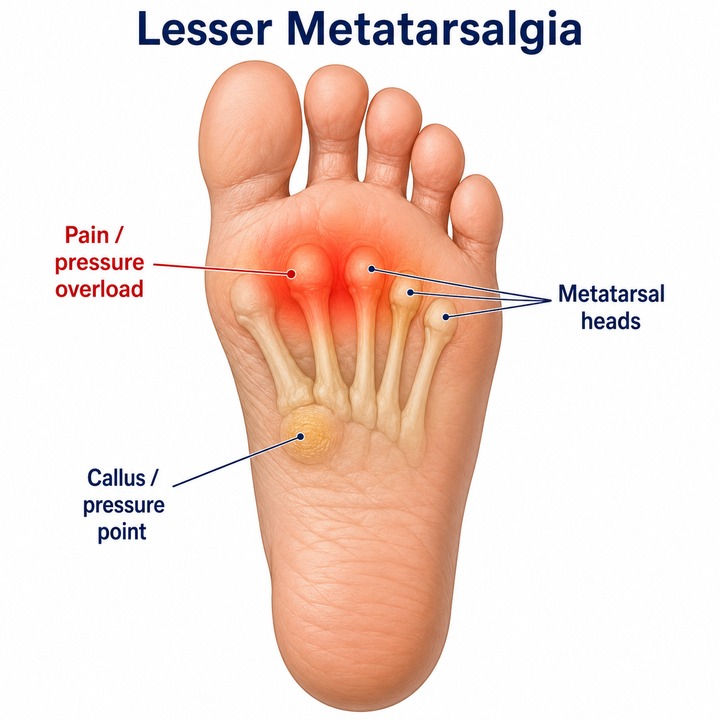
Pressure-Related Metatarsalgia.
Excessive pressure beneath one or more metatarsal bones may cause:
- Aching or burning
- A bruised sensation
- Painful calluses
- Pain when barefoot or standing for long periods
Foot structure, tight calf muscles, hammertoes, abnormal mechanics and poorly cushioned shoes may contribute.Treatment can include better footwear, metatarsal padding, stretching, cushioned insoles and custom orthotics designed to redistribute pressure.
|
|
|
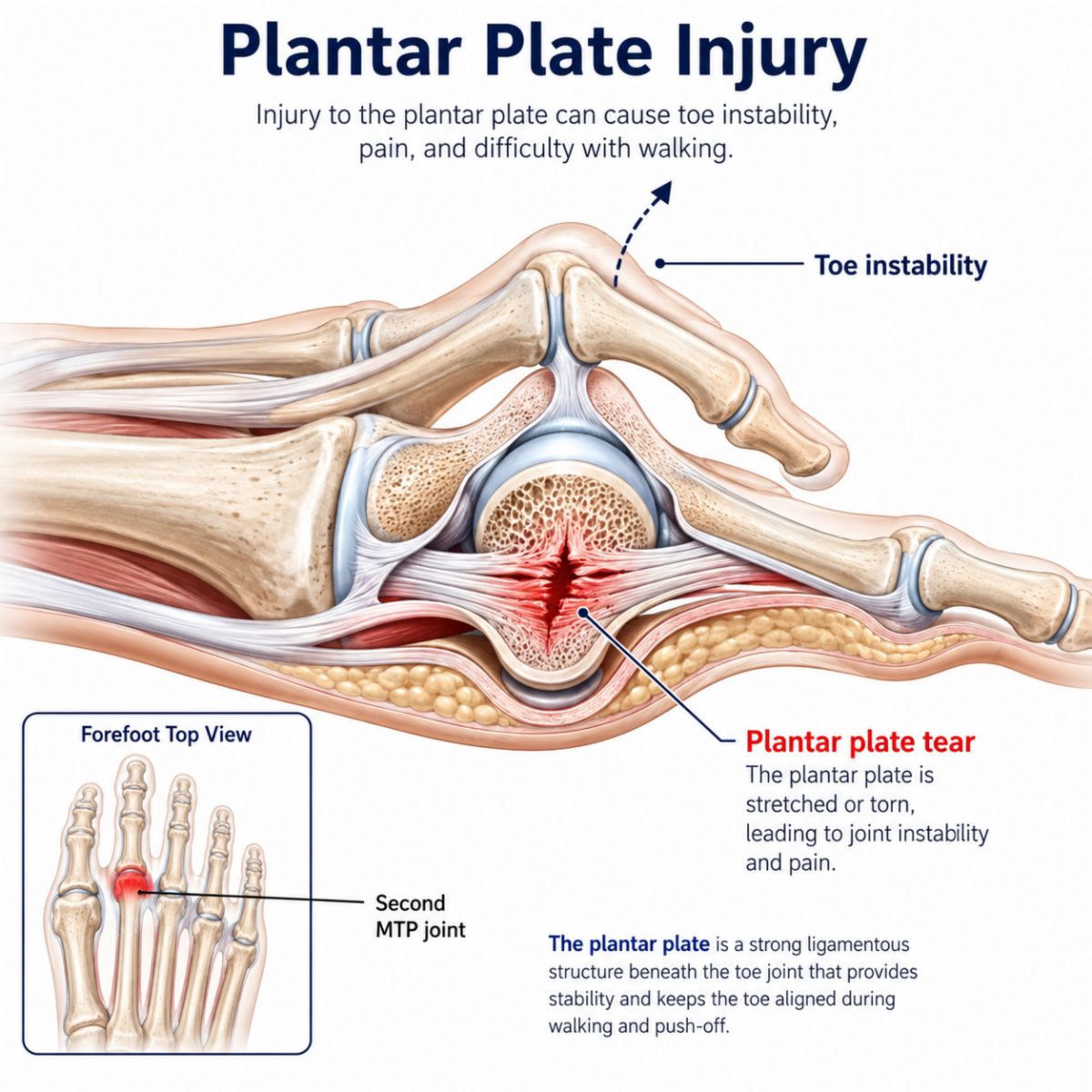
PLANTAR PLATE INJURY
The plantar plate is a ligament beneath the toe joint that helps keep the toe stable. It is most frequently injured beneath the second toe.
Symptoms may include pain and swelling beneath the toe joint. As the injury progresses, the toe may lift, drift or develop into a hammertoe or crossover toe.
| Early treatment may include taping, activity modification, supportive shoes, orthotics or temporary immobilization. Advanced tears may require surgical repair. | |  |
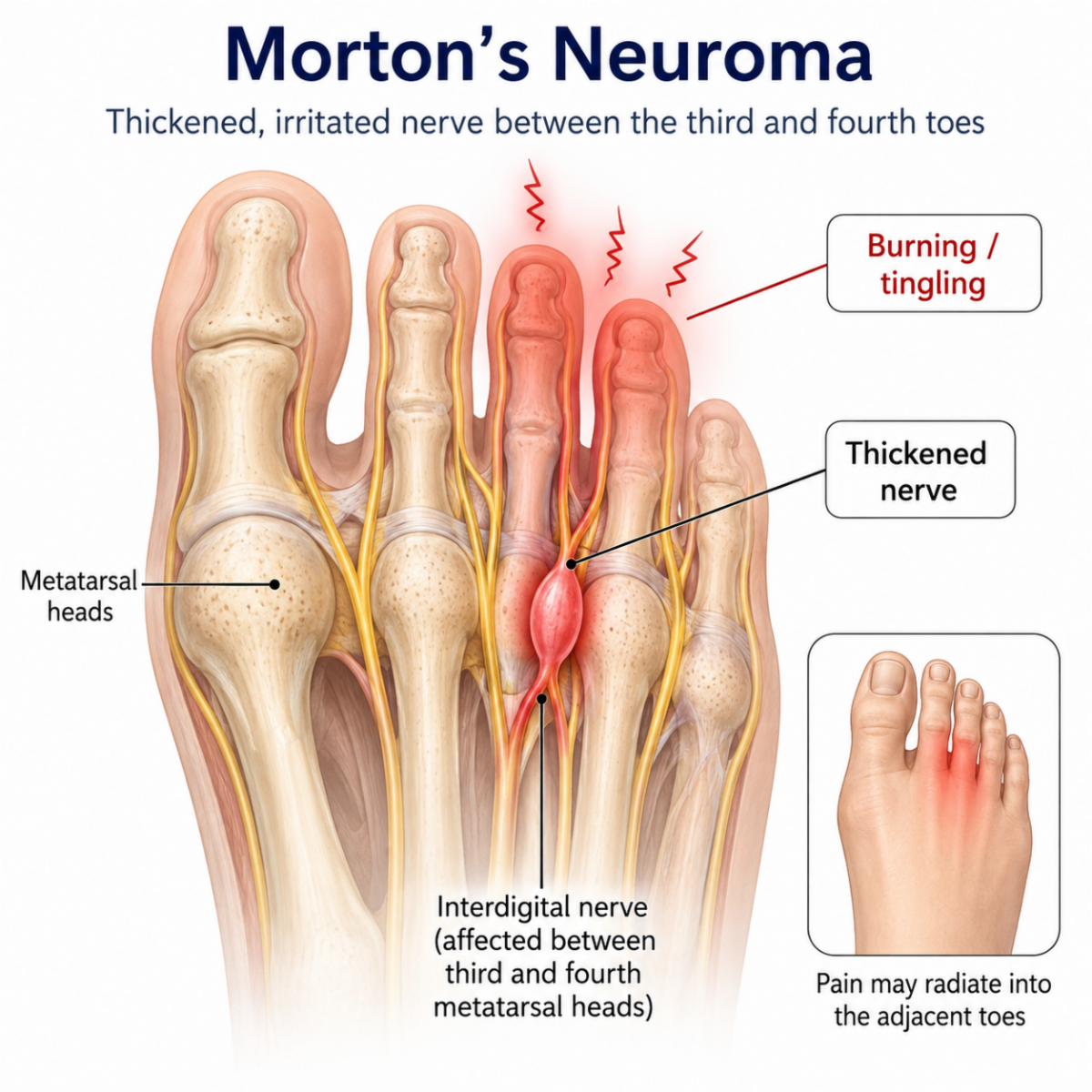
MORTON’S NEUROMA
A neuroma is irritation and thickening of a nerve between the metatarsal bones, most commonly between the third and fourth toes.
Typical symptoms include:
- Burning or shooting pain
- Tingling or numbness into the toes
- Feeling as though a pebble is inside the shoe
- Pain that worsens in tight shoes
Treatment may include wider shoes, padding, orthotics, anti-inflammatory medication or injection therapy. Occasionally, persistent cases require surgery.
| |
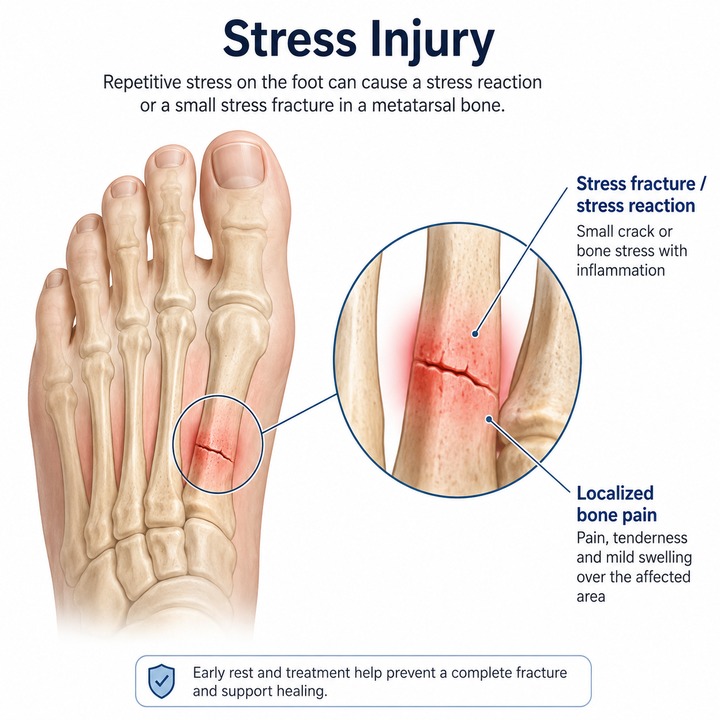
STRESS INJURY
A stress reaction or stress fracture can develop when repetitive activity overwhelms the metatarsal bone.
Pain usually worsens with activity and may be accompanied by localized swelling and very specific tenderness.
Early stress injuries may not appear on an X-ray. MRI or other imaging may sometimes be needed.
| | | |
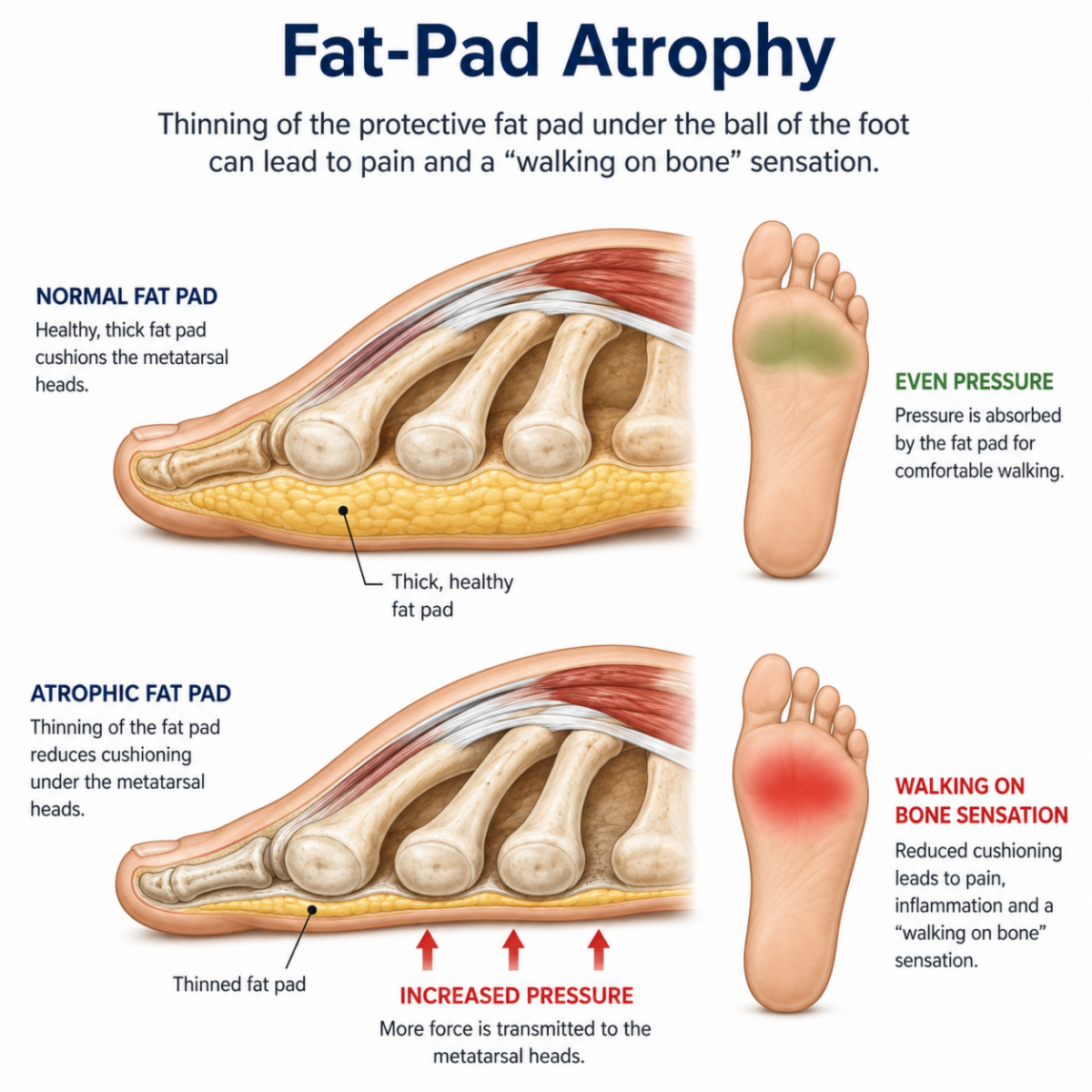
FAT-PAD ATROPHY
The fatty tissue beneath the metatarsal heads acts as a natural shock absorber. With aging or repetitive loading, it may become thinner or displaced, causing a bruised or “walking directly on bone” sensation.
Treatment may include cushioned footwear, shock-absorbing insoles, padding and custom orthotics.
In selected patients, a fat graft or injectable adipose-tissue supplement may be used to restore cushioning and treat metatarsalgia caused by fat-pad atrophy.
| | | |
GETTING THE DIAGNOSIS RIGHT
“A careful examination helps determine whether the pain is coming from a bone, joint, ligament, nerve or loss of cushioning.
X-rays, diagnostic ultrasound or MRI may be recommended depending upon the suspected cause.”
DID YOU KNOW?
“The type of pain can provide an important clue:
- Pain beneath one metatarsal: Pressure overload or plantar plate injury
- Burning or tingling into the toes: Possible neuroma
- Localized bone pain and swelling: Possible stress injury
- ‘Walking on bone’ across the forefoot: Possible fat-pad loss
- A toe beginning to lift or drift: Possible plantar plate instability”
| |
About Our Practice
For over 40 years, Manhattan Podiatry Associates, PC has provided advanced, patient-centered foot and ankle care in Manhattan.
Services include conservative care, prescription orthotics, regenerative therapies, diagnostic imaging, and surgical treatment in our Joint Commission Accredited Office-Based Surgical Facility (OBS).
Midtown East | Financial District
Appointments available weekdays, with Friday procedural scheduling.
| |
Keeping Manhattan Moving- With Experience, Precision, and Compassion
Manhattan Podiatry Associates, P.C.
Manhattan | Foot & Ankle Specialists
📞212-759-9090
🌐www.manhattanpodiatry.com
| | | | |